Articles

Articles & Insights

Discover, learn, and grow with stories from our ecosystem members.

search
The World of Women's Handbags: Types, Features and Styling Tips Fashion & Style
Nov 24, 2026 • visibility 11 • 11 min read

The World of Women's Handbags: Types, Features and Styling Tips

A handbag is more than just an accessory; it is an essential part of every woman's wardrobe. From carrying everyday belongings to completing a stylish outfit, the right bag combines fashion, functionality and convenience. With so many designs, sizes and styles available, choosing the perfect handbags for women can make a difference to your everyday look. Whether you prefer a spacious tote, an elegant shoulder bag or a compact sling, there is a handbag for every occasion and personal style.Why Are Handbags an Essential Accessory for Women?Handbags are among the most versatile fashion accessories. They help keep everyday essentials organised while adding personality to an outfit. A well-chosen handbag can complement casual wear, office outfits, festive looks and party ensembles.Here are some reasons why every woman needs a collection of stylish handbags:Everyday Convenience: Carry essentials such as your phone, wallet, keys, makeup and other belongings.Style and Personality: Choose designs that reflect your fashion preferences.Organisation: Multiple compartments make it easier to keep your belongings organised.Occasion-Based Styling: Different handbag styles complement different outfits and occasions.Popular Types of Handbags for WomenUnderstanding different handbag styles makes it easier to choose the right one for your needs. Here are some popular designs worth adding to your wardrobe.1. Tote BagsTote bags are known for their spacious interiors and practical designs. They are ideal for women who need extra room for everyday essentials, office documents or travel accessories. Their versatile appearance makes them suitable for work, shopping and casual outings.2. Sling BagsSling bags are compact, lightweight and easy to carry. Designed with a long strap, they can be worn across the body or over one shoulder. They are perfect for shopping trips, casual outings and occasions when you want to travel light.3. Shoulder BagsShoulder bags are timeless accessories that combine elegance with everyday functionality. They come in different shapes, sizes and designs, making them suitable for office wear, brunch dates and evening outings.4. Satchel BagsSatchel bags offer a structured silhouette and a sophisticated appearance. With spacious compartments and organised interiors, they are a practical choice for working professionals and women who prefer a polished look.5. Crossbody BagsCrossbody bags are designed for hands-free convenience. Their adjustable straps and functional compartments make them suitable for travelling, shopping and everyday activities. They pair effortlessly with jeans, dresses and casual outfits.6. Hobo BagsHobo bags are recognised by their relaxed shape and curved silhouettes. They offer a fashionable yet comfortable carrying option for everyday use. Their spacious interiors make them a great choice for women who prefer effortless styling.7. Clutch BagsClutches are compact handbags designed for special occasions. Whether you are attending a wedding, festive celebration or evening party, an elegant clutch adds a refined finishing touch to your outfit.How to Choose the Perfect Handbag for WomenChoosing the right handbag involves more than selecting an attractive design. Consider these factors before making your purchase.1. Consider Your Daily RequirementsThink about what you usually carry. If you need space for a tablet, documents and other essentials, choose a tote or spacious shoulder bag. For lighter everyday use, sling and crossbody bags are convenient options.2. Choose the Right SizeA handbag should offer enough space without feeling uncomfortable. Small handbags are suitable for minimal essentials, while medium and large bags work well for everyday and office use.3. Pay Attention to MaterialThe material affects the appearance, durability and maintenance of a handbag. Choose materials that suit your lifestyle and offer the finish you prefer.4. Select Versatile ColoursNeutral shades such as black, beige, nude, tan, brown and coffee are easy to pair with different outfits. White handbags can also add a fresh touch to your wardrobe.5. Look for Functional FeaturesCheck the compartments, closures, handles, adjustable straps and overall construction. These details make a handbag more convenient for regular use.Handbag Styling Ideas for Different OccasionsThe right handbag can elevate your outfit and create a coordinated appearance.For Office Wear: Pair structured satchels, laptop bags or spacious totes with formal trousers, shirts and dresses.For Casual Outings: Style sling bags and crossbody bags with jeans, tops, skirts or casual dresses.For Parties: Choose elegant clutches or compact handbags to complement dresses and evening outfits.For Shopping: Carry lightweight shoulder bags or spacious totes for added convenience.For Travel: Crossbody bags and larger handbags offer practical storage for travel essentials.Explore Stylish Handbags for Women at Lino PerrosFinding a handbag that balances style, comfort and functionality can transform your everyday fashion choices. From elegant shoulder bags and trendy sling bags to spacious totes, structured satchels and fashionable clutches, the right design can complement different occasions and outfits.At Lino Perros, you can explore a variety of handbags designed for modern women who appreciate fashionable details and everyday practicality. Whether you are looking for an everyday companion, an office-ready accessory or a statement piece for special occasions, discover styles that complement your wardrobe.ConclusionHandbags are an important part of a woman's wardrobe, offering the perfect combination of style and practicality. From spacious totes and elegant shoulder bags to compact clutches and versatile crossbody designs, every style serves a different purpose. By considering your lifestyle, storage requirements, preferred colours and occasions, you can find handbags that complement your personal style. Explore the latest handbag collections at Lino Perros and discover designs that make everyday styling more effortless.Frequently Asked Questions1. Which handbag styles are best for everyday use?Shoulder bags, sling bags, tote bags and crossbody bags are popular everyday choices because they offer convenience, storage and versatile styling.2. Which handbag is suitable for office use?Tote bags, satchels and structured shoulder bags are excellent choices for office use as they offer organised storage and a professional appearance.3. Which handbag colours are easy to style?Black, beige, nude, tan, brown, coffee and white are versatile colours that complement a wide range of outfits.4. How many handbags should a woman own?There is no fixed number, but having a collection of everyday, office, casual and occasion-specific handbags helps you dress appropriately for different situations.5. What should I check before buying a handbag online?Check the dimensions, material, compartments, strap length, closure, product details and return policy before purchasing.

article
Tech & Innovation
Nov 24, 2026 • visibility 24 • 4 min read

5 Simple Daily Habits to Keep Your Laptop Fast and Damage-Free

Easy everyday care tips every laptop user should follow to avoid expensive repairs and extend battery life.Your laptop handles your work, studies, and entertainment every single day. While hardware upgrades and professional servicing keep it running smoothly over the years, small daily habits make the biggest difference in preventing sudden breakdowns and costly repairs.Here are 5 simple habits every laptop user can follow at home or the office:1. Always Use Your Laptop on a Hard, Flat Surface Using your laptop on a bed, pillow, or sofa blocks the bottom cooling vents and traps heat inside. Over time, excessive heat damages the battery and slows down the processor. Place your laptop on a desk, table, or cooling pad so air can circulate freely.2. Follow Smart Charging Habits Keeping your laptop plugged in 24/7 or letting the battery drop to 0% every day wears out battery cells faster. Try to keep your battery level between 20% and 80% during regular desk work, and unplug the charger during heavy thunderstorms or voltage fluctuations.3. Open and Close the Lid from the Center Always lift or close your laptop screen by holding the top center edge rather than pulling from one corner. Lifting from a single side puts uneven pressure on the hinges and can eventually crack the screen bezel or damage the display cable.4. Keep Food, Drinks, and Dust Away Even a tiny splash of water or coffee can short-circuit the keyboard and motherboard. Keep beverages at a safe distance, wipe the screen and keyboard gently with a dry microfiber cloth once a week, and store your laptop inside a padded sleeve when traveling.5. Schedule an Annual Professional Checkup Just like a car or bike, laptops collect internal dust and their thermal paste dries out over time. Getting a routine internal cleanup, thermal paste renewal, and hardware health check once a year prevents overheating and keeps your system performing like new.Need Help With Your Laptop? If your laptop is already running slow, overheating, or facing hardware issues, timely expert care can save your device and data. For reliable diagnostics, genuine spare replacements, and professional repairs, visit Ram Infotech Laptop Service for trusted laptop support across Chennai.

rraminfotechservice laptopservice
Read arrow_forward
What Happens during Hot Tub Removal in San Mateo County from Dismantling to Final Cleanup Entertainment & Pop Culture
Nov 24, 2026 • visibility 18 • 9 min read

What Happens during Hot Tub Removal in San Mateo County from Dismantling to Final Cleanup

Removing an aging spa is more involved than dragging a bulky shell toward the curb. A proper job usually starts with preparation, safe disconnection, and a close look at how the unit can leave the property without damaging nearby fences, decking, or landscaping. For homeowners arranging hot tub removal in San Mateo County, knowing the basic sequence can make the appointment feel much less uncertain. In this article, we discuss how the removal process works from preparation and dismantling through hauling and final cleanup.Preparation Makes the Rest of the Job EasierA good removal begins before any cutting starts. The unit should be fully drained, hoses removed, and electrical power disconnected in advance.  It also asks customers to empty the water beforehand. These small preparations help the crew work without unnecessary delays. Access deserves attention too. Gates, narrow side yards, raised decks, planters, and nearby furniture can affect the route. A quick look around the yard may reveal obstacles worth moving first, especially when the spa sits in a tight corner or behind landscaping.Large Structures Often Need to Come Apart FirstOnce the site is ready, the crew decides whether the structure can move intact or needs to be taken apart. Older units are often too large, awkward, or heavy to carry through a standard gate. In that situation, panels and other sections can be separated into smaller pieces that are easier to handle. Anyone comparing hot tub removal in San Jose may notice the same basic challenge, especially on properties with limited side access. Careful dismantling reduces the need to force oversized sections through narrow areas. It also gives workers better control while lifting, turning, and carrying material away from patios, fences, walls, and garden features.Access Can Change the Way Hauling Is PlannedAfter dismantling, each section has to travel safely from the yard to the truck. That sounds straightforward until stairs, slopes, gravel paths, or tight corners get involved. Crews usually plan the carrying route before loading begins so people are not improvising with heavy pieces halfway through the job. Homeowners looking for San Jose junk removal services may want to ask how access affects scheduling or pricing, since difficult routes can require more labor. The company’s published process explains that debris is loaded after deconstruction and that pricing is based on the space material occupies in the truck. That makes an accurate on-site look especially useful.Small Leftovers Matter More Than They SeemRemoval does not end when the largest pieces reach the truck. Small fragments, loose hardware, weathered panels, and dirt can remain where the spa once stood. A proper final pass focuses on clearing these leftovers so the area is not left with sharp or awkward debris. People searching for the best hot tub removal in San Francisco may find this finishing step worth asking about because it affects how usable the space feels afterward. A swept, cleared footprint is much easier to inspect before planning new seating, landscaping, storage, or repairs.The Empty Space Can Reveal Its Own SurprisesOnce the area is empty, homeowners finally get a clear view of what was hidden underneath. There may be stained concrete, worn decking, trapped leaves, or minor surface damage that was impossible to see before. This is a useful moment to check drainage, boards, fasteners, and nearby surfaces before placing anything new there.Some people use the recovered footprint for a table, planter boxes, or simply more open yard space. Others discover that a repair is needed first. Either way, the cleared area becomes easier to evaluate.ConclusionA successful removal is a sequence of small, sensible steps. Draining and disconnecting come first, followed by access planning, careful dismantling, controlled hauling, and a final sweep of the work area. Understanding that order helps homeowners prepare the property and avoid last-minute surprises.For homeowners who would rather leave the heavy work to an experienced local crew, SFC Junk Removal offers disassembly, hauling, and cleanup across San Mateo County and other Bay Area communities. Its published process includes on-site estimates, truck-space-based pricing, responsible disposal, and tidying after removal.Frequently Asked QuestionsQuestion: How should a yard be prepared beforehand?Answer: Preparation usually means draining all water, clearing nearby objects, opening the access route, and arranging proper electrical disconnection.  A few minutes spent checking gates, steps, and narrow corners may prevent avoidable delays once the crew begins moving large sections toward the vehicle.Question: Can a bulky structure be separated into smaller pieces?Answer: Many units cannot pass through side gates or tight yards in one piece. Crews can separate bulky structures into smaller sections that are easier to carry and load. The exact approach depends on size, placement, surrounding surfaces, and available access, so an on-site inspection often helps determine the safest method.Question: Why inspect the cleared footprint afterward?Answer: The cleared footprint may reveal dirt, faded paving, worn boards, or damage that was previously hidden. After debris is collected, it is worth checking the surface before adding new furniture or landscaping. This gives homeowners a chance to handle repairs, improve drainage, or simply keep the newly opened area clear. 

SFC Junk Removal
Read arrow_forward
The Unexpected Financial Burden of Inheriting a House in Olive Branch, MS
Nov 24, 2026 • visibility 18 • 7 min read

The Unexpected Financial Burden of Inheriting a House in Olive Branch, MS

On paper, inheriting a home sounds like a major financial windfall. In reality, it often arrives wrapped in grief, family pressure, and a stack of bills you never budgeted for.When a loved one leaves behind a property in Olive Branch—especially one that has been neglected or filled with years of accumulated clutter—the expenses start ticking the moment the house becomes yours. Before you decide whether to keep, rent, or sell the property, it helps to look closely at the hidden costs that catch most heirs off guard.1. Ongoing and Unexpected TaxesEven if the house is completely paid off, it is never truly free to own. The moment you inherit the property, the annual property taxes become your responsibility. Depending on the estate's structure and state guidelines, you might also encounter estate or inheritance taxes. On top of that, if you hold onto the house for a while and it appreciates in value before you sell, you could face capital gains taxes on the profit. Factoring these into your budget early prevents a nasty surprise down the road.2. Paying to Keep an Empty House RunningYou might think you can just shut everything off until you figure out what to do with the home, but that usually causes more harm than good. Without climate control, Mississippi humidity can quickly lead to mold, warped flooring, or burst pipes in the winter. That means you have to keep the electricity, water, and gas turned on. Paying monthly utility bills for a house nobody lives in drains your bank account fast, which is why many heirs look to offload the property as quickly as possible.3. Cleanup, Maintenance, and the "Hoarder House" FactorEvery house needs regular upkeep like mowing the lawn and basic cleaning just to keep code enforcement away. However, if you have inherited a hoarder house or a property packed with decades of belongings, the cleanup alone is a massive financial undertaking.Clearing out a heavily cluttered home can easily run anywhere from $1,000 to $5,000 or more. You may have to pay for industrial dumpsters, professional junk haulers, deep cleaners, or even specialized biohazard crews. Once the clutter is finally gone, it often reveals hidden structural or plumbing damage that requires even more cash to make the home safe.4. Family Friction and Legal FeesMoney and real estate have a way of testing even the closest families. When a house is left to multiple siblings or relatives, it is very common for everyone to have a different opinion—one wants to rent it, one wants to move in, and another wants to sell immediately. When heirs cannot agree, disputes can quickly escalate into expensive legal battles. In many cases, agreeing on a fast sale and evenly dividing the proceeds is the cleanest way to preserve both the estate's value and your family relationships.5. The Hidden Costs of a Traditional SaleIf you decide that keeping the house isn't worth the headache, selling it through the traditional real estate market comes with its own price tag. Between real estate agent commissions, closing costs, and the upfront money needed to repair and stage the home for retail buyers, you can lose a significant chunk of your equity before the deal even closes.A Simpler Way to Move ForwardDealing with an inherited property in Olive Branch doesn't have to drain your savings or take up months of your life. If you want to skip the dumpsters, avoid paying for repairs, and bypass agent fees entirely, working with a direct local buyer is a practical alternative.Teams like Spencer Buys Houses specialize in helping Olive Branch families navigate inherited and hoarder properties without the pressure. By purchasing homes completely as-is, they allow you to take what matters most, leave the rest behind, and move on with a fair, straightforward cash sale. You can visit their website to explore your options and get clear, no-obligation information tailored to your situation.Read More: https://blog.spencerbuyshouses.com/blog/hidden-costs-inheriting-property-olive-branch/

Spencer Shadrach
Read arrow_forward
Complete Guide to Installing Access Control Systems: How to Wire a Card Reader Even Beginners Can Handle Tech & Innovation
Nov 24, 2026 • visibility 24 • 15 min read

Complete Guide to Installing Access Control Systems: How to Wire a Card Reader Even Beginners Can Handle

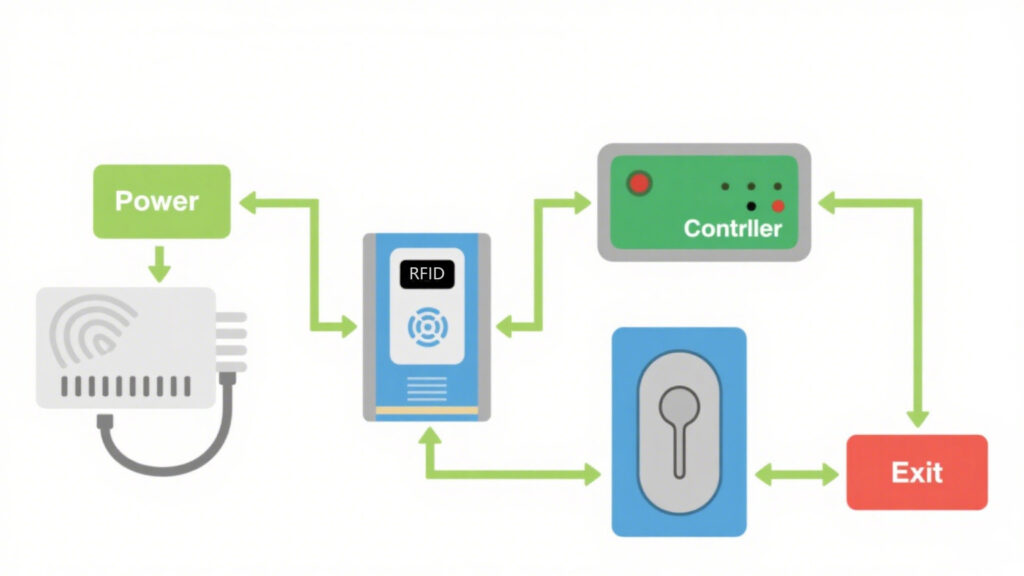
Proper card reader system installation is the foundation of a reliable access control system. Whether you’re securing a small office, a warehouse, or a campus gate, the process comes down to four things: the right components, correct wiring, stable power, and careful testing. In this guide, we walk through a complete card reader system installation from start to finish — including how to wire a card reader using the Wiegand protocol — in language even first-time installers can follow. If you’re new to the hardware itself, start with our overview of what an RFID card reader is.Why Install Your Own Access Control System?Access control systems aren’t that complicated. It’s basically a card reader + a door lock + a power supply + some wires. Connect them correctly, and it works. Many people think you must hire a professional, but as long as you understand a few basic concepts, you can follow a wiring diagram and do it yourself.Doing your own card reader system installation also pays off long term: you know every wire in the wall, so future troubleshooting takes minutes instead of hours — and you save on contractor fees for every additional door you bring online. For a bigger-picture view of how card readers fit into a full security stack, see our guide to commercial door entry systems.What Materials Do You Need?Here are the key components you’ll need:Card Reader: Recognizes cards or PIN codes.Magnetic Lock (Maglock): The core of the door lock; locks when powered, unlocks when the power is cut.Exit Button: Press to unlock the door from the inside.Power Supply: Usually 12V/3A DC; stable output is crucial.Cables: Commonly CAT6, twisted pair, or specialized access control cables.Choosing the Right Card Reader Before You InstallA smooth card reader system installation starts with picking hardware that matches your door and environment. Check four things before you buy:Frequency and card type. 125 kHz, 13.56 MHz (Mifare), or UHF — the reader must match the cards your team will carry. Not sure how the technology behind them works? Our explainer on how an RFID card reader works covers the basics in plain language.Indoor vs. outdoor rating. Outdoor gates need weatherproof (IP65+) readers; office doors don’t.Output protocol. Most access control readers use Wiegand; some newer ones use RS485 or OSDP. Match the protocol to your controller.Read range and mounting height. For gates and vehicle lanes rather than standard doors, a multi-frequency RFID gate reader is usually the better fit.If you’re unsure which model suits your project, our walkthrough on how to choose the right RFID reader for your project breaks the decision down step by step.Card Reader System Installation: The Process at a GlanceEvery successful card reader system installation follows the same five stages:Plan — confirm door type, reader position (typically 120–140 cm from the floor), and cable routes.Select components — reader, controller, lock, power supply, exit button (see the checklist above).Run cables first — pull all wiring through conduits before mounting any device.Wire and mount — connect power, Wiegand data lines, lock relay, and exit button, then fix the reader to the wall.Test and commission — verify voltage, enroll test cards, and confirm every trigger works before closing up.Before you start, make sure your parts list is complete: our pre-build checklist for an RFID access control kit covers what actually matters.Basic Wiring LogicThe wiring logic is actually simple. For the power lines, red goes to positive and black to ground—just make sure the 12V supply is stable.For data transmission, most readers use the Wiegand protocol: green wire is Data0, white wire is Data1, connect them to the corresponding terminals on the controller.The door lock is controlled via the controller’s relay. Common connections are COM and NO/NC. Normally locked, the relay triggers when a card is swiped, cuts the power, and the door opens.The exit button is simpler: connect it to COM and NO. Pressing it sends a signal to unlock.Want to understand what’s actually traveling down those green and white wires? When a card is tapped, the reader converts the card’s chip data into Wiegand pulses that the controller decodes into a card ID. Our article on how RFID card readers work explains the signal chain from tap to unlock — useful context if you ever need to debug a silent reader. And if your door hardware is a maglock, our breakdown of how RFID door locks work shows why correct relay wiring matters so much.Tips During InstallationA few details can save a lot of trouble:Wire first, then install devices. Using conduits helps prevent cable wear over time.Tighten all connections; poor contact is one of the most common issues.Before powering on, use a multimeter to check voltage.If your reader has LEDs or a buzzer, make sure to connect the control lines so you can see feedback when testing—it makes troubleshooting easier.One more tip that applies to any card reader system installation: keep low-voltage data lines (Wiegand) separated from AC mains and high-current lock power where possible. Running them in the same conduit invites electrical noise that can cause random misreads — one of the most overlooked RFID reader installation mistakes we see in the field.How to Test Power and FunctionsWhen debugging, don’t connect everything at once:Test the card reader first. Swipe a card to see if the controller responds.Connect the maglock and confirm it locks and unlocks properly.Add the exit button.If swiping doesn’t work, check the power first, then make sure the data wires aren’t reversed. Green and white wires for Wiegand are commonly mixed up.Testing isn’t just about the door opening — it’s about how it opens. Measure the unlock delay, test with multiple cards, and check behavior when power is interrupted (fail-safe vs. fail-secure). For a deeper pre-deployment checklist, see our guide on what to check before real deployment.Common Pitfalls to AvoidUsing the wrong cable. Thin power wires can overheat or burn when current is high.Wrong voltage. Maglocks usually require 12V; supplying 24V can damage them.Reversed data wires (Data0/Data1). If swapped, card swipes won’t work.Add a fourth: skipping the site survey. Installing a reader next to metal door frames, large displays, or interference sources can degrade read reliability even when the wiring is perfect. We documented seven similar issues in 7 RFID reader installation mistakes that ruin performance — most of them apply directly to card reader system installation projects.Wired vs. Wireless Card Reader SystemsWhen planning a card reader system installation, you’ll also face a topology choice:Wired systems (what this guide covers) are the standard for door-level access control: stable power, reliable Wiegand data, and no batteries to manage. Recommended for offices, server rooms, and any door with existing conduit.Wireless / networked systems suit gates, parking lanes, and multi-building campuses where cabling is impractical. They trade wiring simplicity for network configuration and stronger security hardening requirements.If your deployment spans multiple doors, gates, or sites, our integration guide for RFID access control for developers and OEMs explains how to architect the system at scale, and our office-focused tutorial covers using RFID for contactless access control in offices.Card Reader System Installation FAQHow long does a card reader system installation take?A single standard door with existing wiring typically takes 1–2 hours; a new door with no conduit may take half a day including cable runs.What voltage does a card reader need?Most access control card readers run on 12V DC (some accept 12–24V). The maglock and controller usually share the same 12V/3A power supply — always check the label before wiring.Can I install a card reader system myself?Yes. A card reader system installation at door level only involves low-voltage DC wiring and four connection groups: power, Wiegand data, lock relay, and exit button. Follow the wiring diagram and test step by step, as described above.What cable should I use for card reader wiring?CAT6 or shielded twisted-pair works well for Wiegand runs up to ~150 m; use thicker gauge (18 AWG or lower) for the 12V power line to avoid voltage drop.Do I need a special card reader for outdoor gates?Yes — choose an IP65+ weatherproof reader, and for vehicle or pedestrian gate scenarios consider a dedicated gate reader such as Cykeo’s multi-frequency RFID gate readers.ConclusionAccess control isn’t rocket science. Remember three things: stable power, correct data wiring, and that the relay controls the unlocking timing. The rest is wiring and testing. With patience, you can install it yourself, save on installation costs, and fully understand how your access control system works.