Articles

Articles & Insights

Discover, learn, and grow with stories from our ecosystem members.

search
Openable Wardrobe Designs: A Perfect Blend of Style, Storage and Functionality Home & Gardening
Nov 02, 2026 • visibility 8 • 7 min read

Openable Wardrobe Designs: A Perfect Blend of Style, Storage and Functionality

A well-designed wardrobe plays an important role in keeping your bedroom organised while enhancing its overall appearance. Whether you have a spacious master bedroom or a compact apartment, choosing the right wardrobe design can make a significant difference. Among the various wardrobe styles available, openable wardrobes remain a popular choice because of their practical design, easy accessibility and versatility.Openable wardrobes are designed with hinged doors that swing outward, providing complete access to the storage space inside. They are suitable for different bedroom layouts and can be customised according to individual storage requirements, interior themes and available space.Why Choose an Openable Wardrobe for Your Bedroom?An openable wardrobe offers several advantages that make it a practical storage solution for modern homes.1. Easy AccessibilityOne of the biggest advantages of an openable wardrobe is that it provides easy access to the entire storage area. Unlike sliding wardrobes, both doors can be opened simultaneously, allowing you to view and organise your belongings conveniently.2. Customisable Storage OptionsOpenable wardrobes can be designed with multiple shelves, drawers, hanging sections and compartments. You can customise the internal layout according to your requirements, making it easier to store clothes, accessories, footwear and other essentials.3. Variety of Design OptionsFrom minimalistic finishes to elegant wooden textures, openable wardrobes are available in numerous designs. You can select colours, materials, handles and finishes that complement your bedroom interiors.4. Convenient MaintenanceSince openable wardrobes provide complete access to their interiors, cleaning and maintaining the storage sections becomes easier. You can conveniently organise your belongings and keep every compartment accessible.Different Openable Wardrobe Designs for Modern InteriorsChoosing the right wardrobe design depends on your bedroom size, storage requirements and interior preferences. Here are some popular options to consider.1. Floor-to-Ceiling Openable WardrobeFloor-to-ceiling wardrobes maximise vertical storage space and provide a seamless appearance. They are ideal for bedrooms where additional storage is required without occupying extra floor space.2. Wooden Finish Openable WardrobeWooden finish wardrobes bring warmth and elegance to bedroom interiors. They complement both contemporary and traditional home designs and are available in different shades and textures.3. Handleless Openable WardrobeFor homeowners who prefer a clean and minimalistic look, handleless wardrobes are an excellent option. Their simple appearance creates a sophisticated finish while maintaining everyday functionality.4. Openable Wardrobe with DrawersWardrobes with integrated drawers offer additional storage for smaller items such as accessories, documents and everyday essentials. Combining drawers with hanging sections and shelves helps maintain an organised bedroom.How to Choose the Right Wardrobe for Your HomeBefore selecting a wardrobe, consider the following factors:Bedroom Space: Measure the available area and ensure sufficient clearance for the doors to open comfortably.Storage Requirements: Consider the number of shelves, drawers and hanging sections you need.Material Selection: Choose durable materials that suit your budget and interior preferences.Colour and Finish: Select finishes that complement your bedroom furniture and overall décor.Internal Layout: Plan compartments according to your clothing, accessories and storage habits.Proper planning ensures that your wardrobe looks attractive while serving your everyday storage needs.Find the Right Modular Wardrobe for Your Bedroom in MumbaiHomeowners looking to upgrade their bedroom interiors can explore customised wardrobe solutions that combine functionality with modern aesthetics. Selecting Modular Wardrobe In Mumbai allows you to explore designs suited to different room sizes, interior styles and storage preferences.From compact bedroom wardrobes to spacious floor-to-ceiling installations, modular solutions offer flexibility in terms of materials, finishes, layouts and internal configurations. Working with experienced wardrobe designers can also help you make better use of available space while maintaining a cohesive interior design.ConclusionAn openable wardrobe is a practical and stylish addition to any modern bedroom. With easy accessibility, customisable storage and a wide range of design possibilities, it offers a convenient way to keep your belongings organised.Whether you prefer a minimalistic design, a classic wooden finish or a customised storage arrangement, choosing the right wardrobe can enhance both the functionality and appearance of your bedroom. Consider your available space, storage needs and interior preferences before making the final decision.

Veneto Modular
Read arrow_forward
How Does UNIQLO RFID Work? Tech & Innovation
Nov 02, 2026 • visibility 12 • 28 min read

How Does UNIQLO RFID Work?

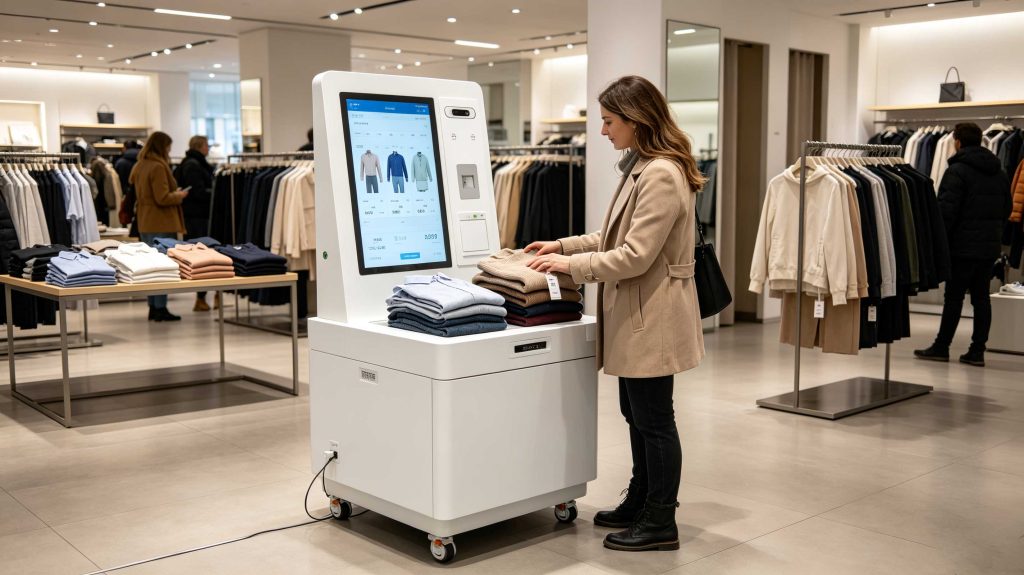
UNIQLO uses RFID tags attached to individual merchandise so readers can identify multiple garments electronically during warehouse handling, store inventory, and checkout. The approach connects item identification with automated retail processes, reducing repetitive scanning and giving staff faster access to product-level inventory information. Fast Retailing has publicly stated that RFID tags are attached to UNIQLO, GU, and other Group-brand products worldwide.How UNIQLO Uses RFID on ClothingUNIQLO’s RFID implementation is more than an electronic replacement for the barcode.The important point is where the tag travels.A small RFID inlay is incorporated into or attached to the product label. The garment then carries a machine-readable identity through different stages of its commercial life:Factory → Distribution Center → Store → Sales Floor → Checkout → Inventory SystemFast Retailing reported that RFID had been applied to all UNIQLO and GU products and other Group-brand products worldwide, with the technology improving store operating efficiency and supporting the introduction of self-checkout machines.That creates an interesting retail architecture.The same physical garment can be identified without requiring a worker to find and align a visible barcode each time the product needs to be recognized.UNIQLO RFID Technology in Apparel RetailRFID Tags Give Individual Garments an Electronic IdentityA conventional clothing label communicates information visually.An RFID tag adds another layer.The tag contains an RFID chip and antenna. When a compatible reader generates an RF field, the tag responds with its stored identifier. A reader can therefore recognize several tagged garments within its operating zone.For apparel, this is particularly useful because a store may handle large numbers of combinations:Product AttributeExampleStyleT-shirtSizeS / M / L / XLColorBlack / White / BlueLocationSales floor / StockroomStatusAvailable / Sold / ReturnedRFID IdentityIndividual electronic identifierThe result is not simply “there are 20 shirts.”A properly integrated system can determine which tagged items were observed.That difference becomes valuable when inventory accuracy matters.RFID in UNIQLO WarehousesFast Retailing’s Ariake warehouse has been one of the company’s most frequently cited examples of retail automation.The company described RFID-enabled merchandise moving through automated processes including stock receipt, sorting, picking, and inspection.That is a very different use of RFID from a single checkout station.At a warehouse checkpoint, several products may be moving together. Requiring an employee to scan every barcode individually would introduce friction into the flow.RFID allows the reader to identify multiple tagged products while they remain physically together.The warehouse application then decides what the observation means.For example:RFID detected → receiving area → shipment ID → inventory updateThe radio system provides the identification event.The warehouse software provides the business meaning.Why RFID Matters in a UNIQLO-Style StoreWalk into a large apparel store near closing time and the inventory problem becomes obvious.Garments are folded.Some are hanging.Some have just been returned to the sales floor.Others are in fitting rooms or waiting in the stockroom.A barcode-based count requires repeated visual alignment.RFID changes that physical interaction.A worker equipped with an RFID reader can move through a rack or stockroom and capture multiple tag identities within the reader’s effective field.That does not eliminate every inventory exception. It does, however, reduce the amount of manual product handling required to establish what is physically present.McKinsey’s retail RFID research reports demonstrated improvements of more than 25% in inventory accuracy, 10–15% reductions in inventory-related labor hours, and 1–3.5% increases in full-price sell-through across relevant RFID retail implementations. These are industry findings, not UNIQLO-specific performance figures.That distinction is important.UNIQLO’s own disclosures establish the deployment.Independent retail research helps explain why the architecture is commercially attractive.An RFID self-checkout station identifies several tagged garments at once, allowing customers to complete purchases with fewer manual scanning steps.RFID Self Checkout and Multi-Item ReadingWhy Batch Reading Changes the Checkout ExperienceA traditional barcode checkout generally requires the product to be presented to the scanner one at a time.RFID can take a different approach.If several tagged garments are placed inside a properly designed RFID reading zone, the system can attempt to identify them together.For the Cykeo-style RFID apparel self-checkout architecture described for this application, the reading platform is designed to identify at least 20 garments in one operation.That specification is application-specific and should not be interpreted as a universal RFID standard.The more important engineering requirement is range control.A checkout station should read the garments being purchased—not the clothing still sitting on the neighboring display table.Controlled Reading Is More Important Than Maximum Reading DistanceThis is one of the details that is often overlooked in retail RFID projects.A powerful reader is not automatically a better reader.At a checkout counter, excessive RF coverage can create unwanted reads from nearby products.Suppose a customer places six shirts on the counter.There are another forty garments on a rack two meters away.If the reading field is poorly controlled, those surrounding garments can potentially become part of the transaction.The solution is not simply reducing reader power.It can involve:Antenna designReading-zone geometryRF power adjustmentTag orientationShielding or absorbing materialsProduct placementReader configurationSoftware filteringTransaction confirmationThe physical design of the checkout surface therefore matters just as much as the reader electronics.How a UNIQLO-Style RFID Checkout Can WorkA simplified transaction looks like this:1. Customer places garments on the RFID station↓2. RFID reader activates the reading field↓3. Multiple garment tags respond↓4. Reader decodes individual tag identities↓5. Software associates tag IDs with product records↓6. Touchscreen displays the detected merchandise↓7. Customer confirms the purchase↓8. POS system processes payment↓9. Inventory status is updatedThe RFID reader does not determine the price by itself.The product database does.The reader provides the identity.That separation makes the system easier to integrate with existing retail software.UNIQLO RFID and Store AutomationFast Retailing has explicitly connected its RFID deployment with store efficiency and self-checkout. Its annual-report disclosure states that RFID tags were already attached to UNIQLO, GU, and other Group-brand products worldwide and that self-checkout machines were being introduced to further improve store efficiency.The company’s current scale makes this operational context significant. Fast Retailing reported 2,519 UNIQLO stores worldwide at the end of FY2025, including 794 in Japan and 1,725 internationally.That is a large physical network in which even small improvements in repetitive store processes can matter.RFID does not need to make every store completely autonomous.Removing one repetitive identification step from thousands of daily transactions can already be meaningful.What RFID Actually Solves for Apparel RetailThe strongest case for RFID is not simply faster checkout.It is the combination of several connected improvements:Faster item identificationBatch reading of garmentsMore efficient inventory countingBetter visibility of store stockReduced manual barcode scanningSupport for self-checkoutFaster receiving and sortingImproved inventory data for omnichannel operationsMcKinsey identifies inventory tracking, store operations, and customer experience as three major retail RFID use-case categories. Its research also notes that RFID can support contactless checkout and improve the accuracy of in-store inventory information used for omnichannel fulfillment.This is why the UNIQLO example is useful for understanding RFID.The technology is not isolated at the cash register.It becomes part of the store’s information infrastructure.Cykeo RFID Apparel Self-Checkout ArchitectureFor a Cykeo RFID clothing self-checkout platform, the hardware architecture can be viewed as five practical layers:LayerFunctionRFID TagsProvide individual garment identificationRFID ReaderGenerates RF field and captures tag responsesControlled AntennaDefines the intended checkout reading zone21.5-inch TouchscreenProvides customer interactionEthernet / Software InterfaceTransfers product and transaction informationThe 21.5-inch high-definition touchscreen provides a straightforward customer interface.The Ethernet connection allows the station to exchange information with the store’s backend system.The RFID reading platform handles the physical identification task.The software determines what happens next.This modular separation is useful when integrating an RFID self-checkout station into an existing POS environment rather than replacing the entire retail IT stack.Author’s Engineering PerspectiveWhen evaluating an RFID clothing self-checkout station, I would test one issue before discussing headline reading speed:Can the system reliably distinguish the customer’s purchase from nearby merchandise?That is where a retail prototype either becomes a usable product—or becomes a source of false transactions.In a real apparel store, garments are rarely arranged with laboratory precision. Customers move them. Employees restock racks. Folded items overlap. A shirt may be partially inside another garment. The neighboring display is only a short distance away.So the reading field has to be deliberately shaped.The best station is not necessarily the one that reads the greatest number of tags from the greatest distance.It is the one that reads the right products at the right moment.That principle is central to understanding how does uniqlo rfid work and to designing a reliable RFID self-checkout solution for modern apparel stores.Technical Architecture Behind a UNIQLO-Style RFID Self-CheckoutA UNIQLO-style RFID checkout is best understood as a controlled item-identification system, not simply a touchscreen with an RFID reader underneath.The hardware stack typically contains:ComponentRole in the Checkout ProcessRFID clothing tagStores the electronic product identityUHF RFID readerSends RF commands and receives tag responsesRFID Antenna / reading surfaceCreates the controlled identification zoneTouchscreenDisplays detected products and transaction informationPOS / backend systemMatches tag IDs with prices, SKUs, promotions, and inventoryNetwork interfaceTransfers transaction and product dataThe commercial logic is simple:Tag identity → Product database → Shopping cart → Payment → Inventory updateMcKinsey describes the modern retail RFID ecosystem in essentially the same architectural terms: tags hold product information, readers communicate with tags, antennas provide the RF interface, and supporting software processes the collected data.RFID clothing tags and batch identificationWhy Apparel Is a Strong RFID ApplicationClothing is one of the easier retail categories in which to deploy UHF RFID.Most garments are not electrically conductive, and RFID labels can be incorporated into existing product labels without changing the appearance of the merchandise.The customer does not need to see the RFID antenna.They simply place the clothes on the checkout station.The system reads the tags.This becomes particularly valuable when a customer buys several pieces at once.The reader can attempt to identify the entire group instead of forcing the customer or cashier to present every item individually.McKinsey reports that RFID-based retail systems can provide more than 25% improvement in inventory accuracy and 10–15% reduction in inventory-related labor hours in demonstrated implementations.Those figures are industry-level results, not a claimed UNIQLO performance metric.That distinction should remain clear when discussing RFID ROI.Several RFID-tagged garments are placed together on a controlled reading surface for rapid item identification.RFID Checkout Range ControlThis is where the engineering becomes less visible to the shopper.A self-checkout station needs a small and predictable reading area.If the reader sees merchandise several meters away, that is usually a defect rather than an advantage.Consider a store layout:Checkout station1 m — adjacent display2 m — clothing rack3 m — fitting-room entranceA customer places five shirts on the checkout surface.The system should identify those five shirts.It should not accidentally add products sitting on the neighboring rack.The Cykeo RFID apparel self-checkout concept therefore emphasizes range control as part of the station design. The objective is to reduce stray reads from merchandise that has not been presented for payment.This requires coordinated engineering across:Antenna geometryReader output powerReading-surface constructionTag orientationProduct placementRF shieldingSoftware filteringCheckout confirmation logicThe reader alone cannot solve the problem.UNIQLO RFID Self-Checkout: What the Customer Actually ExperiencesFrom the customer’s perspective, the process can be extremely short.Step 1 — Place the garmentsThe shopper puts the selected clothing into the designated RFID basket or checkout area.Step 2 — Automatic identificationThe RFID system reads the tags without requiring the shopper to align individual barcodes.Step 3 — Product list appearsThe touchscreen displays the detected products and quantities.Step 4 — Customer confirmsThe shopper checks the displayed items and proceeds with payment.Step 5 — Transaction is completedThe POS system records the purchase and updates the corresponding inventory information.Fast Retailing has publicly documented the connection between RFID tagging and self-checkout. Its annual report states that RFID tags were attached to UNIQLO, GU, and other Group-brand products worldwide and that self-checkout was being introduced to further improve store efficiency.More recent industry research provides another useful data point: McKinsey’s State of Fashion 2025 reported that UNIQLO’s RFID-enabled self-checkout was being used for 70–90% of transactions across markets and was credited with cutting transaction times in half.That is a particularly useful example of how RFID moves beyond inventory counting and becomes part of the customer-facing transaction.RFID Does Not Replace the POS SystemOne common misunderstanding is that the RFID reader somehow knows the selling price.It does not.The tag supplies an identifier.For example:EPC → Product ID 483920The retail database can then associate that identifier with:Product nameSKUSizeColorPriceDiscountTax categoryInventory statusThe RFID reader is therefore an identification device, while the POS remains the commercial transaction engine.This separation is important when integrating Cykeo hardware into an existing apparel retailer’s software environment.Cykeo RFID Self-Checkout Product ArchitectureFor a Cykeo RFID clothing self-checkout platform, the architecture can be organized into four functional layers.Layer 1 — RFID IdentificationThe UHF RFID reader detects multiple EPC C1G2 / ISO 18000-6C tags positioned inside the reading zone.The system is designed for batch identification rather than one-item-at-a-time scanning.Layer 2 — Controlled Reading ZoneThe antenna and enclosure determine where tags can be detected.This is particularly important in open retail environments.The reading zone needs to be wide enough for a customer’s clothing pile but narrow enough to reduce accidental reads from surrounding merchandise.Layer 3 — Customer InterfaceA 21.5-inch high-definition touchscreen provides the main interaction surface.The interface can display:Detected productsQuantitiesProduct informationTransaction amountPayment instructionsConfirmation messagesThe objective is not to reproduce a conventional cashier screen.It is to reduce the number of physical actions required from the shopper.Layer 4 — Store Network IntegrationThe station can use Ethernet connectivity to exchange information with the store’s backend system.This allows the RFID station to become part of a larger retail architecture rather than functioning as an isolated terminal.A typical data path is:RFID Station → Ethernet → Retail Middleware → POS / ERP → Inventory DatabaseRFID apparel inventory and omnichannel retailThe real value of RFID appears when checkout data and inventory data remain connected.Imagine a customer purchases a medium-sized black jacket.The transaction does more than record revenue.The system can associate the RFID identity with the completed sale and remove that unit from available inventory.Now the store has a more current view of what remains.This matters for:Click-and-collectShip-from-storeStore replenishmentOnline stock availabilityReturnsCycle countingStock transferLoss preventionMcKinsey identifies accurate product-location information as a foundation for omnichannel fulfillment and notes that RFID can provide item-level visibility across stores and supply chains.UNIQLO RFID and Warehouse AutomationThe store checkout is only one visible part of the architecture.Fast Retailing reported that its Ariake warehouse used RFID tags on products to automate stock receipt, sorting, picking, and inspection. The company also described around-the-clock operation designed to reduce delivery delays associated with labor shortages during peak periods.That makes the UNIQLO example particularly useful.The same basic product identity can support different operational tasks:LocationRFID RoleFactoryProduct identificationDistribution centerReceiving and sortingWarehousePicking and inspectionStore back roomInventory checkingSales floorStock visibilityCheckoutBatch product identificationReturns deskProduct verificationThe technology is the same.The business event changes.UNIQLO RFID vs. Conventional Barcode CheckoutCapabilityBarcodeRFIDDirect line of sightUsually requiredNot normally requiredOne-at-a-time scanningCommonMultiple tags can be readVisual alignmentRequiredNot necessarilyBatch apparel identificationLimitedStrong use caseSelf-checkout integrationPossibleParticularly suitableItem-level identificationYesYesReading zone controlScanner fieldRF field / antenna designRFID does not make barcodes obsolete.Barcodes remain inexpensive, familiar, and useful for many retail tasks.The advantage of RFID becomes clearer when many physical items must be identified quickly without individually presenting each one to a scanner.FAQ: How Does UNIQLO RFID Work?1. Does UNIQLO put RFID tags on its clothes?Yes. Fast Retailing has publicly stated that RFID tags are attached to UNIQLO, GU, and other Group-brand products worldwide.2. Can UNIQLO RFID read several clothes at once?Yes. UHF RFID supports multi-tag identification, allowing several tagged garments within a controlled reading area to be identified without scanning each barcode individually.3. Does UNIQLO RFID improve inventory accuracy?RFID can substantially improve retail inventory accuracy. McKinsey reports demonstrated improvements of more than 25% in relevant retail implementations, although this figure should not be attributed directly to UNIQLO.4. Does UNIQLO use RFID for self-checkout?Yes. Fast Retailing has connected its RFID deployment with self-checkout, and recent McKinsey reporting describes RFID-enabled UNIQLO self-checkout being used across markets.5. Can RFID checkout read clothes outside the checkout area?A well-designed system should control the reading zone to minimize unintended reads. Antenna design, RF power, enclosure construction, tag position, and software filtering all contribute to this control.6. Does RFID replace UNIQLO’s POS system?No. RFID identifies products. The POS and retail software handle pricing, promotions, payment, inventory transactions, and other business logic.7. Can Cykeo build a similar RFID clothing checkout system?Cykeo’s RFID technology can support this type of architecture through UHF RFID readers, controlled reading zones, touchscreen interaction, Ethernet communication, and software integration. The exact reader, antenna, enclosure, and application configuration should be selected according to the store layout and transaction requirements.

How Grocery & FMCG Brands Use Web Data for Pricing, Assortment and Market Intelligence Tech & Innovation
Nov 02, 2026 • visibility 9 • 27 min read

How Grocery & FMCG Brands Use Web Data for Pricing, Assortment and Market Intelligence

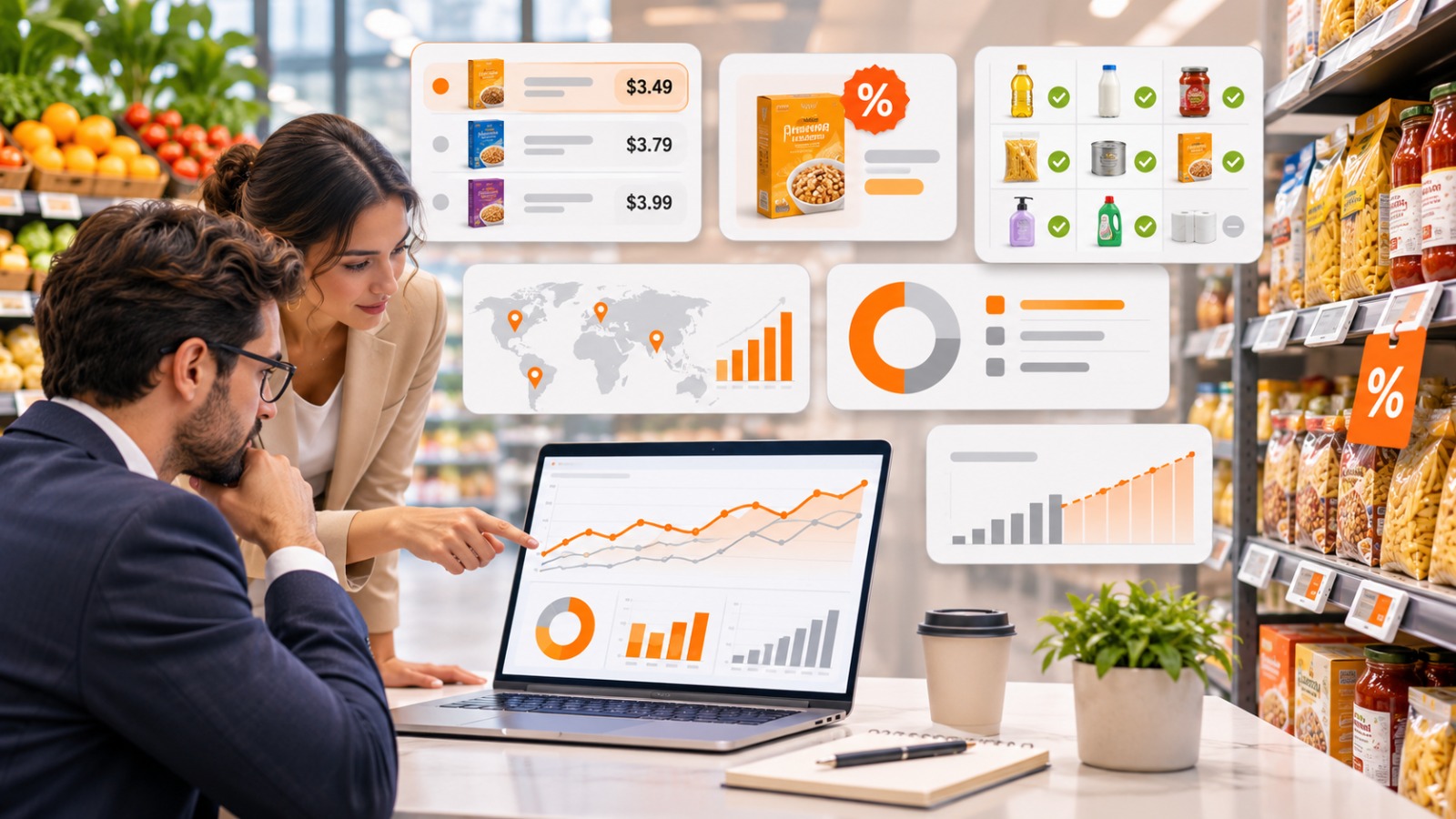
How Grocery & FMCG Brands Use Web Data for Pricing, Assortment and Market IntelligenceA practical guide to turning public digital shelf signals into structured competitive intelligence.Grocery and FMCG teams rarely make important decisions from one source of information. Internal sales, shipments, syndicated market data, retailer reports, and customer research each answer part of the question. What they often do not show clearly is what is changing right now on the external digital shelf: competitor prices, promotions, pack sizes, availability, assortment, product content, ratings, delivery options, and local retailer activity.That external view matters because online grocery has become part of the shopping journey even when the final transaction happens in a physical store. FMI’s U.S. Grocery Shopper Trends 2026 reports that 77% of grocery shoppers are digitally engaged before shopping and 71% are digitally engaged while shopping, including retailer apps, websites, and web search. For brands and retailers, that means public online retail environments are not a side channel; they are a live source of market signals.Industry reference: FMI U.S. Grocery Shopper Trends 2026Core ideaWeb data is most valuable when it is converted from isolated observations into comparable, historical signals that answer a commercial question.What “Web Data” Means for Grocery and FMCG TeamsIn this context, web data means structured observations collected from public retailer websites, marketplaces, grocery apps, quick-commerce platforms, brand stores, search results, and other relevant digital sources. The objective is not to collect pages for their own sake. It is to capture fields that describe how products and competitors appear in the market.Signal AreaExamples of FieldsPricingRegular price, sale price, unit price, loyalty price, shipping or delivery feePromotionsDiscount %, multibuy, BOGO, coupons, promotion typeAssortmentNew products, delistings, variants, pack sizes, category coverageAvailabilityIn stock, out of stock, pickup, delivery, substitutionDigital shelfSearch rank, sponsored status, content completeness, ratings, reviewsLocationStore ID, ZIP/postcode, city, delivery zone, dark storeProduct contentTitle, brand, images, attributes, nutrition, dietary informationThe strategic value comes from combining these fields across time, retailers, products, and locations rather than reviewing one page at a time.Why Internal and Syndicated Data Alone Can Leave Blind SpotsInternal systems tell a company what it sold, shipped, stocked, or promoted. Syndicated datasets can provide powerful market context. But commercial teams also need a current view of how competitors and retailers are behaving in the public market. That is where external web data adds a different layer of intelligence.Internal sales data can show a decline, while external shelf data may reveal a competitor promotion or availability advantage occurring at the same time.Category reports can show market share movement, while retailer-level assortment data can reveal which new products, variants, or pack sizes entered the shelf first.A national pricing view can hide store-level differences that matter in local trade areas.A weekly report can miss a short promotion, temporary stockout, or quick-commerce price change that lasted only a few hours or days.The goal is not to replace internal or syndicated data. It is to add an outside-in view that helps explain what the market looked like when performance changed.1. Pricing Intelligence: Understand Position, Not Just PricePrice monitoring becomes more useful when teams move beyond “our price versus competitor price” and preserve the context behind the comparison. Grocery pricing can vary by retailer, store, loyalty state, pack size, promotion, and location. A valid comparison therefore depends on consistent product matching and normalization.For recurring competitive tracking, a structured price monitoring workflow can preserve price history, promotions, availability, and comparable product context.QuestionUseful Web SignalAre we priced above or below key competitors?Comparable shelf and unit pricesIs the gap temporary or structural?Historical price seriesIs the competitor truly cheaper?Pack-size and unit-price normalizationIs the lower price locally relevant?Store/ZIP-level observationsIs the price driven by a promotion?Promotion type and regular priceFor FMCG brands, the same data can support price-pack architecture reviews. A competitor may hold the same shelf price while reducing pack size, or introduce a larger value pack that changes the unit economics of the category. Looking only at headline price misses that movement.2. Promotion Intelligence: Track the Mechanic Behind the DiscountPromotions should be treated as structured market events. A straight markdown, a multibuy, a loyalty price, and a digital coupon may all reduce the effective shopper price, but they do so in different ways and may target different customer groups.Regular price and promotional priceDiscount percentage or amountPromotion mechanicObserved start and end datesLoyalty or membership requirementCoupon or multibuy requirementLocation or retailer coverageHistorical promotion data can help teams understand cadence: which competitors promote most often, how long offers last, whether a category is becoming more promotional, and whether a brand is facing pressure in specific retailers rather than across the whole market.3. Assortment Intelligence: See Where the Shelf Is Expanding or ContractingAssortment is one of the most important areas where external web data adds context. Online retailer catalogs can reveal which products are listed, which variants disappear, how many pack sizes a competitor carries, where private label is expanding, and which categories are receiving new launches.Assortment SignalWhat It Can IndicateNew SKU appearsLaunch, test, or category expansionSKU disappearsDelisting, temporary removal, or availability issueNew pack sizePrice-pack architecture changePrivate-label growthRetailer investment in owned brandsMore variantsBrand or category expansionCategory coverage changesShift in retailer or competitor prioritiesOnline assortment analysis can track category and retailer assortment changes across digital points of sale. The value for brands is not simply knowing how many products exist, but seeing how the competitive shelf evolves over time.Product Matching Makes Cross-Retailer Intelligence PossiblePricing and assortment analysis break down when equivalent products are not matched correctly. Grocery titles are inconsistent across retailers, and the same product may be described differently by brand, size, count, flavor, or retailer taxonomy.A reliable product matching process can combine identifiers with normalized attributes such as brand, variant, pack count, weight, volume, and unit.For example, “Coke Zero 12pk Cans” and “Coca-Cola Zero Sugar 12 x 12 oz” may refer to the same product. Conversely, a 12-pack and a 24-pack should not be treated as exact matches simply because the title and brand are similar.Why matching mattersBad product matching creates bad price comparisons, misleading unit economics, and distorted assortment analysis.4. Availability Intelligence: Add Stock Context to Every Market SignalAvailability changes the meaning of price, promotion, and assortment data. A competitor may advertise the lowest price but be unavailable in the shopper’s area. A brand may appear to lose assortment when the real problem is a temporary stockout. An online listing can also vary between delivery, pickup, and store-specific fulfillment states.In-stock versus out-of-stock statusStore or delivery-area availabilityPickup and delivery eligibilitySubstitution statusDuration of stockout eventsAvailability by retailer and locationFor category and supply teams, repeated availability observations can reveal whether an issue is isolated or persistent. For pricing teams, they prevent the system from treating an unavailable offer as an equally strong competitive alternative.5. Digital Shelf Intelligence: Measure How Products Are Seen, Not Only SoldThe digital shelf extends beyond price and availability. FMCG teams increasingly monitor search visibility, sponsored placements, product content, ratings, reviews, and retailer-specific content compliance because these factors influence whether a shopper can find and evaluate the product online.For teams connecting external retail data with online visibility KPIs, digital shelf analytics can combine availability, search, content, pricing, ratings, and assortment signals.Digital Shelf SignalBusiness QuestionSearch positionCan shoppers find the product for priority queries?Sponsored statusHow much paid visibility exists in the category?Content completenessAre retailer listings missing important attributes or assets?Ratings/reviewsAre shopper perceptions changing?AvailabilityIs the product actually purchasable where it is visible?This matters particularly in grocery because shopper journeys move between retailer apps, websites, search, and physical stores. A brand can have strong offline distribution and still lose online discoverability or content quality on specific retailers.6. Quick-Commerce and Local Market IntelligenceQuick-commerce platforms make grocery intelligence even more local and dynamic. Product availability, price, promotions, delivery fees, and estimated delivery times can vary by dark store or service area. A national catalog view is often not enough.Local assortment by delivery zoneDark-store availabilityDelivery fees and thresholdsEstimated delivery timePrice and promotion differences by locationSponsored or featured placementNew product launches across local marketsThis data can help brands compare how consistently products are represented across neighborhoods and identify where a launch, promotion, or availability problem is concentrated.7. Market Intelligence: Turn Individual Shelf Signals Into a Competitive ViewMarket intelligence is the layer that connects all of these observations. A single price move may be noise. A price move combined with a new pack size, expanded assortment, stronger search visibility, and increased promotion frequency is a much stronger competitive signal.Signal CombinationPossible InterpretationPrice down + promotion upCompetitor is increasing promotional pressureNew SKUs + more category coverageCompetitor or retailer is expanding assortmentStockouts + search rank declineAvailability may be affecting digital visibilityNew pack size + lower unit priceValue architecture is changingPrivate-label expansion + lower price indexRetailer may be strengthening owned-brand positioningThe key is to avoid interpreting any one field in isolation. The strongest market-intelligence programs preserve multiple shelf signals and enough history to distinguish a temporary event from a strategic pattern.How Grocery Data Scraping Supports This Intelligence LayerBuilding this external view manually becomes difficult once the scope includes many retailers, SKUs, locations, and refresh cycles. The operational challenge is not only collecting the data but also matching products, normalizing pack sizes and units, preserving location context, validating records, and storing historical observations.Teams that need structured external retail datasets across many sources may use grocery data scraping to collect pricing, promotions, assortment, availability, product content, and local shelf signals on a recurring basis.Typical workflowRetailer & grocery sources → Collection → Product matching → Normalization → Validation → Historical storage → Alerts / BI / market analysisThe collection method should be designed around the business decision. A pricing team may need frequent store-level price and promotion updates. A category team may care more about weekly assortment change. A market-research team may need broad historical coverage with more fields but lower refresh frequency.For a deeper look at reliable recurring collection, see KVETOIQ’s guide to building a web scraping data pipeline for structured validation, history, monitoring, and delivery.A Practical Grocery & FMCG Market-Intelligence DatasetA reusable external dataset should preserve enough structure to support multiple teams without forcing every downstream analyst to reconstruct the same context.Field GroupExample FieldsIdentityretailer, product_id, gtin, brand, product_name, categoryPackpack_count, size, size_unit, normalized_quantityPricingregular_price, sale_price, unit_price, currencyPromotionpromotion_type, discount, offer_textAvailabilitystock_status, pickup, deliveryLocationstore_id, ZIP/postcode, city, delivery_zoneDigital shelfsearch_position, sponsored, rating, review_countContenttitle, images, attributes, nutrition, dietary fieldsHistorycollected_at, source_url, job_idNot every program needs every field. The schema should be designed around the decisions the team plans to make, while keeping enough common identifiers to connect pricing, assortment, availability, and digital-shelf observations.Why Historical Web Data Is More Valuable Than SnapshotsA snapshot answers “what is true now?” History answers “what changed, how long did it last, and is it becoming a pattern?” That difference is fundamental for market intelligence.SnapshotHistorical View$4.99 today$5.49 → $4.99 → $4.79 over three weeksOut of stockOut of stock for 4 of the last 7 days120 listed SKUsAssortment grew from 98 to 120 SKUsRank #8Rank fell from #3 to #8 after stock issuesHistory makes it possible to calculate promotion frequency, duration of stockouts, new-product velocity, assortment changes, price indices, and category movement instead of relying on anecdotes.Different Teams Need Different Views of the Same Web DataTeamTypical QuestionsPricing / Revenue GrowthWhere are we above or below the market? How are promotions changing?Category ManagementWhich products, packs, and private labels are gaining shelf presence?Ecommerce / Digital ShelfAre products visible, available, and content-complete?Trade MarketingWhere are retailer promotions or placements changing?Insights / StrategyWhich competitive patterns are emerging across retailers and markets?Supply / OperationsWhere are recurring availability gaps appearing?This is why a shared external data layer can be more useful than separate manual trackers created by each function. The same validated observations can support multiple commercial questions when product identity, location, and history are preserved.From Web Signal to Business DecisionObserved SignalQuestion to InvestigatePotential OwnerCompetitor price dropsPromotion or new price position?Pricing / categoryCompetitor launches new packIs value architecture changing?Category / brandPrivate-label assortment expandsIs retailer strategy shifting?Category / strategyRepeated stockoutsSupply issue or regional coverage gap?Supply / ecommerceSearch visibility fallsAvailability, content, or competitive pressure?Ecommerce / digital shelfRatings deteriorateProduct or customer-experience issue?Brand / CXThe signal should trigger investigation, not an automatic reaction. External web data is strongest when combined with internal sales, margin, inventory, shopper, and category context.Common Mistakes When Using Web Data for FMCG IntelligenceCollecting data without a decision framework: A large dataset can become expensive noise if teams do not know which business questions it must answer.Comparing unmatched products: Incorrect SKU or pack matching produces misleading pricing and assortment conclusions.Ignoring store and location context: National averages can hide the local shelf a shopper actually sees.Flattening promotions into one price: Different mechanics have different effective values and eligibility conditions.Overwriting historical observations: Without history, teams cannot measure duration, frequency, or change.Using one refresh frequency for everything: Price, stock, assortment, reviews, and content change at different speeds.Treating web data as the final answer: External observations should complement internal commercial and shopper data, not replace them.How to Start an External Grocery & FMCG Data ProgramDefine the decision: pricing, assortment, availability, digital shelf, market research, or a specific combination.Prioritize the retailers, apps, markets, and locations that influence the decision.Define the entities and fields required for analysis.Establish product-matching and normalization rules before scaling collection.Choose refresh frequency by signal instead of defaulting every field to real time.Preserve timestamps and history so changes can be distinguished from snapshots.Create quality checks for coverage, missing fields, duplicates, and anomalous values.Route the resulting dataset into the BI, warehouse, alerting, or analytics workflow the business already uses.A focused pilot with a limited number of retailers, categories, and locations is usually the best way to validate the data model before expanding coverage.Frequently Asked QuestionsWhat is grocery data scraping?Grocery data scraping is the recurring collection of structured information from public grocery and retail sources, such as product details, prices, promotions, availability, pack sizes, ratings, assortment, and location-level information. The most useful implementations also normalize and validate the records so they can be compared across retailers and over time.How do FMCG brands use web data?FMCG brands can use web data for competitor pricing, promotion tracking, assortment analysis, digital shelf visibility, availability monitoring, product-content audits, quick-commerce intelligence, private-label analysis, and broader market research. The value depends on matching external observations to the business decisions the team needs to make.How does web data support assortment analysis?Recurring retailer catalog data can show new listings, removed products, pack-size changes, variant growth, private-label expansion, and category coverage. Historical observations make it possible to distinguish a temporary listing issue from a sustained assortment change.Why is product matching important in grocery data?The same grocery item can appear under different retailer titles, while similar titles may refer to different pack sizes or variants. Matching identifiers and normalized attributes helps ensure that price and assortment comparisons refer to the correct products.Can web data be collected at store or ZIP-code level?Yes, where the source exposes location-specific information and collection is technically feasible. Local context can be important because price, stock, assortment, delivery, and promotion behavior may vary by store or service area.How often should grocery web data be refreshed?The right cadence depends on the signal. High-priority pricing and availability data may need frequent updates, while assortment, reviews, or content may be monitored daily or weekly. Refresh frequency should reflect how quickly the signal changes and how quickly the business can act.Final TakeawayGrocery and FMCG web data becomes strategically useful when it is treated as a structured market-observation layer rather than a collection of scraped pages. Price, promotion, assortment, availability, content, ratings, local context, and history each describe a different part of the competitive shelf. Combined, they can help explain why market conditions are changing and where teams should investigate further.The strongest programs begin with a business decision, define the external signals needed to support it, and build enough product, location, and historical context to make those signals comparable. That approach turns web data from a technical collection exercise into a practical input for pricing, category, ecommerce, and market-intelligence teams.

Pradip Valand
Read arrow_forward
Modern Residential Communities Offering Lifestyle Convenience Home & Gardening
Nov 02, 2026 • visibility 14 • 6 min read

Modern Residential Communities Offering Lifestyle Convenience

Modern residential communities are designed to create comfortable, convenient, and enjoyable living experiences by combining thoughtful architecture with practical everyday facilities. These communities focus on providing residents with a balanced lifestyle where comfort, accessibility, and relaxation come together naturally. Contemporary residential developments often feature attractive building designs, spacious apartments, landscaped surroundings, and carefully planned shared spaces that enhance daily living. Well-designed homes provide functional interiors, comfortable bedrooms, inviting living areas, and modern kitchens that support different household needs. Natural lighting, proper ventilation, and efficient space utilization also contribute to a pleasant indoor environment. Beyond individual homes, residential communities offer shared facilities that encourage recreation, wellness, and social interaction. Landscaped gardens, walking paths, fitness areas, swimming pools, and comfortable seating spaces provide opportunities for residents to enjoy their free time. These thoughtful features help create an environment where individuals and families can experience convenience while enjoying peaceful surroundings. With a strong focus on quality, functionality, and visual appeal, modern residential communities offer an attractive approach to contemporary home living.Lifestyle convenience becomes an important advantage when residential developments bring essential amenities and recreational facilities within easy reach. A thoughtfully planned community allows residents to manage their daily routines comfortably while enjoying opportunities for relaxation and personal activities. Developments such as one chuan grove highlight the appeal of contemporary residential living through the idea of combining comfortable homes with convenient lifestyle features. Spacious common areas, landscaped outdoor environments, fitness facilities, and welcoming recreational spaces can make every day experiences more enjoyable. Families benefit from environments that provide room for children to play, adults to relax, and everyone to spend quality time together. Dedicated fitness areas encourage regular physical activity, while gardens and walking paths offer refreshing spaces for peaceful breaks. Community gathering areas also create opportunities for neighbours to connect and develop friendly relationships. Practical features such as secure access, organized parking, efficient building layouts, and well maintained shared facilities further improve everyday convenience. When these elements are thoughtfully integrated, residents can enjoy a comfortable routine without compromising their personal space or leisure time. Such developments demonstrate how residential planning can support modern expectations while creating a welcoming atmosphere for different lifestyles.Another important aspect of modern residential communities is the thoughtful arrangement of individual homes and shared facilities. Efficient interior layouts help residents make the most of available space while maintaining a sense of openness and comfort. A well designed home can include spacious living and dining areas, practical kitchen arrangements, comfortable bedrooms, and functional storage solutions. Reviewing a one chuan grove floor plan can help prospective residents understand how different spaces are organized and how the overall layout supports everyday activities. Natural light, ventilation, privacy, and convenient movement between rooms are valuable considerations when evaluating residential designs. Flexible spaces can also accommodate changing household requirements, whether residents need a dedicated workspace, a study corner, or an additional relaxation area. Modern communities further enhance their appeal through attractive landscaping, organized pedestrian pathways, welcoming entrances, and thoughtfully maintained common facilities. These features contribute to an environment that feels both practical and inviting. By combining functional architecture, lifestyle amenities, and pleasant surroundings, contemporary residential communities provide a rewarding living experience. Their focus on comfort, convenience, and thoughtful design makes them appealing choices for individuals and families seeking a home that supports enjoyable everyday living and long term residential satisfaction.

Velnora Topicnest
Read arrow_forward
article
Health & Wellness
Nov 02, 2026 • visibility 6 • 6 min read

Tegretol Tablet: Uses, Benefits, and Important Precautions | Online Generic Medicine

Maintaining good health means understanding medical conditions and the treatments available to manage them. Some neurological conditions can affect everyday activities, so appropriate medical care is important. Tegretol Tablet is a prescription medicine used to manage specific conditions related to nerve activity and brain function.What Is Tegretol Tablet?Tegretol Tablet contains carbamazepine as its active ingredient. It belongs to a group of medicines called anticonvulsants. It works by reducing abnormal electrical activity in the brain and influencing the way certain nerve signals are transmitted.Doctors commonly prescribe carbamazepine for certain types of epilepsy, nerve-related facial pain, and some mood conditions.How Does Tegretol Work?Carbamazepine helps stabilise overactive nerve cells by affecting sodium channels involved in transmitting electrical signals.This action may help:Reduce certain types of seizures.Manage nerve-related facial pain.Help control manic episodes in people with bipolar I disorder.The medicine does not cure these conditions, but it can help manage symptoms when used as prescribed.Common Medical Uses of Tegretol1. Epilepsy ManagementTegretol is prescribed for certain types of epilepsy. It helps reduce abnormal electrical activity in the brain, which may lower the frequency of seizures.2. Nerve-Related Facial PainCarbamazepine is commonly used to manage trigeminal neuralgia, a condition that can cause sudden episodes of intense facial pain.3. Mood ManagementIn selected cases, carbamazepine may be prescribed to help manage manic episodes associated with bipolar I disorder.The appropriate treatment depends on the individual's diagnosis and medical history.Important Precautions Before Taking TegretolBefore starting treatment, discuss your medical history and current medicines with your healthcare professional.Follow the prescribed dosage: Take the medicine exactly as directed.Do not stop suddenly: Stopping carbamazepine without medical guidance may cause seizures to return or worsen.Discuss other medicines: Carbamazepine can interact with several prescription medicines, supplements, and hormonal contraceptives.Avoid alcohol: Alcohol may increase drowsiness and dizziness.Attend regular check-ups: Your doctor may recommend blood tests to monitor blood cell counts, liver function, and medicine levels.Discuss pregnancy plans: Carbamazepine may affect pregnancy, so seek medical advice if you are pregnant or planning a pregnancy.Possible Side EffectsSome people may experience dizziness, drowsiness, nausea, vomiting, dry mouth, or difficulty with coordination.Rarely, carbamazepine can cause serious skin reactions or changes in blood cell counts. Seek immediate medical attention if you develop a severe rash, blistering, peeling skin, mouth sores, unexplained fever, or unusual bruising.Avoid driving or operating machinery if you feel sleepy or dizzy after taking the medicine.Supporting Your Health During TreatmentAlong with following your prescribed treatment, a few everyday habits may support general well-being:Maintain a regular sleep schedule.Take your medicine consistently as prescribed.Avoid alcohol during treatment.Keep a record of any unusual symptoms.Attend scheduled medical appointments.Inform your doctor about any new medicines or supplements.Explore Tegretol Tablet InformationUnderstanding a medicine's ingredients, uses, and precautions can help you make informed healthcare decisions.Visit the Tegretol Tablet page at Online Generic Medicine to review the available product information.Final ThoughtsTegretol Tablet contains carbamazepine, a medicine used to manage certain neurological conditions and mood-related symptoms. Its use requires proper medical supervision, regular monitoring, and attention to possible side effects.Always follow your healthcare professional's instructions and avoid changing or stopping the treatment on your own. Online Generic Medicine.

Tannu Jackmup
Read arrow_forward