Articles

Articles & Insights

Discover, learn, and grow with stories from our ecosystem members.

search
article
Nov 26, 2026 • visibility 13 • 1 min read

The Essential Features to Look for in an Online Document Editor for Business Use

An online document editor helps businesses create, edit, and share documents efficiently from any location. When choosing a suitable tool, businesses should look for essential features such as real-time collaboration, cloud storage, automatic saving, and professional formatting options. Sharing permissions allow teams to control document access, while version history helps track changes and recover previous drafts. Comments and editing tools also make communication easier during document reviews. A reliable online document editor can reduce manual work, improve teamwork, and streamline business documentation. Sarv Workspace offers collaborative productivity tools that help businesses manage documents and support efficient digital workflows.

Sarv Workspace
Read arrow_forward
Elevate Your Everyday Look with Stylish and Functional Sling Bags
Nov 26, 2026 • visibility 9 • 6 min read

Elevate Your Everyday Look with Stylish and Functional Sling Bags

Fashion is about expressing your personality through thoughtfully chosen outfits and accessories. A stylish handbag can instantly transform an ordinary look into a sophisticated fashion statement. Among the many handbag styles available today, sling bags for women stand out for their contemporary appeal, versatility and everyday functionality. Whether you are heading to work, meeting friends or enjoying a weekend adventure, a well-designed sling bag can enhance your appearance while keeping your essentials organised.Add a Touch of Elegance to Everyday OutfitsSling bags are an effortless way to enhance your everyday wardrobe. Their compact silhouettes and refined designs complement both casual and formal outfits, making them a versatile fashion accessory.Classic shades such as black, beige, tan and brown offer timeless sophistication, while vibrant colours and textured finishes add personality to your look. Elegant metallic hardware, structured shapes and minimalist detailing can further enhance the overall appeal of your ensemble.Even a simple combination of jeans and a white shirt can look more polished when paired with a stylish sling bag.Enjoy Practical FunctionalityA fashionable handbag should be as functional as it is attractive. Many modern sling bags feature thoughtfully designed compartments, internal pockets and secure closures that help keep everyday belongings organised.From smartphones and wallets to keys, sunglasses and beauty essentials, a well-designed sling bag offers convenient storage without unnecessary bulk. Its compact construction makes it an excellent choice for women who prefer carrying only their daily necessities.Experience Hands-Free ConvenienceOne of the most attractive features of sling bags for women is their comfortable carrying style. Designed to be worn across the body or over the shoulder, they provide greater freedom of movement.Adjustable straps, available in many designs, allow you to customise the fit according to your preferences. Whether you are commuting, shopping or travelling, a sling bag offers everyday convenience while maintaining a fashionable appearance.Style Your Sling Bag for Different OccasionsThe versatility of sling bags makes them suitable for numerous occasions. For a professional look, pair a structured sling bag with tailored trousers, a crisp shirt and classic footwear.For casual outings, choose a relaxed crossbody bag that complements denim, sneakers or a comfortable dress. When attending evening gatherings, opt for a compact sling bag with sophisticated metallic accents to create an elegant appearance.A versatile sling bag can effortlessly transition between different settings, making it a valuable addition to your wardrobe.Choose a Sling Bag That Reflects Your PersonalityWhen selecting a sling bag, consider your lifestyle, preferred colours and storage requirements. Look for quality materials, comfortable straps, secure closures and practical compartments.Minimalist designs are ideal for understated elegance, while bold colours and distinctive textures allow you to express your individuality.Discover Stylish Sling Bags at Lino PerrosLino Perros brings together contemporary fashion and everyday functionality through its collection of stylish sling bags for women. Featuring refined silhouettes, sophisticated finishes and versatile designs, the collection complements the needs of modern, fashion-conscious women.ConclusionStylish and functional sling bags offer the perfect balance of elegance, comfort and convenience. Their timeless appeal and versatility make them an essential everyday accessory. Explore the Lino Perros sling bag collection and elevate your everyday look with effortless sophistication.

Nizoral Anti-Dandruff Shampoo: Uses, Benefits, Application, and Precautions Health & Wellness
Nov 26, 2026 • visibility 17 • 11 min read

Nizoral Anti-Dandruff Shampoo: Uses, Benefits, Application, and Precautions

Nizoral Anti-Dandruff Shampoo is a medicated shampoo used to manage dandruff and certain fungal-related scalp conditions. It contains ketoconazole, an antifungal ingredient that helps control the growth of fungi associated with these conditions.Nizoral Shampoo is available in different strengths and formulations depending on the country. This article explains its uses, how it works, application instructions, possible side effects, precautions, and frequently asked questions. It also covers the related product name Nizral Shampoo.What Is Nizoral Anti-Dandruff Shampoo?Nizoral Anti-Dandruff Shampoo is a medicated shampoo containing ketoconazole. Ketoconazole belongs to a group of medicines called antifungals. It works by controlling the growth of certain fungi on the skin and scalp.It is commonly used to manage dandruff and seborrhoeic dermatitis, which can cause flaky, itchy, and sometimes red skin on the scalp.The strength may vary by product. Always check the packaging to confirm whether the shampoo contains 1% or 2% ketoconazole.Uses of Nizoral ShampooNizoral Shampoo may be used for the following conditions, depending on its strength and approved product instructions:Dandruff: Helps reduce visible flakes and scalp itching associated with dandruff.Seborrhoeic Dermatitis: Helps manage a skin condition that can cause redness, scaling, and irritation on the scalp.Fungal Skin Conditions: Certain ketoconazole shampoo formulations are also used for conditions such as pityriasis versicolor, as directed by the product instructions.The exact approved uses depend on the shampoo's concentration and the country where it is marketed.How Does Nizoral Shampoo Work?Nizoral Shampoo contains ketoconazole, an antifungal ingredient. It works by interfering with the production of ergosterol, an important component of fungal cell membranes.This action helps control the growth of fungi, including Malassezia, which is associated with dandruff and seborrhoeic dermatitis.By reducing fungal growth, Nizoral Shampoo may help improve scalp flaking, itching, and scaling over time.How to Use Nizoral Anti-Dandruff ShampooUse the shampoo according to the instructions on its packaging or the directions provided for the specific formulation.Wet your hair and scalp thoroughly with water.Apply the required amount of Nizoral Shampoo to the affected scalp.Gently massage it into the scalp to create a lather.Leave it on for the time mentioned in the product instructions.Rinse your hair and scalp thoroughly with water.Follow the recommended frequency of use for the product strength.Avoid contact with the eyes. If the shampoo gets into your eyes, rinse them thoroughly with clean water.Possible Side Effects of Nizoral ShampooSome people may experience mild scalp or skin reactions while using Nizoral Shampoo.Common Side EffectsDryness of the scalpItchingBurning or stinging sensationRedness or irritationChanges in hair textureDry or oily hairLess Common Side EffectsSkin rashContact dermatitisIncreased scalp irritationChanges in hair colour, particularly in chemically treated or grey hairStop using the shampoo and seek medical advice if severe irritation, swelling, or an allergic reaction occurs.Precautions While Using Nizoral ShampooAvoid Contact With EyesNizoral Shampoo is intended for external use. Keep it away from the eyes and rinse thoroughly if accidental contact occurs.Check the IngredientsReview the product label before use, especially if you have a known allergy to ketoconazole or any other ingredient in the shampoo.Avoid Using More Than RecommendedUsing the shampoo more frequently than instructed may increase dryness or irritation.Inform About Other Scalp TreatmentsIf you are using other medicated shampoos, scalp lotions, or treatments, check whether they can be used together.Pregnancy and BreastfeedingIf you are pregnant or breastfeeding, check with a healthcare professional before using a medicated shampoo.Stop if Irritation OccursDiscontinue use and seek advice if you experience persistent redness, burning, swelling, or worsening scalp irritation.Interactions With Other ProductsNizoral Shampoo is applied externally, so interactions with other medicines are generally limited. However, some products may increase scalp irritation when used together.Other Medicated Shampoos: Combining several medicated shampoos may increase dryness or irritation.Salicylic Acid Products: These may cause additional dryness or peeling of the scalp.Coal Tar Products: Using multiple scalp treatments may increase irritation in some people.Strong Hair Treatments: Hair dyes, chemical straighteners, and other treatments may make the scalp more sensitive.Other Antifungal Products: Using additional antifungal treatments should depend on the condition being treated and the product instructions.If you use other scalp medicines, check their compatibility before combining them with Nizoral Shampoo.Storage InstructionsStore Nizoral Shampoo according to the instructions on the packaging.Keep the bottle tightly closed after use.Protect it from excessive heat and direct sunlight.Keep it out of the reach of children.Do not use the shampoo after its expiry date.Nizoral Shampoo and Online Generic MedicineOnline Generic Medicine provides product-related information to help readers understand different medicines and their uses. When reviewing Nizoral Anti-Dandruff Shampoo or Nizral Shampoo, check the product label for its active ingredient, strength, directions, and storage information.Product formulations and approved uses may differ between countries. Refer to the specific packaging for accurate details.Frequently Asked Questions (FAQs)1. What is Nizoral Anti-Dandruff Shampoo used for?Nizoral Anti-Dandruff Shampoo is used to manage dandruff and certain fungal-related scalp conditions, including seborrhoeic dermatitis, depending on the formulation.2. What is the active ingredient in Nizoral Shampoo?The active ingredient in Nizoral Shampoo is ketoconazole, an antifungal medicine that helps control fungal growth.3. Is Nizoral Shampoo used for itchy scalp?It may help reduce itching when the itching is associated with dandruff or seborrhoeic dermatitis. It may not help itching caused by other conditions.4. How often should Nizoral Shampoo be used?The frequency depends on the strength and formulation. Follow the instructions on the product packaging or the directions provided for your specific shampoo.5. Can Nizoral Shampoo cause dry hair?Yes. Some people may experience dry hair, changes in hair texture, or scalp dryness while using the shampoo.6. How long does Nizoral Shampoo take to work?The time needed for improvement varies depending on the scalp condition and product strength. Follow the recommended treatment period on the packaging.7. Is Nizral Shampoo the same as Nizoral Shampoo?Nizral and Nizoral are product names associated with ketoconazole shampoos in some markets. However, their strengths and formulations should be checked on the individual product labels.8. Can Nizoral Shampoo be used on coloured hair?Some people may notice changes in hair texture or colour, particularly with chemically treated or grey hair. Check the product instructions before using it on coloured hair.ConclusionNizoral Anti-Dandruff Shampoo is a medicated shampoo containing ketoconazole, an antifungal ingredient used to manage dandruff and certain fungal-related scalp conditions. It helps control fungal growth and may reduce scalp flakes, itching, and scaling. The product is available in different strengths, so checking the label and following the correct application instructions are important when using Nizoral Shampoo or Nizral Shampoo.

Lachi jackmup
Read arrow_forward
Fixed-Mount UHF RFID Readers Explained Tech & Innovation
Nov 26, 2026 • visibility 13 • 21 min read

Fixed-Mount UHF RFID Readers Explained

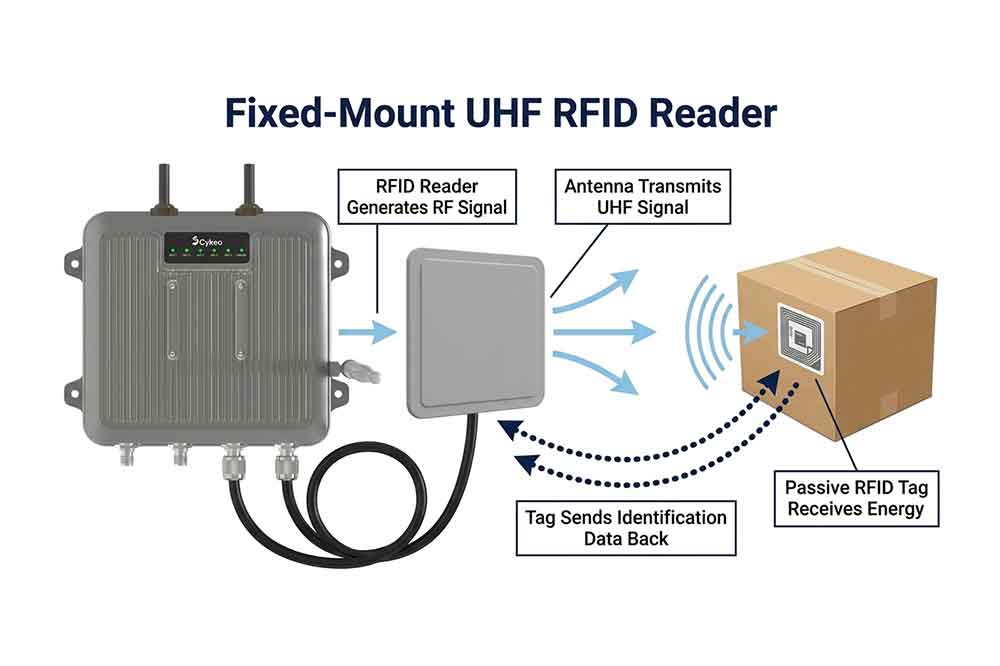
Fixed-mount UHF RFID readers are widely used in warehouses, manufacturing facilities, logistics centers, and automated identification systems. They allow businesses to identify tagged items without requiring an operator to scan each product manually.Unlike handheld RFID devices, fixed readers are installed at specific locations and operate as part of a permanent identification system. They can monitor goods moving through a checkpoint, track materials on a production line, or identify assets stored inside a designated area.However, installing a fixed UHF RFID reader involves more than choosing a device with a long reading distance. Antenna placement, tag selection, radio frequency settings, surrounding materials, and software integration all affect the final result.Understanding these factors helps system integrators and equipment manufacturers select the right RFID hardware for their projects.What Is a Fixed-Mount UHF RFID Reader?A fixed-mount UHF RFID reader is a stationary device that communicates with UHF RFID tags through radio frequency signals. It is normally installed on a wall, mounting bracket, warehouse gate, production machine, or other fixed structure.Most industrial UHF RFID systems use passive tags. These tags do not require an internal battery. Instead, they receive energy from the radio frequency field generated by the reader’s antenna and respond by transmitting their stored identification information.UHF RFID commonly operates within the 860–960 MHz range, although the exact frequency band depends on regional regulations and equipment configuration. EPC Class 1 Gen 2 and ISO/IEC 18000-63 are widely used communication standards for passive UHF RFID systems. ifm+1A fixed-mount reader is particularly useful when identification needs to happen repeatedly at the same location. Once installed and configured, it can collect tag information automatically without depending on employees to perform manual scans.For example, a warehouse can install readers at loading doors. When tagged pallets pass through the reading area, the system identifies them and sends the collected information to warehouse management software.How Fixed-Mount UHF RFID Readers WorkThe communication process between a fixed reader and an RFID tag involves several steps. Understanding this process is important when designing an RFID installation.UHF Radio Frequency CommunicationThe reader generates an RF signal and sends it through one or more connected antennas.When a compatible passive UHF tag enters the antenna’s coverage area, the tag receives energy from the transmitted signal. Its chip then uses this energy to respond to the reader.The reader does not need physical contact with the tag. This makes UHF RFID suitable for applications where items move continuously or where several products need to be identified in a short period.RFID Tag Identification and BackscatterPassive UHF RFID communication uses a principle called backscatter.Instead of generating its own radio transmission, the tag changes the way it reflects the reader’s RF signal. The reader detects these changes and decodes the information returned by the tag.The information may include an Electronic Product Code (EPC), a unique identifier, or other stored data, depending on the tag configuration.This communication method allows a fixed reader to identify tagged items without requiring a direct line of sight. However, this does not mean that every tag can be read from every position. Metal surfaces, liquids, tag orientation, and surrounding structures can affect RF performance.Anti-Collision and Multiple Tag ReadingOne of the main advantages of UHF RFID is its ability to identify multiple tags within a reading area.Imagine a pallet carrying dozens of tagged cartons. A barcode system generally requires each label to be presented to a scanner individually. A properly configured UHF RFID reader can identify multiple tags during the same reading session.Anti-collision protocols help organize communication between the reader and multiple tags, reducing the chance of communication conflicts.The actual reading speed depends on the reader chipset, tag population, antenna configuration, RF environment, and software settings. Therefore, a high tag-reading rate in a datasheet should always be evaluated against the requirements of the actual project.Main Components of a Fixed-Mount UHF RFID SystemA fixed reader is only one part of an RFID installation. Its performance depends on how the other components work together.RFID ReaderThe reader controls the communication process between the system and RFID tags.Important specifications include:Supported UHF frequency bandEPC C1G2 / ISO 18000-6C compatibilityRF output powerNumber of antenna portsTag identification speedCommunication interfacesSupported SDKs and APIsFor industrial applications, buyers should also consider operating temperature, housing protection, power requirements, and mounting options.UHF RFID AntennasAntennas determine how RF energy is distributed across the reading area.A fixed reader may support one antenna or multiple external antennas. For example, a four-port reader can connect to four antennas, allowing a system designer to establish several reading zones.Antenna selection should consider:Linear or circular polarizationAntenna gainReading directionInstallation distanceRequired coverage areaSurrounding metal structuresCircularly polarized antennas are often useful when tagged items have different orientations. Linear polarization can provide strong performance when tag orientation is predictable.Using more antennas does not automatically guarantee better identification. Poor antenna positioning can create overlapping reading zones or cause unwanted tags to be detected.RFID Tags and SoftwareThe tag must match the operating frequency and communication protocol supported by the reader.Its physical design is equally important. A standard label tag may work well on cardboard packaging but perform poorly when attached directly to a metal container. In that situation, an anti-metal UHF tag may be more appropriate.Software is responsible for turning raw tag reads into useful business information. Reader SDKs, APIs, and communication interfaces allow developers to connect RFID hardware with WMS, ERP, MES, inventory platforms, or custom applications.Reading Range and Performance FactorsReading range is one of the most frequently discussed specifications when purchasing fixed-mount UHF RFID readers.Some industrial systems can identify suitable tags over several meters. However, a manufacturer’s maximum reading distance should not be treated as a guaranteed working distance for every installation.Several factors influence actual performance.RF output power: Higher output power can extend the reading area, but the permitted transmission level depends on local regulations. Increasing power may also cause unwanted tags to be detected.Antenna gain and direction: Antenna characteristics determine how the RF signal is distributed. A directional antenna can focus coverage on a particular checkpoint, while a different antenna may be more suitable for a wider area.Tag size and sensitivity: Larger tags with suitable antenna designs may achieve better reading performance than small tags. The tag chip and antenna design also matter.Installation environment: Metal racks, machinery, liquids, and other reflective or RF-absorbing materials can change the signal distribution.Tag orientation: A tag that faces the antenna correctly may be detected more consistently than one installed at an unfavorable angle.For this reason, RFID projects should include practical testing before final installation. Testing should use the actual tags, mounting materials, product positions, and operating conditions expected in the application.Common Applications of Fixed-Mount UHF RFID ReadersFixed-mount UHF RFID readers are used in applications where automatic identification needs to take place at a defined location.Warehouse and Logistics CheckpointsReaders installed at loading doors or warehouse entrances can identify tagged pallets, cartons, and containers as they move through a checkpoint.The collected data can be sent to warehouse management software to support receiving, dispatching, and inventory updates.Manufacturing and Production LinesIn manufacturing, RFID tags can be attached to workpieces, production carriers, or reusable containers.Fixed readers installed along production lines identify items as they move between processing stations. This helps manufacturers associate each item with the correct production stage.Asset TrackingFactories, hospitals, and equipment management companies may use fixed readers to monitor tagged tools, machines, and reusable assets.Instead of checking every item manually, the system can identify which tagged assets are present in a designated area.Access Control and Vehicle IdentificationFixed UHF RFID readers can also be installed at vehicle entrances, parking facilities, and industrial access points.When a compatible vehicle tag enters the reading zone, the system can send its identification data to access control software for further verification.Smart Cabinets and Automated EquipmentSome OEM projects integrate fixed UHF RFID readers into cabinets, lockers, storage equipment, or automated machines.The reader identifies tagged items during storage or retrieval. With appropriately positioned antennas, the equipment can support automatic inventory records without requiring manual item registration.How to Choose a Fixed-Mount UHF RFID ReaderSelecting a reader should begin with the application rather than the maximum specifications listed in a product brochure.For a small identification checkpoint, an integrated reader may be sufficient. A larger warehouse portal or production line may require a multi-port reader connected to several external antennas.Before choosing a model, project buyers should evaluate the following points:1. Required reading areaDefine the physical area where tags need to be detected. Consider its width, height, direction of movement, and distance from the antennas.2. Number of antennasA single antenna may work for a simple identification point. Larger areas may require four-port, eight-port, or sixteen-port configurations.3. Tag population and reading speedEstimate how many tags will enter the reading area at the same time. A system identifying a few products per minute has different requirements from one processing densely packed pallets.4. Communication interfacesCheck whether the reader supports the interfaces required by the existing system, such as Ethernet, RS232, RS485, or GPIO, depending on the selected model.5. Environmental protectionFor forklifts, production equipment, and outdoor installations, housing protection, vibration resistance, and operating temperature are important considerations.6. Software integrationConfirm whether the manufacturer provides SDKs, APIs, demo software, and technical documentation for the development environment used by the integration team.For B2B projects, it is also useful to confirm the manufacturer’s ability to provide technical assistance during testing and deployment.Fixed-Mount UHF RFID Reader IntegrationA fixed UHF RFID reader should be selected as part of the complete identification system, not as an isolated hardware purchase.For example, an automated warehouse project may require readers, antennas, RFID tags, mounting brackets, network communication, and WMS integration. Each component affects the final identification result.Cykeo provides fixed RFID reader options with four-port, eight-port, and sixteen-port configurations for different industrial applications. The product range includes hardware for warehouse checkpoints, production lines, asset tracking, and automated identification. SDK and API support is also available to assist system developers and integrators. CykeoFor projects requiring multiple reading zones, the antenna layout should be tested before the installation is finalized. A practical test can reveal whether tags are being missed, whether adjacent zones interfere with each other, and whether the reader is collecting unwanted tag information.The Cykeo RFID Readers product range provides a starting point for evaluating fixed reader hardware for industrial and OEM applications.ConclusionFixed-mount UHF RFID readers provide a practical way to automate identification in warehouses, factories, logistics systems, and equipment management projects.Their performance depends on more than reader power or advertised reading distance. Antenna configuration, tag selection, installation conditions, communication interfaces, and software integration all need to be considered together.For system integrators and equipment manufacturers, choosing a reader that matches the actual application is more important than simply selecting the model with the highest specifications.FAQQ1: What frequency do fixed-mount UHF RFID readers use?Most UHF RFID systems operate within regional frequency allocations in the 860–960 MHz range. The exact operating band depends on the country and equipment configuration.Q2: How far can a fixed-mount UHF RFID reader read tags?Reading distance varies with reader output power, antenna gain, tag design, tag orientation, and installation conditions. Some industrial systems can achieve several meters or more under suitable conditions.Q3: Can a fixed-mount UHF RFID reader read multiple tags simultaneously?Yes. UHF RFID anti-collision protocols allow readers to identify multiple compatible tags within a reading area during the same reading session.Q4: How many antennas can a fixed-mount UHF RFID reader support?This depends on the reader model. Common industrial configurations include four-port, eight-port, and sixteen-port readers.Q5: Can fixed-mount UHF RFID readers connect to ERP or WMS software?Yes. Depending on the model, SDKs, APIs, Ethernet, serial communication, and other interfaces can support integration with ERP, WMS, MES, and custom software.Related Fixed-Mount RFID Reader GuidesChoosing the right reader starts with understanding its working principle and installation requirements. These guides provide additional information for RFID project planning:For a broader introduction to stationary RFID technology, read our guide on how fixed-mount RFID readers work.Fixed readers are not the only option for RFID identification. Our comparison of fixed-mount readers vs. handheld RFID readers explains which configuration is more suitable for different operations.Different applications require different reader configurations. Explore the different types of fixed-mount RFID readers before selecting hardware for an industrial project.Fixed RFID readers are also widely applicable to conveyor-based manufacturing, where automated identification is required at different production checkpoints:fixed RFID readers for production lines

Understanding Lithium Ion Pouch Cells: A Practical Guide for Battery Wholesalers Tech & Innovation
Nov 26, 2026 • visibility 13 • 20 min read

Understanding Lithium Ion Pouch Cells: A Practical Guide for Battery Wholesalers

What Makes Pouch Cells Unique?At first glance, a pouch cell looks deceptively simple—a flat, flexible package, often wrapped in an aluminum-laminated film. But underneath, there’s clever engineering designed to maximize energy storage while minimizing weight.Flexibility and Form Factor: Unlike rigid cylindrical cells, pouch cells can be made in various shapes and sizes. This makes them ideal for devices or battery packs that don’t have a traditional rectangular or cylindrical compartment.Lightweight Advantage: Without a metal casing, these cells are lighter, which is a huge plus for portable electronics, drones, or electric vehicles where every gram matters.Cost-Efficient Production: For manufacturers and wholesalers, pouch cells are often cheaper to produce at scale, since the manufacturing process is simpler than that of prismatic cells.For businesses sourcing lithium-ion pouch cell wholesale, these inherent advantages translate directly into commercial value. Because pouch cells can be produced in custom thicknesses and capacities without expensive tooling changes, wholesale buyers can cover a wider product portfolio with fewer SKU variations. Whether your customers need a slim 3.7V cell for wearables or a high-capacity cell for energy storage, a flexible wholesale supply chain makes it easier to serve diverse markets from one supplier.The Challenges You Need to KnowNo product is perfect, and pouch cells are no exception. Wholesalers need to be aware of some common issues:Swelling During Use: One of the most talked-about quirks is that pouch cells can swell during charging and discharging. While this is usually manageable, it’s important to advise customers to provide some space in the battery enclosure.Environmental Sensitivity: High humidity and extreme temperatures can reduce the lifespan of these cells. Proper storage and shipping conditions are essential to avoid early failures.Mechanical Protection: Because the pouch is flexible, it’s more prone to physical damage. Ensuring that packs are reinforced or housed in protective structures is key for long-term reliability.Practical Tips for WholesalersSelling lithium ion pouch cells isn’t just about offering the product—it’s about helping your clients succeed. Here are some practical tips:Know Your Market: Pouch cells are popular in electric bikes, power tools, drones, and small-scale energy storage solutions. Matching the cell format to your clients’ devices can boost satisfaction.Educate Your Customers: A quick guide on proper handling, storage, and usage can save both you and your clients headaches. Many failures can be prevented with simple precautions.Offer Variety: Different projects require different capacities, thicknesses, and sizes. Stocking a range of options positions you as a trusted partner, not just a supplier.Buying checklistBefore committing to a pouch cell supplier, wholesalers should verify three things. First, ask for swelling test data — pouch cells swell 8–12% over their lifetime, and a supplier who cannot provide cycle-life and swelling curves is a red flag. Second, confirm UN38.3 and IEC 62133 certification for the exact model you are ordering, not just the product family. Third, clarify aluminum laminate film thickness (typically 88–152 μm) and sealing process, as this determines long-term moisture resistance.Pair this guide with our pouch cell quality inspection checklist before signing a quality agreement.What to Expect from a Lithium-Ion Pouch Cell Wholesale SupplierFor buyers new to lithium-ion pouch cell wholesale, understanding how a professional supply partnership works helps you avoid costly mistakes. A qualified wholesale supplier should offer more than a competitive unit price—look for these capabilities before placing your first bulk order:Transparent MOQ and sample policy: Reliable suppliers typically support low-quantity sample orders (10–50 pcs) for testing, then scale to wholesale volumes of 1,000–5,000 pcs per model. Never commit to bulk before validating samples in your end product.Batch consistency: In wholesale volumes, cell-to-cell consistency matters more than peak performance. Ask how the supplier grades and matches cells for capacity, internal resistance, and voltage before packing.OEM/ODM flexibility: Many lithium-ion pouch cell wholesale buyers need custom dimensions, connectors, PCM/BMS integration, or series-parallel pack assembly. A supplier with in-house pack assembly—such as the configurations in our pouch cell battery collection—shortens development cycles and reduces quality risk.Export and certification support: Wholesale shipments require UN38.3 test summaries, MSDS, and air/sea freight documentation. Confirm these are provided per model, not just per product family.After-sales traceability: Batch numbers, date codes, and warranty terms should be clearly defined so any field issue can be traced back to a specific production lot.Working with a supplier that covers the full chain—from bare cells to finished battery packs—means fewer intermediaries, better pricing control, and faster response when your downstream customers need technical support.Popular Pouch Cell Models for Wholesale BuyersWhen evaluating lithium-ion pouch cell wholesale options, it helps to look at real models that cover the most common market demands. Our pouch cell battery category includes a full range of rechargeable lithium polymer cells suitable for different wholesale applications:ModelVoltage / CapacityTypical Wholesale Applications3.7V 502248 500mAh Lithium Ion Polymer Battery3.7V / 500mAhBluetooth headsets, small IoT devices, smart cards3.7V 700mAh Li-Polymer Pouch Cell Battery3.7V / 700mAhWearables, tracking devices, small remotes3.7V 800mAh Rechargeable Pouch Li-Polymer Battery3.7V / 800mAhPortable audio, medical handhelds3.7V 1200mAh Li-Polymer Pouch Cell Battery3.7V / 1200mAhGPS trackers, smart home sensors3.7V 2000mAh Pouch Cell Battery3.7V / 2000mAhConsumer electronics, power banks134365 4500mAh 3.7V Rechargeable Lithium Polymer Battery3.7V / 4500mAhDrones, backup power, industrial handhelds3.7V 15Ah 148198 Pouch Lithium Ion Battery3.7V / 15AhEnergy storage modules, e-mobility, high-drain devices11.1V 3S 850mAh Li-ion Polymer Pouch Cell Battery Pack11.1V / 850mAhRC models, UAVs, portable instrumentsFor wholesale buyers, this lineup demonstrates how a single pouch cell platform can serve markets from milliwatt wearables to multi-amp energy storage. Ordering mixed models in one wholesale shipment also reduces freight cost per unit and simplifies customs clearance, since all cells share the same certification documentation framework.If you don’t see an exact specification match, most wholesale suppliers—including our team—can customize capacity, thickness, wire/connector type, and protection circuitry based on your drawings or sample units.Why Lipo Pouch Cells Are Popular for Custom Battery DesignsFor manufacturers looking for lightweight and flexible battery solutions, lipo pouch cells have become a preferred option in many compact electronic products and custom battery pack projects. Unlike traditional cylindrical cells, lipo pouch cells use a flexible packaging structure, allowing engineers to customize the battery shape, thickness, and capacity according to the available product space. This design flexibility makes them suitable for applications where size and weight are critical factors.When sourcing lipo pouch cells in bulk, battery wholesalers should pay attention to more than just capacity ratings. Factors such as cell thickness tolerance, discharge performance, cycle life, safety protection, and consistency between batches can directly affect the reliability of the final battery pack. High-quality pouch cells help manufacturers achieve better energy utilization while maintaining stable performance during long-term operation.This is also where a professional lithium-ion pouch cell wholesale partner adds measurable value: instead of forcing your product design around a standard catalog cell, an experienced wholesale supplier can propose semi-custom options—adjusting terminal positions, adding NTC/PTC protection, or pairing cells into 1S2P configurations like our 3.7V 1S2P 3000mAh lithium polymer battery—so your engineering team gets closer to an ideal fit without full custom tooling costs.For OEM customers, lipo pouch cells are widely used in drones, wearable devices, smart electronics, medical equipment, GPS trackers, and other portable products that require compact yet powerful energy sources. A reliable battery supplier can provide customized pouch cell solutions, including different voltage options, capacity ranges, connector designs, and integrated BMS configurations to meet specific product requirements.Choosing the right lipo pouch cells supplier is an important step for companies planning long-term production. Beyond competitive pricing, manufacturers should evaluate production capability, quality control processes, certification support, and customization experience to ensure consistent supply for future projects.Choosing the Right Lithium Pouch Cell for Wholesale ApplicationsFor battery wholesalers, selecting the right lithium pouch cell is not only about comparing capacity and size. The performance of a pouch cell depends on factors such as energy density, cycle life, safety features, and manufacturing consistency. Compared with traditional cylindrical cells, lithium pouch cells offer a flexible design that allows manufacturers to create thinner and lighter battery packs for different applications.When sourcing pouch cells in bulk, wholesalers should pay attention to supplier quality control, cell testing procedures, and customization capability. A reliable lithium pouch cell supplier can provide stable cell performance, different capacity options, and support for OEM battery pack projects. This makes pouch cells a popular choice for portable electronics, medical equipment, smart devices, and other applications where space and weight are important factors.Before finalizing a lithium-ion pouch cell wholesale agreement, we recommend requesting: (1) cell datasheets with charge/discharge curves at your operating temperature range, (2) aging and cycle-life reports from the actual production line, and (3) a signed quality agreement covering AQL inspection standards for incoming wholesale shipments. These three documents form the foundation of a long-term wholesale partnership and protect both parties if field performance ever comes into question.Browse our complete pouch cell battery wholesale catalog to compare available models, or contact our team for OEM pricing on custom specifications.Why Pouch Cells Are Worth ItDespite their quirks, pouch cells are here to stay. Their adaptability, weight savings, and manufacturing advantages make them an increasingly popular choice across industries. For wholesalers, understanding their strengths and limitations is the key to providing real value.At the end of the day, selling lithium ion pouch cells battery isn’t just about moving inventory—it’s about helping businesses power their products safely, efficiently, and reliably. A well-informed wholesaler is a trusted partner, and in a growing market like lithium-ion batteries, trust goes a long way.Start Your Lithium-Ion Pouch Cell Wholesale OrderReady to source pouch cells at wholesale pricing? Whether you need standard 3.7V cells from 500mAh to 4500mAh, high-capacity 15Ah cells, or assembled packs like 11.1V 3S configurations, our pouch cell battery category lists in-stock models ready for sampling and bulk production. Send us your target capacity, dimensions, and annual volume, and our wholesale team will respond with unit pricing at different quantity tiers, lead times, and certification documents within one business day.FAQWhat is the typical MOQ for pouch cells from Chinese manufacturers?Most factories set MOQ at 1,000–5,000 pcs per model; sample orders of 10–50 pcs are usually available before bulk commitment.Do pouch cells swell over time?Yes, expect 8–12% thickness growth over full cycle life; proper fixture design in the pack accommodates this.Are pouch cells safer than cylindrical cells?Pouch cells fail more gracefully (the pouch vents rather than exploding) but are more vulnerable to puncture; protection design matters more than chemistry format.How do I compare pouch cell quotes between suppliers?Normalize by $/Wh, then compare cycle life at your target DOD, swelling spec, and certification scope.What volume discounts can I expect on lithium-ion pouch cell wholesale orders?Typical tiered pricing breaks at 1k / 5k / 10k / 50k pcs. The gap between sample price and 5k-pcs wholesale price is usually 20–40%, depending on cell size and customization level. Always request quotes at two volume tiers to see the real price curve before forecasting margins.Can wholesale pouch cell orders be shipped with our own branding?Yes. Most suppliers, including us, support neutral packaging, custom labels, and batch coding for wholesale orders. Confirm packaging requirements and label artwork before mass production, as relabeling after shipment is usually not possible for lithium batteries.Related ArticlesUnderstanding Lithium Ion Pouch Cells: A Practical Guide for Battery WholesalersWhat Is Pouch Cell Battery? A Simple GuideHow Are Lithium Ion Pouch Batteries Connected?lithium battery sizes:Common Sizes and Specifications18650 Battery Which Side is Positive,A Quick and Practical GuideWhat Are the Best 18650 Rechargeable Batteries? Here’s What Actually Matters18650 Battery Voltage: 3.6V, 3.7V, 4.2V and Battery Pack Voltage Explained

How to Choose a Desiccated Coconut Supplier: A Buyer’s Checklist Food & Drink
Nov 26, 2026 • visibility 5 • 8 min read

How to Choose a Desiccated Coconut Supplier: A Buyer’s Checklist

Sourcing desiccated coconut sounds simple until you start comparing quotes from different suppliers. What looks like a single commodity is actually a product that varies widely in cut, moisture level, certification status, and processing standard from one manufacturer to the next. For bakeries, ingredient distributors, and private label food brands, picking the wrong supplier can mean inconsistent batches, compliance headaches, or a shipment that doesn’t match what the spec sheet promised.This matters more the larger your order gets. A home baker buying a small retail bag can afford to try a few brands before settling on a favorite, but a manufacturer placing a container-load order needs confidence upfront that the product, documentation, and delivery timeline will all hold up. Here is what experienced procurement teams check before committing to a desiccated coconut supplier.1. Confirm the Cut Matches Your ApplicationDesiccated coconut isn’t a single product. It comes in fine, medium, fancy shred, and chip cuts, along with toasted and sweetened variants, and each is suited to a different use, from delicate macaroons to coarser snack applications. Before requesting quotes, define exactly which cut your product needs. A supplier who cannot clearly explain the difference between their cuts likely hasn’t invested in cut-specific quality control.2. Ask for a Full Specification SheetA credible manufacturer should readily provide documentation covering moisture content (typically at or below 3%), fat content (generally 62–68% for standard desiccated coconut), free fatty acid levels, and microbiological limits such as total plate count, yeast and mold, and pathogen testing. If a supplier is vague or slow to share this information, treat it as a warning sign. Spec sheets should be available on request, not something you have to chase down over multiple emails.3. Verify Certifications DirectlyOrganic, BRC/GFSI, Kosher, and Halal certifications are standard expectations for export-grade desiccated coconut, but a logo on a website is not proof. Ask for the certificate number, issuing body, and current validity date, and check that the certificate can be independently verified with the issuing organization. This step matters most if you supply regulated markets like the EU, US, or Japan, where your own customers or auditors may ask you to produce documentation on request.4. Understand Minimum Order QuantitiesDesiccated coconut is typically priced around container-load volumes, but many established manufacturers can accommodate smaller trial orders for new accounts still validating a product line. Ask directly about standard MOQs, whether a trial order is possible, and what packaging formats are available, from bulk 25kg bags to retail-ready pouches, including private label options for qualifying volumes.5. Ask About Shelf Life and StorageDesiccated coconut is shelf-stable, but not indefinitely. Proper moisture content and packaging affect how long it stays fresh, typically around 12 months from production when stored correctly. A knowledgeable supplier should be able to explain their shelf-life testing and storage recommendations in specific terms rather than a generic “store in a cool, dry place.”6. Evaluate Export ExperienceProducing high-quality desiccated coconut is only half the job. Getting it to your facility on time, in good condition, and with correct documentation is the other half. Ask how many countries a supplier currently exports to, whether they can provide references from buyers in your region, and whether they handle Certificates of Origin, phytosanitary certificates, and other paperwork your customs process requires. A manufacturer with decades of export history has usually already solved the logistics problems that newer or domestically focused producers are still working through, which means fewer surprises once your order is in transit.The Bottom LineThe right desiccated coconut supplier combines the correct cut and spec for your application, verifiable certifications, transparent documentation, and proven export logistics. None of these factors are visible from a price quote alone, which is exactly why they get overlooked by buyers under pressure to close a sourcing decision quickly. Taking the time to vet these areas upfront, rather than defaulting to the lowest quoted price, is what protects your production schedule and your product’s quality over the long run.Royce Food Corporation has spent decades manufacturing and exporting organic desiccated coconut across the full range of cuts and grades, backed by certifications recognized in regulated markets worldwide. Our team can walk you through spec sheets, certification documentation, and sample options before you commit to a bulk order.Ready to evaluate Royce Food Corporation as your desiccated coconut supplier? Contact us to request a spec sheet and sample.

Royce Food Corporation
Read arrow_forward
article
Nov 25, 2026 • visibility 8 • 9 min read

Laptop Battery Draining Too Fast? 10 Fixes to Make It Last Longer

Laptop Battery Draining Too Fast? 10 Fixes to Make It Last LongerYou unplug your laptop expecting hours of work, and the battery is down to 20% before lunch. A fast-draining battery is frustrating, but it's rarely a sign you need a new laptop. Often it's a setting, a hungry app or simple battery wear. Here's how to find the cause and get more time away from the charger.Why laptop batteries drain quicklyThe usual suspects are:A bright screen or a high refresh rateApps running in the backgroundWi-Fi, Bluetooth and other radios left onDemanding tasks such as video calls, gaming or editingA battery that has worn out with ageOverheating, which makes the laptop work harderOutdated software or drivers1. Check your battery health firstBefore changing settings, find out whether the battery itself is worn.Windows: open Command Prompt as administrator and type powercfg /batteryreport. It creates a report showing design capacity versus full-charge capacity.Mac: go to System Settings > Battery and check Battery Health, or hold Option and click the Apple menu, then open System Information > Power.If the full-charge capacity is well below 70 to 80% of the original, the battery is worn and replacing it will help more than any setting.2. Lower the screen brightnessThe display is one of the biggest power users in a laptop.Turn brightness down to a comfortable level, ideally around 50 to 70%.Enable adaptive brightness if your laptop supports it.Lower the screen timeout so the display switches off sooner when you step away.Reduce the refresh rate if your laptop has a 120 Hz or higher screen.3. Use the battery saver or power modeBuilt-in power modes limit background activity and processor speed.Windows: turn on Battery saver and set the power mode to Best power efficiency in Settings > System > Power & battery.Mac: enable Low Power Mode in System Settings > Battery.Set it to turn on automatically when the battery drops to around 20 to 30%.4. Find the apps draining your batterySome apps use far more power than others.Windows: go to Settings > System > Power & battery > Battery usage to see usage by app.Mac: open Activity Monitor and click the Energy tab.Close or replace apps with a high drain, especially video tools, game launchers and some browsers.Watch out for browsers with many tabs and heavy extensions.5. Stop apps running in the backgroundApps that run when you aren't using them quietly use up your battery.Disable unneeded startup apps in Task Manager (Windows) or Login Items (Mac).In Settings > Apps, turn off background activity for apps you don't need updating constantly.Quit programs fully instead of just closing the window.6. Turn off what you aren't usingWireless radios and connected devices consume power.Turn off Bluetooth if nothing is connected.Switch off Wi-Fi when you're offline or working on local files.Disconnect USB devices, external drives and dongles, which draw power from the battery.Turn off the keyboard backlight or lower its brightness.7. Manage your browserFor many people, the browser is the biggest drain.Close tabs you aren't using.Pause or block auto-playing videos and animated ads.Remove extensions you don't need.Use the browser's built-in Energy Saver or Memory Saver mode, which is available in most major browsers.Lower the video quality when watching on battery.8. Keep your laptop coolHeat makes the fans work harder and wears the battery out faster.Use the laptop on a hard, flat surface, never on a blanket or pillow.Clean the vents and fan of dust.Don't leave it in a hot car or in direct sunlight.9. Update your system and driversUpdates often include power management fixes.Install the latest Windows Update or macOS update.Update your graphics, chipset and BIOS from the manufacturer's site.Update your apps, since an old version can have a bug that drains power.10. Charge the battery the right wayGood habits slow the ageing of lithium-ion batteries.Try to keep the charge between about 20% and 80% for everyday use.Avoid regularly draining the battery to 0%.If your laptop has a charge limit or battery care setting, turn it on. Many Lenovo, ASUS, Dell, HP and Samsung laptops have one, and recent Macs have Optimised Battery Charging.Avoid leaving it plugged in at 100% in a hot place for weeks.Use the original or a certified charger.Quick referenceProblemLikely causeFixDrains in a couple of hoursWorn batteryCheck health, replace the batteryDrains fast in the browserToo many tabs or extensionsClose tabs, use energy saverDrains while idleBackground appsDisable startup and background appsHot and drains fastDust or blocked ventsClean vents, improve airflowDrains only on batteryPower mode set to performanceUse battery saver or efficiency modeWhen to replace the batteryConsider a new battery if:The report shows the capacity has dropped well below 70 to 80%The laptop shuts down suddenly at 20 to 40%The battery is swollen or the case is bulgingThe laptop only works when plugged inThe battery has lasted more than three to five years under regular useA swollen battery is a safety risk. Stop using the laptop right away and take it to a professional. Never puncture or try to flatten it.Final thoughtsGetting more out of your battery usually comes down to a few smart settings: lower the brightness, switch on battery saver, close heavy apps and keep the laptop cool. If the battery is simply worn out, a replacement is often cheaper than a new laptop and can make an older machine feel fresh again.