Articles

Articles & Insights

Discover, learn, and grow with stories from our ecosystem members.

search
Business Data Scraping Solutions for Competitive Intelligence Tech & Innovation
Oct 27, 2026 • visibility 33 • 11 min read

Business Data Scraping Solutions for Competitive Intelligence

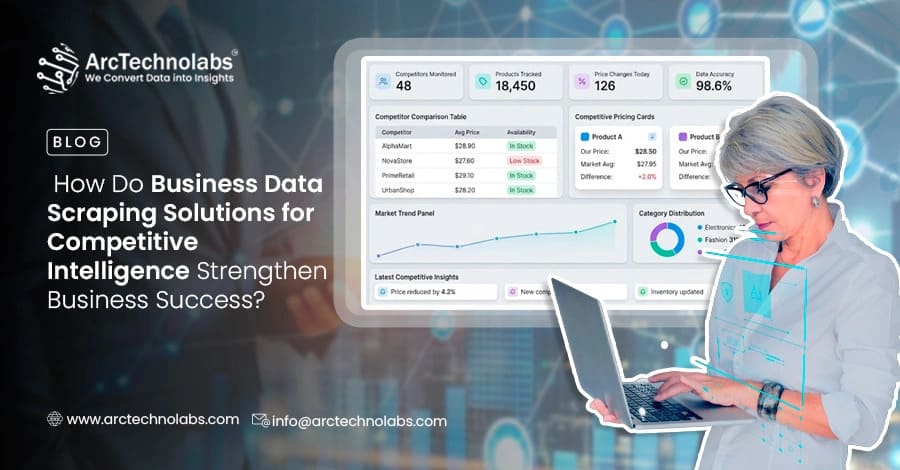
IntroductionModern businesses operate in markets where prices, product availability, customer preferences, and competitor campaigns can change several times a day. Relying on manual research, scattered spreadsheets, or outdated reports makes it difficult for teams to respond quickly. Decision-makers need reliable market visibility to understand what competitors sell, how they position products, and where new commercial opportunities may emerge.This data can support pricing reviews, assortment comparisons, product tracking, campaign analysis, and category-level planning. Business Data Scraping Solutions for Competitive Intelligence help organizations collect structured information from websites, marketplaces, mobile applications, and digital catalogs.Accurate data collection also reduces dependency on assumptions, allowing teams to build strategies around actual market signals. Enterprise Web Crawling supports this process by collecting information at scale across multiple public sources while maintaining consistency in data formats. It has become an ongoing process that supports faster decisions, stronger product strategies, and measurable business growth.Strengthening Competitive Visibility Through Continuous Market Activity MonitoringBusinesses often face limited visibility into competitor pricing, product launches, promotional campaigns, and customer engagement patterns. Regular monitoring of public online information helps companies understand how competitors respond to demand, seasonal trends, and changing customer expectations.Web Scraping Services support this process by collecting publicly available competitor information from websites, marketplaces, catalogs, and review platforms. Instead of repeatedly checking pages manually, teams can receive structured datasets containing prices, offers, product details, ratings, and availability updates.Research from Deloitte indicates that data-driven organizations are more likely to improve operational performance and revenue outcomes. When businesses receive timely competitor information, they can evaluate whether their own pricing, product assortment, and promotional strategy remain aligned with market conditions.Competitor Price Changes: Collects product prices, discounts, and bundles; enables improved pricing response.New Product Launches: Tracks product titles, categories, and specifications; supports faster assortment planning.Promotional Campaigns: Monitors coupon offers, sale periods, and campaign messages; improves campaign timing.Customer Feedback Trends: Analyzes ratings, reviews, and recurring concerns; improves product positioning.Availability Updates: Tracks stock status and delivery availability; strengthens inventory decisions.The Benefits of Web Scraping for Business Growth become clearer when market data is connected to regular reporting and planning activities. Businesses can also identify competitor weaknesses through negative customer reviews related to delivery delays, limited selections, or service issues.Converting Customer Feedback Into Actionable Product Development InsightsInternal sales reports can show what customers purchase, but they often do not explain why buyers select one brand over another. Businesses need external feedback to understand product preferences, recurring complaints, service expectations, and competitor strengths.Mobile App Data Scraping Services help businesses collect publicly available app-store information, including user ratings, review themes, feature feedback, update histories, and competitor app details. By analyzing customer feedback across platforms, teams can identify concerns that may not appear in internal support records.According to PwC, customer experience remains a major factor influencing purchasing behavior and long-term loyalty. How Scraped Data Improves Business Decisions becomes evident when businesses validate assumptions through real customer language and competitor activity.Product Preferences: Tracks popular features and requested improvements; supports product enhancement planning.Customer Complaints: Monitors delivery delays, usability issues, and support concerns; drives service improvement.Brand Sentiment: Analyzes positive and negative review themes; supports reputation management.Competitor Strengths: Identifies frequently praised competitor features; enables market differentiation.Demand Signals: Tracks review volume, category interest, and rating changes; supports demand forecasting.Business Intelligence Using Web Scraping enables teams to combine external market signals with internal performance data. For example, a business can compare declining product sales with competitor review trends to identify whether customers prefer faster delivery, improved packaging, or additional features.Improving Strategic Planning With Structured External Market IntelligencePricing, promotions, product availability, and market performance can change quickly across digital channels. Structured external data helps organizations evaluate market conditions more consistently and make faster decisions across pricing, product planning, and commercial operations.Web Scraping API Services provide organized data delivery that connects collected market information with dashboards, databases, analytics platforms, and internal reporting systems. Teams can access updated information about competitor prices, promotions, product listings, reviews, and availability through a streamlined workflow.Accenture research has shown that companies using data effectively can improve decision speed and business agility. Businesses can also Scrape Data for Business Performance Analytics to understand how competitor actions, market demand, and customer feedback influence their own results.Price Monitoring: Captures current prices, discounts, and shipping charges; supports better pricing alignment.Promotion Analysis: Tracks offer types, campaign duration, and coupon activity; improves promotion planning.Product Assortment: Monitors new arrivals, discontinued items, and category changes; strengthens portfolio decisions.Market Performance: Tracks ratings, rankings, and review volumes; enables clearer performance benchmarking.Regional Trends: Monitors location-based prices and availability; supports localized strategy development.Enterprise Web Scraping Solutions for Business Growth support organizations managing large catalogs, multiple regions, and frequent competitor monitoring requirements. Automated workflows can standardize data formats, schedule collection, and simplify reporting across departments.How ArcTechnolabs Can Help You?Our team builds customized data collection workflows that align with your business goals, industry requirements, and reporting needs. Through Business Data Scraping Solutions for Competitive Intelligence, companies can convert scattered online information into structured datasets that support faster planning and more informed decisions.Our solutions are designed to help businesses manage large-scale data collection without adding unnecessary manual effort.Monitor competitor pricing, promotions, and product updates.Collect structured data from websites, apps, and marketplaces.Track customer reviews, ratings, and market sentiment.Receive data through APIs, dashboards, files, or cloud storage.Build custom workflows for specific categories and locations.Support ongoing monitoring with scheduled data delivery.Our approach supports the Benefits of Web Scraping for Business Growth by helping teams access timely market information, reduce research delays, and improve the quality of business planning across departments.ConclusionBusinesses that rely on fragmented research methods may struggle to respond quickly when competitors change prices, introduce new products, or attract customers through stronger digital experiences. Business Data Scraping Solutions for Competitive Intelligence help companies collect relevant market signals and turn them into structured insights for pricing, product planning, customer analysis, and competitive monitoring.With the right data strategy, organizations can use Business Intelligence Using Web Scraping to improve planning accuracy, identify market gaps, and respond to customer expectations with greater confidence. Contact ArcTechnolabs today to build a tailored data scraping solution that supports smarter decisions and long-term business growth.#BusinessesDataScrapingSolutionsForCompetitiveIntelligence,#BenefitsOfWebScrapingForBusinessGrowth,#BusinessIntelligenceUsingWebScraping,#HowScrapedDataImprovesBusinessDecisions,Source: https://www.arctechnolabs.com/businesses-data-scraping-solutions-for-competitive-intelligence.phpContact us:E-mail: [email protected] No: +91 8866656657Visit Now: https://www.arctechnolabs.com/

Steve Harringtone
Read arrow_forward
article
Tech & Innovation
Oct 27, 2026 • visibility 36 • 15 min read

Best Cyber Security Course in Kolkata with Placement Guarantee: Build Skills for Security Analyst Careers

Organisations across industries rely on secure digital systems to protect customer information, business applications, and critical infrastructure. This creates a growing need for professionals who understand security monitoring, threat detection, incident response, and risk management. A structured Best Cyber Security Course in Kolkata with Placement Guarantee can help learners develop practical technical skills and prepare for entry-level opportunities in information security.For graduates, IT professionals, and career changers in Kolkata, Cyber Security training offers a pathway to explore roles such as Security Operations Centre (SOC) Analyst, Information Security Analyst, Junior Security Consultant, and Incident Response Analyst.Why Security Monitoring Skills MatterSecurity monitoring helps organisations identify suspicious activity, investigate potential threats, and respond to security incidents before they cause significant damage. Professionals in this area work with system logs, security alerts, network activity, and threat intelligence to understand what is happening across digital environments.Developing these skills can help learners:Recognise suspicious login attempts and unusual network activity.Analyse security alerts and identify potential threats.Understand common malware, phishing, and credential-based attacks.Investigate incidents using logs and security tools.Document findings and communicate security risks.Follow structured procedures for incident escalation and response.These capabilities provide a foundation for careers in security operations and wider information security functions.Essential Skills to Learn for a Security Analyst Career1. Networking and Operating System FundamentalsSecurity analysts need to understand how computers communicate and how operating systems manage users, files, processes, and permissions.Key topics include:TCP/IP, DNS, HTTP and HTTPSPorts, protocols, and network trafficIP addressing and subnettingWindows and Linux fundamentalsUser accounts and access permissionsSystem logs and basic command-line operationsA strong foundation makes it easier to understand security alerts and investigate the technical activity behind them.2. Security Information and Event AnalysisSecurity teams examine event records from endpoints, applications, servers, and network devices to identify unusual behaviour. Learning how to interpret these records helps candidates understand the context behind an alert.Practical learning activities may include:Reading authentication and system logsIdentifying repeated failed login attemptsRecognising unusual access patternsCorrelating related eventsPrioritising alerts based on potential riskWriting clear incident summariesPractice exercise: Examine a sample authentication log, identify suspicious login patterns, and prepare a short incident report describing the evidence and recommended next steps.3. SIEM and Security Monitoring ToolsSecurity Information and Event Management (SIEM) platforms collect and analyse security-related events from multiple sources. Security analysts use them to investigate alerts, search event data, and identify patterns that may indicate an attack.Learners should understand:How log collection worksHow security alerts are generatedBasic event searches and filtersAlert triage and prioritisationInvestigation workflowsIncident documentationTraining with representative security monitoring tools helps learners understand how SOC teams organise investigations and respond to potential threats.4. Threat Detection and Incident ResponseThreat detection involves recognising indicators of malicious activity. Incident response focuses on investigating and managing security events through a structured process.Important concepts include:Phishing and social engineeringMalware indicatorsSuspicious processes and connectionsAccount compromiseThreat intelligence fundamentalsIncident classification and escalationContainment and recovery conceptsPractical exercises should take place in authorised lab environments using sample data or controlled simulations.5. Vulnerability Management and Risk AssessmentSecurity teams also identify weaknesses in systems and applications, assess their potential impact, and help organisations prioritise remediation.Learners can develop an understanding of:Common vulnerability categoriesVulnerability scanning fundamentalsRisk severity and business impactPatch managementSecurity configuration weaknessesRemediation reportingBasic security assessment workflowsThese skills complement monitoring and incident response by helping organisations reduce the weaknesses that attackers may exploit.How Practical Cyber Security Training Builds Job ReadinessPractical training connects technical concepts with realistic security scenarios. Instead of learning tools in isolation, learners can practise identifying threats, analysing evidence, documenting findings, and explaining their decisions.At Boston Institute of Analytics, the Cyber Security and Ethical Hacking programme combines structured instruction with practical labs, projects, security tools, and career support. Learners can build a foundation in network security, ethical hacking, penetration testing, application security, incident response, and related security concepts.The Top Cyber Security Course in Kolkata with Job Guarantee is relevant for learners who want to develop technical capabilities and prepare for security-related recruitment. Career support can help with interview preparation and job-search readiness; any formal job guarantee is governed by the programme's applicable terms and eligibility requirements.Practical Projects to Add to a Cyber Security PortfolioA portfolio can help candidates demonstrate their problem-solving approach and practical understanding during interviews. Beginners can start with controlled exercises that do not involve unauthorised access to real systems.Project 1: Security Log InvestigationAnalyse sample system or authentication logs and identify unusual login patterns, suspicious timestamps, or repeated access failures.Skills demonstrated: Log analysis, event interpretation, threat identification, and incident reporting.Project 2: Phishing Email AnalysisStudy simulated phishing emails and document suspicious sender details, misleading links, unusual requests, and social engineering techniques.Skills demonstrated: Threat awareness, email analysis, risk identification, and security communication.Project 3: Vulnerability Assessment ReportUse an authorised lab environment to identify common configuration weaknesses and organise findings by severity and potential business impact.Skills demonstrated: Vulnerability assessment, risk prioritisation, documentation, and remediation planning.Project 4: Incident Response PlaybookPrepare a step-by-step response plan for a simulated compromised account or malware alert. Include initial investigation, escalation, containment considerations, recovery, and lessons learned.Skills demonstrated: Incident handling, structured problem-solving, reporting, and security procedures.For every project, explain the scenario, tools used, evidence collected, findings, and recommended actions. This makes the portfolio more useful during technical interviews.Career Opportunities After Cyber Security TrainingCyber Security skills can support several career paths, depending on a candidate's technical foundation, practical experience, and role requirements.SOC Analyst: Monitors alerts, investigates suspicious events, and escalates potential incidents.Information Security Analyst: Helps assess risks, monitor controls, and support security policies.Incident Response Analyst: Assists with investigating security incidents and coordinating response activities.Vulnerability Assessment Analyst: Identifies system weaknesses and helps prioritise remediation.Junior Security Consultant: Supports security assessments, documentation, and improvement initiatives.Penetration Testing Trainee: Learns to assess systems for vulnerabilities through authorised testing.Learners interested in the wider profession can also explore Cyber Security Career Paths and Skills for Security Professionals to understand how different technical skills relate to security roles.How to Prepare for Cyber Security InterviewsTechnical knowledge is only one part of recruitment readiness. Candidates should also demonstrate a structured approach to investigation, clear communication, and awareness of responsible security practices.Practise Explaining Security ConceptsPrepare concise explanations of DNS, firewalls, phishing, malware, authentication, SIEM, vulnerabilities, and incident response. Focus on how each concept relates to real security work.Work Through Scenario-Based QuestionsPractise scenarios involving repeated failed logins, suspicious outbound traffic, phishing reports, or unusual user activity. Explain what evidence you would collect, how you would assess risk, and when you would escalate an alert.Build a Portfolio of Practical WorkKeep project reports organised with clear objectives, steps, findings, screenshots where appropriate, and recommendations. Use only authorised environments and avoid including sensitive information.Strengthen Linux and Networking SkillsPractise common command-line operations, network fundamentals, and basic troubleshooting. These skills help candidates investigate technical problems more effectively.Improve Documentation and CommunicationSecurity professionals often need to communicate incidents to colleagues who are not security specialists. Practise writing concise reports that distinguish observed evidence from assumptions and explain the potential business impact.Frequently Asked Questions1. What skills are important for a beginner Security Analyst?Important skills include networking, Windows and Linux fundamentals, log analysis, security monitoring, threat detection, incident response, vulnerability management, and clear technical documentation.2. Can beginners learn SOC Analyst skills through Cyber Security training?Yes. Beginners can build a foundation through structured learning, practical labs, simulated alerts, log investigations, and incident response exercises. Networking and operating system fundamentals are useful starting points.3. Which projects help demonstrate SOC Analyst skills?Security log investigation, phishing email analysis, vulnerability assessment reporting, and incident response playbooks are useful beginner projects. Each project should explain the evidence, investigation process, findings, and recommended actions.4. What jobs can learners pursue after Cyber Security training in Kolkata?Potential entry-level paths include SOC Analyst, Information Security Analyst, Junior Security Consultant, Vulnerability Assessment Analyst, and Incident Response support roles. Relevant skills and practical experience help candidates prepare for these opportunities.5. Where can I study Cyber Security and Ethical Hacking in Kolkata?Boston Institute of Analytics offers a Cyber Security and Ethical Hacking programme in Kolkata that includes technical learning, practical exercises, projects, and career support.6. Does a Cyber Security course provide placement assistance?Career-focused programmes may include placement assistance, interview preparation, and job-search support. Any formal placement or job guarantee is subject to the applicable programme terms and eligibility requirements.ConclusionSecurity monitoring, log analysis, threat detection, and incident response are valuable skills for learners preparing for Cyber Security careers. Practical exercises and portfolio projects help candidates demonstrate their understanding of security investigations and responsible technical practices.For learners in Kolkata, Boston Institute of Analytics offers Cyber Security and Ethical Hacking training designed to combine technical foundations with practical learning and career support. Building strong networking knowledge, practising security investigations, and preparing for scenario-based interviews can help candidates work towards entry-level opportunities in the information security field.

article
Finance & Wealth
Oct 27, 2026 • visibility 34 • 15 min read

Best Investment Banking Course in Thane with Placement Guarantee: Develop Financial Analysis and Reporting Skills

Building a career in finance requires more than theoretical knowledge of accounting and markets. Employers value candidates who can interpret financial statements, identify business trends, prepare reports, and communicate financial insights clearly. A structured Best Investment Banking Course in Thane with Placement Guarantee can help learners develop these practical capabilities through industry-oriented training in Investment Banking and Financial Analytics.For graduates, commerce students, finance professionals, and career changers in Thane, learning financial analysis and reporting can create a foundation for roles such as financial analyst, investment banking analyst, corporate finance associate, and equity research analyst.Why Financial Analysis Skills Matter in Investment BankingFinancial analysis helps businesses and investors understand an organisation’s financial health, profitability, risks, and growth potential. Investment banking professionals use these insights to support transactions, evaluate companies, prepare presentations, and make informed financial decisions.Developing financial analysis skills can help learners:Understand a company's financial performance.Interpret income statements, balance sheets, and cash flow statements.Identify revenue, cost, profitability, and liquidity trends.Prepare structured financial reports and presentations.Support valuation, investment research, and corporate finance activities.Present financial findings clearly to colleagues and stakeholders.These skills are useful for entry-level finance roles and provide a foundation for more advanced investment banking responsibilities.Essential Financial Analysis Skills to Learn1. Financial Statement AnalysisFinancial statements provide a detailed view of a company's financial position and performance. Learning to interpret them helps candidates understand how businesses generate revenue, manage expenses, use assets, and handle liabilities.Key learning areas include:Income statement analysisBalance sheet interpretationCash flow statement analysisProfitability and liquidity ratiosWorking capital assessmentYear-on-year performance analysisPractical exercise: Analyse the financial statements of a listed company and prepare a short report highlighting revenue growth, profitability, debt levels, and cash flow trends.2. Financial Reporting and Business CommunicationFinancial reporting involves converting financial data into meaningful information for business decisions. A well-prepared report explains the numbers, identifies important trends, and presents conclusions in a clear format.Learners can develop skills in:Preparing financial summariesOrganising data in spreadsheetsCreating charts and supporting schedulesWriting concise financial observationsPresenting business performance to different audiencesThese abilities are particularly valuable when preparing analyst reports, management presentations, company profiles, and investment research documents.3. Advanced Excel for FinanceExcel remains an important tool for financial analysis, reporting, and modelling. Candidates benefit from learning how to organise large datasets, perform calculations, and build repeatable analytical workflows.Important Excel skills include:Financial formulas and functionsLookup and reference functionsPivotTables and data summarisationConditional formattingScenario analysisSpreadsheet organisation and error checksFinancial models and reporting templatesPortfolio project: Create an Excel-based financial performance dashboard showing revenue, expenses, margins, cash flow, and key financial ratios for a sample business.4. Financial Modelling FundamentalsFinancial modelling uses financial data, assumptions, and formulas to estimate a company's future performance. It helps analysts understand how changes in revenue, costs, investment, and financing can affect business outcomes.Core concepts include:Revenue and expense forecastingAssumption buildingIntegrated financial statementsCash flow projectionsSensitivity and scenario analysisModel structure and documentationFinancial modelling also provides a foundation for valuation, budgeting, business planning, and transaction analysis.5. Financial Ratios and Performance MeasurementFinancial ratios help analysts assess a business using consistent measures. Rather than looking at individual figures in isolation, candidates learn to evaluate the relationships between profitability, debt, liquidity, and operational efficiency.Common measures include:Current ratioDebt-to-equity ratioGross profit marginOperating profit marginReturn on equityReturn on assetsEarnings per shareThe objective is to understand what these measures indicate, how they relate to one another, and what additional information may be needed to interpret a company's performance.How Practical Training Helps Finance Candidates in ThanePractical training allows learners to apply concepts to realistic business scenarios instead of relying only on textbook explanations. A career-focused programme can combine accounting fundamentals, financial analysis, Excel, financial modelling, valuation, and case studies.At Boston Institute of Analytics, the Investment Banking and Financial Analytics programme includes structured learning, practical assignments, case-based activities, and career support. Its learning pathway is designed to help candidates build relevant technical knowledge and demonstrate their abilities through applied work.The Top Investment Banking Course in Thane with Job Guarantee can be explored by learners who want to strengthen their finance skills and prepare for analyst-oriented opportunities. Career support and placement assistance can help candidates prepare for recruitment; any formal job guarantee is governed by the programme's applicable terms and eligibility requirements.Projects That Can Strengthen a Finance PortfolioA portfolio gives candidates an opportunity to demonstrate what they can do with financial information. Well-organised projects can also provide useful examples for interviews.Project 1: Company Financial Health ReportChoose a publicly listed company and analyse its financial statements across multiple reporting periods. Summarise revenue growth, profitability, debt, liquidity, and cash flow.Skills demonstrated: Financial statement analysis, ratio analysis, research, and report writing.Project 2: Financial Performance DashboardBuild an Excel dashboard that presents important financial indicators through charts, summary metrics, and trend analysis.Skills demonstrated: Excel, data presentation, financial reporting, and analytical communication.Project 3: Revenue Forecasting ModelCreate a basic forecast using historical revenue, growth assumptions, and projected expenses. Develop alternative scenarios to demonstrate how different assumptions influence profitability.Skills demonstrated: Forecasting, financial modelling, scenario analysis, and spreadsheet management.Project 4: Company Comparison ReportStudy two companies in the same industry and compare their growth, margins, debt levels, and operating performance. Present the findings in a concise report.Skills demonstrated: Comparative analysis, business research, financial ratios, and professional writing.These projects can help demonstrate practical understanding during interviews for finance and analyst positions.Career Opportunities After Financial Analysis TrainingFinancial analysis and reporting skills are relevant to several career paths. The specific role a candidate pursues depends on their background, technical ability, experience, and recruitment requirements.Potential roles include:Financial Analyst: Analyses financial performance, budgets, forecasts, and business trends.Investment Banking Analyst: Supports financial modelling, valuation, transaction documentation, and deal-related research.Equity Research Analyst: Studies companies, industries, financial performance, and investment considerations.Corporate Finance Analyst: Supports budgeting, capital planning, financial reporting, and business decisions.Financial Planning and Analysis (FP&A) Analyst: Assists with forecasting, variance analysis, budgets, and management reports.Business Finance Analyst: Connects financial results with operational performance and business strategy.Learners can explore the broader relationship between technical training and finance careers through this resource on Investment Banking Skills and Career-Relevant Financial Modelling.How to Prepare for Investment Banking InterviewsTechnical knowledge becomes more valuable when candidates can explain their reasoning clearly. Interview preparation should combine financial concepts, practical exercises, and professional communication.Strengthen Your Accounting FundamentalsPractise explaining how the income statement, balance sheet, and cash flow statement connect. Learn how transactions affect these statements and how financial performance influences business decisions.Practise Excel-Based QuestionsWork on spreadsheet formulas, financial calculations, data interpretation, and basic modelling tasks. Focus on producing accurate, organised, and understandable outputs.Explain Your Projects ClearlyPrepare a short explanation for every portfolio project. Describe the business question, data used, method followed, key findings, and conclusions.Develop Professional CommunicationPractise summarising financial information in simple language. Interviewers may assess whether you can explain complex figures, organise your thoughts, and support conclusions with evidence.Build a Consistent Learning RoutineSet aside time for accounting, financial analysis, Excel practice, business news, and mock interviews. Regular practice helps turn concepts into skills that can be demonstrated in recruitment situations.Frequently Asked Questions1. What financial analysis skills are important for investment banking?Important skills include financial statement analysis, accounting fundamentals, financial modelling, valuation, Excel, ratio analysis, research, and professional communication.2. Can beginners learn financial analysis?Yes. Beginners can start with accounting fundamentals, learn to interpret financial statements, practise Excel, and progress to forecasting, financial modelling, and valuation through structured training and practical projects.3. Is Excel important for investment banking careers?Yes. Excel is widely used for financial calculations, reporting, forecasting, financial modelling, and organising company data. Strong spreadsheet skills can support several entry-level finance roles.4. What projects can help demonstrate financial analysis skills?Useful projects include a company financial health report, an Excel financial dashboard, a revenue forecasting model, and a comparative analysis of two companies. Each project should explain the method and findings clearly.5. Where can learners pursue Investment Banking and Financial Analytics training in Thane?Learners can explore the Investment Banking and Financial Analytics programme at Boston Institute of Analytics in Thane. The programme combines finance concepts with practical learning and career support to help learners prepare for finance-related opportunities.6. Does investment banking training include placement assistance?Career-focused training programmes may include placement assistance, interview preparation, and support with recruitment readiness. A formal job guarantee, where offered, is subject to its applicable terms and eligibility requirements.ConclusionFinancial analysis and reporting skills can help learners build a strong foundation for careers in investment banking, corporate finance, equity research, and financial planning. By developing accounting knowledge, Excel proficiency, financial modelling fundamentals, and report-writing skills, candidates can demonstrate their readiness for practical finance responsibilities.For learners in Thane, Boston Institute of Analytics offers Investment Banking and Financial Analytics training that combines structured coursework, practical assignments, and career support. Building a portfolio of financial projects and preparing to explain those projects clearly can further strengthen a candidate's readiness for finance-sector recruitment.

article
Tech & Innovation
Oct 27, 2026 • visibility 32 • 17 min read

Develop Business Intelligence and Dashboard Skills with the Best Data Science Course in Bengaluru with Placement Guarantee

Business intelligence and dashboard development help organizations transform raw data into clear insights for better decision-making. Companies use dashboards to track sales, customer behavior, financial performance, operational efficiency, and business growth. Professionals who can analyze information and communicate findings effectively can contribute to data-driven decisions across industries.Learners exploring the Best Data Science Course in Bengaluru with Placement Guarantee can build practical analytical capabilities through structured training, hands-on assignments, and real-world case studies. Learning SQL, Excel, Power BI, Tableau, and Python provides a foundation for developing reports, interactive dashboards, and analytical solutions.Why Are Business Intelligence and Dashboard Skills Important?Business intelligence (BI) involves collecting, organizing, analyzing, and presenting business information to support decisions. Dashboards make important metrics easier to understand by bringing data from different sources into a visual format.For example, a retail business may use a dashboard to monitor monthly revenue, product performance, customer demand, and regional sales. A finance team may track expenses, budgets, and profitability through visual reports.These skills help professionals:Turn raw data into meaningful business information.Monitor key performance indicators (KPIs).Identify trends and unusual changes.Present findings through interactive visualizations.Support operational planning and performance tracking.Communicate analytical results to different stakeholders.For learners interested in analytics careers, dashboard development provides a practical way to demonstrate both technical ability and business understanding.Essential Skills for Building Effective Dashboards1. Data Preparation and CleaningDashboards are only as useful as the information behind them. Business datasets may contain missing values, duplicate records, inconsistent labels, or incorrect formats.Learners should practise cleaning datasets, standardizing categories, handling missing information, and preparing data for analysis. Excel, SQL, and Python libraries such as Pandas can support these tasks.Good data preparation helps produce more consistent calculations and reliable reports.2. SQL for Retrieving Business DataSQL helps analysts retrieve information from relational databases and combine data from multiple tables.Important skills include:Writing SELECT queries to retrieve records.Filtering information with WHERE.Summarizing data using GROUP BY.Calculating totals and averages with aggregate functions.Combining related tables using joins.Organizing results for reporting and analysis.For example, an analyst can use SQL to calculate monthly revenue by region and then use those results to create a sales performance dashboard.3. Excel for Data AnalysisExcel remains useful for organizing data, performing calculations, preparing reports, and carrying out quick analysis.Learners should become comfortable with formulas, lookup functions, pivot tables, conditional formatting, charts, and data-cleaning techniques.These capabilities can support early-stage analysis and help learners prepare datasets before building dashboards in dedicated BI tools.4. Power BI and TableauPower BI and Tableau allow analysts to develop visual reports and interactive dashboards.Learners should practise creating charts, arranging report layouts, adding filters, and selecting visualizations that answer specific business questions.In Power BI, understanding data relationships, calculated measures, and basic DAX can help learners build more useful reports. Tableau learners can focus on calculated fields, filters, dashboard actions, and visual design.The goal is to present information clearly rather than filling a dashboard with unnecessary charts.5. KPI Selection and Business UnderstandingA dashboard should help users answer a particular question. Selecting relevant KPIs requires understanding the business objective and the audience using the report.Examples include:Sales teams tracking revenue and conversion rates.Finance teams monitoring costs and profit margins.Marketing teams studying campaign performance.Operations teams tracking delivery times and productivity.Customer service teams measuring resolution time and satisfaction.Choosing appropriate metrics makes dashboards more focused and useful.6. Data Storytelling and PresentationData storytelling connects numerical findings with business context. Analysts should explain what changed, why the change matters, and what further investigation or action may be appropriate.Clear titles, consistent formatting, useful comparisons, and concise summaries help stakeholders understand the information without needing extensive technical explanations.How to Build a Business Intelligence Dashboard Step by StepA structured workflow helps learners develop dashboards that solve practical problems.<list marker="number" gap={2}> <list-item>**Define the business question.** Identify the decision the dashboard should support, such as tracking sales growth or monitoring expenses.</list-item> <list-item>**Collect relevant data.** Gather suitable information from spreadsheets, databases, or sample business datasets.</list-item> <list-item>**Clean and prepare the dataset.** Address missing values, duplicate records, inconsistent formats, and incorrect entries.</list-item> <list-item>**Calculate the required metrics.** Use SQL, Excel, or the BI tool to calculate KPIs and summarize performance.</list-item> <list-item>**Choose appropriate visualizations.** Use charts, tables, and KPI cards that make the important information easy to understand.</list-item> <list-item>**Add useful interactions.** Include filters, slicers, and drill-down features when they help users explore the data.</list-item> <list-item>**Test and explain the results.** Check that calculations are consistent and write a short summary of the main findings.</list-item></list>Following these steps helps learners understand the full reporting process, from raw data to actionable insights.Practical Dashboard Projects for a Data Analytics PortfolioProjects provide opportunities to apply technical skills to realistic business questions. A portfolio of well-documented dashboards can help candidates explain their analytical process during interviews.Project 1: Sales Performance DashboardUse a sample retail dataset to track revenue, profit, order volume, and product performance. Add filters for time period, region, and category.Skills demonstrated: Data preparation, KPI calculation, Power BI or Tableau, and business reporting.Project 2: Financial Performance DashboardPrepare a dashboard showing revenue, expenses, profit margins, and budget-versus-actual performance.Use appropriate charts to highlight changes over time and identify areas that may need further analysis.Skills demonstrated: Excel, financial metrics, dashboard development, and analytical interpretation.Project 3: Customer Insights DashboardAnalyze customer purchases, order frequency, and product preferences. Present customer segments and buying patterns through charts and summary metrics.Skills demonstrated: Data cleaning, customer analysis, visualization, and data storytelling.Project 4: Marketing Campaign DashboardUse sample campaign data to track impressions, clicks, conversions, and campaign costs. Calculate suitable performance metrics and identify which campaigns perform differently.Skills demonstrated: KPI design, data transformation, reporting, and business communication.For each project, include the business objective, dataset description, data preparation steps, key metrics, dashboard screenshots or files, and a short explanation of the findings. This shows prospective employers how the dashboard supports a real analytical task.How Structured Data Science Training Supports Career ReadinessIndependent learning can help students become familiar with dashboard tools, while structured training can connect visualization with data preparation, programming, and analytical reasoning.Boston Institute of Analytics offers a Data Science and Artificial Intelligence program covering areas such as Python, SQL, machine learning, data visualization, and modern AI technologies. Practical assignments and case studies help learners apply analytical concepts to data-driven problems.Learners considering the Top Data Science Course in Bengaluru with Job Guarantee can build their technical foundation through structured learning and project-based practice.Career preparation may include resume guidance, interview practice, and support with presenting practical projects. Any formal job guarantee is subject to the applicable program terms and eligibility requirements; placement assistance and career support are distinct from an unconditional promise of employment.Career Opportunities After Learning Business IntelligenceDashboard development and analytical reporting skills can support several career paths. Specific responsibilities depend on the employer, tools used, and candidate experience.Business Intelligence Analyst: Develops dashboards and reports to monitor business performance.Data Analyst: Cleans, analyzes, and interprets information to answer business questions.Reporting Analyst: Prepares recurring reports and tracks key performance metrics.Power BI Developer: Builds data models, reports, and interactive dashboards using Power BI.Tableau Developer: Creates visual analytics solutions and dashboards using Tableau.Operations Analyst: Uses data to study efficiency, service performance, and operational trends.Candidates can strengthen their preparation by combining dashboard skills with SQL, Excel, basic statistics, and communication.How to Prepare for Data Analytics InterviewsEmployers may assess technical knowledge, business reasoning, dashboard design, and the ability to explain analytical findings.Practise SQL: Work on filtering, joins, aggregation, and data retrieval.Strengthen Excel: Learn formulas, pivot tables, lookup functions, and data cleaning.Build dashboards: Create projects that answer specific business questions.Understand KPIs: Explain how metrics measure business performance.Prepare project walkthroughs: Describe the data source, preparation, calculations, visualizations, and conclusions.Practise scenario questions: Explain how you would investigate a decline in sales or an increase in operating costs.Improve communication: Present findings in clear language and connect them to business objectives.Interview preparation should focus on explaining why you selected particular metrics and visualizations, not just demonstrating familiarity with the tools.For additional insight, explore this resource on Data Science training, tools, and career opportunities.Frequently Asked Questions1. What is business intelligence in Data Science?Business intelligence focuses on organizing, analyzing, and presenting business data to support decisions. It commonly involves reporting, KPI tracking, dashboard development, and performance analysis.2. Which tools should beginners learn for dashboard development?Excel, SQL, Power BI, and Tableau are useful tools for beginners. Python can also support data cleaning, automation, and more advanced analytical tasks.3. Is coding required to build dashboards?Some dashboard tasks can be completed with visual interfaces and spreadsheet functions. SQL is valuable for retrieving data, while programming can support more complex preparation, automation, and analysis.4. What makes a good business intelligence dashboard?A good dashboard has a clear purpose, accurate calculations, relevant KPIs, readable visualizations, and a layout that helps users understand important findings quickly.5. What projects can help demonstrate dashboard skills?Sales performance, financial reporting, customer insights, and marketing campaign dashboards are practical portfolio options. Each project should include a clear business objective and an explanation of the findings.6. How does a Data Science course help with BI career preparation?A structured course can combine data preparation, SQL, programming, visualization, and applied projects. Career preparation may also include resume guidance, interview practice, and support with presenting projects to employers.ConclusionBusiness intelligence and dashboard development help organizations turn data into useful information. By learning SQL, Excel, Power BI, Tableau, KPI design, and data storytelling, learners can develop practical skills for analytics and reporting roles.Boston Institute of Analytics offers Data Science and Artificial Intelligence training that combines technical foundations with practical assignments and applied learning. With consistent practice, a focused portfolio, and interview preparation, learners in Bengaluru can work toward developing the skills needed for business intelligence and data analytics careers.

article
Tech & Innovation
Oct 27, 2026 • visibility 36 • 17 min read

Build Ethical Hacking and Penetration Testing Skills with the Best Cyber Security Course in Chennai with Placement Guarantee

Ethical hacking and penetration testing are important areas of Cyber Security that help organizations identify vulnerabilities and strengthen their digital defenses. As businesses depend on websites, applications, networks, and cloud platforms, they need professionals who understand how security weaknesses arise and how to address them responsibly.Learners exploring the Best Cyber Security Course in Chennai with Placement Guarantee can develop practical security knowledge through structured training, hands-on labs, guided projects, and career-focused learning. Building skills in networking, vulnerability assessment, security testing, and technical reporting can help learners prepare for entry-level opportunities in the Cyber Security field.Why Are Ethical Hacking and Penetration Testing Important?Ethical hacking involves authorized security testing to identify weaknesses before malicious actors exploit them. Penetration testing takes a structured approach to assessing how vulnerabilities could affect a system within an agreed scope.These activities help organizations understand security risks, improve protective controls, and prioritize remediation.Practical ethical hacking skills can help learners understand how to:Identify potential weaknesses in systems and applications.Understand common attack methods and defensive measures.Assess security configurations in authorized environments.Document vulnerabilities and their potential impact.Recommend practical remediation steps.Communicate security findings to technical teams.For beginners, learning the fundamentals and practising in controlled environments provides a responsible starting point for more advanced security topics.Essential Skills to Learn for Ethical Hacking1. Networking FundamentalsNetworking knowledge helps learners understand how systems communicate and how data travels across networks.Important concepts include IP addressing, ports, TCP/IP, DNS, HTTP and HTTPS, routing, and firewalls. Understanding these topics makes it easier to interpret network traffic and recognize potentially insecure configurations.Learners should practise explaining how devices communicate, how services operate, and how security controls protect network resources.2. Linux and Windows FundamentalsSecurity professionals often work with Linux and Windows environments. Understanding their basic commands, user permissions, processes, files, services, and logs helps learners investigate system behavior.Linux command-line practice is particularly useful for working with security tools and performing tasks in controlled testing environments.These operating system fundamentals also help learners troubleshoot problems and understand how system configurations influence security.3. Vulnerability AssessmentVulnerability assessment involves identifying and documenting weaknesses in systems, applications, or configurations.Learners can develop familiarity with common vulnerability categories, security scanning concepts, risk prioritization, and remediation planning.The objective is to understand the potential impact of a weakness and recommend improvements based on its severity and the environment in which it exists.4. Web Application SecurityWeb applications may contain weaknesses involving authentication, access control, input validation, session management, and data handling.Learners should understand common web security risks and practise identifying them in intentionally vulnerable training applications.Practical exercises can help learners recognize insecure behavior, document the conditions that cause it, and explain how developers can improve application security.5. Security Testing ToolsSecurity tools help professionals gather information, assess configurations, and investigate potential weaknesses. Learners can develop introductory familiarity with tools such as Nmap for network discovery and Wireshark for network traffic analysis, along with suitable vulnerability assessment tools.Understanding the purpose and limitations of each tool is more important than simply learning its commands. Every practical exercise should remain within an explicitly authorized scope.6. Technical Documentation and ReportingSecurity testing produces findings that need to be communicated clearly. A professional report typically describes the issue, affected component, potential impact, evidence, severity, and recommended remediation.Strong documentation skills help security teams prioritize issues and understand how to address them effectively.A Practical Ethical Hacking Learning RoadmapBeginners can build their skills through a progressive learning sequence.<list marker="number" gap={2}> <list-item>**Start with IT fundamentals.** Learn networking, operating systems, basic command-line usage, and security principles.</list-item> <list-item>**Understand common vulnerabilities.** Study authentication, access control, insecure configurations, and common web application risks.</list-item> <list-item>**Practise in controlled labs.** Use training environments to understand scanning, traffic analysis, and vulnerability identification.</list-item> <list-item>**Learn to assess findings.** Understand how vulnerabilities are categorized, prioritized, and connected to potential business impact.</list-item> <list-item>**Build practical projects.** Document the testing process, findings, and recommended fixes in a professional format.</list-item> <list-item>**Prepare for technical interviews.** Practise explaining tools, security concepts, troubleshooting approaches, and project outcomes.</list-item></list>Following a structured sequence helps learners develop a stronger foundation before progressing to advanced penetration testing techniques.Hands-On Projects to Build an Ethical Hacking PortfolioPractical projects allow learners to demonstrate their technical understanding and problem-solving approach. Beginners can use intentionally vulnerable applications, sample datasets, and isolated lab networks to build experience safely.Project 1: Network Discovery and Security AssessmentSet up an authorized lab network and identify active devices and exposed services. Document the findings and explain which security controls could reduce unnecessary exposure.Skills demonstrated: Networking, service discovery, security assessment, and technical reporting.Project 2: Web Application Vulnerability AssessmentUse a deliberately vulnerable training application to explore common issues involving authentication, input validation, and access control. Record the observed behavior and recommend suitable fixes.Skills demonstrated: Web application security, vulnerability identification, analytical thinking, and remediation planning.Project 3: Network Traffic AnalysisUse sample network traffic or a controlled lab capture to identify protocols, examine communication patterns, and understand potentially unusual activity.Skills demonstrated: Wireshark fundamentals, protocol analysis, network troubleshooting, and security awareness.Project 4: Security Assessment ReportPrepare a sample report based on findings from a training lab. Include the assessment scope, methodology, findings, potential impact, severity, and recommended remediation.Skills demonstrated: Risk communication, technical writing, vulnerability prioritization, and professional documentation.A strong portfolio explains the purpose of each exercise, the tools used, the observations made, and the steps that could improve security. This demonstrates responsible technical practice rather than tool usage alone.How Structured Cyber Security Training Supports Career PreparationSelf-learning can introduce individual tools and concepts, while structured training can connect them through a progressive curriculum and practical exercises.Boston Institute of Analytics offers a Cyber Security and Ethical Hacking program covering network security, cryptography, ethical hacking, penetration testing, application security, and incident response. Practical learning activities can help students connect security concepts with controlled testing scenarios and project work.Learners considering the Top Cyber Security Course in Chennai with Job Guarantee can develop their technical foundation through structured coursework, hands-on practice, and career-focused preparation.Career support may include resume preparation, interview practice, and guidance on presenting technical projects. Any formal job guarantee is subject to the applicable program terms and eligibility requirements; placement assistance and career support are distinct from an unconditional promise of employment.Career Opportunities After Learning Ethical HackingEthical hacking and penetration testing skills can support preparation for several security-related roles. The responsibilities depend on the employer, experience level, and technical requirements.Junior Penetration Tester: Assists with authorized security testing and documents vulnerabilities.Vulnerability Assessment Analyst: Identifies weaknesses and helps prioritize remediation.SOC Analyst: Reviews alerts, examines logs, and supports security incident investigations.Cyber Security Analyst: Helps monitor threats, assess risks, and improve security controls.Application Security Associate: Supports application testing and secure development practices.Information Security Associate: Assists with security policies, risk management, and protective measures.Candidates can strengthen their readiness by combining practical lab experience with networking knowledge, operating system fundamentals, clear reporting, and interview preparation.How to Prepare for Ethical Hacking InterviewsTechnical interviews may assess networking, operating systems, common vulnerabilities, security tools, and practical problem-solving.Revise networking concepts: Understand ports, protocols, DNS, HTTP/HTTPS, and firewalls.Practise Linux commands: Become comfortable navigating files, checking processes, and understanding permissions.Learn vulnerability fundamentals: Explain common application and network security weaknesses.Understand security tools: Describe what tools such as Nmap and Wireshark are designed to do.Prepare project explanations: Discuss the assessment scope, testing process, findings, and remediation.Study defensive controls: Understand how patching, access controls, secure configurations, and monitoring reduce risk.Practise professional reporting: Explain technical findings in clear, structured language.Candidates should also be able to explain the importance of authorization, scope management, confidentiality, and responsible disclosure in security testing.For more context on building a career in this field, explore Cyber Security careers and the skills needed to enter the profession.Frequently Asked Questions1. Can beginners learn ethical hacking?Yes. Beginners can start with networking, operating systems, and security fundamentals before progressing to vulnerability assessment and penetration testing. Guided practice in authorized lab environments helps build practical understanding.2. What is the difference between ethical hacking and penetration testing?Ethical hacking is a broad term for authorized activities that identify security weaknesses. Penetration testing is a structured assessment that evaluates how vulnerabilities may be exploited within a defined scope to understand their impact.3. Which tools should an ethical hacking beginner learn?Beginners can explore Nmap for network discovery and Wireshark for traffic analysis, along with appropriate vulnerability assessment tools. Learning the underlying security concepts and interpreting results are essential parts of the process.4. What projects can help demonstrate ethical hacking skills?Network discovery assessments, web application testing in controlled labs, network traffic analysis, and security assessment reports are useful options. Documenting findings and remediation recommendations helps demonstrate practical knowledge.5. What career options are available after Cyber Security training?Potential pathways include Junior Penetration Tester, Vulnerability Assessment Analyst, SOC Analyst, Cyber Security Analyst, and Application Security Associate. Role requirements vary, and practical skills help candidates demonstrate their capabilities.6. How does Cyber Security training support job preparation?A structured program can combine technical instruction, hands-on labs, projects, and security fundamentals. Career preparation may also include resume guidance, technical interview practice, and support with presenting project work.ConclusionEthical hacking and penetration testing require a combination of networking knowledge, operating system fundamentals, security testing, vulnerability analysis, and technical reporting. Learning these skills through practical projects helps learners understand how security weaknesses are identified and how organizations can improve their defenses.Boston Institute of Analytics offers Cyber Security and Ethical Hacking training that connects core concepts with hands-on learning and career preparation. With consistent practice, responsible testing habits, and a well-documented project portfolio, learners in Chennai can work toward developing the skills needed for Cyber Security opportunities.

Modern Home Interiors: Combining Glass Partitions and Modular Wardrobes Home & Gardening
Oct 27, 2026 • visibility 35 • 9 min read

Modern Home Interiors: Combining Glass Partitions and Modular Wardrobes

Modern home interiors are all about creating spaces that look elegant while remaining practical and comfortable. Whether you live in a compact apartment or a spacious home, choosing the right interior elements can make a significant difference. From creating separate zones in an open-plan layout to organising everyday essentials, thoughtful interior design helps maximise available space without compromising on aesthetics.Two popular solutions for contemporary homes are glass partitions and modular wardrobes. Both offer a combination of functionality and visual appeal, making them suitable for homeowners who want a well-organised and stylish living environment.Enhance Your Living Space with Glass PartitionsOpen layouts are increasingly popular because they make homes feel brighter, more spacious, and connected. However, there are times when separating different areas becomes necessary. A glass partition for living room spaces offers an effective way to create distinct zones without making the interiors feel enclosed.Glass partitions can separate the living room from the dining area, create a subtle division between workspaces and common areas, or provide a decorative boundary between different sections of the home. Unlike solid walls, glass allows natural light to pass through, helping maintain an open and airy atmosphere.Homeowners can choose from clear, frosted, tinted, or textured glass depending on their privacy requirements and interior style. Black metal frames can complement industrial-inspired interiors, while frameless designs work well in minimalist homes. Frosted glass is particularly useful when a greater level of privacy is needed without blocking light completely.When selecting a glass partition, it is important to consider the available space, safety requirements, maintenance, and the overall design theme. The right choice can improve the functionality of a living room while adding a sophisticated architectural element.Improve Storage with Modular WardrobesAn organised home depends on efficient storage solutions. Bedrooms, in particular, require furniture that accommodates clothing, accessories, footwear, and other personal belongings without making the room feel cluttered.Choosing a Modular Wardrobe In Mumbai allows homeowners to explore storage designs that suit different room sizes, lifestyles, and interior preferences. Modular wardrobes can be customised with shelves, drawers, hanging sections, accessory organisers, and overhead storage to make better use of the available space.Sliding-door wardrobes are ideal for bedrooms where opening traditional hinged doors may be inconvenient. Hinged wardrobes, on the other hand, provide complete access to the interiors and can accommodate a variety of design styles. Finishes such as laminates, glass panels, wood textures, and neutral colours allow wardrobes to complement the existing bedroom decor.For smaller apartments, floor-to-ceiling wardrobes can help utilise vertical space efficiently. Internal organisers also make it easier to separate everyday clothing from seasonal items, keeping everything accessible and organised.Before finalising a modular wardrobe, homeowners should consider room dimensions, storage requirements, door clearance, material quality, ventilation, and ease of maintenance. A carefully planned design can provide long-term convenience while enhancing the overall appearance of the bedroom.Create a Consistent Interior Design ThemeAlthough glass partitions and modular wardrobes serve different purposes, they can work together to create a cohesive home interior. The key is to maintain consistency in colours, finishes, materials, and design details.For example, a home with neutral walls, wooden furniture, and subtle metallic accents can feature a black-framed glass partition in the living room and a wardrobe with matching dark handles or frame details. Alternatively, light wood finishes and transparent glass can create a brighter atmosphere in compact apartments.Lighting also plays an important role. Well-planned ambient lighting can highlight the textures of wardrobe finishes, while natural light passing through glass partitions can make shared living spaces feel more welcoming.Homeowners should also consider how people move through each room. Partitions should not obstruct essential pathways, and wardrobes should provide convenient access without restricting movement. Combining visual appeal with practical planning ensures that every element serves a purpose.Make the Most of Your Available SpaceEffective interior design begins with understanding how each area of the home is used. Glass partitions can help define spaces without introducing the visual heaviness of solid walls, while modular wardrobes provide structured storage tailored to individual needs.For apartments with limited floor space, these solutions can help reduce clutter and create a more organised environment. In larger homes, they can introduce subtle divisions and improve the usability of different rooms.It is also worth investing time in selecting durable materials and finishes that suit everyday use. Professional measurements, thoughtful layouts, and quality installation can help avoid common issues and ensure that the finished interiors meet your expectations.ConclusionCreating a beautiful and functional home requires a balance between smart space planning, attractive finishes, and practical storage. A well-designed glass partition can add openness and definition to a living room, while a modular wardrobe can improve bedroom organisation and maximise storage capacity.By choosing designs that complement one another and suit your lifestyle, you can create interiors that feel cohesive, comfortable, and timeless. Whether you are renovating an existing home or designing a new apartment, these interior solutions can help you make better use of every available space.

Veneto Modular
Read arrow_forward
article
Finance & Wealth
Oct 27, 2026 • visibility 28 • 17 min read

Build Financial Modeling and Valuation Skills with the Best Investment Banking Course in Mumbai with Placement Guarantee

Financial modeling and business valuation are important skills for professionals pursuing careers in investment banking, equity research, corporate finance, and financial analysis. Companies and financial institutions use these skills to evaluate business performance, estimate future results, assess investment opportunities, and support strategic decisions.Learners exploring the Best Investment Banking Course in Mumbai with Placement Guarantee can develop practical finance knowledge through structured training, financial modeling exercises, case studies, and career-focused learning. Building proficiency in Excel, financial statement analysis, and valuation methods helps learners understand how financial professionals evaluate businesses and investment opportunities.Why Are Financial Modeling and Valuation Important?Financial modeling translates financial information and business assumptions into a structured representation of a company's performance. Valuation uses financial data and appropriate methods to estimate the economic value of a business or asset.These skills are useful for tasks such as:Forecasting revenue, expenses, and profitability.Evaluating a company's financial performance.Estimating business value using established methods.Supporting mergers and acquisitions analysis.Comparing businesses within the same industry.Assessing investment opportunities and financial risks.For learners entering finance, these concepts provide a practical foundation for understanding how businesses make financial decisions.Essential Financial Modeling Skills to Learn1. Understanding Financial StatementsFinancial models rely on information from the income statement, balance sheet, and cash flow statement.Income statement: Shows revenue, expenses, and profit over a period.Balance sheet: Presents assets, liabilities, and shareholders' equity at a particular point in time.Cash flow statement: Tracks cash generated and used by operating, investing, and financing activities.Learners should understand how these statements connect and how changes in revenue, expenses, working capital, and capital expenditure influence a company's financial position.2. Building Financial Models in ExcelExcel is widely used to organize financial data, calculate projections, and create structured financial models.Important skills include:Using formulas and functions to perform calculations.Organizing historical financial information.Separating assumptions from calculations and outputs.Creating revenue and expense forecasts.Linking financial statements.Building scenario and sensitivity analyses.A well-structured model should be easy to understand, update, and interpret. Learners should also practise checking formulas and ensuring that calculations follow a consistent logic.3. Revenue and Expense ForecastingForecasting estimates future business performance using historical results, operating assumptions, and relevant business factors.For example, a learner might forecast revenue based on expected sales volume and pricing, then estimate operating expenses using historical cost ratios or specific assumptions.A useful forecast should explain why each assumption was selected and how changes in those assumptions affect projected profitability.4. Working Capital and Cash Flow AnalysisWorking capital represents the short-term resources and obligations involved in daily business operations. Changes in receivables, inventory, and payables can influence how much cash a company needs to operate.Learners should understand how working capital movements affect cash flow and why reported profit may differ from the cash generated by a business.These concepts are especially relevant when preparing cash flow projections and evaluating a company's financial health.Business Valuation Methods Every Finance Learner Should UnderstandValuation helps analysts estimate what a business may be worth based on financial performance, expected cash flows, and market information.1. Discounted Cash Flow AnalysisDiscounted cash flow (DCF) analysis estimates business value by discounting expected future cash flows to their present value.Learners should understand projected cash flows, discount rates, terminal value, and the effect of assumptions on the final valuation.Sensitivity analysis is particularly useful because small changes in key assumptions can produce meaningful differences in estimated value.2. Comparable Company AnalysisComparable company analysis estimates value by examining valuation multiples for similar publicly traded businesses.Analysts may examine metrics such as enterprise value to EBITDA, price-to-earnings, and enterprise value to revenue, depending on the company and industry.Learners should understand why comparable companies need similar business characteristics and why differences in growth, profitability, and risk can affect valuation.3. Precedent Transaction AnalysisPrecedent transaction analysis examines the valuations associated with previous acquisitions of comparable businesses.This method helps analysts understand how businesses have been valued in actual transactions. Relevant factors include the target company's characteristics, market conditions, transaction timing, and the strategic rationale for the acquisition.4. Understanding Valuation AssumptionsA valuation is only as useful as the assumptions and information supporting it. Analysts need to understand how revenue growth, operating margins, capital expenditure, cash flow, and risk influence the result.Learning to explain these assumptions is essential for presenting a valuation logically and professionally.Practical Projects to Build Financial Modeling SkillsHands-on projects help learners apply finance concepts to business situations. They also provide examples to discuss during technical interviews.Project 1: Three-Statement Financial ModelCreate a model connecting the income statement, balance sheet, and cash flow statement for a sample company.Use historical financial information and reasonable assumptions to project future performance. Explain how changes in revenue, expenses, working capital, and capital expenditure affect cash flow.Skills demonstrated: Excel, financial statement analysis, forecasting, and model structure.Project 2: Discounted Cash Flow ValuationPrepare a DCF model using projected cash flows, a discount rate, and terminal value assumptions.Calculate an estimated enterprise value and examine how changes in assumptions influence the result.Skills demonstrated: Financial modeling, valuation, sensitivity analysis, and analytical reasoning.Project 3: Comparable Company ValuationSelect a group of businesses operating in the same industry and organize relevant financial and market metrics in Excel.Calculate selected valuation multiples and explain the factors that may contribute to differences between the companies.Skills demonstrated: Financial data organization, valuation multiples, company analysis, and interpretation.Project 4: Merger and Acquisition Case StudyCreate a simplified case study involving a potential acquisition. Review the businesses' financial performance, outline the strategic rationale, and identify key financial considerations.Skills demonstrated: Financial analysis, transaction fundamentals, business reasoning, and professional presentation.For every project, document the objective, data sources, assumptions, methodology, calculations, and findings. A clear explanation of the work helps demonstrate understanding beyond spreadsheet formulas alone.How Investment Banking Training Supports Career PreparationIndependent study can help learners understand financial concepts, while structured training can connect accounting, modeling, valuation, and business analysis through guided exercises.Boston Institute of Analytics offers an Investment Banking and Financial Analytics program covering financial modeling, corporate finance, mergers and acquisitions, valuation, equity research, and financial analytics. The program also incorporates tools such as Excel, Python, Power BI, and Tableau into practical learning.Learners considering the Top Investment Banking Course in Mumbai with Job Guarantee can build their finance knowledge through structured coursework, assignments, and case-based activities. These learning experiences can help connect theoretical concepts with the analytical tasks performed in finance-related roles.Career preparation may include resume guidance, interview practice, and support with presenting financial projects. Any formal job guarantee is subject to the applicable program terms and eligibility requirements; career support and placement assistance are distinct from an unconditional promise of employment.Career Opportunities After Learning Financial Modeling and ValuationFinancial modeling and valuation skills are relevant to several finance-related roles. Responsibilities vary according to the employer, role, and candidate's level of experience.Financial Analyst: Examines financial results, prepares reports, and supports business planning.Investment Banking Analyst: Assists with company valuation, financial modeling, transaction materials, and financial analysis.Equity Research Analyst: Studies companies, industries, financial statements, and investment considerations.Valuation Analyst: Supports business and asset valuation using financial data and suitable methods.Corporate Finance Analyst: Helps with forecasting, capital planning, and financial performance analysis.Financial Planning and Analysis Analyst: Prepares budgets, forecasts, and reports that support management decisions.Candidates can strengthen their preparation by combining modeling and valuation skills with accounting fundamentals, Excel proficiency, analytical reasoning, and communication.How to Prepare for Investment Banking InterviewsInvestment banking interviews may cover accounting, valuation, financial modeling, Excel, and business analysis. Candidates should practise applying concepts to realistic examples.Revise financial statements: Understand the income statement, balance sheet, cash flow statement, and how they connect.Practise Excel: Work with formulas, lookups, pivot tables, and structured financial calculations.Learn valuation methods: Explain DCF analysis, comparable company analysis, and precedent transaction analysis.Build a financial model: Practise forecasting revenue, expenses, cash flow, and key financial metrics.Understand key ratios: Learn profitability, liquidity, leverage, and efficiency measures.Prepare project walkthroughs: Explain the objective, assumptions, methodology, and conclusions of your models.Develop communication skills: Practise presenting financial findings in a concise, logical manner.Candidates should be ready to explain why they selected specific assumptions, how they evaluated their model, and what the results mean for the business.For more insight into modern finance skills, explore the new investment banker toolkit: Excel, Python, AI, and financial modeling.Frequently Asked Questions1. What is financial modeling in investment banking?Financial modeling involves organizing historical financial information and business assumptions in a structured spreadsheet to estimate future performance. It is used in forecasting, valuation, transaction analysis, and financial planning.2. Which valuation methods should beginners learn?Beginners can start with discounted cash flow analysis, comparable company analysis, and precedent transaction analysis. Understanding the assumptions, purpose, and limitations of each method helps learners apply them appropriately.3. Is Excel important for financial modeling?Yes. Excel is widely used to organize financial information, calculate projections, link financial statements, and build valuation models. Strong spreadsheet skills help learners work efficiently and structure calculations clearly.4. Can beginners learn financial modeling without investment banking experience?Yes. Beginners can start with accounting fundamentals, financial statements, and Excel before progressing to forecasting and valuation. Practical exercises and guided projects help connect these concepts.5. Which projects are useful for an investment banking portfolio?A three-statement financial model, DCF valuation, comparable company analysis, and a simplified M&A case study are useful options. Each project should explain the assumptions, calculations, and financial conclusions.6. How does an Investment Banking course support career development?A structured program can combine finance fundamentals, financial modeling, valuation, practical assignments, and case studies. Career preparation may also include resume development, interview practice, and support in presenting projects to prospective employers.ConclusionFinancial modeling and valuation help finance professionals understand business performance, estimate company value, and assess investment opportunities. Developing these skills through Excel practice, financial statement analysis, forecasting, and valuation projects provides a practical foundation for investment banking and related careers.Boston Institute of Analytics offers Investment Banking and Financial Analytics training that combines finance concepts, analytical tools, and practical learning. With consistent practice, a strong portfolio, and focused interview preparation, learners in Mumbai can work toward developing the skills required for financial analyst, valuation, and investment banking opportunities.