
Articles

Articles & Insights

Discover, learn, and grow with stories from our ecosystem members.

search
RFID Tool Cabinet for Tool Risk Management Tech & Innovation
Oct 15, 2026 • visibility 23 • 30 min read

RFID Tool Cabinet for Tool Risk Management

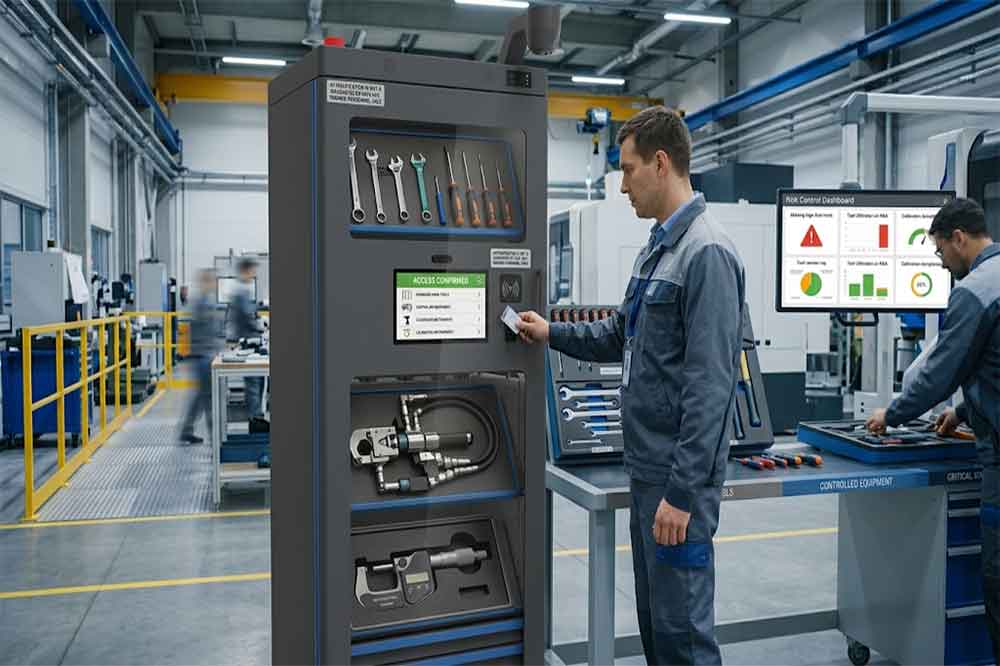
RFID Tool Cabinet for Tool Risk Management: Identify Problems Before They EscalateA missing screwdriver and an unavailable torque wrench may both appear as tool management problems, but the consequences can be very different. One may cause a short delay in a routine maintenance task. The other could interrupt a production line, delay a quality inspection, or leave a critical job waiting for equipment.Industrial companies do not need the same level of control for every tool. They need to understand which tools create the greatest operational, financial, quality, or safety risks and decide how those risks should be managed.An RFID tool cabinet can support this work by improving tool identification, recording checkout and return events, supporting configured access rules, and making selected tool statuses easier to review. When these functions are connected to a clear risk management process, teams can respond more consistently to missing tools, overdue returns, restricted equipment, and recurring shortages.The cabinet is not a complete risk management system by itself. Its value depends on how the company classifies tools, defines control requirements, handles exceptions, and uses the information collected.What Is Tool Risk Management?Tool risk management is the process of identifying problems that could arise from storing, issuing, using, maintaining, or losing industrial tools, then applying controls appropriate to their potential consequences.The risks vary by workplace. A general-purpose wrench may mainly create a replacement cost if it goes missing. A calibrated measuring instrument may introduce quality concerns if its status is uncertain. A specialized maintenance tool may cause production delays if it cannot be located when needed.A practical risk management process usually includes identifying tools and possible failure scenarios, estimating their likelihood and impact, selecting controls, assigning responsibility, and reviewing whether those controls are working.An RFID tool cabinet can contribute to several parts of this process. It can help establish which tools are registered, record supported transactions, associate events with users, and provide information about recorded availability or status.These records can help teams investigate risk events and identify patterns. For example, repeated overdue returns from one department may indicate a workflow problem, while frequent requests for an unavailable tool may reveal a shortage or allocation issue.The important point is that risk management starts with understanding the consequences of a problem. RFID provides useful information and control options, but people still need to assess the risks and decide what action is appropriate.Which Tool Risks Should Companies Consider?Tool loss and unexplained inventory differencesTools may disappear gradually rather than in one obvious incident. An item is borrowed without a complete transaction, returned to the wrong storage area, or moved to another department without updating its record.Over time, the digital register and physical inventory no longer match.An RFID-enabled cabinet can support inventory verification and record tool checkout and return events. When a discrepancy appears, supervisors can review the available transaction history and investigate whether the issue involves an incomplete return, an incorrect record, or a genuinely missing item.This does not guarantee that every loss will be prevented. The effectiveness depends on tag readability, cabinet design, transaction rules, and whether tools are required to pass through the controlled workflow.Production delays caused by unavailable toolsSome tools are inexpensive but operationally critical. A particular fixture, service tool, or specialized instrument may be required for one specific maintenance procedure.If that item is missing, being repaired, or already allocated to another team, the cost of the delay may exceed the replacement value of the tool.An RFID tool cabinet can help teams review recorded availability, outstanding checkouts, and recurring demand. Combined with work-order planning, these records can reveal which tools deserve closer availability monitoring or a backup plan.For more detailed guidance, companies can also review RFID tool downtime management and RFID tool demand planning.Unauthorized access or useSome tools are expensive, sensitive, specialized, or subject to internal restrictions. Uncontrolled access can increase the risk of loss, misuse, or use by personnel who have not received the required training.A compatible RFID cabinet system may support user authentication, permissions, and transaction records. These features can help a company apply different access rules to different tool categories.However, a recorded user identity does not prove that the tool was used correctly after checkout. Where misuse could have serious consequences, additional safeguards, supervision, training, and work procedures may be necessary.Tools used in unsuitable conditionA tool can be physically available but not ready for use. It may be damaged, awaiting repair, overdue for inspection, or subject to a restriction that has not been reflected in the cabinet’s current status.This creates a different kind of risk from ordinary tool loss. The concern is not simply whether the tool can be found, but whether it should be issued.A tool management platform can link tools to maintenance or inspection information when the relevant data is available. Depending on the system, it may display warnings, flag restricted items, or enforce configured checkout rules.The company must define the status categories and ensure that inspection or maintenance information remains accurate.Poor visibility across departmentsA tool may be available somewhere in a factory but remain unavailable to the team that needs it. Different departments may maintain separate registers, use different naming conventions, or follow inconsistent transfer procedures.This makes it difficult to understand the overall exposure created by shared equipment.A coordinated RFID tool management system can help standardize tool identities and record movements between cabinets or locations where the required functionality is supported. This gives managers a better basis for reviewing shared resources and deciding where stronger controls are needed.Classify Tools According to RiskOne of the most useful steps is to stop treating all tools as equally important.A simple classification process can group tools according to factors such as replacement value, operational criticality, inspection requirements, access restrictions, loss history, and the consequences of incorrect use.For example, a factory might use three broad categories:Risk categoryTypical characteristicsPossible controlsStandardCommon tools with limited operational impactBasic identification, checkout records, periodic inventoryControlledHigher replacement cost, frequent demand, or restricted accessUser permissions, closer transaction review, exception alertsCriticalSignificant production, quality, or safety consequences if unavailable or misusedDefined authorization, status checks, escalation procedures, contingency planningThese categories are illustrative rather than universal. A company should adapt them to its own equipment, processes, and risk assessment.A low-cost tool may still deserve critical status if a production process cannot continue without it. Conversely, an expensive tool may not require the strictest operational controls if the consequences of loss or misuse are limited.Risk classification should therefore reflect both the probability of a problem and the potential impact.Use a practical risk scoring methodA simple risk score can help teams prioritize their attention. One common approach is to score likelihood and impact separately, then multiply the two values.For example:Risk score = Likelihood score × Impact scoreIf each factor is scored from one to five, the resulting score ranges from one to twenty-five.A tool with a likelihood score of four and an impact score of five receives a score of twenty. A tool with a likelihood score of two and an impact score of two receives a score of four.The numbers are only a prioritization aid. They do not provide a precise prediction of future events, and different risks may require separate treatment even when their scores are similar.Teams should document their scoring criteria and review them when operating conditions change. A frequently missing tool may deserve a higher likelihood rating, while a tool used in a newly critical process may need a higher impact rating.How an RFID Tool Cabinet Supports Risk ControlsImprove tool identification and recorded statusRisk decisions are difficult when the company cannot reliably identify the affected tool.Each managed tool should have a unique asset record linked to its RFID tag. The record may contain the tool category, location, responsible department, current status, and relevant risk classification.This allows the management platform to distinguish between tools that look similar but have different control requirements.For example, two visually identical measuring instruments may have different inspection dates or restrictions. Their records should not be combined simply because the models match.Accurate identification creates a foundation for more targeted control rules and more reliable investigations.Record transactions that matterCheckout and return events can provide useful evidence about how tools move through the workplace.Depending on the system configuration, a transaction may record the tool ID, user ID, timestamp, cabinet, and event type. Transfer or exception events may also be recorded if the software supports them.These records can help managers investigate overdue tools and identify recurring patterns. If one category regularly remains checked out beyond the expected period, the team can review whether return rules, work scheduling, or storage arrangements need to change.The goal is not to collect every possible data point. It is to capture enough reliable information to support the decisions that matter.Apply risk-based access rulesRisk classification can guide cabinet permissions.Standard tools may be available through a routine checkout process, while selected equipment may require a specific user role, supervisor approval, or another configured authorization step.The rules should be clear enough for employees to follow without creating unnecessary delays. Emergency access also needs attention: if a critical maintenance job cannot wait, the company should define how an authorized exception is approved and recorded.Review permissions when employees change roles, temporary assignments end, or departments reorganize. Otherwise, outdated permissions can create avoidable exposure.For more detail, see RFID tool cabinet access control.Support exception alerts and escalationAn exception becomes more useful when someone knows what action to take.Examples include a critical tool remaining checked out beyond its expected return time, an inventory discrepancy involving a high-risk item, or an item whose status indicates that it should not be issued.Where supported, an RFID tool management platform can generate alerts or reports for these events. The company should then define who receives the alert, how quickly it should be reviewed, and when the issue must be escalated.Not every exception requires the same response. A short delay involving a common hand tool may need a reminder. An unexplained discrepancy involving critical equipment may require an immediate inventory check and supervisor review.The response should reflect the actual risk rather than relying on a single rule for every event.Make recurring risk patterns easier to identifyA single missing tool may be an isolated incident. Repeated missing tools from the same work area could indicate a deeper problem.Transaction histories and exception reports can help identify recurring issues, such as frequent overdue returns, repeated status overrides, tools often unavailable during planned maintenance, or unusually high demand for specific equipment.Managers can use these patterns to adjust storage locations, clarify responsibilities, revise checkout periods, purchase backup tools, or improve employee training.For related operational metrics, see RFID tool cabinet reporting and analytics.Build a Risk Register for Managed ToolsA risk register helps turn observations into assigned actions. It does not need to be complicated, particularly during a pilot project.A useful register might include the following fields:FieldPurposeTool ID and categoryIdentifies the equipment under reviewRisk scenarioDescribes what could go wrongLikelihood and impactEstablishes a consistent priorityExisting controlsRecords what is already in placeAdditional actionDefines the proposed risk responseResponsible personAssigns ownershipReview dateSets a point for reassessmentCurrent statusShows whether the action is open or completeFor example, a specialized maintenance tool may have a high impact rating because its absence can delay a critical repair. Existing controls might include a cabinet checkout record, while an additional action could be to introduce a return-time review and identify a backup source.The risk register should remain connected to the real operating process. If it becomes a spreadsheet that nobody updates, it will provide little ongoing value.An RFID tool cabinet can supply some of the operational information used during reviews, but risk ratings, action ownership, and decisions may need to remain in a separate maintenance, quality, or risk management system.Connect Tool Risk Information With Maintenance and PlanningTool risk does not exist in isolation.Maintenance teams may know that a particular tool is essential for a planned repair. Quality teams may know that a measuring instrument must have a current calibration status. Production planners may know that several work orders require the same limited equipment.Combining these perspectives can improve decisions about tool availability and control.Where system interfaces support it, an RFID tool management platform may exchange tool identities and transaction information with a computerized maintenance management system, enterprise resource planning platform, or other operational software.For example, a maintenance planner could review whether required tools are recorded as available before scheduling a job. A tool manager could use demand history to identify frequently contested equipment. A quality team could review the recorded status of controlled instruments before use.The implementation should define which system owns each authoritative record and how updates are synchronized. If a connected system becomes unavailable, staff need a documented process for handling transactions and reconciling records afterward.Integration should be tested with actual workflows rather than judged only by the presence of an API or a software connection.How to Implement Risk-Based RFID Tool ManagementStart with the most consequential risksDo not begin by trying to apply advanced controls to every item in the factory.Choose a tool group where a problem would have a meaningful impact, such as critical maintenance equipment, high-value tools, or instruments with specific inspection requirements.Document the main risk scenarios and the controls already in place. This provides a baseline for deciding what the RFID cabinet should help improve.Confirm the required system functionsTranslate the risk scenarios into specific requirements.A project may need unique tool identification, user authentication, transaction history, configurable permissions, status warnings, exception reporting, or integration with maintenance records.Ask the supplier to demonstrate each important function. If a requirement is to prevent checkout of restricted tools, confirm whether the proposed system can enforce the rule or only display a warning.Test normal operations and failure scenariosA pilot should include everyday checkout and return tasks, but that is only the beginning.Test missing tags, duplicate-looking tools, overdue returns, restricted status, unauthorized access attempts, damaged returns, and network interruptions. Check how the system records each event and whether employees can follow the required response.For critical equipment, test the escalation process as well. An alert is useful only if the responsible person receives it and knows what to do.Define measurable indicatorsChoose a small set of indicators that reflect the original risk.Possible measures include overdue returns for critical tools, inventory discrepancies, time needed to locate a required item, repeated access exceptions, or tool-related delays in maintenance work.Compare results with a reliable baseline and allow for differences in workload or production conditions. Do not assume that every improvement is caused by the cabinet alone.Review and adjust the controlsAfter the pilot, review whether the controls are reducing the intended exposure without creating excessive work.A rule that is too strict may encourage employees to bypass the process. A rule that is too loose may fail to address the original risk.Use feedback from operators, supervisors, maintenance staff, and IT personnel to refine the workflow before expanding to more tool categories or locations.Common Mistakes in Tool Risk ManagementOne common mistake is classifying risk only by purchase price. A low-cost tool may be essential to production, while a more expensive item may have limited operational impact. Classification should consider consequences, likelihood, and use conditions.Another mistake is assuming that RFID automatically prevents tool loss. The system can improve identification and recordkeeping, but results depend on tag performance, cabinet design, transaction compliance, and the procedures used outside the cabinet.Companies may also create too many alerts. If every minor delay triggers the same urgent notification, staff can begin to ignore them. Prioritize events according to their impact and assign clear response responsibilities.A further problem is failing to maintain tool status information. An RFID record cannot provide a reliable risk signal if the underlying inspection, maintenance, or location data is outdated.Finally, some projects measure only how many tools have been tagged. Tagging is an implementation milestone, not proof that operational risk has been reduced. The more useful question is whether the controls help prevent, detect, or resolve the specific problems identified at the start.Choosing an RFID Tool Cabinet for Risk ManagementWhen evaluating an RFID tool cabinet, begin with the risks the system is expected to address.Review tool identification accuracy, cabinet access options, user authentication, transaction records, status management, exception handling, reporting, and supported software interfaces. The required features will depend on the tool categories and the operating environment.Ask practical questions during evaluation:Can the system distinguish individual tools with similar models or appearances?Which checkout, return, and access events are recorded?Can different permissions be configured for different tool categories?Can restricted status be enforced, or is it only displayed?How are overdue returns and unresolved discrepancies handled?Can records be exported or shared with existing maintenance software?What happens during network or synchronization failures?Can the system support the company’s expected number of users, tools, and locations?For a broader purchasing review, use an RFID tool cabinet procurement checklist. A structured RFID tool cabinet pilot project can then verify whether the selected functions address the real risks before full deployment.The best solution is not necessarily the one with the longest feature list. It is the one that provides dependable information and workable controls for the risks the organization actually faces.ConclusionRFID tool cabinets can support industrial tool risk management by improving identification, recording tool movements, supporting configured permissions, and making selected exceptions easier to investigate. When this information is used alongside a risk register, maintenance planning, and clear operating procedures, teams can make more informed decisions about which tools need stronger controls.The process should begin with risk, not hardware. Identify the tools whose loss, unavailability, restricted status, or misuse could have the greatest consequences. Define suitable controls, test them with actual workflows, and measure whether they improve the intended outcomes.RFID does not eliminate every risk, and it cannot replace sound maintenance, safety, or quality practices. Used as part of a well-designed process, however, it can help organizations move from reacting to missing or unavailable tools toward more consistent, evidence-based risk control.
RFID Tool Cabinet for Tool Risk Management Tech & Innovation
Oct 15, 2026 • visibility 20 • 30 min read

RFID Tool Cabinet for Tool Risk Management

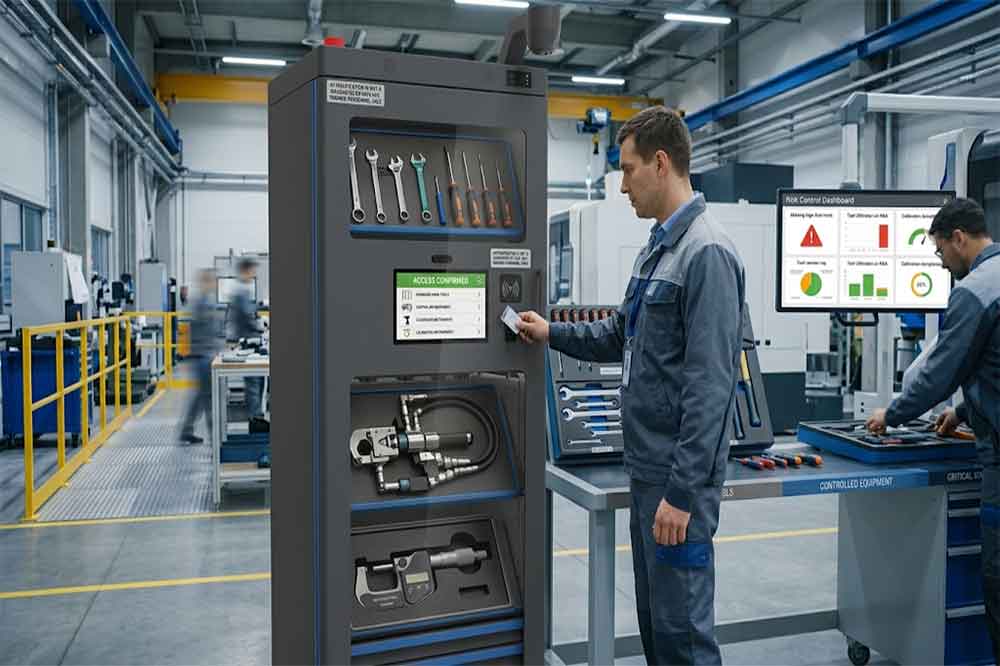
RFID Tool Cabinet for Tool Risk Management: Identify Problems Before They EscalateA missing screwdriver and an unavailable torque wrench may both appear as tool management problems, but the consequences can be very different. One may cause a short delay in a routine maintenance task. The other could interrupt a production line, delay a quality inspection, or leave a critical job waiting for equipment.Industrial companies do not need the same level of control for every tool. They need to understand which tools create the greatest operational, financial, quality, or safety risks and decide how those risks should be managed.An RFID tool cabinet can support this work by improving tool identification, recording checkout and return events, supporting configured access rules, and making selected tool statuses easier to review. When these functions are connected to a clear risk management process, teams can respond more consistently to missing tools, overdue returns, restricted equipment, and recurring shortages.The cabinet is not a complete risk management system by itself. Its value depends on how the company classifies tools, defines control requirements, handles exceptions, and uses the information collected.What Is Tool Risk Management?Tool risk management is the process of identifying problems that could arise from storing, issuing, using, maintaining, or losing industrial tools, then applying controls appropriate to their potential consequences.The risks vary by workplace. A general-purpose wrench may mainly create a replacement cost if it goes missing. A calibrated measuring instrument may introduce quality concerns if its status is uncertain. A specialized maintenance tool may cause production delays if it cannot be located when needed.A practical risk management process usually includes identifying tools and possible failure scenarios, estimating their likelihood and impact, selecting controls, assigning responsibility, and reviewing whether those controls are working.An RFID tool cabinet can contribute to several parts of this process. It can help establish which tools are registered, record supported transactions, associate events with users, and provide information about recorded availability or status.These records can help teams investigate risk events and identify patterns. For example, repeated overdue returns from one department may indicate a workflow problem, while frequent requests for an unavailable tool may reveal a shortage or allocation issue.The important point is that risk management starts with understanding the consequences of a problem. RFID provides useful information and control options, but people still need to assess the risks and decide what action is appropriate.Which Tool Risks Should Companies Consider?Tool loss and unexplained inventory differencesTools may disappear gradually rather than in one obvious incident. An item is borrowed without a complete transaction, returned to the wrong storage area, or moved to another department without updating its record.Over time, the digital register and physical inventory no longer match.An RFID-enabled cabinet can support inventory verification and record tool checkout and return events. When a discrepancy appears, supervisors can review the available transaction history and investigate whether the issue involves an incomplete return, an incorrect record, or a genuinely missing item.This does not guarantee that every loss will be prevented. The effectiveness depends on tag readability, cabinet design, transaction rules, and whether tools are required to pass through the controlled workflow.Production delays caused by unavailable toolsSome tools are inexpensive but operationally critical. A particular fixture, service tool, or specialized instrument may be required for one specific maintenance procedure.If that item is missing, being repaired, or already allocated to another team, the cost of the delay may exceed the replacement value of the tool.An RFID tool cabinet can help teams review recorded availability, outstanding checkouts, and recurring demand. Combined with work-order planning, these records can reveal which tools deserve closer availability monitoring or a backup plan.For more detailed guidance, companies can also review RFID tool downtime management and RFID tool demand planning.Unauthorized access or useSome tools are expensive, sensitive, specialized, or subject to internal restrictions. Uncontrolled access can increase the risk of loss, misuse, or use by personnel who have not received the required training.A compatible RFID cabinet system may support user authentication, permissions, and transaction records. These features can help a company apply different access rules to different tool categories.However, a recorded user identity does not prove that the tool was used correctly after checkout. Where misuse could have serious consequences, additional safeguards, supervision, training, and work procedures may be necessary.Tools used in unsuitable conditionA tool can be physically available but not ready for use. It may be damaged, awaiting repair, overdue for inspection, or subject to a restriction that has not been reflected in the cabinet’s current status.This creates a different kind of risk from ordinary tool loss. The concern is not simply whether the tool can be found, but whether it should be issued.A tool management platform can link tools to maintenance or inspection information when the relevant data is available. Depending on the system, it may display warnings, flag restricted items, or enforce configured checkout rules.The company must define the status categories and ensure that inspection or maintenance information remains accurate.Poor visibility across departmentsA tool may be available somewhere in a factory but remain unavailable to the team that needs it. Different departments may maintain separate registers, use different naming conventions, or follow inconsistent transfer procedures.This makes it difficult to understand the overall exposure created by shared equipment.A coordinated RFID tool management system can help standardize tool identities and record movements between cabinets or locations where the required functionality is supported. This gives managers a better basis for reviewing shared resources and deciding where stronger controls are needed.Classify Tools According to RiskOne of the most useful steps is to stop treating all tools as equally important.A simple classification process can group tools according to factors such as replacement value, operational criticality, inspection requirements, access restrictions, loss history, and the consequences of incorrect use.For example, a factory might use three broad categories:Risk categoryTypical characteristicsPossible controlsStandardCommon tools with limited operational impactBasic identification, checkout records, periodic inventoryControlledHigher replacement cost, frequent demand, or restricted accessUser permissions, closer transaction review, exception alertsCriticalSignificant production, quality, or safety consequences if unavailable or misusedDefined authorization, status checks, escalation procedures, contingency planningThese categories are illustrative rather than universal. A company should adapt them to its own equipment, processes, and risk assessment.A low-cost tool may still deserve critical status if a production process cannot continue without it. Conversely, an expensive tool may not require the strictest operational controls if the consequences of loss or misuse are limited.Risk classification should therefore reflect both the probability of a problem and the potential impact.Use a practical risk scoring methodA simple risk score can help teams prioritize their attention. One common approach is to score likelihood and impact separately, then multiply the two values.For example:Risk score = Likelihood score × Impact scoreIf each factor is scored from one to five, the resulting score ranges from one to twenty-five.A tool with a likelihood score of four and an impact score of five receives a score of twenty. A tool with a likelihood score of two and an impact score of two receives a score of four.The numbers are only a prioritization aid. They do not provide a precise prediction of future events, and different risks may require separate treatment even when their scores are similar.Teams should document their scoring criteria and review them when operating conditions change. A frequently missing tool may deserve a higher likelihood rating, while a tool used in a newly critical process may need a higher impact rating.How an RFID Tool Cabinet Supports Risk ControlsImprove tool identification and recorded statusRisk decisions are difficult when the company cannot reliably identify the affected tool.Each managed tool should have a unique asset record linked to its RFID tag. The record may contain the tool category, location, responsible department, current status, and relevant risk classification.This allows the management platform to distinguish between tools that look similar but have different control requirements.For example, two visually identical measuring instruments may have different inspection dates or restrictions. Their records should not be combined simply because the models match.Accurate identification creates a foundation for more targeted control rules and more reliable investigations.Record transactions that matterCheckout and return events can provide useful evidence about how tools move through the workplace.Depending on the system configuration, a transaction may record the tool ID, user ID, timestamp, cabinet, and event type. Transfer or exception events may also be recorded if the software supports them.These records can help managers investigate overdue tools and identify recurring patterns. If one category regularly remains checked out beyond the expected period, the team can review whether return rules, work scheduling, or storage arrangements need to change.The goal is not to collect every possible data point. It is to capture enough reliable information to support the decisions that matter.Apply risk-based access rulesRisk classification can guide cabinet permissions.Standard tools may be available through a routine checkout process, while selected equipment may require a specific user role, supervisor approval, or another configured authorization step.The rules should be clear enough for employees to follow without creating unnecessary delays. Emergency access also needs attention: if a critical maintenance job cannot wait, the company should define how an authorized exception is approved and recorded.Review permissions when employees change roles, temporary assignments end, or departments reorganize. Otherwise, outdated permissions can create avoidable exposure.For more detail, see RFID tool cabinet access control.Support exception alerts and escalationAn exception becomes more useful when someone knows what action to take.Examples include a critical tool remaining checked out beyond its expected return time, an inventory discrepancy involving a high-risk item, or an item whose status indicates that it should not be issued.Where supported, an RFID tool management platform can generate alerts or reports for these events. The company should then define who receives the alert, how quickly it should be reviewed, and when the issue must be escalated.Not every exception requires the same response. A short delay involving a common hand tool may need a reminder. An unexplained discrepancy involving critical equipment may require an immediate inventory check and supervisor review.The response should reflect the actual risk rather than relying on a single rule for every event.Make recurring risk patterns easier to identifyA single missing tool may be an isolated incident. Repeated missing tools from the same work area could indicate a deeper problem.Transaction histories and exception reports can help identify recurring issues, such as frequent overdue returns, repeated status overrides, tools often unavailable during planned maintenance, or unusually high demand for specific equipment.Managers can use these patterns to adjust storage locations, clarify responsibilities, revise checkout periods, purchase backup tools, or improve employee training.For related operational metrics, see RFID tool cabinet reporting and analytics.Build a Risk Register for Managed ToolsA risk register helps turn observations into assigned actions. It does not need to be complicated, particularly during a pilot project.A useful register might include the following fields:FieldPurposeTool ID and categoryIdentifies the equipment under reviewRisk scenarioDescribes what could go wrongLikelihood and impactEstablishes a consistent priorityExisting controlsRecords what is already in placeAdditional actionDefines the proposed risk responseResponsible personAssigns ownershipReview dateSets a point for reassessmentCurrent statusShows whether the action is open or completeFor example, a specialized maintenance tool may have a high impact rating because its absence can delay a critical repair. Existing controls might include a cabinet checkout record, while an additional action could be to introduce a return-time review and identify a backup source.The risk register should remain connected to the real operating process. If it becomes a spreadsheet that nobody updates, it will provide little ongoing value.An RFID tool cabinet can supply some of the operational information used during reviews, but risk ratings, action ownership, and decisions may need to remain in a separate maintenance, quality, or risk management system.Connect Tool Risk Information With Maintenance and PlanningTool risk does not exist in isolation.Maintenance teams may know that a particular tool is essential for a planned repair. Quality teams may know that a measuring instrument must have a current calibration status. Production planners may know that several work orders require the same limited equipment.Combining these perspectives can improve decisions about tool availability and control.Where system interfaces support it, an RFID tool management platform may exchange tool identities and transaction information with a computerized maintenance management system, enterprise resource planning platform, or other operational software.For example, a maintenance planner could review whether required tools are recorded as available before scheduling a job. A tool manager could use demand history to identify frequently contested equipment. A quality team could review the recorded status of controlled instruments before use.The implementation should define which system owns each authoritative record and how updates are synchronized. If a connected system becomes unavailable, staff need a documented process for handling transactions and reconciling records afterward.Integration should be tested with actual workflows rather than judged only by the presence of an API or a software connection.How to Implement Risk-Based RFID Tool ManagementStart with the most consequential risksDo not begin by trying to apply advanced controls to every item in the factory.Choose a tool group where a problem would have a meaningful impact, such as critical maintenance equipment, high-value tools, or instruments with specific inspection requirements.Document the main risk scenarios and the controls already in place. This provides a baseline for deciding what the RFID cabinet should help improve.Confirm the required system functionsTranslate the risk scenarios into specific requirements.A project may need unique tool identification, user authentication, transaction history, configurable permissions, status warnings, exception reporting, or integration with maintenance records.Ask the supplier to demonstrate each important function. If a requirement is to prevent checkout of restricted tools, confirm whether the proposed system can enforce the rule or only display a warning.Test normal operations and failure scenariosA pilot should include everyday checkout and return tasks, but that is only the beginning.Test missing tags, duplicate-looking tools, overdue returns, restricted status, unauthorized access attempts, damaged returns, and network interruptions. Check how the system records each event and whether employees can follow the required response.For critical equipment, test the escalation process as well. An alert is useful only if the responsible person receives it and knows what to do.Define measurable indicatorsChoose a small set of indicators that reflect the original risk.Possible measures include overdue returns for critical tools, inventory discrepancies, time needed to locate a required item, repeated access exceptions, or tool-related delays in maintenance work.Compare results with a reliable baseline and allow for differences in workload or production conditions. Do not assume that every improvement is caused by the cabinet alone.Review and adjust the controlsAfter the pilot, review whether the controls are reducing the intended exposure without creating excessive work.A rule that is too strict may encourage employees to bypass the process. A rule that is too loose may fail to address the original risk.Use feedback from operators, supervisors, maintenance staff, and IT personnel to refine the workflow before expanding to more tool categories or locations.Common Mistakes in Tool Risk ManagementOne common mistake is classifying risk only by purchase price. A low-cost tool may be essential to production, while a more expensive item may have limited operational impact. Classification should consider consequences, likelihood, and use conditions.Another mistake is assuming that RFID automatically prevents tool loss. The system can improve identification and recordkeeping, but results depend on tag performance, cabinet design, transaction compliance, and the procedures used outside the cabinet.Companies may also create too many alerts. If every minor delay triggers the same urgent notification, staff can begin to ignore them. Prioritize events according to their impact and assign clear response responsibilities.A further problem is failing to maintain tool status information. An RFID record cannot provide a reliable risk signal if the underlying inspection, maintenance, or location data is outdated.Finally, some projects measure only how many tools have been tagged. Tagging is an implementation milestone, not proof that operational risk has been reduced. The more useful question is whether the controls help prevent, detect, or resolve the specific problems identified at the start.Choosing an RFID Tool Cabinet for Risk ManagementWhen evaluating an RFID tool cabinet, begin with the risks the system is expected to address.Review tool identification accuracy, cabinet access options, user authentication, transaction records, status management, exception handling, reporting, and supported software interfaces. The required features will depend on the tool categories and the operating environment.Ask practical questions during evaluation:Can the system distinguish individual tools with similar models or appearances?Which checkout, return, and access events are recorded?Can different permissions be configured for different tool categories?Can restricted status be enforced, or is it only displayed?How are overdue returns and unresolved discrepancies handled?Can records be exported or shared with existing maintenance software?What happens during network or synchronization failures?Can the system support the company’s expected number of users, tools, and locations?For a broader purchasing review, use an RFID tool cabinet procurement checklist. A structured RFID tool cabinet pilot project can then verify whether the selected functions address the real risks before full deployment.The best solution is not necessarily the one with the longest feature list. It is the one that provides dependable information and workable controls for the risks the organization actually faces.ConclusionRFID tool cabinets can support industrial tool risk management by improving identification, recording tool movements, supporting configured permissions, and making selected exceptions easier to investigate. When this information is used alongside a risk register, maintenance planning, and clear operating procedures, teams can make more informed decisions about which tools need stronger controls.The process should begin with risk, not hardware. Identify the tools whose loss, unavailability, restricted status, or misuse could have the greatest consequences. Define suitable controls, test them with actual workflows, and measure whether they improve the intended outcomes.RFID does not eliminate every risk, and it cannot replace sound maintenance, safety, or quality practices. Used as part of a well-designed process, however, it can help organizations move from reacting to missing or unavailable tools toward more consistent, evidence-based risk control.
RFID Tool Cabinet for Tool Risk Management Tech & Innovation
Oct 15, 2026 • visibility 20 • 30 min read

RFID Tool Cabinet for Tool Risk Management

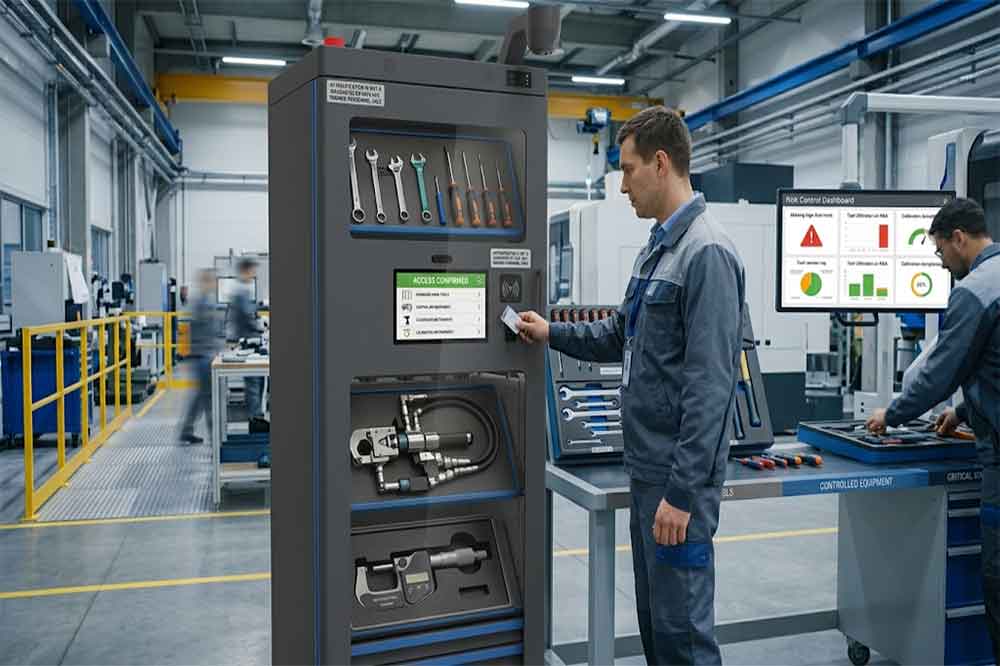
RFID Tool Cabinet for Tool Risk Management: Identify Problems Before They EscalateA missing screwdriver and an unavailable torque wrench may both appear as tool management problems, but the consequences can be very different. One may cause a short delay in a routine maintenance task. The other could interrupt a production line, delay a quality inspection, or leave a critical job waiting for equipment.Industrial companies do not need the same level of control for every tool. They need to understand which tools create the greatest operational, financial, quality, or safety risks and decide how those risks should be managed.An RFID tool cabinet can support this work by improving tool identification, recording checkout and return events, supporting configured access rules, and making selected tool statuses easier to review. When these functions are connected to a clear risk management process, teams can respond more consistently to missing tools, overdue returns, restricted equipment, and recurring shortages.The cabinet is not a complete risk management system by itself. Its value depends on how the company classifies tools, defines control requirements, handles exceptions, and uses the information collected.What Is Tool Risk Management?Tool risk management is the process of identifying problems that could arise from storing, issuing, using, maintaining, or losing industrial tools, then applying controls appropriate to their potential consequences.The risks vary by workplace. A general-purpose wrench may mainly create a replacement cost if it goes missing. A calibrated measuring instrument may introduce quality concerns if its status is uncertain. A specialized maintenance tool may cause production delays if it cannot be located when needed.A practical risk management process usually includes identifying tools and possible failure scenarios, estimating their likelihood and impact, selecting controls, assigning responsibility, and reviewing whether those controls are working.An RFID tool cabinet can contribute to several parts of this process. It can help establish which tools are registered, record supported transactions, associate events with users, and provide information about recorded availability or status.These records can help teams investigate risk events and identify patterns. For example, repeated overdue returns from one department may indicate a workflow problem, while frequent requests for an unavailable tool may reveal a shortage or allocation issue.The important point is that risk management starts with understanding the consequences of a problem. RFID provides useful information and control options, but people still need to assess the risks and decide what action is appropriate.Which Tool Risks Should Companies Consider?Tool loss and unexplained inventory differencesTools may disappear gradually rather than in one obvious incident. An item is borrowed without a complete transaction, returned to the wrong storage area, or moved to another department without updating its record.Over time, the digital register and physical inventory no longer match.An RFID-enabled cabinet can support inventory verification and record tool checkout and return events. When a discrepancy appears, supervisors can review the available transaction history and investigate whether the issue involves an incomplete return, an incorrect record, or a genuinely missing item.This does not guarantee that every loss will be prevented. The effectiveness depends on tag readability, cabinet design, transaction rules, and whether tools are required to pass through the controlled workflow.Production delays caused by unavailable toolsSome tools are inexpensive but operationally critical. A particular fixture, service tool, or specialized instrument may be required for one specific maintenance procedure.If that item is missing, being repaired, or already allocated to another team, the cost of the delay may exceed the replacement value of the tool.An RFID tool cabinet can help teams review recorded availability, outstanding checkouts, and recurring demand. Combined with work-order planning, these records can reveal which tools deserve closer availability monitoring or a backup plan.For more detailed guidance, companies can also review RFID tool downtime management and RFID tool demand planning.Unauthorized access or useSome tools are expensive, sensitive, specialized, or subject to internal restrictions. Uncontrolled access can increase the risk of loss, misuse, or use by personnel who have not received the required training.A compatible RFID cabinet system may support user authentication, permissions, and transaction records. These features can help a company apply different access rules to different tool categories.However, a recorded user identity does not prove that the tool was used correctly after checkout. Where misuse could have serious consequences, additional safeguards, supervision, training, and work procedures may be necessary.Tools used in unsuitable conditionA tool can be physically available but not ready for use. It may be damaged, awaiting repair, overdue for inspection, or subject to a restriction that has not been reflected in the cabinet’s current status.This creates a different kind of risk from ordinary tool loss. The concern is not simply whether the tool can be found, but whether it should be issued.A tool management platform can link tools to maintenance or inspection information when the relevant data is available. Depending on the system, it may display warnings, flag restricted items, or enforce configured checkout rules.The company must define the status categories and ensure that inspection or maintenance information remains accurate.Poor visibility across departmentsA tool may be available somewhere in a factory but remain unavailable to the team that needs it. Different departments may maintain separate registers, use different naming conventions, or follow inconsistent transfer procedures.This makes it difficult to understand the overall exposure created by shared equipment.A coordinated RFID tool management system can help standardize tool identities and record movements between cabinets or locations where the required functionality is supported. This gives managers a better basis for reviewing shared resources and deciding where stronger controls are needed.Classify Tools According to RiskOne of the most useful steps is to stop treating all tools as equally important.A simple classification process can group tools according to factors such as replacement value, operational criticality, inspection requirements, access restrictions, loss history, and the consequences of incorrect use.For example, a factory might use three broad categories:Risk categoryTypical characteristicsPossible controlsStandardCommon tools with limited operational impactBasic identification, checkout records, periodic inventoryControlledHigher replacement cost, frequent demand, or restricted accessUser permissions, closer transaction review, exception alertsCriticalSignificant production, quality, or safety consequences if unavailable or misusedDefined authorization, status checks, escalation procedures, contingency planningThese categories are illustrative rather than universal. A company should adapt them to its own equipment, processes, and risk assessment.A low-cost tool may still deserve critical status if a production process cannot continue without it. Conversely, an expensive tool may not require the strictest operational controls if the consequences of loss or misuse are limited.Risk classification should therefore reflect both the probability of a problem and the potential impact.Use a practical risk scoring methodA simple risk score can help teams prioritize their attention. One common approach is to score likelihood and impact separately, then multiply the two values.For example:Risk score = Likelihood score × Impact scoreIf each factor is scored from one to five, the resulting score ranges from one to twenty-five.A tool with a likelihood score of four and an impact score of five receives a score of twenty. A tool with a likelihood score of two and an impact score of two receives a score of four.The numbers are only a prioritization aid. They do not provide a precise prediction of future events, and different risks may require separate treatment even when their scores are similar.Teams should document their scoring criteria and review them when operating conditions change. A frequently missing tool may deserve a higher likelihood rating, while a tool used in a newly critical process may need a higher impact rating.How an RFID Tool Cabinet Supports Risk ControlsImprove tool identification and recorded statusRisk decisions are difficult when the company cannot reliably identify the affected tool.Each managed tool should have a unique asset record linked to its RFID tag. The record may contain the tool category, location, responsible department, current status, and relevant risk classification.This allows the management platform to distinguish between tools that look similar but have different control requirements.For example, two visually identical measuring instruments may have different inspection dates or restrictions. Their records should not be combined simply because the models match.Accurate identification creates a foundation for more targeted control rules and more reliable investigations.Record transactions that matterCheckout and return events can provide useful evidence about how tools move through the workplace.Depending on the system configuration, a transaction may record the tool ID, user ID, timestamp, cabinet, and event type. Transfer or exception events may also be recorded if the software supports them.These records can help managers investigate overdue tools and identify recurring patterns. If one category regularly remains checked out beyond the expected period, the team can review whether return rules, work scheduling, or storage arrangements need to change.The goal is not to collect every possible data point. It is to capture enough reliable information to support the decisions that matter.Apply risk-based access rulesRisk classification can guide cabinet permissions.Standard tools may be available through a routine checkout process, while selected equipment may require a specific user role, supervisor approval, or another configured authorization step.The rules should be clear enough for employees to follow without creating unnecessary delays. Emergency access also needs attention: if a critical maintenance job cannot wait, the company should define how an authorized exception is approved and recorded.Review permissions when employees change roles, temporary assignments end, or departments reorganize. Otherwise, outdated permissions can create avoidable exposure.For more detail, see RFID tool cabinet access control.Support exception alerts and escalationAn exception becomes more useful when someone knows what action to take.Examples include a critical tool remaining checked out beyond its expected return time, an inventory discrepancy involving a high-risk item, or an item whose status indicates that it should not be issued.Where supported, an RFID tool management platform can generate alerts or reports for these events. The company should then define who receives the alert, how quickly it should be reviewed, and when the issue must be escalated.Not every exception requires the same response. A short delay involving a common hand tool may need a reminder. An unexplained discrepancy involving critical equipment may require an immediate inventory check and supervisor review.The response should reflect the actual risk rather than relying on a single rule for every event.Make recurring risk patterns easier to identifyA single missing tool may be an isolated incident. Repeated missing tools from the same work area could indicate a deeper problem.Transaction histories and exception reports can help identify recurring issues, such as frequent overdue returns, repeated status overrides, tools often unavailable during planned maintenance, or unusually high demand for specific equipment.Managers can use these patterns to adjust storage locations, clarify responsibilities, revise checkout periods, purchase backup tools, or improve employee training.For related operational metrics, see RFID tool cabinet reporting and analytics.Build a Risk Register for Managed ToolsA risk register helps turn observations into assigned actions. It does not need to be complicated, particularly during a pilot project.A useful register might include the following fields:FieldPurposeTool ID and categoryIdentifies the equipment under reviewRisk scenarioDescribes what could go wrongLikelihood and impactEstablishes a consistent priorityExisting controlsRecords what is already in placeAdditional actionDefines the proposed risk responseResponsible personAssigns ownershipReview dateSets a point for reassessmentCurrent statusShows whether the action is open or completeFor example, a specialized maintenance tool may have a high impact rating because its absence can delay a critical repair. Existing controls might include a cabinet checkout record, while an additional action could be to introduce a return-time review and identify a backup source.The risk register should remain connected to the real operating process. If it becomes a spreadsheet that nobody updates, it will provide little ongoing value.An RFID tool cabinet can supply some of the operational information used during reviews, but risk ratings, action ownership, and decisions may need to remain in a separate maintenance, quality, or risk management system.Connect Tool Risk Information With Maintenance and PlanningTool risk does not exist in isolation.Maintenance teams may know that a particular tool is essential for a planned repair. Quality teams may know that a measuring instrument must have a current calibration status. Production planners may know that several work orders require the same limited equipment.Combining these perspectives can improve decisions about tool availability and control.Where system interfaces support it, an RFID tool management platform may exchange tool identities and transaction information with a computerized maintenance management system, enterprise resource planning platform, or other operational software.For example, a maintenance planner could review whether required tools are recorded as available before scheduling a job. A tool manager could use demand history to identify frequently contested equipment. A quality team could review the recorded status of controlled instruments before use.The implementation should define which system owns each authoritative record and how updates are synchronized. If a connected system becomes unavailable, staff need a documented process for handling transactions and reconciling records afterward.Integration should be tested with actual workflows rather than judged only by the presence of an API or a software connection.How to Implement Risk-Based RFID Tool ManagementStart with the most consequential risksDo not begin by trying to apply advanced controls to every item in the factory.Choose a tool group where a problem would have a meaningful impact, such as critical maintenance equipment, high-value tools, or instruments with specific inspection requirements.Document the main risk scenarios and the controls already in place. This provides a baseline for deciding what the RFID cabinet should help improve.Confirm the required system functionsTranslate the risk scenarios into specific requirements.A project may need unique tool identification, user authentication, transaction history, configurable permissions, status warnings, exception reporting, or integration with maintenance records.Ask the supplier to demonstrate each important function. If a requirement is to prevent checkout of restricted tools, confirm whether the proposed system can enforce the rule or only display a warning.Test normal operations and failure scenariosA pilot should include everyday checkout and return tasks, but that is only the beginning.Test missing tags, duplicate-looking tools, overdue returns, restricted status, unauthorized access attempts, damaged returns, and network interruptions. Check how the system records each event and whether employees can follow the required response.For critical equipment, test the escalation process as well. An alert is useful only if the responsible person receives it and knows what to do.Define measurable indicatorsChoose a small set of indicators that reflect the original risk.Possible measures include overdue returns for critical tools, inventory discrepancies, time needed to locate a required item, repeated access exceptions, or tool-related delays in maintenance work.Compare results with a reliable baseline and allow for differences in workload or production conditions. Do not assume that every improvement is caused by the cabinet alone.Review and adjust the controlsAfter the pilot, review whether the controls are reducing the intended exposure without creating excessive work.A rule that is too strict may encourage employees to bypass the process. A rule that is too loose may fail to address the original risk.Use feedback from operators, supervisors, maintenance staff, and IT personnel to refine the workflow before expanding to more tool categories or locations.Common Mistakes in Tool Risk ManagementOne common mistake is classifying risk only by purchase price. A low-cost tool may be essential to production, while a more expensive item may have limited operational impact. Classification should consider consequences, likelihood, and use conditions.Another mistake is assuming that RFID automatically prevents tool loss. The system can improve identification and recordkeeping, but results depend on tag performance, cabinet design, transaction compliance, and the procedures used outside the cabinet.Companies may also create too many alerts. If every minor delay triggers the same urgent notification, staff can begin to ignore them. Prioritize events according to their impact and assign clear response responsibilities.A further problem is failing to maintain tool status information. An RFID record cannot provide a reliable risk signal if the underlying inspection, maintenance, or location data is outdated.Finally, some projects measure only how many tools have been tagged. Tagging is an implementation milestone, not proof that operational risk has been reduced. The more useful question is whether the controls help prevent, detect, or resolve the specific problems identified at the start.Choosing an RFID Tool Cabinet for Risk ManagementWhen evaluating an RFID tool cabinet, begin with the risks the system is expected to address.Review tool identification accuracy, cabinet access options, user authentication, transaction records, status management, exception handling, reporting, and supported software interfaces. The required features will depend on the tool categories and the operating environment.Ask practical questions during evaluation:Can the system distinguish individual tools with similar models or appearances?Which checkout, return, and access events are recorded?Can different permissions be configured for different tool categories?Can restricted status be enforced, or is it only displayed?How are overdue returns and unresolved discrepancies handled?Can records be exported or shared with existing maintenance software?What happens during network or synchronization failures?Can the system support the company’s expected number of users, tools, and locations?For a broader purchasing review, use an RFID tool cabinet procurement checklist. A structured RFID tool cabinet pilot project can then verify whether the selected functions address the real risks before full deployment.The best solution is not necessarily the one with the longest feature list. It is the one that provides dependable information and workable controls for the risks the organization actually faces.ConclusionRFID tool cabinets can support industrial tool risk management by improving identification, recording tool movements, supporting configured permissions, and making selected exceptions easier to investigate. When this information is used alongside a risk register, maintenance planning, and clear operating procedures, teams can make more informed decisions about which tools need stronger controls.The process should begin with risk, not hardware. Identify the tools whose loss, unavailability, restricted status, or misuse could have the greatest consequences. Define suitable controls, test them with actual workflows, and measure whether they improve the intended outcomes.RFID does not eliminate every risk, and it cannot replace sound maintenance, safety, or quality practices. Used as part of a well-designed process, however, it can help organizations move from reacting to missing or unavailable tools toward more consistent, evidence-based risk control.

article
Career & Business
Oct 15, 2026 • visibility 15 • 2 min read

overhead conveyor manufacturers

Overhead conveyor systems are designed to transport materials, components, and products efficiently across different stages of industrial production. Perfection Engineering provides conveyor solutions to support material handling requirements in manufacturing plants, assembly lines, warehouses, and industrial facilities. Businesses looking for reliable overhead conveyor manufacturers can explore suitable systems based on product weight, available floor space, workflow, and production requirements. These conveyors help utilise overhead space, reduce floor-level congestion, and maintain a more organised material movement process. Overhead conveyors can be considered for automotive, engineering, painting, packaging, and other industrial applications where products need to move between workstations. Selecting the right conveyor configuration depends on load capacity, conveyor layout, operating conditions, and integration with existing equipment. Perfection Engineering supports businesses in identifying suitable conveyor solutions for their operational needs. Companies in Delhi, Noida, Gurgaon, Faridabad, and other industrial regions can explore overhead conveyor systems to improve material handling and production workflow.Address:F-17 sector- 11 Noida G.B Nagar (U.P) 201301phone no:080 3501 7008

webdesigning house72
Read arrow_forward
article
Career & Business
Oct 15, 2026 • visibility 15 • 2 min read

overhead conveyor manufacturers

Overhead conveyor systems are designed to transport materials, components, and products efficiently across different stages of industrial production. Perfection Engineering provides conveyor solutions to support material handling requirements in manufacturing plants, assembly lines, warehouses, and industrial facilities. Businesses looking for reliable overhead conveyor manufacturers can explore suitable systems based on product weight, available floor space, workflow, and production requirements. These conveyors help utilise overhead space, reduce floor-level congestion, and maintain a more organised material movement process. Overhead conveyors can be considered for automotive, engineering, painting, packaging, and other industrial applications where products need to move between workstations. Selecting the right conveyor configuration depends on load capacity, conveyor layout, operating conditions, and integration with existing equipment. Perfection Engineering supports businesses in identifying suitable conveyor solutions for their operational needs. Companies in Delhi, Noida, Gurgaon, Faridabad, and other industrial regions can explore overhead conveyor systems to improve material handling and production workflow.Address:F-17 sector- 11 Noida G.B Nagar (U.P) 201301phone no:080 3501 7008

webdesigning house72
Read arrow_forward
How to Choose Standard 18650 Cells for OEM Battery Packs
Oct 15, 2026 • visibility 19 • 21 min read

How to Choose Standard 18650 Cells for OEM Battery Packs

Choosing 18650 cell for OEM battery pack is not simply a matter of finding the highest capacity.A battery pack may need high discharge current, long runtime, compact dimensions, stable performance, or a specific terminal design. In real OEM projects, the cell has to match the application, pack configuration, BMS, mechanical space, thermal design, and production requirements at the same time.That is why cell selection should happen before the battery pack design is finalized.This guide explains how to choose standard 18650 cells for OEM battery packs and what battery buyers, engineers, and procurement teams should check before placing a bulk order.1. Start With the ApplicationThe application should determine the cell selection.A flashlight, portable medical device, industrial instrument, power tool, and e-bike battery pack may all use 18650 cells, but their requirements can be very different.For example, a portable electronic device may prioritize capacity and compact size. A power tool can place much more emphasis on discharge current and temperature rise.Before selecting the cell, define:Required pack voltageRequired capacityContinuous discharge currentPeak discharge currentExpected runtimeAvailable installation spaceOperating temperatureCharging requirementsExpected cycle lifePack weight limitationsThis information provides the starting point for selecting an appropriate 18650 cell.2. Check the Nominal Voltage FirstMost standard 18650 lithium-ion cells used in OEM packs have a nominal voltage around 3.6V or 3.7V, depending on the cell chemistry and manufacturer’s specification.The fully charged voltage is commonly around 4.2V for conventional lithium-ion cells.The important point is that the pack voltage is determined by the number of cells connected in series.For example:ConfigurationNominal VoltageMaximum Voltage5S18.0–18.5V21.0V7S25.2–25.9V29.4V10S36.0–37.0V42.0V13S46.8–48.1V54.6V14S50.4–51.8V58.8VThe exact values depend on the cell specification and the nominal voltage used by the manufacturer.For a deeper explanation of series and parallel design, see 18650 Battery Series and Parallel: Understanding S and P Configurations.3. Choose Capacity Based on the Real RequirementCapacity is usually specified in mAh or Ah.Common 18650 capacities may include 2000mAh, 2500mAh, 2600mAh, 3000mAh, 3200mAh, and 3500mAh, although available specifications vary by cell model.A higher-capacity cell can provide more energy from the same number of cells. But capacity should not be considered alone.Suppose an OEM project needs approximately 12Ah.Using a 3000mAh cell:3000mAh × 4 = 12,000mAhSo four cells in parallel can provide approximately 12Ah.Using a 3500mAh cell:3500mAh × 4 = 14,000mAhThe second option provides more capacity with the same parallel count, but that does not automatically make it the better choice. The cell’s discharge capability, internal resistance, dimensions, price, availability, and production consistency also matter.For a detailed capacity comparison, see Standard 18650 Battery Capacity: 2000mAh, 2600mAh, 3000mAh or 3500mAh?4. Capacity and Discharge Current Are DifferentThis is one of the most important points when selecting OEM 18650 cells.A high-capacity cell is not necessarily a high-discharge cell.A cell designed around high energy density may have a different discharge specification from a cell designed for high-power applications.Consider two simplified choices:Cell TypeCapacityDischarge RequirementHigh-capacity cell3500mAhModerate currentHigh-discharge cell2500–3000mAhHigher currentFor equipment that operates at relatively low current for a long period, a higher-capacity cell may be suitable.For a power tool, motor system, or other high-load application, discharge capability can become more important than maximum capacity.The final selection should always be based on the manufacturer’s actual continuous and pulse discharge specifications rather than capacity alone.For more detail, see High Capacity vs High Discharge 18650 Batteries and 18650 Battery Discharge Current: What Buyers Should Check.5. Calculate the Required Pack CurrentThe cell must support the current required by the complete battery pack.For a simplified parallel configuration:Pack current capability ≈ cell current capability × number of cells in parallelFor example, suppose a cell is rated for 10A continuous discharge and the pack uses four cells in parallel:10A × 4 = approximately 40AThis is only a simplified calculation.Real pack design also depends on temperature, cell aging, BMS current limits, nickel or busbar design, connection resistance, enclosure cooling, and the manufacturer’s discharge conditions.A battery manufacturer should therefore verify the complete system rather than selecting cells from a single current number.6. Check Energy, Not Just AhCapacity tells you how much charge the battery stores. Energy gives a more useful picture of how much work the battery can provide.A simple calculation is:Energy (Wh) ≈ Nominal Voltage (V) × Capacity (Ah)For example:36V × 12Ah ≈ 432WhThe actual usable energy can be lower because of discharge conditions, cutoff voltage, temperature, load profile, aging, and other system factors.This is particularly important for OEM projects where the customer has a target runtime or energy requirement.For a more detailed explanation, see How Much Energy Does an 18650 Battery Hold? A Simple Wh Guide.7. Check the Physical DimensionsElectrical specifications are only half of the selection process.The cell must physically fit inside the battery pack.The term “18650” describes the approximate cylindrical cell size, but manufacturers can have differences in actual dimensions, terminals, insulation, and construction.A typical 18650 cell is approximately 18mm in diameter and 65mm long, but the complete installed dimensions need to be confirmed from the cell datasheet.Check:Cell diameterCell lengthPositive terminal designFlat top or button topInsulation sleeveCell holder requirementsWelding areaPack enclosure dimensionsA few millimeters can matter when dozens of cells are arranged inside a compact enclosure.For this reason, OEM buyers should provide drawings or dimensional restrictions whenever possible.See 18650 Battery Dimensions: What Does 18650 Really Mean? for more information.8. Flat Top or Button Top?Terminal design can affect the mechanical and electrical design of an OEM pack.Flat-top cells have a relatively flat positive terminal and are commonly used in battery packs with dedicated interconnection structures.Button-top cells have a raised positive terminal and are frequently found in applications where direct device contact is expected.For an OEM battery pack, the important question is not simply which type is more common.The question is:Which terminal design matches the pack structure and connection method?Check the battery holder, nickel strip, busbar, spot-welding process, insulation structure, and available space before confirming the cell.For a detailed comparison, see Flat Top vs Button Top 18650 Batteries: What’s the Difference?9. Internal Resistance MattersInternal resistance affects voltage drop, heat generation, and load performance.When current flows through a cell, resistance causes power loss:Power loss ≈ I² × RThis means that resistance becomes increasingly important as current increases.For example, a cell with higher internal resistance may experience more voltage sag under heavy load and generate more heat.OEM buyers should therefore ask suppliers about:DC internal resistanceTesting methodTest temperatureTesting state of chargeCapacity test conditionsProduction batch consistencyInternal resistance should not be compared blindly between suppliers. The measurement method needs to be consistent.10. Cell Matching Is Critical for Pack ProductionUsing cells with the same nominal capacity does not necessarily mean the cells are perfectly matched.For multi-cell battery packs, manufacturers may need to control differences in:CapacityInternal resistanceVoltageSelf-discharge behaviorProduction batchCell ageGood matching helps the cells behave more consistently during charging and discharging.This becomes especially important for larger packs containing many cells.For example, a 13S4P pack contains:13 × 4 = 52 cellsThe more cells a pack contains, the more important production consistency becomes.11. Consider High-Capacity vs High-Discharge CellsThere is often a trade-off between energy density and power capability.A high-capacity cell can help reduce the number of parallel cells needed for a target Ah rating.A high-discharge cell may be more appropriate when the application requires high current.The correct choice depends on the application.High-capacity cells may suit:Portable electronicsLong-runtime equipmentBackup powerModerate-load industrial devicesHigh-discharge cells may suit:Power toolsMotor-driven equipmentHigh-current devicesApplications with short periods of heavy loadThis is a design decision, not simply a specification comparison.12. Think About Temperature and Thermal DesignBattery cells generate heat during charging and discharging.Heat generation can increase with current and internal resistance.For a compact OEM battery pack, there may be limited space for heat dissipation. Cell selection should therefore be considered together with the enclosure, airflow, insulation, BMS settings, and expected operating environment.Ask the battery manufacturer to evaluate:Maximum operating temperatureCharging temperature rangeDischarging temperature rangeExpected temperature risePack ventilationThermal insulationContinuous and peak load conditionsA cell that performs well in a laboratory test may behave differently inside a tightly packed enclosure.13. Match the Cell With the BMSThe BMS is part of the complete battery system.The selected cell and BMS should work together in terms of:Number of series cellsOvercharge protectionOver-discharge protectionOver-current protectionShort-circuit protectionTemperature monitoringBalancing strategyContinuous current ratingFor example, a 10S pack requires a BMS designed for a 10-series configuration.The BMS cannot compensate for an unsuitable cell.Cell selection, BMS design, interconnection, charging, and thermal management should be treated as one system.14. Check the Cell’s Production ConsistencyOEM production is different from buying a few cells for testing.A prototype may require only dozens of cells, while mass production may require thousands or more.The cell supplier should therefore be able to provide stable specifications across production batches.Important information can include:Cell modelNominal capacityNominal voltageDischarge ratingInternal resistanceDimensionsProduction date or batch informationTest reportDatasheetSafety documentationFor long-term OEM projects, consistency between the approved sample and later production batches is especially important.15. Do Not Select a Cell From the Datasheet AloneDatasheets are necessary, but prototype testing is still important.A practical OEM evaluation can include:Capacity testingInternal resistance testingDischarge testingCharging testingTemperature monitoringPhysical dimension verificationPack assembly testingBMS compatibility testingRuntime testingAging or cycle testing where requiredThe goal is to verify that the selected cell works in the actual battery design.A cell that looks suitable on paper may require a different configuration after prototype testing.16. Consider Supply Stability Before Mass ProductionA good cell for an OEM project also needs to be available consistently.Changing the cell model after the battery pack has entered production can affect:Pack dimensionsCapacityCurrent performanceBMS settingsMechanical designCertificationProduction processesProduct documentationFor this reason, procurement teams should discuss expected annual volume and production schedule with the battery supplier before finalizing the cell model.A cell that is suitable for a prototype but difficult to source later can create problems for the finished product.17. What Should OEM Buyers Send to a Battery Manufacturer?A clear RFQ makes cell selection much faster.Instead of asking only for “18650 battery cells,” provide the main technical requirements.A useful OEM inquiry can include:Application: industrial equipment / power tool / portable electronics / e-bike / otherTarget voltage: for example, 36V or 48V classTarget capacity: for example, 10Ah or 20AhMaximum continuous current: for example, 20APeak current: if applicableMaximum dimensions: length × width × heightExpected annual quantity: estimated units per yearCell preference: high capacity / high discharge / open to recommendationBMS: required or customer suppliedConnector: required typeCertification: required market or product standardSample quantity: number of prototype packsProduction target: expected mass-production dateA drawing, existing battery photo, or old battery specification can make the discussion even clearer.18. Common Cell Selection MistakesChoosing the highest mAh numberMaximum capacity is not always the correct specification.The application may require much higher discharge capability.Ignoring internal resistanceResistance can affect voltage sag and heat, especially under heavy loads.Checking only one sampleOne good sample does not prove production consistency.Ignoring dimensionsA cell that cannot fit the enclosure is not a practical OEM choice.Mixing different cell modelsMixing cells with different characteristics can create inconsistent pack behavior.Selecting the BMS laterThe BMS should be considered during pack design, not added as an afterthought.Focusing only on the cell priceFor OEM projects, the total cost also includes pack construction, BMS, connectors, testing, certification, assembly, logistics, and possible redesign costs.19. A Simple OEM Cell Selection ProcessThe selection process can be simplified into seven steps:Application → Electrical requirements → Cell specifications → Physical design → Prototype testing → Production validation → Bulk supplyThis approach prevents a common problem: selecting a cell first and trying to make the rest of the battery pack fit around it.For OEM battery manufacturing, the better approach is to define the system requirements first and then select the cell.20. Final Checklist for Choosing 18650 CellsBefore approving an 18650 cell for an OEM battery pack, check:Nominal voltageFull-charge voltageCapacityContinuous discharge currentPeak discharge currentInternal resistanceDimensionsTerminal typeCell chemistryOperating temperatureCharging temperatureCell matching requirementsBMS compatibilityPack configurationProduction consistencyTesting documentationSupply availabilitySample performanceMass-production requirementsThe “best” 18650 cell is not simply the cell with the largest capacity or highest current rating.It is the cell whose electrical, mechanical, thermal, and supply characteristics match the complete battery pack.For OEM buyers, that means cell selection should be made together with pack configuration, BMS design, mechanical structure, testing, and production planning.Once these requirements are clear, an experienced battery manufacturer can recommend a suitable 18650 cell and build the pack around the actual application.