Articles

Articles & Insights

Discover, learn, and grow with stories from our ecosystem members.

search
article
Arts & Crafts (DIY)
Oct 16, 2026 • visibility 21 • 6 min read

NLS Enterprises: Discover Quality Wooden Kitchen and Home Products for Everyday Living

NLS Enterprises: Discover Quality Wooden Kitchen and Home Products for Everyday LivingWooden products have always held a special place in Indian homes because of their traditional appeal, natural appearance, and practical uses. From everyday kitchen essentials to decorative accessories, wooden items can add warmth and functionality to modern living spaces. NLS Enterprises offers a collection of wooden kitchen and household products designed to meet a variety of everyday needs.Explore Wooden Kitchen Products at NLS EnterprisesThe kitchen is one of the most important areas of any home, and choosing practical kitchen tools can make daily cooking more convenient. NLS Enterprises features traditional wooden kitchen essentials, including wooden Chakla Belan sets, wooden rolling boards, wooden Belan, and kitchen utensils.A wooden Chakla Belan is a familiar tool in Indian kitchens, commonly used to prepare roti, chapati, and paratha. When selecting a Chakla Belan set, customers can consider the size, finish, handling comfort, and suitability for their cooking requirements. Wooden kitchen tools are also worth exploring for people who appreciate traditional cooking accessories and the natural appearance of wood.Enhance Your Home with Wooden Decorative ProductsHome decoration is an effective way to express personal style and create a welcoming atmosphere. Wooden decorative products can complement different interior styles, from traditional settings to contemporary homes.NLS Enterprises offers a range of home and decorative products, including wooden candle holders, agarbatti and dhoop stands, decorative storage boxes, and other household accessories. These products can be considered for living rooms, bedrooms, workspaces, and special occasions, depending on their design and intended use.Customers looking for decorative accessories can explore different styles to find items that complement their existing furniture and home decor.Practical Wooden Household Products for Daily UseApart from kitchen accessories and decorative items, practical household products can help organize everyday spaces. Wooden storage racks, organizers, money banks, and other household accessories can serve useful purposes while adding a natural visual element to interiors.When purchasing wooden household products, it is helpful to check the product dimensions, material details, finish, maintenance requirements, and intended use. Choosing items according to available space and individual needs can make them more useful in daily life.Why Explore NLS Enterprises?NLS Enterprises provides an online platform where customers can browse wooden kitchen and home products in different categories. The website makes it convenient to discover available items and contact the business directly for additional product information.Customers can explore the collection, identify products that suit their requirements, and enquire about pricing and availability through WhatsApp. This direct communication option allows buyers to ask questions and obtain relevant details before making a purchasing decision.Whether you are looking for a traditional wooden Chakla Belan, useful kitchen accessories, decorative candle holders, or wooden household products, exploring a dedicated product collection can help you discover suitable options for your home.ConclusionWooden kitchen and home products combine traditional appeal with practical everyday uses. From roti-making essentials to decorative accessories and storage solutions, the right products can complement your cooking routine and living environment.If you are searching for wooden kitchen products, wooden Chakla Belan sets, wooden home decor, or useful household accessories, visit NLS Enterprises to explore its collection and enquire about product details.Website: https://nlsenterprises.in/Discover wooden products for your kitchen and home with NLS Enterprises, and find options that suit your everyday requirements.

Abhishek Kumar
Read arrow_forward
Buying 18650 Batteries in Bulk: What Wholesale Buyers Should Check Tech & Innovation
Oct 16, 2026 • visibility 21 • 19 min read

Buying 18650 Batteries in Bulk: What Wholesale Buyers Should Check

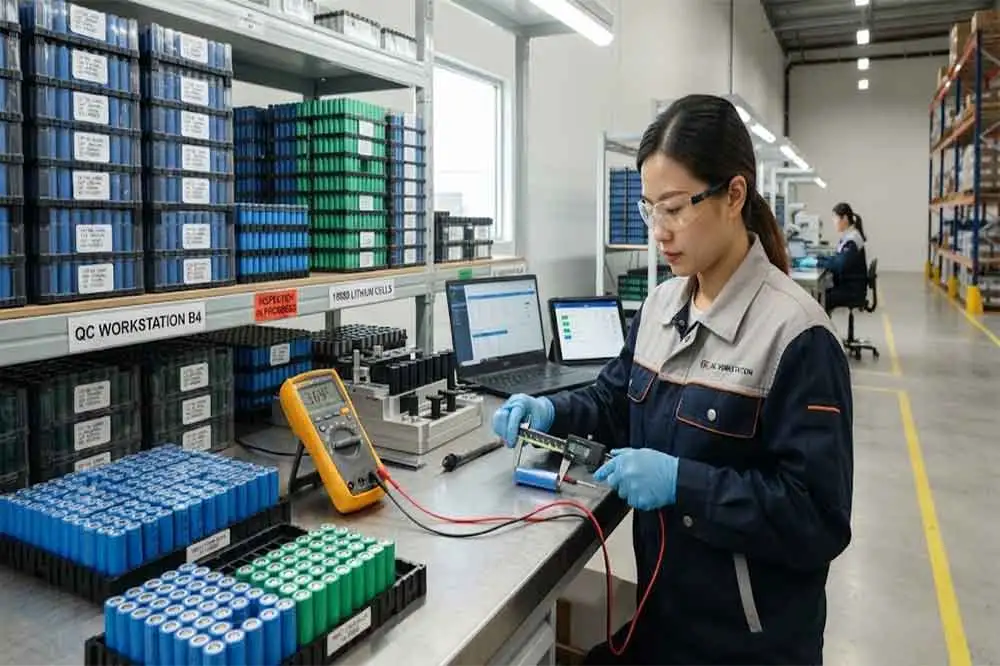
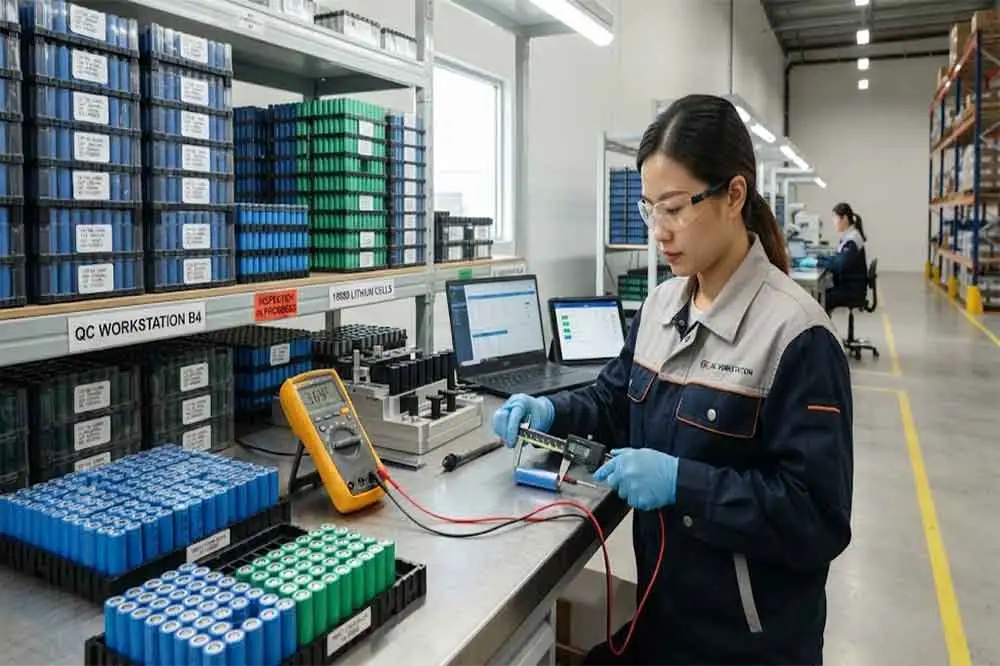
Buying few 18650 cells for testing is very different from buying thousands for production.A sample order can help confirm dimensions, capacity, discharge performance, and compatibility. A bulk order introduces another set of questions: cell consistency, production batches, documentation, packaging, lead time, quality control, and long-term supply.For wholesalers, battery pack manufacturers, distributors, and OEM buyers, these details can affect the final product just as much as the cell specification itself.This guide explains what to check when buying 18650 batteries in bulk, from the first sample to repeat production.1. Define the Cell Specification Before Asking for a QuoteA common mistake is starting with a simple request such as:“Please quote 18650 batteries, 3000mAh.”That specification is not complete enough for a serious bulk purchase.A supplier needs to know what type of 18650 cell is required and how it will be used.A basic RFQ should include:Cell typeNominal voltageCapacityContinuous discharge currentPeak current, if applicableCell dimensionsFlat-top or button-top terminalQuantityApplicationRequired certifications or documentsDestination countryExpected delivery scheduleFor OEM battery packs, also provide the intended series/parallel configuration when it is already known.A more detailed specification usually leads to a more useful quotation.2. Decide Whether You Need Cells or Complete Battery Packs“Buying 18650 batteries in bulk” can mean two different things.The first is purchasing loose 18650 cells.The second is purchasing assembled battery packs containing 18650 cells.These require different purchasing specifications.For loose cells, the buyer may focus on:Cell modelCapacityVoltageDischarge ratingInternal resistanceTerminal typeQuantityBatch informationFor assembled packs, the buyer may also need:Pack voltagePack capacityS/P configurationBMSConnectorHousingWire specificationDimensionsLabelPackagingCertificationFunctional testingMaking this distinction early avoids confusion during quotation.3. Know the Exact Capacity You Are BuyingCapacity is one of the most important specifications when purchasing 18650 cells.Common specifications may include 2000mAh, 2500mAh, 2600mAh, 3000mAh, 3200mAh, and 3500mAh.However, the number printed in a quotation should not be treated as the only evidence.Ask how the capacity is tested.Important test conditions can include:Charging methodCharging voltageDischarge currentCutoff voltageTest temperatureRest timeTesting equipmentTwo suppliers can quote the same nominal capacity but use different test conditions.For bulk purchasing, the test method matters because it gives the buyer a consistent basis for comparison.For more information, see Standard 18650 Battery Capacity: 2000mAh, 2600mAh, 3000mAh or 3500mAh?4. Check Discharge Current CarefullyCapacity and discharge current are different specifications.A 3500mAh cell is not automatically suitable for a high-current application.A power tool, motor system, industrial device, or high-output product may require a cell with a much higher discharge capability.When reviewing a quotation, ask whether the stated current is:Continuous discharge currentMaximum continuous currentPulse or peak currentManufacturer’s recommended operating limitThese terms should not be treated as interchangeable.For high-current projects, also consider voltage sag, internal resistance, temperature rise, and the number of cells connected in parallel.See 18650 Battery Discharge Current: What Buyers Should Check for more background.5. Ask for the Cell DatasheetA professional bulk quotation should be supported by technical information.A cell datasheet may contain:Nominal voltageNominal capacityStandard charging methodMaximum charging currentContinuous discharge currentDischarge cutoff voltageOperating temperatureDimensionsWeightInternal resistanceCycle informationSafety informationThe datasheet should match the exact cell model being quoted.A general 18650 datasheet is not enough when the buyer is approving a specific cell for production.6. Confirm the Cell Model and ManufacturerBefore placing a bulk order, confirm exactly what cell is being supplied.Ask for:Manufacturer nameExact cell modelCell chemistryRated capacityProduction specificationDatasheetBatch informationThis becomes particularly important when a buyer is developing a product around a specific cell.A replacement cell with a similar capacity may still have different dimensions, internal resistance, discharge performance, or charging characteristics.For OEM projects, changing the cell after product validation may require additional testing.7. Sample Testing Should Come Before Bulk ProductionA sample is not only for checking whether the battery looks correct.It is an opportunity to verify the cell against the actual application.Depending on the project, sample testing can include:Capacity testCheck whether the measured capacity matches the agreed specification.Internal resistance testCompare resistance between samples.Discharge testEvaluate voltage behavior under the intended load.Charging testConfirm charging behavior with the planned charger or BMS.Temperature testMonitor temperature under representative operating conditions.Dimension checkMeasure actual cell dimensions before designing or approving the battery holder.For an OEM battery pack, testing the assembled pack is also important.8. Check Cell Matching for Bulk Battery Pack ProductionBuying thousands of cells does not mean putting any four cells together and building a pack.Cell matching becomes important when cells are assembled into multi-cell battery packs.The manufacturer may need to control:CapacityInternal resistanceOpen-circuit voltageProduction batchCell ageSelf-discharge characteristicsFor example, a 13S4P battery pack contains:13 × 4 = 52 cellsThose cells need to work together as a system.Good cell matching can help improve pack consistency and reduce differences between parallel groups.9. Ask About Internal ResistanceInternal resistance is often overlooked during purchasing because capacity is easier to understand.But resistance can have a significant effect on high-current applications.A simplified relationship is:Power loss ≈ I² × RAs current increases, the effect of resistance becomes more noticeable.When comparing bulk suppliers, ask:What is the resistance specification?How is it measured?At what temperature?At what state of charge?What equipment is used?Is the value an average or maximum?How is batch consistency controlled?The testing method should be consistent before comparing results from different suppliers.10. Understand Batch ConsistencyA sample from one production batch does not automatically represent every future batch.This is particularly important for long-term OEM projects.A buyer may approve a cell based on a sample and later order a much larger quantity.The supplier should be able to explain how it controls production consistency.Useful information may include:Incoming material inspectionCell testingCapacity gradingInternal resistance gradingBatch identificationSampling inspectionFinal QCProduction recordsFor repeat orders, keeping the approved cell specification and sample reference can make quality control easier.11. Check Production Date and Storage ConditionsLithium-ion cells are not normally treated like a product that can be stored indefinitely without consideration.Production date and storage conditions can matter, especially for large purchases.Ask the supplier about:Production dateStorage temperatureStorage conditionsRecommended storage periodPackaging conditionStock rotationFor a project requiring a large quantity, buyers may prefer controlled production and shipment rather than receiving old inventory without clear batch information.12. Packaging Matters in Bulk OrdersA bulk shipment may contain hundreds or thousands of cells.Packaging should protect the cells during handling and transportation.Depending on the product and shipping method, packaging may include:Individual insulationTraysInner cartonsOuter cartonsProtective separatorsBatch labelsQuantity labelsThe packaging method should also be suitable for the destination and transportation requirements.For international shipments, battery transportation documentation and packaging requirements should be confirmed before shipping.13. Ask for the Required Compliance DocumentsThe exact documents depend on the market, product, transportation method, and application.Common battery-related documents may include:UN38.3 test informationMSDS/SDSCE-related documentation where applicableRoHS documentation where applicableUL-related documentation where applicableQuality-system documentationCell datasheetTest reportsDo not assume that a supplier having one certificate means every cell model has the same certification coverage.Ask for documents related to the exact product being purchased.14. Understand MOQ Before Planning Your PurchaseMinimum order quantity can vary significantly between suppliers and products.For standard loose cells, the MOQ may depend on:Cell modelStock availabilityProduction schedulePackaging requirementsCustom labelingCustom sorting or gradingOEM requirementsA stocked standard cell may have a different purchasing condition from a cell that needs a dedicated production run.For buyers planning long-term supply, it is useful to ask about both:Sample MOQandMass-production MOQThis makes it easier to plan the project from prototype to production.15. Compare the Total Purchase CostThe unit cell price is important, but it is not the entire purchasing cost.A bulk buyer may also need to consider:PackagingTestingCertification documentsCustom labelingSortingBMSAssemblyShippingInsuranceImport costsLocal taxesStorageQuality inspectionFor loose cells, logistics can also depend on the shipment quantity, packaging, destination, and transportation method.A slightly different unit price may therefore have a different total landed cost.For a complete OEM battery pack, the calculation should include all major components rather than comparing cell prices alone.16. Check Lead Time Before Placing the Purchase OrderLead time can be very different for stocked cells and custom production.A supplier should ideally clarify:Sample preparation timeProduction lead timeTesting timePackaging timeShipping preparationEstimated dispatch dateA buyer planning a product launch should also leave time for incoming inspection.It is risky to calculate the project schedule using only the manufacturer’s production time.International transportation and customs processing can add additional time.17. Ask How Repeat Orders Are ControlledLong-term OEM purchasing is not a one-time transaction.The first order may be used to validate the product. Later orders need to maintain the same basic specification.Discuss how repeat orders are controlled.Useful questions include:Will the same cell model be supplied?How are production batches recorded?What happens if the original cell is discontinued?Will the buyer be informed before a specification change?Can an alternative cell be provided for approval?These questions become more important when the battery is installed in a product that will remain in production for several years.18. Build a Simple Bulk Purchasing ChecklistBefore confirming an order, buyers can review the following list.TechnicalExact cell modelNominal voltageCapacityDischarge currentInternal resistanceDimensionsTerminal typeCell chemistryQualitySample test resultsCapacity gradingResistance testingBatch informationProduction dateQC processDocumentationDatasheetSafety documentationTransportation documentsApplicable compliance documentsTest reportsCommercialQuantityMOQLead timePackagingPayment termsShipping termsRepeat-order conditionsA checklist helps prevent a common purchasing problem: confirming the price before confirming the product specification.19. What Should Be Included in an 18650 Bulk RFQ?For B2B buyers, a clear RFQ can save several rounds of emails.A practical RFQ could look like this:Product: 18650 lithium-ion cellCapacity: 3000mAhNominal voltage: 3.6V/3.7V according to approved specificationDischarge requirement: [required current]Quantity: [required quantity]Terminal: flat top/button topApplication: [application]Required documents: datasheet, MSDS/SDS, UN38.3 and other applicable documentsDestination: [country/city]Sample requirement: [quantity]Mass production target: [quantity/month or year]Additional requirement: [label, sorting, packaging, OEM pack assembly, etc.]The more complete the RFQ, the easier it is for a battery supplier to recommend the right cell and provide a realistic quotation.20. Common Mistakes When Buying 18650 Cells in BulkBuying only by capacityA 3500mAh cell may not be appropriate for a high-current application.Comparing different test conditionsCapacity numbers should be compared under consistent test conditions.Ignoring batch informationA buyer needs to know what production batch the approved samples represent.Skipping sample testingA bulk order should not normally be the first opportunity to test the cell.Assuming all 18650 cells are identicalDimensions, terminals, resistance, capacity, and discharge performance can vary between models.Focusing only on unit priceShipping, testing, documents, packaging, and quality control can affect total purchasing cost.Ordering too much before validationLarge quantities should generally follow successful sample and prototype evaluation.21. Bulk Buying Is a Supply-Chain DecisionThe main difference between sample purchasing and bulk purchasing is consistency.A sample answers:“Does this cell work?”A bulk purchasing process needs to answer several additional questions:“Can the supplier provide the same specification?”“Can the quality remain consistent?”“Can the quantity be delivered on schedule?”“Can the supplier provide the required documentation?”“What happens when we place the next order?”These questions matter for wholesalers and OEM manufacturers because the battery becomes part of their own supply chain.ConclusionBuying 18650 batteries in bulk requires more than finding a suitable capacity and negotiating a unit price.The buyer should confirm the exact cell model, capacity, discharge capability, internal resistance, dimensions, production batch, testing method, documentation, packaging, MOQ, lead time, and repeat-order conditions.For OEM battery projects, sample testing should come before mass production, and cell matching should be considered when multiple cells are assembled into a pack.The goal is not simply to buy a large quantity of 18650 cells.The goal is to establish a stable supply of cells that consistently meet the technical requirements of the finished product.

How Can Foreign Companies Apply for BIS Certification in India? News & Current Events
Oct 15, 2026 • visibility 30 • 11 min read

How Can Foreign Companies Apply for BIS Certification in India?

India is one of the world's major markets for international manufacturers and exporters. However, foreign companies planning to sell certain products in India must comply with applicable Indian quality and safety regulations. One important requirement is BIS Certification, issued by the Bureau of Indian Standards (BIS), India's national standards body.BIS certification helps establish that a product meets the relevant Indian Standard and applicable certification requirements. Depending on the product category, foreign manufacturers may need a BIS licence under the Foreign Manufacturers Certification Scheme (FMCS) registration under another applicable scheme.Understanding the correct procedure, documentation, testing requirements and application process can help international businesses enter the Indian market more smoothly.What Is BIS Certification for Foreign Manufacturers?The Bureau of Indian Standards operates the Foreign Manufacturers Certification Scheme (FMCS) to grant licences to manufacturers whose factories are located outside India. Under this scheme, eligible manufacturers can obtain permission to use the BIS Standard Mark on products that conform to the relevant Indian Standard.FMCS generally covers products other than electronics and IT goods notified under the Compulsory Registration Scheme (CRS). The appropriate certification route depends on the product and the applicable Indian government notifications.Foreign companies should first verify whether their products fall under mandatory certification before exporting them to India.Step-by-Step Process to Apply for BIS Certification in IndiaStep 1: Identify the Applicable Indian StandardThe first step is to identify the Indian Standard (IS) applicable to the product. Each product category may have specific requirements relating to quality, performance, safety and testing.Manufacturers should check the official BIS website to determine the applicable standard and whether certification is mandatory under a relevant Quality Control Order (QCO) or other notification.Selecting the correct standard is essential because it determines the testing requirements, manufacturing controls and certification scope.Step 2: Check Factory and Testing FacilitiesForeign manufacturers applying under FMCS must have suitable manufacturing infrastructure and quality control arrangements at their factory premises.The manufacturer should ensure that:Appropriate manufacturing machinery and facilities are available.Required testing equipment and arrangements are maintained.Competent personnel can conduct the necessary product tests.Production processes comply with the applicable Indian Standard.The company can follow the prescribed Scheme of Testing and Inspection (STI/SIT) and applicable marking requirements.BIS assesses the manufacturer's ability to consistently produce products that meet the relevant standard.Step 3: Appoint an Authorised Indian Representative (AIR)Foreign manufacturers are required to nominate an Authorised Indian Representative (AIR) for the applicable certification process.The AIR must be an Indian resident and is responsible for representing the manufacturer in matters concerning compliance with the BIS Act, rules, regulations and licence conditions.The representative may be an eligible employee of the manufacturer's Indian branch or office. Where no such office exists, the manufacturer can nominate an appropriate representative in accordance with BIS requirements.The nomination must follow the prescribed format, and the representative should understand the responsibilities associated with the licence.Step 4: Prepare the Required DocumentsDocumentation is an important part of the BIS application process. Foreign manufacturers should prepare the prescribed application form and supporting records before submitting the application.Depending on the product and applicable requirements, documents may include:Company registration and manufacturing establishment details.Factory address and manufacturing process information.Details of production machinery and testing equipment.Quality control procedures and testing arrangements.Product specifications and relevant technical documents.Information about raw materials and production controls.Details and nomination documents for the AIR.Undertakings and declarations required by BIS.Applicable application fees and supporting payment details.Applicants should refer to the latest BIS checklist for their specific product and certification scheme, as the exact requirements may vary.Step 5: Submit the BIS Application OnlineOnce the documents are ready, the foreign manufacturer can submit the application through the official BIS Manak Online portal, following the procedure applicable to the relevant scheme.As of October 2026, BIS states that FMCS applications must be submitted online from 1 June 2026; the earlier offline application facility was accepted only up to 31 May 2026.Applicants should complete the required fields, upload the prescribed documents and pay the applicable fees. Incomplete information or delayed responses to BIS queries can extend the processing time.Step 6: Factory Inspection and Product TestingAfter the application is reviewed and the necessary formalities are completed, BIS arranges an assessment of the manufacturing facility in accordance with the applicable scheme.During the assessment, the inspection team may examine manufacturing processes, quality control systems, testing facilities, equipment and the manufacturer's ability to maintain consistent product quality.Product samples are also tested according to the applicable certification requirements. Testing may involve a BIS-recognised or approved laboratory, depending on the scheme and product category.If discrepancies are identified, the manufacturer must address them and provide the required information or corrective actions.Step 7: Grant of BIS LicenceIf the factory assessment, product testing and other applicable requirements are satisfactorily completed, BIS may grant the licence.The manufacturer must fulfil the applicable fee and compliance requirements before the licence is issued. Once authorised, the company may use the BIS Standard Mark only within the approved licence scope and subject to the licence conditions.Foreign manufacturers must also maintain ongoing compliance with applicable testing, inspection, marking and renewal requirements.How Much Does BIS Certification Cost for Foreign Companies?The cost of BIS certification depends on several factors, including the product category, applicable standard, number of products or varieties, testing expenses, factory inspection requirements and applicable BIS fees.Foreign manufacturers should also account for international travel, visa and related expenses associated with factory assessments where applicable.Because the costs vary by scheme and product, businesses should consult the latest official BIS fee schedule rather than rely on a single fixed price.How Long Does BIS Certification Take?The processing time depends on the completeness of the application, factory readiness, inspection scheduling, laboratory testing and the time taken to resolve any deficiencies.Manufacturers should begin the certification process well before their planned shipment or product launch in India. No product-specific timeline should be assumed until the applicable scheme and requirements have been confirmed.ConclusionForeign companies can apply for BIS certification in India by identifying the correct Indian Standard, preparing their manufacturing and testing facilities, appointing an Authorised Indian Representative, submitting the application, and completing the required inspection and product testing.Choosing the correct certification scheme is particularly important because FMCS and CRS have different scopes and procedures. Careful preparation can help reduce avoidable delays and support a smoother entry into the Indian market.

What Are Backlinks and How Do They Work? Tech & Innovation
Oct 15, 2026 • visibility 23 • 7 min read

What Are Backlinks and How Do They Work?

f you’ve spent any time reading about SEO, you’ve seen the word “backlinks” everywhere. Many beginners know they matter but aren’t sure why, or how to get them without risking a penalty. Here are ten clear answers.1. What are backlinks?A backlink is a link from one website to another. If a blog mentions your site and links to it, that link is a backlink for you. They’re also called “inbound links” or “incoming links.”2. How do backlinks work?Search engines use links to discover pages and to judge how trustworthy they are. When a respected, relevant site links to yours, it works like a recommendation. The more good recommendations you earn, the more confident search engines become that your content is worth showing to searchers.3. Why are backlinks important for SEO?They’re one of the strongest ranking signals. Backlinks help you:Rank higher for competitive keywordsGet discovered faster, since search bots follow links to find new pagesBuild authority in your topic areaReceive referral traffic from people who click the link4. What makes a backlink “good”?Not all links are equal. A good backlink usually has these qualities:Relevant: comes from a site related to your topicTrusted: the linking site has a good reputation and real contentEditorial: placed naturally within useful content, not forcedDescriptive anchor text: the clickable words match the topic and look naturalOne link from a respected, relevant blog is worth more than hundreds from random, low-quality pages.5. What is the difference between dofollow and nofollow links?A dofollow link passes authority from the linking site to yours. A nofollow link includes a tag telling search engines not to count it as a vote. Nofollow links don’t pass the same ranking value, but they can still bring visitors and make your link profile look natural. A healthy profile has a mix of both.6. What is anchor text, and how should I use it?Anchor text is the visible, clickable text of a link. Vary it so it looks natural:Brand: your site nameTopic-related: a short phrase describing the pageGeneric: phrases like “this guide” or “click here”Avoid using the exact same keyword-heavy anchor every time. It can look manipulative.7. How can I build backlinks safely?These methods work and carry low risk:Guest posting: write helpful articles for relevant blogsCreating useful resources: guides, checklists, and original data that others want to citeBroken link building: suggest your page as a replacement for a dead linkDigital PR and mentions: share expertise with journalists and bloggersCommunity participation: answer questions where your link genuinely helpsEven a new website such as MB Solver can earn links this way, provided it has real, useful content for others to link to.8. What backlink mistakes should I avoid?Buying links in bulk or joining link schemesUsing spammy directories and irrelevant sitesOver-using the same exact-match anchor textBuilding many links in a very short timePosting low-quality guest posts only to get a linkSearch engines can ignore or even penalize manipulative links, so quality always matters more than quantity.9. How many backlinks do I need?There’s no magic number. It depends on how competitive your keyword is. Look at the pages already ranking for your target term and see how many quality sites link to them. For many beginners, a steady stream of a few good links each month is a healthy goal.10. How long do backlinks take to improve rankings?Usually weeks to a few months, depending on the link quality and how competitive your topic is. Links work best alongside strong content and solid on-page SEO, so keep improving all three together.Final ThoughtsSo, what are backlinks and how do they work? They’re links from other sites that act as votes of trust, helping search engines decide which pages deserve to rank. Focus on relevance, quality, and natural placement, create content worth linking to, and build links steadily instead of in a rush. Over time, that patience pays off in stronger rankings and more traffic.

What Are Backlinks and How Do They Work? Tech & Innovation
Oct 15, 2026 • visibility 20 • 7 min read

What Are Backlinks and How Do They Work?

f you’ve spent any time reading about SEO, you’ve seen the word “backlinks” everywhere. Many beginners know they matter but aren’t sure why, or how to get them without risking a penalty. Here are ten clear answers.1. What are backlinks?A backlink is a link from one website to another. If a blog mentions your site and links to it, that link is a backlink for you. They’re also called “inbound links” or “incoming links.”2. How do backlinks work?Search engines use links to discover pages and to judge how trustworthy they are. When a respected, relevant site links to yours, it works like a recommendation. The more good recommendations you earn, the more confident search engines become that your content is worth showing to searchers.3. Why are backlinks important for SEO?They’re one of the strongest ranking signals. Backlinks help you:Rank higher for competitive keywordsGet discovered faster, since search bots follow links to find new pagesBuild authority in your topic areaReceive referral traffic from people who click the link4. What makes a backlink “good”?Not all links are equal. A good backlink usually has these qualities:Relevant: comes from a site related to your topicTrusted: the linking site has a good reputation and real contentEditorial: placed naturally within useful content, not forcedDescriptive anchor text: the clickable words match the topic and look naturalOne link from a respected, relevant blog is worth more than hundreds from random, low-quality pages.5. What is the difference between dofollow and nofollow links?A dofollow link passes authority from the linking site to yours. A nofollow link includes a tag telling search engines not to count it as a vote. Nofollow links don’t pass the same ranking value, but they can still bring visitors and make your link profile look natural. A healthy profile has a mix of both.6. What is anchor text, and how should I use it?Anchor text is the visible, clickable text of a link. Vary it so it looks natural:Brand: your site nameTopic-related: a short phrase describing the pageGeneric: phrases like “this guide” or “click here”Avoid using the exact same keyword-heavy anchor every time. It can look manipulative.7. How can I build backlinks safely?These methods work and carry low risk:Guest posting: write helpful articles for relevant blogsCreating useful resources: guides, checklists, and original data that others want to citeBroken link building: suggest your page as a replacement for a dead linkDigital PR and mentions: share expertise with journalists and bloggersCommunity participation: answer questions where your link genuinely helpsEven a new website such as MB Solver can earn links this way, provided it has real, useful content for others to link to.8. What backlink mistakes should I avoid?Buying links in bulk or joining link schemesUsing spammy directories and irrelevant sitesOver-using the same exact-match anchor textBuilding many links in a very short timePosting low-quality guest posts only to get a linkSearch engines can ignore or even penalize manipulative links, so quality always matters more than quantity.9. How many backlinks do I need?There’s no magic number. It depends on how competitive your keyword is. Look at the pages already ranking for your target term and see how many quality sites link to them. For many beginners, a steady stream of a few good links each month is a healthy goal.10. How long do backlinks take to improve rankings?Usually weeks to a few months, depending on the link quality and how competitive your topic is. Links work best alongside strong content and solid on-page SEO, so keep improving all three together.Final ThoughtsSo, what are backlinks and how do they work? They’re links from other sites that act as votes of trust, helping search engines decide which pages deserve to rank. Focus on relevance, quality, and natural placement, create content worth linking to, and build links steadily instead of in a rush. Over time, that patience pays off in stronger rankings and more traffic.

article
Lifestyle & Culture
Oct 15, 2026 • visibility 24 • 10 min read

Choosing the Right Commercial Garage Door: What Arizona Business Owners Should Know Before They Buy

PHOENIX, AZ — For a warehouse, workshop, retail loading bay, or fleet yard, the overhead door is not a background detail. It opens and closes dozens or even hundreds of times a day, it protects inventory and equipment overnight, and when it fails, work can stop. Elite Garage Doors & Gates, which has served Arizona customers since 2000, is sharing guidance to help business owners and facility managers choose, maintain, and plan for commercial doors that keep operations moving.Why commercial doors are a different categoryA residential door might cycle a handful of times a day. A commercial door can cycle many times more, often with forklifts, pallets, and delivery trucks passing through. That difference shapes everything: the gauge of the materials, the type of operator, the rating of the springs, and how often the door needs service. Putting a light-duty door in a heavy-duty opening is a common and costly mistake, because wear that should take years can show up within months.Arizona adds its own demands. Intense heat, dust, and sudden monsoon storms are all hard on moving parts, seals, and finishes, so a door that looks fine on a brochure page needs to be judged against how it will perform in a Phoenix summer or a Flagstaff winter.The three common choicesMost commercial openings are served by one of three door types:Rolling steel doors coil upward into a barrel above the opening. They are valued for strength, security, and for saving headroom and wall space, which is why they are common on warehouses, storage facilities, and service bays.Rolling sheet doors use a lighter-weight curtain and are often chosen for service openings, storage rooms, and applications where cost and simplicity matter most.Sectional doors rise on tracks in horizontal panels, much like a residential door but built to a heavier standard. They allow insulation, windows, and a wide range of finishes, which makes them popular for customer-facing buildings, showrooms, and offices.Each has strengths. The right answer depends on the size of the opening, the amount of headroom, how the door will be used, and how much security, insulation, and appearance matter to the business.Questions to ask before choosingBefore requesting quotes, it helps to answer a few practical questions:How often will the door operate? Daily cycle counts affect spring selection, operator choice, and expected lifespan.What does it need to protect? Inventory, vehicles, tools, and sensitive equipment all call for different levels of security.Does temperature matter? If the space is climate-controlled or houses heat-sensitive goods, an insulated door and good weather sealing can reduce losses.How much clearance is there? Ceiling height, side room, and overhead obstructions influence which door type fits.What will the building look like? A door facing customers or the street is part of the company's image.Business owners who want to see the full range of options can browse Elite's commercial garage door services in Arizona, which cover installation and repair for rolling steel and sectional doors.Security and durabilityFor many owners, security is the deciding factor. Rolling steel doors are widely used where a robust barrier is needed, and a quality door paired with a properly installed locking system gives a building a strong first line of defense. Durability matters just as much. A door that sags, jams, or drifts off its track becomes a weak point and a daily frustration. Quality installation, correct anchoring, and appropriate hardware do more for long-term reliability than any single feature.Business owners often overlook the role of materials and finish in the desert. Protective coatings resist fading and corrosion, and the right choice depends on exposure to sun, dust, and moisture. Ask any provider how a door is finished and what maintenance the finish needs.Operators and safetyCommercial openers are built for heavier doors and heavier use than their residential cousins. Options include trolley, jackshaft, and other operator styles, chosen to match the door type, size, and duty cycle. Whatever the style, safety features should be standard: photo-eye sensors, edge devices, and other entrapment protection reduce the risk of a door closing on people, vehicles, or merchandise, and a manual release provides a way to operate the door in an outage. Battery backup is worth considering for businesses that cannot afford to be locked in or out.The cost of downtimeA stuck door at a loading dock can hold up deliveries, idle employees, and strain customer relationships. Many failures begin as small, ignorable symptoms: a new noise, a door that moves unevenly, a motor that hesitates. Fixing them early is usually far cheaper than responding to a full breakdown. A planned maintenance schedule, with regular inspections of springs, rollers, tracks, cables, operators, and sensors, turns surprise failures into scheduled service.When something does fail, speed matters. Elite offers same-day service and is available around the clock, including holidays, and callers reach a live operator who can arrange a visit at a time that suits the business.A practical planning checklistMeasure the opening accurately and note headroom, side room, and any obstructions.Estimate daily cycles and tell your installer, so springs and operators are sized correctly.Decide how important insulation, windows, and appearance are for each opening.Plan for access control and after-hours security.Set up scheduled maintenance from day one rather than waiting for a failure.Choose a licensed contractor. Elite works under Arizona contractor licenses ROC#184842 and ROC#288393.Rolling steel doors in focusFor owners whose priority is a tough, space-saving door, Elite's rolling steel doors page explains the options in more detail. Elite also works with well-known commercial door brands, including Cookson and Janus, so businesses can match the door to the opening rather than the other way around.About Elite Garage Doors & GatesElite Garage Doors & Gates provides garage door and gate repair, installation, and opener service for residential and commercial customers throughout Arizona, with offices in Phoenix, Scottsdale, Tucson, and Flagstaff. The company has served customers since 2000 and is open seven days a week, with emergency service available. Customers can call (866) 206-0183 or schedule service online.

No More Guessing Games: The FDA and EMA Just Wrote AI’s Rulebook Finance & Wealth
Oct 15, 2026 • visibility 22 • 10 min read

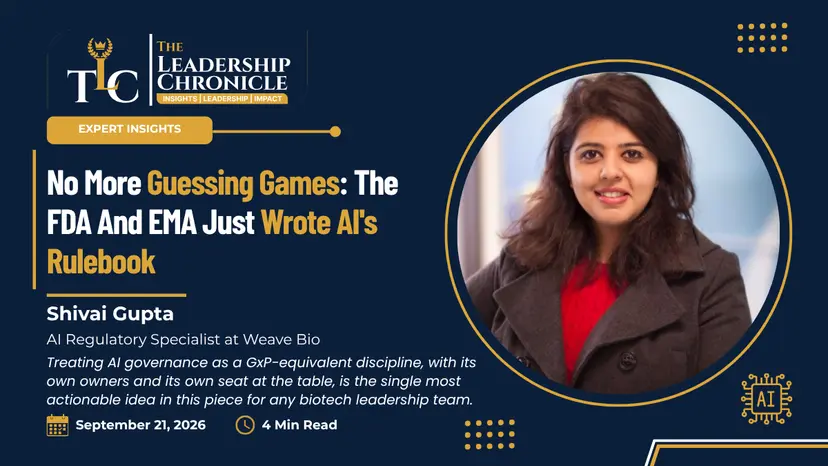
No More Guessing Games: The FDA and EMA Just Wrote AI’s Rulebook

Two years ago, a pharma sponsor asked the FDA a simple question: “Can we use AI to identify patients most likely to respond to our therapy?” The answer, in essence, was “it depends, and we’ll figure it out together.”That answer no longer holds. In the span of twelve months, the FDA and EMA have moved from case-by-case improvisation to the most significant AI framework in the history of modern clinical research. For sponsors, CROs, and biotech leadership, this isn’t a future consideration. It’s a compliance conversation happening right nowThe Regulatory Shift You Need to Know AboutTwo milestones define this new era.January 2025, FDA Draft Guidance. “Considerations for the Use of AI to Support Regulatory Decision-Making for Drug & Biological Products” introduced a seven-step, risk-based credibility framework for evaluating AI models used in submissions. This wasn’t written in a vacuum: the FDA has received more than 800 AI-component submissions since 2016. Nearly a decade of hands-on review experience is baked into this framework, which is exactly what makes it so different from the ad hoc guidance sponsors were navigating even two years ago.January 2026, FDA + EMA Joint Principles. The two agencies released ten Guiding Principles for Good AI Practice in Drug Development, the first coordinated transatlantic regulatory position on AI in pharma. For global sponsors, this is the end of trying to satisfy two separate regulatory philosophies with two separate strategies. There is now one shared standard to build toward.Having spent years working across CMC, digital biotech, and regulatory science, including time inside the FDA itself before moving into industry, I’ve watched this shift from both sides of the table. The agencies didn’t get more permissive. They got more precise. And precision is something sponsors can actually build a strategy around.“This is a rare case of regulators getting ahead of an industry’s growing pains instead of two years behind them. That alone should change how boards prioritize AI governance conversations.”What This Means For SponsorsHere’s the mindset shift that matters most: the sponsors who thrive in this new environment won’t be the ones with the most sophisticated models. They’ll be the ones who can explain those models clearly to a regulator, and stand behind every decision the model influenced.That’s a scientific communication problem as much as a technical one. Practically, it breaks down into five disciplines:1. Specify exactly how each AI model is used in your study. Vague descriptions of “AI-assisted analysis” no longer clear the bar. Regulators want to know the model’s role, inputs, and boundaries in your trial design.2. Identify, quantify, and mitigate risks to the trial. This means building a risk assessment into your protocol from day one, not retrofitting one after a question from reviewers.3. Validate continuously, not once. Models degrade as data environments shift, a phenomenon known as data drift. A model validated at trial start can behave differently eighteen months later if the underlying data population changes. Ongoing validation isn’t optional; it’s the new baseline expectation.4. Integrate data scientists with clinical leads throughout the trial, not as a handoff. The sponsors who struggle are the ones where data science and clinical operations work in sequence. The ones who succeed build those functions into one continuous conversation, from protocol design through database lock.5. Keep humans accountable. AI supports the decision. It does not make it. Every regulatory framework published in the last eighteen months reinforces this principle, and it’s the one non-negotiable that underlies all the others.“Notice that none of these five disciplines are technical in the AI-engineering sense. They read closer to what a regulatory affairs team already does — which suggests the real skill gap most sponsors need to close isn’t data science. It is translation.”The Big PictureWhat’s striking is just how far AI has already spread across the clinical trial lifecycle. It’s no longer confined to one function. It now shapes how trials are designed, how patients are recruited and matched to studies, how biomarker and real-world evidence data gets analyzed, how safety signals get caught early, and how manufacturing gets optimized. Each of these areas now comes with its own documentation and validation expectations under the new frameworks. That’s a lot of ground for a sponsor to cover, which is exactly why this has shifted from a “watch this space” conversation to a “build this into your operating model” conversation.Where This Leaves SponsorsThe good news buried in all this new structure is that ambiguity was never really an advantage for anyone. Sponsors spent the last several years trying to anticipate what regulators might ask. Now there’s a published, risk-based framework and a transatlantic set of shared principles to build against. That’s a foundation, not a hurdle.The organizations that get ahead from here will treat AI governance the way they already treat GxP compliance: as a discipline with its own owners, its own documentation trail, and its own seat at the leadership table, not a side project bolted onto data science.“Treating AI governance as a GxP-equivalent discipline, with its own owners and its own seat at the table, is the single most actionable idea in this piece for any biotech leadership team building next year’s org chart.”Having worked across the full arc of this problem, from bench immunology research, through CMC and regulatory affairs, to building AI adoption strategies for biotech and pharma teams today, my read is straightforward: the agencies have done sponsors a favor. They’ve replaced guesswork with a rulebook. The work now is execution.For more details, visit: https://theleadershipchronicle.com/If you would like to get featured or want to know more, connect with us at [email protected] : https://www.linkedin.com/company/the-leadership-chronicle/Twitter : @TLChronicle