

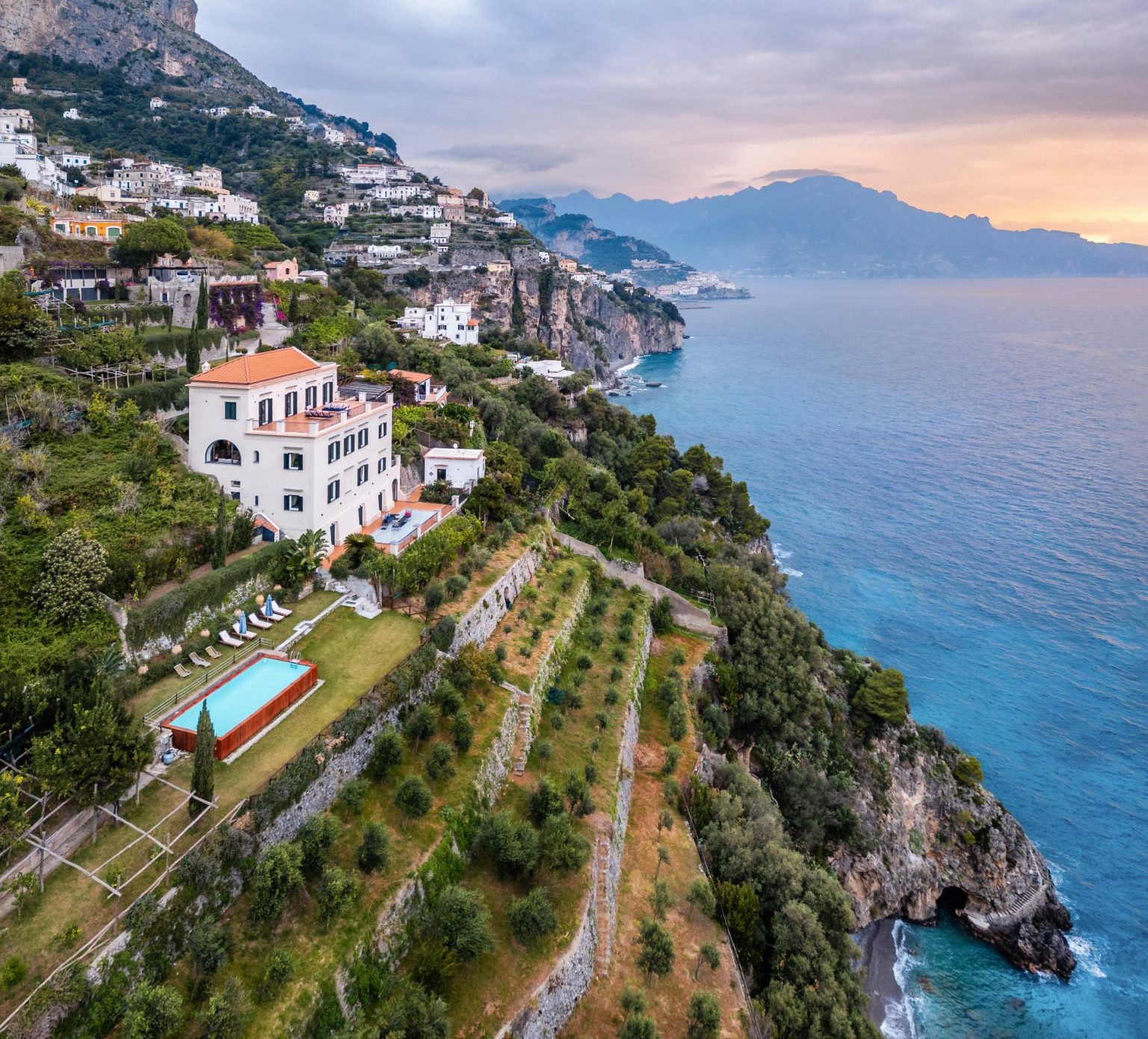
Where Mountains Meet the Sea: The Timeless Allure of the Amalfi Coast
There is a specific corner of the Mediterranean where the mountains do not merely meet the sea—they plunge into it with dramatic, gravity-defying theatricality. This is the Amalfi Coast, a 50-kilometer stretch of coastline in Italy’s Campania region that has captivated emperors, artists, and Hollywood icons for centuries.
With its vertical landscapes, luxury villas Amalfi Coast ↗, pastel-hued villages stacked like gemstone mosaics, and terraced lemon groves that scent the sea breeze, the Amalfi Coast is more than just a destination. It is the living embodiment of *la dolce vita*—the sweet life.
Whether you are plotting an Italian escape or simply daydreaming of the Mediterranean sun, here is a deep dive into why this UNESCO World Heritage site remains one of the most famous and desirable coastlines on earth.
A Landscape Sculpted by Nature and History
To understand the allure of the Amalfi Coast, one must first look at its geography. The Lattari Mountains rise sharply from the Tyrrhenian Sea, creating a rugged wall of limestone. Millennia ago, native inhabitants carved narrow terraces into these steep cliffs, transforming a hostile vertical wilderness into fertile agricultural land and secure strongholds.
During the Middle Ages, this isolated coastline became a powerhouse of global trade. The town of Amalfi was the heart of the Duchy of Amalfi, a powerful maritime republic that rivaled Venice and Genoa. Amalfi’s sailors controlled Mediterranean trade routes, introduced the compass to the West, and established maritime laws that governed the sea for centuries.
When the republic’s political dominance waned, the region transformed from a trading hub into a sanctuary. By the 19th and 20th centuries, it became a mandatory stop on the "Grand Tour" for European aristocrats, writers, and artists like Richard Wagner, D.H. Lawrence, and Steinbeck, who sought inspiration in its dramatic isolation.
The Stars of the Coast: Iconic Towns
Every twist and turn of the coastal road reveals a new town, each possessing its own distinct personality and aesthetic charm.
Positano: The Vertical Dream
Positano is the postcard child of the Amalfi Coast. Famed author John Steinbeck once wrote, "Positano bites deep. It is a dream place that isn’t quite real when you are there and becomes beckoningly real after you have gone."
The town is practically vertical, built into a steep cliff face facing the sea. Houses painted in soft shades of terracotta, pink, and peach cling to the rock, connected by a labyrinth of steep stairways, narrow alleys, and overhead arches draped in blooming purple bougainvillea. At the base lies the Spiaggia Grande, a pebbled beach dotted with iconic orange-and-blue umbrellas, where visitors sip chilled drinks and watch yachts bob in the azure waters.
Amalfi: The Historic Heart
Located at the mouth of a deep ravine, the town of Amalfi feels grander and more grounded than its neighbor Positano. The focal point of the town is the Piazza del Duomo, dominated by the magnificent Cathedral of St. Andrew (Duomo di Amalfi). This architectural marvel features a striking 9th-century striped Byzantine facade, sweeping staircases, and Moorish-influenced Cloister of Paradise. Amalfi is also famous for its centuries-old tradition of handmade *bambagina* paper, which you can still learn about in the town's historic paper mills.
Ravello: The Mountaintop Sanctuary
Perched high above the sea, away from the coastal crowds, sits Ravello with its iconic Ravello villas ↗. Known as the "City of Music," Ravello is a peaceful, aristocratic village famous for its lush gardens and breathtaking vantage points.
The crown jewels of Ravello is its historic villas. Villa Rufolo features multi-tiered gardens that seem to float directly over the sea, hosting open-air classical concerts every summer. A short walk away lies Villa Cimbrone, home to the famous "Terrace of Infinity." Standing on this balcony, lined with marble busts against a backdrop of endless blue sky and sea, offers arguably one of the finest panoramic views in the world.
Driving the Amalfi Drive: The Thrill of SS163
You cannot discuss the fame of the Amalfi Coast without mentioning the road that connects it. The *Strada Statale 163*, or the Amalfi Drive, is widely considered one of the most beautiful—and terrifying—scenic drives in the world.
Built during the Bourbon era, the road is a marvel of engineering. It hugs the contours of the cliffs, snaking through solid rock tunnels, spanning deep gorges via stone bridges, and hovering hundreds of feet above the crashing waves. The road is notoriously narrow, often barely wide enough for two vehicles to pass. Driving here is an art form; local bus drivers expertly navigate blind hairpin turns, honking their horns to warn oncoming traffic, while adventurous travelers on Vespa scooters zip past with effortless Italian flair.
The Flavors of the Coast: Lemons, Seafood, and Wine
The unique geography of the Amalfi Coast dictates its culinary identity. The star of the region is the *Sfusato Amalfitano*—the famous Amalfi lemon. These are not ordinary lemons; they are massive, sweet, intensely aromatic, and packed with vitamin C. Grown on terraced hillsides under protective chestnut-wood scaffolding, these lemons are so mild they can be eaten sliced with a sprinkle of sugar.
More importantly, these lemons are the essential ingredient in *limoncello*, the sweet, vibrant digestif served ice-cold at the end of every regional meal. They also flavor everything from local lemon gelato to *scialatielli ai frutti di mare* (a thick, local pasta served with fresh seafood) and lemon-infused risottos.
The sea provides an abundant bounty. The tiny fishing village of Cetara is world-famous for its *colatura di alici* (an exquisite, amber-colored anchovy syrup rooted in ancient Roman tradition) which adds a deep savory umami to simple pasta dishes. Paired with a crisp, volcanic white wine from the nearby hills of Furore or Tramonti, dining on the Amalfi Coast is a sensory experience that rivals the views.
A Legacy of Luxury and Creative Inspiration
The Amalfi Coast has long been a playground for the rich, famous, and creatively inclined. In the 1950s and 60s, icons like Jacqueline Kennedy, Grace Kelly, and Gianni Agnelli made the coast their summer home, cementing its reputation as a global symbol of effortless glamour.
Today, that legacy of luxury lives on in the region's world-class cliffside hotels, private beach clubs, and exclusive yacht charters. Yet, despite the influx of modern luxury, the coast retains its old-world soul. It is found in the quiet morning hours before the tour buses arrive, the rhythmic sound of waves hitting the pebbles, the scent of wild herbs on the hiking trails like the *Sentiero degli Dei* (Path of the Gods), and the warm hospitality of locals who have called these cliffs home for generations.
The Amalfi Coast is famous because it delivers on its promise. It is an intoxicating blend of natural drama, historic depth, sensory indulgence, and architectural wonder. It challenges the senses and captures the imagination, leaving every traveler with a lingering, sun-drenched memory that "bites deep" and never truly fades.