Articles

Articles & Insights

Discover, learn, and grow with stories from our ecosystem members.

search
Pune’s Luxury Apartment Checklist for First-Time Home Buyers Home & Gardening
Oct 30, 2026 • visibility 17 • 6 min read

Pune’s Luxury Apartment Checklist for First-Time Home Buyers

Click Here - https://reverie.gadagroup.co.in/Thinking of buying an ultra-luxury 4.5 BHK in Aundh or looking for a luxury apartment in Pune West? Whether you’re a first-time buyer or upgrading your lifestyle, making the right choice in Pune’s dynamic real estate market is both exciting and challenging. Here’s a comprehensive guide to ensure your next move is a smart and rewarding investment.Why Choose a Luxury Apartment in Pune West?Pune West, especially sought-after neighborhoods like Aundh, has become a hotspot for buyers looking for a blend of convenience, connectivity and premium living. A luxury apartment in Pune West doesn’t just offer a prestigious address; it brings with it superior infrastructure, proximity to business hubs, reputed educational institutions, wellness centers and shopping destinations.What Makes an Ultra-Luxury 4.5 BHK Stand Out?Ultra-luxury 4.5 BHK apartments in Pune are designed for families seeking space, elegance, and privacy. These homes offer expansive living areas, multiple balconies, dedicated parking and top-tier amenities such as smart home automation, acoustic insulation and EV charging provisions. If you’re searching for an ultra-luxury 4.5 BHK, focus on factors like floor plan efficiency, construction quality, and the reputation of the developer.The Importance of Regulatory Compliance and Due DiligenceWhether you’re eyeing a luxury apartment in Pune (non-branded) or considering branded residences, never overlook regulatory clearances. Always verify RERA registration, land title certifications, and sanctioned approvals from environment and fire safety authorities. These checks protect your investment and ensure a hassle-free purchase process.Essential Checklist Before Booking Your Dream HomeLocation Matters:Choose a location like Aundh for superior connectivity, reduced commute times and access to premium lifestyle amenities.Document Verification:Request a detailed cost sheet, payment schedule, approved floor plan and builder-issued acknowledgements.On-Site Inspection:Inspect the sample flat, but also review the actual floor plan, construction quality and available amenities. Look beyond the surface to ensure every detail meets your expectations.Financial Planning:Opt for projects with construction-linked payment plans and pre-approved bank tie-ups for peace of mind and financial flexibility.Spotlight: Gada Group and ReverieIf you’re searching for a branded luxury apartment in Pune, Gada Group stands out as a trusted developer with a legacy of over 25 years. Their flagship project, Reverie, is redefining exclusivity in Aundh. Reverie offers Pune’s first “one floor, one apartment” concept, featuring the city’s largest private balconies, four dedicated parking spaces per flat, and state-of-the-art amenities like a sun deck, open gym and landscaped gardens.Situated close to Hinjewadi, Shivaji Nagar and Kharadi, Reverie ensures excellent connectivity and seamless access to wellness centers, retail malls and Pune University. For families seeking a branded ultra-luxury 4.5 BHK for sale in Aundh, Reverie by Gada Group is an address that delivers on every promise—privacy, luxury, and lifestyle.Making the Right ChoiceWhether you prefer a non-branded luxury apartment in Pune or a branded residence like Reverie by Gada Group, always make decisions based on thorough due diligence. Review regulatory approvals, inspect the site, verify all documents, and evaluate the location’s advantages.Investing in an ultra-luxury 4.5 BHK in Pune West is not just about buying a home; it’s about securing your family’s future in a thriving, well-connected, and luxurious environment.

Why Is Understanding Simple Battery OCGA Important Under Georgia Law?
Oct 30, 2026 • visibility 14 • 11 min read

Why Is Understanding Simple Battery OCGA Important Under Georgia Law?

Many imagine a violent assault when they hear the word “battery”. The term is often used in the media to describe more newsworthy physical altercations, i.e., bar fights. In Georgia, battery can describe a much more minor offense. Something as mild as an intentional shove during an argument or an offensive, insulting touch can lead to battery charges in Georgia. Because the line is so thin, understanding simple battery OCGA can protect your future.Simple battery is one of the more common charges in Georgia, and many people are arrested for it every year, often times unexpectedly. It's a misdemeanor offense and is often charged in the context of a domestic dispute. Simple battery under OCGA family violence is charged when there is a minor physical altercation in the context of a domestic relationship. Simple battery OCGA carries other, additional consequences beyond a standard misdemeanor offense. Other laws are guided by the same principles and standards of battery, which this article explains.What Does Simple Battery Mean Under the Georgia Code?O.C.G.A. § 16-5-23 states that a person commits simple battery in one of two ways:Intentionally making offensive or contact of a provoking nature with a person.Intentionally causing physical harm to a person.It's important to note that the law does not require that the contact be of an injurious or damaging nature. An offensive, insulting touch, or even minor, trivial contact can constitute battery under Georgia law.Simple Battery vs. Battery vs. AssaultAssault means trying to hurt someone, or putting them in fear of imminent harm. When this happens, a judge or jury must decide whether the person at fault attempted to cause fear of bodily harm or offensive contact. In order for the state to prove that a defendant is guilty of a battery, the state must prove beyond a reasonable doubt that the defendant either:actually committed an offensive contact, orintentionally caused physical injury to another person.If the injury is 'substantial,' the charge will be elevated to a more serious felony. Knowing the difference is critical, as the level of charge will dictate the potential penalties you face.Why Understanding Simple Battery OCGA Matters for Your RightsMany people think a misdemeanor is no big deal, and that is a costly mistake. A simple battery conviction in Georgia is a misdemeanor of a higher order and is punishable by a jail sentence of up to 12 months and/or a fine.Probation, with strict conditionsCourt-ordered classesPermanent Criminal RecordEmployment and housing issuesProfessional license issuesUnderstanding the elements of the Battery Statute arms a defendant with a powerful tool. A defendant is required to prove that the contact or injury was not intentional and/or was done in self-defense. If you don't understand OCGA 16-5-23, then you will have a hard time identifying your rights.Simple Battery OCGA Family Violence: A Higher Stakes SituationWhen the alleged victim of a battery is a spouse or former spouse, parent or child, or a person with whom the defendant lives or has lived, or with whom the defendant has a child in common, a family violence battery is charged. These cases are handled more seriously for a number of reasons.Mandatory Arrests and No-Contact OrdersMany police officers in Georgia are ordered by their agencies to make an arrest in any domestic situation in which they see any contact. Even if contact is only minimal, as in a push, judges often issue bond conditions that prohibit contact and bar the person from returning home. Can you imagine being ordered to not go home before being found guilty?Repeat Offenses Can EscalateAlso, family violence charges in Georgia often carry increased penalties with repeat offenses. In addition to this, the increased penalties may be further enhanced for subsequent offenses. There can be collateral consequences for family violence convictions, such as the loss of child custody or the right to own/possess firearms.The Accuser Doesn't Control the CaseMany people believe that if the victim/witness in a case of family violence "drops charges" or "does not want to prosecute", then the case will be dismissed. In Georgia, this is not the case. It is the prosecutor who decides whether to proceed with charges, not the victim/witness. This is why it is important to have an attorney who is familiar with this area of the law to help guide you through this process.Common Examples of Simple Battery in GeorgiaThere are many different situations that can qualify as battery in Georgia:Two co-workers have a verbal altercation, and one pushes the other away from a doorway.A partner grabs a wrist to stop them from leaving.A parent slaps the phone out of another person’s hand during a sporting event.A neighbor spits towards another person.In all of these examples, a person can be charged with battery, even if no person suffers a serious injury.What Should You Do If You're Charged?If you’ve been arrested or cited for simple battery, these steps may help:Stay calm and stay quiet. Police will eventually let you talk to your attorney before you give a formal statement.Follow the conditions of your release and stay away from the person who has a protective order against you.Write down the details of your version of what happened while the information is still fresh. You should include the names of any witnesses.Avoid Facebook and other social media.Make an appointment with a criminal defense attorney.You may be able to get charges reduced, take a diversion, or have your case dismissed if there is little evidence to support the state’s case. It is best to take these steps as soon as possible.Frequently Asked QuestionsIs simple battery a felony in Georgia?Yes, a conviction is part of your public record and will be seen by potential employers, landlords, and licensing agencies. In some cases, you may be able to have your record restricted at a later date, but eligibility depends on your situation.Conclusion: Don't Face a Simple Battery Charge AloneMost Georgians don't need a law degree to understand simple battery, but they will benefit from knowing how the state law regarding battery and other conflicts can impact them. While charges may stem from a family dispute or an altercation with a stranger, the beginning can determine the end.If you find yourself in this situation, contact Downie Law, LLC to schedule a free consultation. We will evaluate your case, let you know the potential outcomes, and help you determine the best options for you and your situation.

Downie Law, LLC
Read arrow_forward
Web Scraping for Travel Agencies in Spain and Italy Data Tech & Innovation
Oct 30, 2026 • visibility 38 • 12 min read

Web Scraping for Travel Agencies in Spain and Italy Data

IntroductionSouthern European tourism thrives on fluctuating demand, high-volume seasonal spikes, and constant price elasticity. Modern tourism operators rely on Web Scraping for Travel Agencies in Spain and Italy to track dynamic fare adjustments and protect seasonal profit margins. Integrating automated web data collection tools allows agencies to convert raw internet traffic into structured pricing insights.To maintain a competitive edge across Mediterranean markets, agencies must continually evaluate competitor strategies. Implementing specialized Travel Data Scraping Services ensures your pricing team receives up-to-date rate intelligence across regional hot spots like Barcelona, Venice, Madrid, and Rome.Understanding shifting consumer booking trends requires continuous dataset monitoring across diverse distribution channels. By capturing flight rates, hotel room costs, and tour packages automatically, agencies eliminate manual research errors while speeding up revenue optimization workflows.Enhancing Revenue Management Strategies Across Mediterranean Travel Destination MarketsThe travel sector across Southern Europe experiences rapid rate fluctuations driven by seasonality, local events, and shifting consumer demand. To maintain profitability, regional agencies must continuously evaluate how competitor prices shift across high-traffic booking platforms. Having reliable visibility into current rates allows pricing teams to react instantly rather than adjusting fares reactively after sales slow down. Automated monitoring tools continuously harvest publicly available rate listings, transforming raw web pages into actionable commercial intelligence.When revenue managers analyze an enterprise-level Travel Dataset, they gain the exact analytical depth needed to forecast future booking trends accurately. Evaluating historical pricing curves alongside real-time inventory levels reveals optimal pricing windows for seasonal packages. This structured approach helps agencies capture high-margin bookings during peak travel months without pricing themselves out of price-sensitive customer segments.Boutique Hotels: Average daily rate variation in Spain — +32%; average daily rate variation in Italy — +36%; margin impact — +16% revenue.Coastal Resorts: Average daily rate variation in Spain — +41%; average daily rate variation in Italy — +45%; margin impact — +22% revenue.City Tour Packages: Average daily rate variation in Spain — +18%; average daily rate variation in Italy — +21%; margin impact — +11% revenue.Tracking rate variance across major Mediterranean coastal destinationsIdentifying early-bird booking discounts offered by regional competitorsAnalyzing seasonal occupancy shifts to optimize yield management modelsConverting raw travel listings into clean structural database inputsAgencies often choose to Scrape Travel Booking Websites for Competitor Pricing to ensure their direct consumer rates stay strictly aligned with current market conditions. Establishing automated extraction schedules eliminates manual checking errors and gives commercial teams full transparency into rival promotional campaigns.Automating Regional Hospitality Rate Monitoring Solutions Across European Hotel NetworksManaging hotel inventory across diverse European markets requires tracking thousands of independent properties and international hotel chains. Manual rate collection across multiple online travel agencies is slow, prone to human error, and impossible to scale effectively. Automated scraping infrastructure solves this operational bottleneck by extracting room rates, availability statuses, and promotional discounts automatically at set intervals throughout the day.Executing comprehensive Tourism Data Analytics in Europe Using Web Scraping gives agency leaders a complete picture of regional supply dynamics and localized demand spikes. Comparing property rates across popular travel corridors allows agencies to negotiate better wholesale rates with hotel partners and package providers. This data-backed negotiation strategy strengthens supplier relationships while expanding gross operating margins.5-Star Luxury Hotels: Extraction frequency — hourly updates; data accuracy rate — 99.9% verified; system processing speed — < 2 seconds per query.Mid-Range Chains: Extraction frequency — 4 times daily; data accuracy rate — 99.7% verified; system processing speed — < 1 second per query.Vacation Rentals: Extraction frequency — daily batch; data accuracy rate — 99.4% verified; system processing speed — < 3 seconds per query.Extracting property rates across thousands of target accommodation listingsIngesting room availability data to detect sudden market supply shortagesNormalizing multi-currency pricing into unified regional reporting formatsBuilding automated alerts for sudden price drops or promo campaign launchesIntegrating a high-speed Hotel Pricing API for Travel Agencies in Spain streamlines the seamless transfer of scraped room rates straight into central revenue engines. This direct system integration reduces data latency, allowing yield managers to publish competitive hotel package rates instantaneously across all direct booking sales channels.Modern Integration Standards for Automated Travel Booking Price Pipeline ArchitecturesFast execution is crucial when operating within dynamic travel markets where flight and room prices change continuously. Agencies relying on static weekly rate sheets risk marketing outdated package prices or missing out on profitable rate adjustments. Modern automated pipelines deliver real-time data feeds directly into analytical dashboards, ensuring business leaders make informed strategic adjustments based on fresh market facts.Establishing robust enterprise backend infrastructure allows travel agencies to process massive volumes of web data without disrupting core database performance. Choosing dedicated Web Scraping Services provides complete pipeline management, continuous proxy rotation, and automated maintenance when target website layouts update unexpectedly.Update Cycle: Manual web tracking — weekly manual checks; automated scraping API feed — automated continuous feeds.Coverage Scale: Manual web tracking — 10–15 target sites; automated scraping API feed — 500+ global portals.Labor Requirement: Manual web tracking — high manual workload; automated scraping API feed — fully automated workflow.Handling complex anti-bot protections and rotating IP networks smoothlyNormalizing multi-source travel data into standardized structural JSON formatsScaling extraction pipelines effortlessly during high-volume peak travel seasonsDelivering cleaned data directly into internal revenue management platformsConnecting your backend directly to a Real-Time Travel Booking Data Extraction API guarantees that clean, validated booking data streams into enterprise pricing tools without delay. This live connectivity enables travel agencies to automate dynamic pricing rules, ensuring maximum profitability and strong market competitiveness around the clock.How ArcTechnolabs Can Help You?Navigating the fast-paced Mediterranean travel sector demands reliable technical infrastructure that turns raw web listings into actionable commercial intelligence. By choosing Web Scraping for Travel Agencies in Spain and Italy, we build scalable data pipelines tailored to your operational needs.Our end-to-end data solutions remove the technical burden of web extraction so your teams can focus on strategic positioning and market expansion.Customized data collection pipelines configured for complex travel platformsAutomated Anti-Bot bypass engines ensuring uninterrupted data deliveryClean dataset delivery in preferred formats including JSON, CSV, or database feedsScalable infrastructure capable of processing millions of daily travel data pointsEnterprise-grade proxy management guaranteeing high extraction success ratesDedicated technical support and constant schema maintenance for all scrapersOur modern solutions integrate seamlessly with your platform through a Travel Booking Data Scraping for Market Research pipeline, delivering precise competitor intelligence directly to your internal dashboards.ConclusionMaximizing market share across Southern Europe demands continuous operational agility and real-time market awareness. Deploying modern Web Scraping for Travel Agencies in Spain and Italy allows travel agencies to convert complex online rate structures into actionable business growth strategies, protecting revenue margins despite rapid market changes.Building a resilient intelligence strategy ensures your agency maintains optimal pricing across all customer touchpoints. Integrating custom Travel Data Scraping Services equips your team with the data clarity required to scale operations efficiently. Contact ArcTechnolabs today to transform your travel price intelligence infrastructure.#WebScrapingForTravelAgenciesInSpainAndItaly,#TravelBookingDataScrapingForMarketResearch,#HotelPricingAPIForTravelAgenciesInSpain,#ScrapeTravelBookingWebsitesForCompetitorPricing,Source: https://www.arctechnolabs.com/web-scraping-for-travel-agencies-in-spain-and-italy.phpContact us:E-mail: [email protected] No: +91 8866656657Visit Now: https://www.arctechnolabs.com/

Steve Harringtone
Read arrow_forward
article
Lifestyle & Culture
Oct 30, 2026 • visibility 14 • 13 min read

Plate Heat Exchangers: Efficient Heat Transfer for Industrial Applications

Plate heat exchangers are compact, high-efficiency devices used to transfer heat between two fluids without mixing them. Their compact construction, strong thermal performance, and adaptability make them valuable across chemical processing, food and beverage production, pharmaceutical manufacturing, heating and cooling systems, and energy recovery applications. Unlike conventional shell-and-tube equipment, a Plate Heat Exchanger uses thin, corrugated plates to separate the hot and cold streams while providing a large heat-transfer surface. Proper selection and operation are essential to achieve reliable performance, manageable pressure drops, and long service life.Selecting the Right Plate Heat Exchanger DesignThe two most common Plate Heat Exchanger configurations are gasketed and welded designs. Gasketed plate heat exchangers use compressible seals between individual plates, allowing the unit to be opened for inspection, cleaning, and plate replacement. This makes them especially suitable for duties involving variable flow rates, changing temperatures, or products that may create deposits. They are widely used for heating water, cooling process liquids, and recovering heat in industrial facilities.Welded plate heat exchangers permanently seal the plates together, generally through laser welding. Because the assembled unit cannot readily be opened, welded exchangers are preferred where high pressure, high temperature, hazardous fluids, or strict leakage prevention are priorities. Common installations include oil preheating, chemical reactors, steam condensation, and applications involving aggressive fluids. Semi-welded plate heat exchangers combine a gasket around every other plate with welded plates at the end of the pack, providing a compromise between serviceability and leakage resistance.Heat-transfer duty is the first factor to calculate when selecting equipment. The required rate of heat transfer can be estimated from the mass flow rate and specific heat capacity of each stream:Q = m Ã— Cp Ã— Î”TIn this equation, Q is the thermal duty, m is the mass flow rate, Cp is the specific heat capacity, and Î”T is the temperature difference. For example, cooling 5,000 kg/h of water from 80°C to 35°C at an assumed Cp of 4.18 kJ/kg·K produces a duty of approximately 938 kW. The selected exchanger must provide this output while remaining within its allowable temperature and pressure limits.Pressure drop is equally important. Excessive resistance can increase pumping energy, while insufficient pressure can cause cavitation or unstable flow. Engineers should evaluate the pressure loss on both fluid circuits and confirm that the operating pressure remains below the exchanger’s allowable limits. A typical industrial unit may handle pressures from approximately 1 to 25 bar, depending on its construction and rating, but application-specific limits must always govern the final design.Materials, Temperature Limits, and Operating ConditionsPlate material must be selected according to temperature, pressure, chemical compatibility, and cleaning requirements. Stainless steel grades such as 304 and 316 are common because they offer corrosion resistance and mechanical strength. Grade 316 is generally preferred for chloride-containing process fluids, whereas titanium may be considered for highly corrosive seawater, chlorinated environments, or demanding chemical duties. Nickel-based alloys can be used for extreme conditions where standard stainless steels are unsuitable.Gasket material is another critical consideration because it must resist the fluid, temperature, and chemicals present in the process. Common elastomers include NBR, EPDM, and FKM. NBR performs well with many oils and general process fluids, EPDM is suitable for steam and hot water within its specified limits, and FKM provides excellent resistance to fuels, acids, and aggressive chemicals. Natural rubber and other elastomers may also be appropriate, but only after compatibility and temperature checks.Plate heat exchangers can operate across a broad temperature range, with practical limits determined by the plates, gaskets or welds, and selected materials. Many standard units serve duties from below zero to around 200°C, while specially engineered equipment can handle substantially higher or lower temperatures. In steam applications, for instance, condensate can leave the exchanger at approximately 80°C, while saturated steam may enter near 10 bar with a saturation temperature close to 180°C. Adequate temperature margin is necessary to account for pressure changes, fouling, and operating fluctuations.Flow arrangement also influences performance. Counterflow generally provides a larger effective temperature difference than parallel flow because the outlet temperatures are more balanced. However, the arrangement must be compatible with the required pressure profile and installation layout. For a hot-oil heater, a counterflow configuration can heat the cold stream close to the hot-oil outlet temperature while reducing thermal stress. A cooling-water service may use a suitable multi-pass arrangement to balance heat recovery against pressure drop.Before placing a plate heat exchanger into service, operators should verify the design pressure and temperature, inspect gaskets and plate surfaces, confirm the fluid connections, and check that inlet valves are correctly positioned. Start-up procedures should introduce flow gradually and follow the manufacturer’s heating or cooling sequence. Rapid temperature changes can cause thermal distortion, unplanned pressure rises, or damage to seals.Maintenance, Cleaning, and Industrial ApplicationsRoutine maintenance can extend equipment life and preserve thermal efficiency. Operators should monitor inlet and outlet temperatures, pressure drops, and fluid quality. A rising pressure drop with unchanged flow conditions may indicate scaling, suspended solids, or product fouling. For gasketed units, scheduled plate opening allows the plates to be cleaned mechanically or with an approved cleaning solution. Chemical cleaning must be compatible with the plate and gasket materials; strong acids or alkalis can quickly damage unsuitable components.Differential pressure is a useful operating indicator. For instance, a chilled-water plate heat exchanger with a design pressure drop of 0.5 bar should be investigated if the measured value rises well beyond that level at comparable flow rates. Strainer blockage, air accumulation, and plate fouling are among the causes that should be checked. If a process stream contains fibers, particles, or precipitating salts, filtration or a clarified feed may be necessary to reduce maintenance frequency.The most appropriate cleaning method depends on the service. Water-based deposits may be removed with alkaline cleaning followed by thorough rinsing. Oil residues often require degreasing products compatible with the equipment. In hygienic food, beverage, and pharmaceutical applications, stainless steel plates must meet applicable sanitary requirements, and cleaning procedures should address sanitary design features such as minimum drainability and smooth contact surfaces. Crevice-resistant connections and documented cleaning validation are particularly important when heat exchangers handle food-grade products.Plate heat exchangers are also effective for heat recovery. In a dairy plant, hot pasteurized milk can transfer heat to incoming raw milk, reducing the energy required for preheating. In a chemical facility, a welded exchanger can condense steam and use the recovered condensate as boiler feedwater. HVAC systems use plate heat exchangers for chilled-water heating and cooling, while district heating networks benefit from their ability to handle varying return-water temperatures. In each case, performance depends on matching the exchanger capacity to the actual duty rather than selecting equipment only by nominal flow rate.ConclusionPlate heat exchangers offer an efficient and flexible solution for industrial heat transfer, but their performance depends on thoughtful design and disciplined operation. Selecting between gasketed, welded, and semi-welded configurations requires consideration of pressure, temperature, maintenance access, and leakage risk. Material compatibility, gasket selection, flow arrangement, pressure drop, and thermal duty must all be evaluated together.For process plants, food manufacturers, pharmaceutical producers, and HVAC contractors, regular inspection and monitoring can prevent fouling, seal failure, and unnecessary energy consumption. When matched to the application and maintained according to its service requirements, a Plate Heat Exchanger can provide reliable heat transfer, compact installation, and improved operating economics.

what is the rfid technology Tech & Innovation
Oct 30, 2026 • visibility 11 • 21 min read

what is the rfid technology

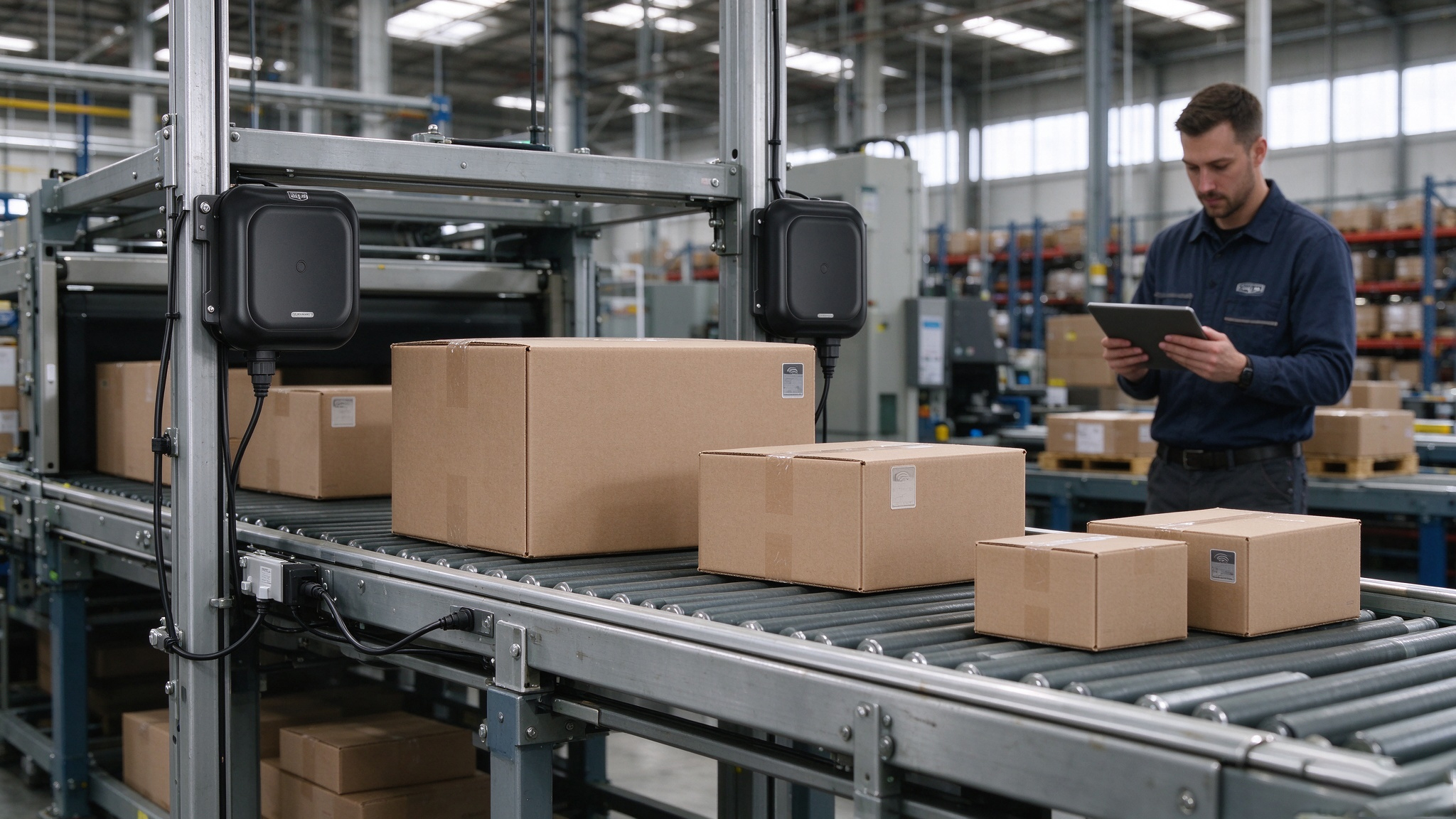
RFID technology, or Radio Frequency Identification, uses radio waves to identify and exchange data with tagged objects without requiring direct physical contact or a clear line of sight. An RFID system typically combines tags, readers, antennas, and software to support identification, tracking, inventory control, and automated data collection.RFID is often described as a replacement for barcodes. That comparison is useful, but incomplete. A barcode scanner generally needs to see a printed code, while an RFID reader can detect compatible tags within its effective radio-frequency field. Depending on the tag type, reader configuration, materials nearby, and operating environment, the system may identify several items in a single read cycle.For businesses, the important question is not simply whether RFID can read a tag. It is whether the system can reliably identify the right items at the right point in a real workflow.What Is RFID Technology and How Does It Work?RFID technology transfers identification data between an RFID tag and a RFID reader using radio-frequency signals. The reader captures the tag’s response and passes the resulting data to an application, database, or management platform.A typical system contains four elements:RFID tag: A small electronic device attached to or embedded in an item. It stores an identifier and, depending on the tag, may hold additional data.RFID reader: Equipment that communicates with compatible tags and receives their responses.Antenna: A component that transmits and receives radio-frequency signals. It may be integrated into the reader or connected separately.Software: The application layer that interprets tag reads and connects them to business records, inventory systems, access control, or other operations.What happens during an RFID read?1. The tag enters the reading zoneA tagged carton, product, tool, or asset moves into the reader’s effective radio-frequency field.2. The reader communicates with the tagWith passive RFID, the reader’s transmitted field powers the tag’s response. The tag returns its stored data through a radio signal, commonly using backscatter in UHF systems.3. The software processes the readThe application uses the captured identifier to look up an item record or trigger a configured business action, such as updating inventory or recording an asset movement.This sequence looks simple on paper. In an actual installation, read performance depends on antenna placement, tag orientation, the distance between reader and tag, and nearby materials. A tag attached to a cardboard box may behave differently from the same tag mounted on a metal tool or placed beside liquid-filled containers.GS1’s RFID technical documentation explains the air-interface standards used for communication between compatible RFID devices. For UHF systems, the GS1 EPC UHF Gen2 standard defines how readers and tags communicate; supported frequencies depend on the applicable regional rules. See the GS1 EPC UHF Gen2 Air Interface Protocol.Types of RFID Technology: LF, HF, and UHFRFID is not a single radio technology. Different frequency bands serve different needs, and choosing the wrong one can create unnecessary cost or unreliable reads.RFID typeCommon frequencyTypical applicationsMain considerationLow Frequency (LF)125–134 kHzAnimal identification, some access-control systemsShort range and relatively low sensitivity to radio interferenceHigh Frequency (HF)13.56 MHzContactless cards, ticketing, document identification, NFC applicationsOften designed for close-range interactionUltra-High Frequency (UHF)Approximately 860–960 MHz, depending on the system and regionWarehouse inventory, logistics, retail stock control, asset trackingSupports longer-range and multi-tag reading, but tag placement and the environment matterGS1 describes typical LF read distances of around 10–50 cm and HF distances of around 10 cm to 1 m, depending on the application. Passive UHF systems can commonly read tags several metres away; GS1 notes that ranges of up to 15 metres are possible in special circumstances. These figures are reference points, not performance guarantees.Passive RFID vs. Active RFIDThe power source is another important distinction.Passive RFID: The tag has no battery dedicated to powering its normal communication. It draws energy from the reader’s field and responds to the reader.Active RFID: The tag has its own power source and transmitter, allowing it to send signals over longer distances.Battery-assisted passive RFID: A battery supports the tag’s circuitry or sensors, but communication may still use backscatter.For many item-level inventory projects, passive UHF tags are attractive because they do not need a battery to communicate. Active tags may suit applications where longer-range tracking is needed. The choice depends on the asset, required read behaviour, operating environment, and budget.Where Is RFID Technology Used?RFID is valuable when an organisation needs to connect a physical item with a digital record without scanning every label individually.Warehousing and logistics: Identify tagged cartons, pallets, and reusable containers at receiving, dispatch, or transfer points.Retail: Support stock counts, item identification, and inventory visibility across storage and sales areas.Manufacturing: Associate tools, work-in-progress, components, or finished products with production records.Libraries: Manage tagged books, borrowing and returns, shelf inventory, and security workflows.Access control: Use compatible cards or credentials to identify authorised users.Asset and tool management: Record the movement of equipment and help identify missing or misplaced items.For example, a warehouse can install a fixed UHF RFID reader near a dispatch lane. When tagged cartons pass through the configured read zone, the software can associate their identifiers with a shipment record. That only works reliably when the tags, reader settings, antenna positions, and software rules are configured for the actual lane. A read event alone does not prove that the correct shipment was assembled; the application must check the captured identifiers against the expected order.Fixed RFID readers can capture tag identifiers as goods move through receiving, sorting, or dispatch zones.What Should Businesses Consider Before Adopting RFID Technology?RFID technology performs best when the tag, reader, antenna, software, and physical workflow are selected as one system. A reader with a long advertised range cannot compensate for an unsuitable tag, poorly controlled read zone, or software that interprets every detected identifier as a confirmed transaction.1. Match the tag to the itemThe material surrounding an RFID tag matters. Metal can reflect radio waves and detune a conventional tag antenna, while water and liquid-rich products can absorb RF energy and reduce performance. Specially designed on-metal tags and tags intended for challenging materials can help, but they still need to be tested in the intended installation.2. Design the read zone around the taskA warehouse receiving gate has different requirements from a desktop tag encoder. A receiving gate may need to detect tagged cartons moving through a defined lane. A desktop reader may instead need to identify or encode one item at close range.Before installation, define:Which items should be detected—and which should be ignored.The distance and orientation at which tags must be read.Whether items are stationary, moving, stacked, or packed closely together.How the system should handle duplicate reads, missed reads, and unexpected tags.3. Check standards and regional requirementsFor passive UHF applications, confirm that the reader and tags support a compatible air-interface protocol, such as GS1 EPC Gen2 / ISO/IEC 18000-63 where applicable. Also check that the equipment supports the permitted frequency band and transmission settings in the country where it will operate. GS1’s RFID standards overview describes the identification, air-interface, and software standards used in RFID implementations.4. Test real items—not just sample tagsA tag that reads well on an empty workbench may behave differently after it is attached to a metal tool, placed on a liquid-filled container, or sandwiched between cartons. Test the actual product, packaging, mounting position, and movement pattern. Record missed and unintended reads instead of relying on a single successful demonstration.A useful implementation measure is workflow-level accuracy: whether the system correctly records the intended receiving, dispatch, borrowing, or asset-movement event. A high number of tag reads is not enough if the application assigns an item to the wrong shipment or records an event twice.Testing tag placement and reader configuration helps establish a suitable reading zone before deployment.Frequently Asked Questions About RFID Technology1. What is the rfid technology used for?RFID technology is used to identify and track tagged objects through radio-frequency communication. Common applications include warehouse inventory, retail stock management, logistics, library circulation, access control, manufacturing, and equipment tracking. The best application depends on the required reading distance, tag type, operating environment, and how the captured data will be used.2. How does RFID technology work without line of sight?RFID readers communicate with tags through radio waves, so compatible tags do not generally need to be visually exposed to the reader like barcodes do. However, this does not mean radio signals can pass through every material without loss. Metal, liquids, packaging, tag orientation, and antenna placement can affect reading performance.3. What is the difference between RFID and a barcode?A barcode stores information in a visual pattern that a scanner must be able to see. RFID uses radio-frequency communication to identify compatible electronic tags, often without direct visual contact. RFID systems can read multiple tags within a suitable reading zone, while barcode workflows commonly require individual codes to be presented to a scanner.4. What is the typical RFID reading range?There is no single reading distance for all RFID systems. LF and HF systems are commonly used at shorter distances, while passive UHF systems can read tags several metres away under suitable conditions. GS1 describes UHF ranges of up to 10 metres in typical guidance, with actual results depending on the tag, reader, antenna, materials, and installation.5. Does RFID technology work on metal or near water?Yes, but the system may require a suitable tag and careful placement. Metal can interfere with conventional tag antennas, and water can absorb UHF radio-frequency energy. Tags designed for metal surfaces or challenging products can improve performance, but the finished item should be tested in its real operating environment.6. Is RFID technology secure?RFID security depends on the tag, communication protocol, reader configuration, application, and data-handling practices. Some systems support security features such as authentication or access controls, while others primarily provide identification. Businesses should assess the sensitivity of the data, restrict access to connected systems, and define appropriate privacy and retention policies. GS1 also publishes guidance on responsible EPC/RFID use for consumer products.Choosing an RFID Solution for Your BusinessThe practical value of RFID technology comes from connecting physical objects with reliable digital records. Frequency, tag construction, reader configuration, antenna placement, and software integration all influence whether that connection works as intended.For a warehouse, the priority may be capturing tagged cartons as they pass through a dispatch zone. For a library, it may be identifying books quickly during borrowing, returns, or stocktaking. For industrial asset management, the critical requirement may be reading tags attached to metal equipment under demanding conditions.Cykeo’s RFID solutions include UHF readers and modules for system integration and item-identification applications. When evaluating equipment, start with the real workflow and the objects to be identified, then validate the tag and reader combination against the required performance.What is the rfid technology? It is a radio-frequency identification method that connects physical items with digital information. Its success depends not just on the reader’s specifications, but on how well the complete RFID system is designed for the job.Related ArticleBefore choosing an RFID reader for your project, it is important to understand which tag types your smartphone can recognize. You can also learn more about how to identify an RFID tag.Once you understand the basic differences between RFID tags, you may want to test whether your smartphone can recognize them. Our guide on how to test RFID tags with your smartphone without a scanner explains the practical steps.RFID reading performance depends on tag frequency, antenna design, surrounding materials, and reader capabilities. To better understand smartphone limitations, explore our guide on testing NFC and RFID reader compatibility.RFID door lock systems use different card technologies and authentication methods, which means not every access card can work directly with a smartphone. If you want to understand mobile phone compatibility and access credentials, read our guide on how to clone an access card to iPhone.When your smartphone displays an NFC tag detected notification, it means the phone has recognized a compatible NFC tag nearby. If you want to understand why some tags are detected while others are not, check out our guide on how to check if NFC is working on your phone.Once NFC is enabled, you may want to explore what happens when you scan different RFID tags. Our guide on what NFC tag detected means explains how smartphones recognize compatible NFC tags.If you are comparing smartphone-based access credentials, Android devices offer another interesting perspective. Read our guide on how to copy an RFID card to Android to understand the compatibility differences between mobile platforms.