Articles

Articles & Insights

Discover, learn, and grow with stories from our ecosystem members.

search
article
Fashion & Style
Oct 21, 2026 • visibility 34 • 5 min read

How to Choose the Perfect Wedding Guest Dress for Every Celebration

Choosing the right outfit for a wedding involves more than following the latest fashion trends. The venue, season, dress code and time of day all play an important role in finding an outfit that feels elegant, comfortable and appropriate for the occasion.From romantic floral prints to sophisticated evening dresses, there are plenty of ways to create a memorable wedding guest look.Consider the Wedding Venue and Dress CodeThe first step when selecting a wedding guest outfit is to understand the formality of the event. A countryside wedding may call for a floral midi dress, while a formal city celebration might suit a refined maxi dress or an elegant evening gown.For black-tie weddings, consider floor-length silhouettes, luxurious fabrics and understated accessories. For relaxed daytime ceremonies, printed dresses and softer colours can create a polished yet effortless appearance.Exploring different styles of wedding guest dresses can help you discover designs suitable for different wedding settings and dress codes.Choose Colours and Prints That Suit the SeasonSpring and summer weddings provide an opportunity to experiment with floral prints, pastel shades and vibrant colours. Floral dresses are particularly suitable for garden ceremonies and outdoor receptions, adding a fresh, romantic element to an outfit.For autumn and winter weddings, deeper colours, rich textures and long-sleeved designs can offer a more seasonal approach. Jewel tones and sophisticated prints can work particularly well for evening celebrations.When selecting colours, remember to avoid white or bridal-looking shades unless the couple has specifically encouraged guests to wear them.Midi or Maxi: Which Length Should You Choose?Midi dresses are versatile options for daytime weddings, registry ceremonies and semi-formal receptions. Their adaptable length makes them easy to style with court shoes, sandals or elegant heels.Maxi dresses can create a more dramatic silhouette and are particularly suitable for formal celebrations, evening receptions and destination weddings. Depending on the design, a maxi dress can be styled with minimal jewellery for a contemporary look or statement accessories for a more glamorous finish.Complete Your Outfit with Thoughtful AccessoriesAccessories should complement the dress rather than compete with it. A structured clutch, elegant earrings and coordinated footwear can bring the overall look together.For outdoor weddings, consider the practicalities of the venue. Block heels may be more comfortable on grass, while a lightweight wrap can be useful for cooler evenings.Find Your Wedding Guest StyleThe ideal wedding guest outfit combines personal style with the practical requirements of the occasion. By considering the venue, season, dress code and silhouette, it becomes easier to choose an outfit that feels confident and appropriate.For inspiration across different silhouettes, prints and occasionwear styles, explore Raishma's collection of wedding guest dresses and discover designs for your next special celebration.

The Hidden Deal-Breaker: Navigating "Cloudy Titles" in Bartlett Real Estate
Oct 21, 2026 • visibility 27 • 8 min read

The Hidden Deal-Breaker: Navigating "Cloudy Titles" in Bartlett Real Estate

Imagine this: you have finally found the perfect property, the price is negotiated, and you are already mentally arranging the furniture in the living room. Or, on the flip side, you are a seller who just accepted a fantastic offer and you are ready to pack your bags. Then, the phone rings. Your real estate agent or title company tells you there is a "cloud" on the title.Suddenly, the whole deal is on ice.It is one of those obscure real estate terms you never think about until it actively derails your plans. To protect your investment—and your sanity—here is a breakdown of what a cloudy title actually is, and how buyers and sellers in Bartlett can navigate the fallout.So, What Exactly is a "Cloudy Title"?In the real estate world, a cloudy title (or a "cloud on title") is essentially a legal defect or an unresolved issue in a property’s ownership history. Think of it like a background check that just returned a major red flag. For a property to change hands legally, the title must be completely clear. If there is a cloud, it means someone else might have a legal claim to the property, or there is a financial burden attached directly to the house.This usually happens for a few common reasons:Contractor Debts: This is often called a mechanic’s lien. If a previous owner hired a company to put on a new roof or remodel a kitchen but never actually paid the bill, the contractor can place a lien on the house. That unpaid bill attaches to the property itself, not just the person who failed to pay it.Inheritance and Probate Messes: Properties passed down through families are notorious for title issues. If a home was inherited but the previous owner passed away without a clear will, or if essential documents like death certificates were never properly filed with the county, it becomes legally murky regarding who actually has the right to sell the home.Lingering Foreclosures: Sometimes, foreclosure proceedings are initiated by a lender but never fully resolved or cleared from the public record before the house is sold again.Fraud: While it sounds like something out of a movie, forged deeds and falsified public records do happen, completely muddying the waters of true ownership.Selling a Home? How to Avoid the TrapIf you are preparing to list your home, a title issue is a ticking time bomb. The absolute worst moment to discover a lien or a missing document is when you have an eager buyer waiting to close.To protect your sale, the smartest move you can make is to commission a preliminary title search before you even put a "For Sale" sign in the yard.Finding out about a paperwork snag on your own timeline gives you the breathing room to fix it. Whether that means tracking down an old contractor to settle a forgotten debt, securing a quitclaim deed from an ex-spouse, or filing missing documents with the county, handling it early ensures your actual sales process remains smooth. You want to clear these hurdles before a buyer's lender gets involved and threatens to pull their financing.Buying a Home? How to Protect Your InvestmentFor buyers, a cloudy title is incredibly frustrating because it is entirely out of your control. You won't know there is a problem until the title company digs into the county records during the escrow period.The good news is that you are not legally responsible for the seller's past debts or paperwork messes. The bad news is that it can seriously delay your move-in date or kill the deal entirely.Sometimes, the fix is easy. If it's a simple financial lien, the seller can often just pay the outstanding debt using the proceeds of the sale at the closing table. But if the issue involves complex family disputes over an inherited property or missing heirs, it could take months in court to resolve.Your best defense as a buyer is to manage your emotional attachment. Until your title search comes back crystal clear, keep an open mind and don't stop looking at backup properties. You don't want to hinge all your real estate hopes on a single house only to find out the seller doesn't actually have the legal right to hand over the keys.Let me know if this conversational, fully expanded format hits the mark for your off-page promotion sites, or if you'd like me to go back and rewrite the Estate Sale article in this exact style.Read More- https://blog.spencerbuyshouses.com/blog/cloudy-title-bartlett-guide/

Spencer Shadrach
Read arrow_forward
Real-Time Competitor Price Monitoring Using Web Scraping Tech & Innovation
Oct 21, 2026 • visibility 32 • 11 min read

Real-Time Competitor Price Monitoring Using Web Scraping

IntroductionModern digital markets move at a pace where pricing changes can occur several times a day across multiple platforms. Businesses that rely on manual tracking often struggle to react quickly to competitor movements, resulting in missed opportunities, lower margins, and reduced market competitiveness. As consumers increasingly compare prices before making purchases, organizations require accurate and timely pricing intelligence to support strategic decisions.This challenge has accelerated the adoption of Web Scraping Services, enabling companies to collect competitor pricing data from websites, marketplaces, and online retail channels efficiently. Automated data collection provides a continuous flow of actionable insights that help pricing teams identify trends, respond to market shifts, and optimize product positioning. Rather than depending on outdated reports, businesses can access fresh data that reflects current market conditions.Real-Time Competitor Price Monitoring Using Web Scraping empowers organizations to transform raw competitor data into meaningful pricing strategies. By monitoring pricing fluctuations as they happen, companies can make informed decisions faster, maintain competitiveness, and improve revenue performance. The ability to monitor thousands of products simultaneously creates a significant advantage, helping organizations respond proactively to market dynamics while maintaining customer trust and profitability.Building Continuous Visibility Across Dynamic Market ChangesOrganizations often struggle to react quickly when competitors adjust prices multiple times throughout the day. Delayed awareness can lead to lost sales opportunities, shrinking profit margins, and weakened market positioning. Continuous market visibility addresses this challenge by providing immediate access to changing pricing conditions across online channels.Research shows that more than 70% of online shoppers compare prices before making a purchase, making rapid pricing responses essential for maintaining competitiveness. Companies that monitor pricing activity continuously can identify sudden promotions, discount campaigns, and product-level changes before they impact revenue performance. Through Enterprise Web Crawling, businesses can collect and organize pricing information from thousands of product listings across marketplaces and competitor websites.The resulting data stream allows decision-makers to evaluate market movements in near real time and respond accordingly. Another advantage comes from Web Scraping for Price Monitoring for Business Insights, which transforms raw competitor data into practical intelligence. Pricing teams can evaluate trends, identify gaps, and understand how competitors position products within specific categories.Delayed Market Awareness: Faster competitive responseManual Tracking Methods: Automated monitoringMissed Pricing Opportunities: Improved decision timingFragmented Data Collection: Centralized intelligenceReactive Pricing Strategy: Proactive market positioningContinuous visibility enables organizations to improve responsiveness, reduce pricing uncertainty, and make more informed adjustments based on actual market conditions. This creates a stronger foundation for revenue optimization and long-term competitive success.Improving Data Accuracy Through Automated Collection SystemsEffective pricing strategies depend on accurate, consistent, and scalable data collection. Businesses relying on manual methods often face issues such as incomplete records, delayed updates, and human errors that reduce the reliability of competitive intelligence. Automated collection systems help eliminate these limitations by delivering structured and timely pricing information.Industry studies suggest that organizations using automated pricing intelligence platforms achieve better operational efficiency and significantly higher pricing accuracy. Reliable data enables decision-makers to compare market conditions confidently and respond with precision. The implementation of Web Scraping API Services helps businesses automate large-scale data extraction from multiple online sources while maintaining consistency across datasets.Automated workflows reduce manual effort and ensure pricing information remains current and actionable. A particularly valuable capability is Extract SKU-Level Price Monitoring for Competitor Analysis, which provides detailed product-level visibility. SKU matching allows businesses to compare identical products sold by competitors, making it easier to identify pricing discrepancies, promotional activities, and category-specific trends.Product Matching: Higher comparison accuracyData Consistency: Reliable intelligenceManual Effort Reduction: Improved efficiencyFaster Updates: Better responsivenessMarket Evaluation: Stronger decision supportOrganizations that invest in automated collection frameworks gain access to dependable market intelligence that supports quicker and more accurate pricing decisions. As competition becomes increasingly data-driven, accurate information remains one of the most important assets for sustainable pricing performance and profitability.Creating Scalable Intelligence For Strategic Market PositioningAs digital commerce expands, businesses require intelligence systems capable of monitoring large volumes of competitor data without sacrificing speed or accuracy. Scalable monitoring frameworks provide the flexibility needed to track thousands of products, multiple competitors, and numerous sales channels simultaneously.Market research consistently demonstrates that organizations with mature competitive intelligence programs respond faster to market changes and maintain stronger pricing consistency. By utilizing Mobile App Data Scraping Services, businesses can capture pricing information from mobile shopping environments where consumers increasingly research products and compare offers.This broader visibility ensures organizations understand pricing activity beyond traditional websites. Scalability is further enhanced through Web Scraping Architecture for Competitor Price Monitoring, which provides a structured framework for collecting, processing, storing, and analyzing large volumes of market data.Multi-Channel Monitoring: Expanded visibilityLarge-Scale Data Collection: Greater market coverageCompetitive Benchmarking: Better positioningTrend Identification: Faster adaptationRevenue Optimization: Improved profitabilityScalable intelligence empowers organizations to transform extensive market data into actionable business insights. With reliable monitoring frameworks in place, companies can strengthen competitive positioning, improve pricing consistency, and make informed decisions that support sustainable growth in rapidly changing digital markets.How ArcTechnolabs Can Help You?Our experts help organizations implement Real-Time Competitor Price Monitoring Using Web Scraping solutions tailored to their industry requirements. We design automated systems that collect, process, and analyze pricing data efficiently, helping businesses improve responsiveness and profitability.Our Capabilities:Build automated competitor tracking systemsDevelop scalable data extraction workflowsCreate customized pricing intelligence dashboardsIntegrate multi-source market data platformsImplement advanced monitoring and alert mechanismsDeliver actionable reporting and analytics solutionsOur team focuses on delivering measurable business value through data-driven intelligence strategies. We also enable Competitive Price Intelligence Through Automated Web Scraping, helping organizations maintain visibility into market trends, competitor actions, and pricing opportunities that support long-term growth.ConclusionBusinesses that rely on timely market intelligence can make faster and more confident pricing decisions. By implementing Real-Time Competitor Price Monitoring Using Web Scraping, organizations improve visibility into competitor activities, reduce pricing delays, and strengthen revenue performance across competitive markets.Scalable monitoring frameworks powered by Web Scraping for Price Monitoring for Business Insights provide the foundation for accurate pricing strategies and long-term business growth. Ready to transform your pricing intelligence strategy? Contact ArcTechnolabs today to build a smarter, data-driven competitive pricing solution.#RealTimeCompetitorPriceMonitoringUsingWebScraping,#WebScrapingForPriceMonitoringForBusinessInsights,#ExtractSKULevelPriceMonitoringForCompetitorAnalysis,#WebScrapingArchitectureForCompetitorPriceMonitoring,Source: https://www.arctechnolabs.com/real-time-competitor-price-monitoring-using-web-scraping.phpContact us:E-mail: [email protected] No: +91 8866656657Visit Now: https://www.arctechnolabs.com/

Steve Harringtone
Read arrow_forward
Web Scraping Helps Tech Startups in Japan Gain Market Intelligence Tech & Innovation
Oct 21, 2026 • visibility 32 • 13 min read

Web Scraping Helps Tech Startups in Japan Gain Market Intelligence

IntroductionJapan’s technology sector is expanding rapidly, driven by digital transformation and a surge in emerging enterprises. To compete effectively, founders and decision-makers need accurate, large-scale data to understand industry shifts. Traditional market research methods are often too slow and expensive for fast-paced modern companies operating in Tokyo, Osaka, and beyond.This is where Web Scraping Services become essential for modern founders. By automatically collecting public online data, new ventures can monitor competitor moves, consumer behavior, and industry pricing without manual effort. Access to structured data empowers founders to make confident, data-driven decisions that minimize financial risk and accelerate overall company expansion.Ultimately, adopting Web Scraping Helps Tech Startups in Japan Gain Market Intelligence required for sustainable survival. Companies that process external market signals early can adapt their products and pricing models to match changing consumer demands. In a crowded digital economy, automated data collection provides the clarity needed to scale operations efficiently.Comprehensive Methods For Analyzing Competitor Strategies And Market TrendsUnderstanding what rival companies are doing is critical for newly established enterprises trying to carve out a niche in East Asia. By utilizing innovative collection frameworks, founders can continuously extract feature updates and promotional offers from competitor portals. According to recent industry reports, over 74% of successful digital ventures rely on automated data feeds to benchmark their performance against established market leaders without manual delays.Integrating Web Scraping API Services streamlines this workflow, allowing engineering teams to ingest competitor data directly into internal analytics dashboards without building scrapers from scratch. Modern analytical pipelines ensure that fresh market intelligence flows seamlessly into your organization every single day. This constant stream of competitor data eliminates blind spots in your strategic planning process.Deploying a Web Scraping API for Japanese Tech Startups enables technical departments to track feature modifications and marketing shifts instantly across rival platforms. Automated extraction protocols guarantee high fidelity while reducing the engineering hours spent on maintenance. Organizations leveraging these advanced feeds maintain a significant operational advantage in crowded digital marketplaces.Data Update Frequency: Monthly or quarterly vs. Real-time or dailyResource Allocation: High manual effort vs. Automated background scriptsData Accuracy Rate: Prone to human error vs. High precision and consistencyAutomated extraction of feature updates and promotional offers from competitor portalsSeamless ingestion of competitor data directly into internal analytics dashboardsConfiguration of automated alerts for rapid pivot response to rival activitiesEngineering groups can configure automated alerts to notify product managers whenever a competitor updates their core offerings or service terms. Maintaining continuous visibility over rival activities ensures that executive teams can pivot their offerings rapidly in response to shifting industry dynamics. Ultimately, automated data ingestion transforms raw web pages into structured intelligence assets.Advanced Techniques For Optimizing Pricing And Product PositioningSetting the right price point is one of the biggest challenges for early-stage founders navigating competitive consumer and enterprise markets. Tracking price fluctuations across multiple digital channels manually often results in missed opportunities and delayed strategic adjustments. Utilizing automated extraction mechanisms ensures that your pricing committee always operates with current, comprehensive market information.Incorporating Web Scraping Product Data for Japan E-Commerce Insights Trends helps category managers identify emerging product gaps and seasonal demand shifts across major domestic retail channels. Comprehensive catalog analysis empowers merchandising teams to align their inventory levels with actual consumer purchasing patterns. Data-driven merchandising reduces overstock risks while maximizing revenue potential across every product line.Deploying a Web Data Scraper for Japanese Tech Startups enables companies to track price fluctuations across local ecommerce and SaaS platforms instantly. Continuous price monitoring allows pricing managers to execute dynamic adjustments before market conditions shift away from their favor. Automated catalog tracking ensures complete visibility across the entire competitive ecosystem.Price Adjustment Speed: Slow (weeks) vs. Immediate (hours)Product Coverage: Limited sample size vs. Comprehensive catalog analysisCompetitor Tracking: Top 3 competitors vs. Entire market ecosystemIdentification of emerging product gaps and seasonal demand shifts across retail channelsContinuous evaluation of competitor pricing matrices to optimize profit marginsInstant tracking of price fluctuations across local ecommerce and SaaS platformsMarket studies indicate that dynamic pricing strategies driven by web data improve profit margins by up to 18% within the first year of implementation. By evaluating competitor pricing matrices continuously, businesses can optimize their own price points to capture market share effectively. Strategic pricing flexibility is essential for sustaining long-term profitability in competitive retail environments.Continuous Monitoring For Real-Time Market Shifts And Pricing VolatilityRapid changes in consumer preferences require businesses to maintain continuous visibility over pricing and inventory shifts. Organizations that fail to monitor live market movements risk losing competitive advantage to faster, more agile market participants. Establishing robust surveillance mechanisms ensures your enterprise remains proactive rather than reactive during market disruptions.Utilizing specialized Mobile App Data Scraping Services further expands intelligence gathering by extracting user reviews, feature requests, and pricing tiers directly from iOS and Android application marketplaces. Analyzing application store feedback provides direct insights into consumer sentiment and feature satisfaction levels. Product development teams use these insights to prioritize bug fixes and new feature rollouts.Deploying tools for Real-Time Competitor Price Monitoring in Japan allows firms to react instantly when major industry players alter their rates or launch special discounts. Continuous observation of market volatility protects profit margins and prevents customer attrition. Automated tracking infrastructure turns volatile market conditions into strategic growth opportunities.Monitoring Parameter: Static Analysis vs. Real-Time Automated TrackingResponse Time: Days to weeks vs. Minutes to hoursData Scope: Historical reports vs. Live market streamsRisk Mitigation: Reactive defense vs. Proactive strategic adjustmentExtraction of user reviews and pricing tiers directly from mobile application marketplacesImmediate access to live pricing streams for rapid executive management adjustmentsContinuous observation of market volatility to protect profit margins and prevent attritionIndustry benchmarks show that businesses monitoring real-time market data experience a 25% faster response time to market disruptions. Having immediate access to live pricing streams enables executive management to adjust operational parameters without waiting for compiled reports. Speed of information directly correlates with resilience against unexpected economic shifts.How ArcTechnolabs Can Help You?Navigating the complexities of data acquisition requires robust infrastructure, technical expertise, and reliable execution. Web Scraping Helps Tech Startups in Japan Gain Market Intelligence by providing the foundational data required to build competitive advantage without straining internal engineering resources.Organizations often face hurdles managing proxy rotations, handling anti-scraping mechanisms, and maintaining clean data pipelines at scale. We provide end-to-end data extraction solutions tailored to the unique requirements of the Japanese digital ecosystem, ensuring high success rates and compliance with local standards.Custom data pipeline architecture designed for high-volume extraction across domestic Japanese websites.Advanced proxy management systems that guarantee uninterrupted data flow and prevent IP blocking.Automated data cleansing and normalization services to deliver ready-to-use structured datasets.Scalable cloud infrastructure capable of handling sudden spikes in data collection requirements.Dedicated technical support and monitoring to ensure continuous operational uptime.Seamless integration capabilities with existing business intelligence and analytics dashboards.Partnering with experienced data specialists allows your team to focus on core product development and strategic expansion. Implementing a Web Data Scraper for Japanese Tech Startups through our managed services ensures you receive accurate, timely insights that directly support your business objectives.ConclusionNavigating the competitive technology landscape requires reliable, structured information to make informed decisions that support sustainable long-term expansion. Recognizing how Web Scraping Helps Tech Startups in Japan Gain Market Intelligence transforms raw online data into actionable strategies that empower founders to outperform industry rivals.As digital ecosystems continue to evolve, incorporating a Web Data Scraper for Japanese Tech Startups ensures your enterprise maintains a continuous flow of accurate market insights. Connect with ArcTechnolabs today to transform your data strategy and accelerate your business growth.#WebScrapingHelpsTechStartupsInJapanGainMarketIntelligence,#WebDataScraperForJapaneseTechStartups,#ExtractTechnologyPricingDataInJapan,#WebScrapingAPIForJapaneseTechStartups,Source: https://www.arctechnolabs.com/web-scraping-helps-tech-startups-in-japan-gain-market-intelligence.phpContact us:E-mail: [email protected] No: +91 8866656657Visit Now: https://www.arctechnolabs.com/

Steve Harringtone
Read arrow_forward
USB RFID Reader Reading Range — What Affects RFID Read Distance? Tech & Innovation
Oct 21, 2026 • visibility 30 • 24 min read

USB RFID Reader Reading Range — What Affects RFID Read Distance?

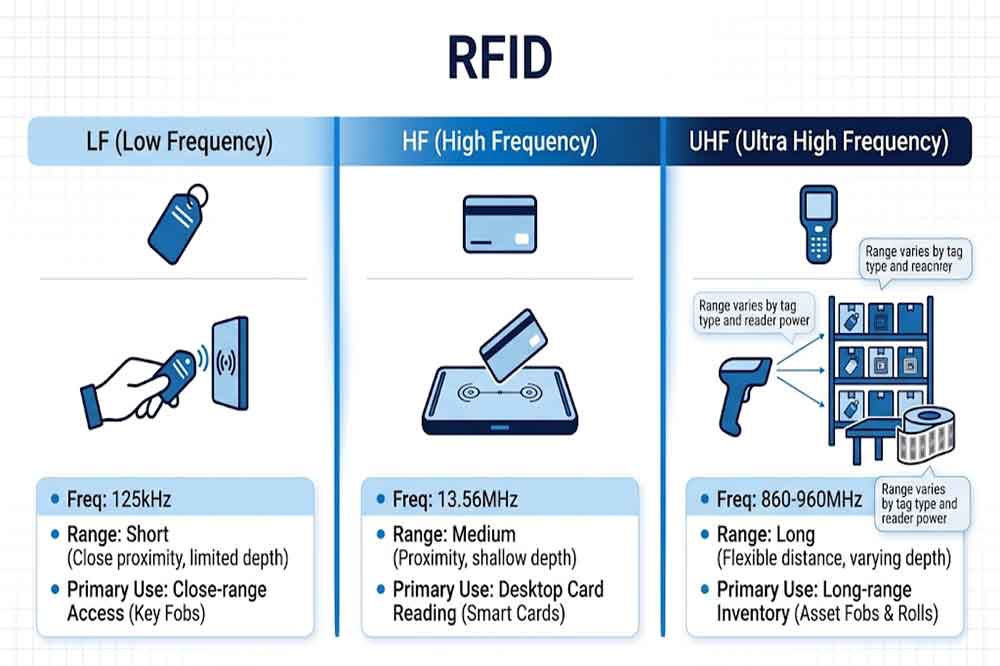
USB RFID reader may identify a tag from a short distance in one application but struggle to read the same type of tag in another. This does not necessarily mean that the reader is defective. RFID reading distance depends on several factors, including the frequency, antenna design, tag construction, reader settings, and surrounding materials.For businesses evaluating a USB RFID reader, the advertised maximum distance is only one part of the decision. A reader that can detect a tag across a long distance may not be the best option for a workstation that requires precise identification of one item at a time.The right choice depends on how the reader will be used. Inventory verification, desktop tag encoding, staff identification, and warehouse operations all have different requirements for reading distance and accuracy.This guide explains what affects USB RFID reader reading range and how to evaluate real-world performance before purchasing hardware in bulk.What Is USB RFID Reader Reading Range?RFID reading range is the distance at which a reader can successfully communicate with a compatible RFID tag under specified conditions.The actual distance varies by RFID technology and application. LF, HF, and UHF readers use different frequency bands and communication methods, so their typical reading distances are not directly interchangeable.For example, an HF desktop reader designed for close-range identification may work well when an employee presents an RFID card near the device. A UHF reader may be more suitable for applications that need to identify tagged products from farther away.USB describes the connection between the reader and its host computer. It does not determine the RFID frequency or guarantee a particular reading distance.When comparing devices, buyers should confirm the reader’s frequency, supported tag types, antenna configuration, and intended operating conditions.LF, HF, and UHF: How Frequency Affects Reading DistanceRFID frequency is one of the first specifications to check when evaluating reading range.LF RFID readersLow-frequency RFID commonly operates at 125 kHz or 134.2 kHz, depending on the system and application.LF technology is often used for animal identification, access-related applications, and certain industrial identification tasks. Its reading distance is generally short, and performance depends on the reader and transponder design.LF may be suitable when tags are presented close to a reader and the application does not require long-distance identification.HF RFID readersHigh-frequency RFID commonly operates at 13.56 MHz. HF readers are used for applications such as contactless cards, product identification, library systems, and NFC-related use cases where supported.Many HF desktop readers are designed for close-range interaction. This can be an advantage when operators need to identify a particular card or item without unintentionally reading tags farther away.However, not every HF reader supports every 13.56 MHz tag protocol. Buyers should verify protocol compatibility as well as reading distance.UHF RFID readersUltra-high-frequency RFID systems commonly operate within regional bands around 860–960 MHz. The permitted operating frequencies and power limits vary by country or region.UHF technology is widely used for inventory, logistics, warehouse operations, and applications that need to identify tags at greater distances or read multiple tags within a suitable field.Actual UHF reading range can vary significantly according to tag antenna design, reader antenna performance, power settings, installation, and environmental conditions.A UHF reader should not be selected based on frequency alone. Test it with the intended tags and materials before deployment.For a detailed comparison, read our guide to USB RFID reader frequency: LF vs HF vs UHF.Six Factors That Affect USB RFID Reader Reading Range1. RFID tag antenna and tag sizeThe tag plays a major role in reading performance.A tag’s antenna design determines how effectively it couples with the reader’s electromagnetic field. Larger tags may support larger antennas, but size alone does not guarantee better performance. Antenna tuning, chip characteristics, construction, and the material carrying the tag also matter.For example, a small UHF label attached to a metal tool may behave differently from a label designed specifically for metal surfaces.When evaluating a reader, use the actual tag model intended for the application. Testing with a different tag can produce misleading results.2. Reader antenna designThe reader antenna influences the shape, strength, and coverage of the reading field.Some USB RFID readers have a built-in antenna for desktop use. Other systems may support an external antenna, depending on the hardware design.A compact integrated reader may be convenient for controlled workstation tasks. A system with an external antenna may offer more flexibility for applications requiring different coverage areas, but only if the reader is designed to support that configuration.The antenna’s effective coverage area matters as much as the maximum distance. A narrow, controlled reading zone may be preferable to a large field when several tagged items are close together.3. Reader power and configurationReader output power can affect the range of supported RFID systems, particularly UHF devices. However, higher power is not always the best solution.Excessive read range may cause unwanted tags to be detected. In a desktop application, this can lead to incorrect product selection or confusion when several tagged items are nearby.Power settings must also comply with the regulations applicable to the deployment location and the reader’s approved operating limits.Where power adjustment is supported, test several appropriate settings with the actual tags and intended read zone. Choose the setting that provides reliable identification without unnecessary reads beyond the target area.4. Tag orientation and placementThe position of the tag relative to the reader can change reading performance.Some tag antennas perform best when their orientation aligns with the reader’s field. Rotating the tag, changing the distance, or placing it at an angle may reduce the probability of a successful read.This is particularly relevant when tags are attached to tools, cartons, equipment, or products that may be presented in different positions.During testing, check more than one orientation. If operators cannot control tag placement in normal use, the test should reflect that variation.5. Metal, liquids, and nearby materialsThe materials around a tag can affect RFID performance.Metal surfaces can detune or shield certain tag antennas, while liquids can absorb or alter radio-frequency energy, particularly in some UHF applications. Packaging, product contents, mounting surfaces, and nearby equipment may also influence performance.A standard tag that works well on a cardboard box may not work reliably when attached directly to a metal enclosure.If the application involves metal or liquid-filled products, consider tags designed for those conditions. Test the complete assembly, including the mounting position and surrounding materials.6. Interference and nearby RFID systemsOther radio-frequency devices, nearby RFID readers, and environmental conditions can affect performance. The impact depends on the technology, configuration, and installation.In a busy warehouse or production area, a reader may operate near other equipment. A reading problem that does not appear in a quiet office may emerge after installation.Test the reader in the actual deployment environment whenever possible. For UHF projects, review regional frequency requirements and the reader’s configuration to help manage interference.Maximum Reading Distance vs. Reliable Working DistanceA maximum reading-distance figure usually describes performance under particular test conditions. It should not automatically be treated as the distance that a business can expect in daily operation.A reliable working distance is the distance at which the system consistently performs the required task with the intended tags and setup.Consider two different applications.In a desktop encoding station, an operator may need to read one tag at close range. A short, controlled reading zone may be ideal because it reduces the chance of detecting another nearby tag.In a warehouse verification process, a business may need to identify tagged cartons from farther away. The system may require a different UHF reader, antenna arrangement, tag design, and workflow.The best reading range is therefore not always the longest one. It is the range that supports the business process accurately and consistently.When reviewing specifications, ask the supplier how the reading distance was measured and which tag, antenna, power setting, and test environment were used.How to Test USB RFID Reader Reading RangeA practical test can help purchasing teams compare candidate readers before committing to a bulk order.Step 1: Use the intended RFID tagsChoose the exact tag model that will be used in the project. Record the tag type, dimensions, mounting surface, and any relevant product materials.Do not rely entirely on tests performed with a supplier’s demonstration tag.Step 2: Prepare a controlled test areaPlace the reader and tag in a consistent environment. Remove unnecessary tagged items from the reading area so that the test focuses on the intended tag.For a UHF system, follow the manufacturer’s setup instructions and applicable regulatory requirements.Step 3: Measure distance consistentlyStart at a short distance and move the tag gradually farther away. Keep the reader configuration unchanged during the first test.Record the distance at which reads become unreliable, not just the farthest distance at which a single read succeeds.Step 4: Test different orientationsRepeat the test with the tag rotated or positioned as it would be during actual use. If the tag will be attached to a product, test it in that mounted position.Step 5: Repeat the testA single successful read does not establish reliability. Repeat each test under the same conditions and record successful reads, missed reads, and unintended reads.The required reliability threshold depends on the business process. A workflow that controls valuable equipment may have different acceptance criteria from a basic demonstration.Step 6: Test the real environmentMove the reader and tagged product into the intended workstation, warehouse, laboratory, or production area.Check whether nearby metal, liquids, other tags, or surrounding equipment changes the result.Step 7: Evaluate the complete workflowConfirm that the host computer receives the correct tag data and that the application handles it properly. A successful radio-frequency read is only one part of the system.For more on connecting RFID hardware to business applications, see our guide to USB RFID reader integration with inventory and ERP systems.Common Reading-Range Problems and Possible SolutionsProblem: The reader only detects tags at very close range.Check that the reader and tag use compatible frequencies and protocols. Confirm the reader settings, tag condition, and test distance. If the application requires longer-range reading, a different reader or tag design may be necessary.Problem: The reading distance changes when the tag is attached to a product.The product’s material or tag mounting position may be affecting performance. Test the tag on the actual product and consider a tag designed for the relevant surface.Problem: The reader detects unwanted tags.The reading zone may be larger than the application requires. Where supported, review power settings, antenna placement, application filtering, and the physical positioning of tagged items.Problem: The reader works in the office but not in the warehouse.The deployment environment may contain different materials, nearby equipment, or additional RFID systems. Repeat testing at the installation site and compare results with the original setup.Problem: Reading performance is inconsistent.Check tag orientation, placement, reader configuration, and the stability of the test conditions. Record repeated results before deciding whether the problem is related to the reader, tag, or environment.How to Choose a USB RFID Reader for Your Required DistanceBefore selecting a device, define the task rather than starting with a maximum-distance specification.For close-range card or item identification, prioritize compatible tag protocols, a controlled read zone, and straightforward computer integration.For workstation-based inventory, consider how the operator presents the item, whether multiple tags may be nearby, and how the software handles repeated reads.For longer-range inventory or logistics applications, review UHF compatibility, antenna design, tag suitability, regional frequency requirements, and the actual coverage needed.Also confirm the host interface and software support. A reader with suitable radio performance may still be unsuitable if it cannot connect to the intended application.Our guide to choosing the right USB RFID reader provides additional selection considerations. You can also review the USB RFID reader buying guide for businesses before requesting samples or a quotation.Questions to Ask Your RFID Reader SupplierWhen evaluating readers for a B2B project, prepare a short list of technical questions:Which RFID frequencies and tag protocols does the reader support?What tag model and test conditions were used for the stated reading distance?Is the antenna integrated, or can the reader support an external antenna?Can the reading parameters be configured?Does the reader support the operating system and software interface required by the project?Can the supplier test the reader with our actual tags and product materials?What documentation, SDK support, and sample-testing options are available?These questions help establish whether the reader is suitable for the real application rather than only for a controlled demonstration.ConclusionUSB RFID reader reading range depends on the complete RFID setup, not just the reader itself. Frequency, tag antenna design, reader antenna, power configuration, orientation, nearby materials, and interference can all influence the result.For reliable selection, test the intended tags under realistic conditions and evaluate consistent performance rather than relying on one maximum-distance figure. A reader that provides the right coverage, accurate identification, and suitable software integration will generally be more valuable than one chosen solely for its advertised range.If you are evaluating USB RFID readers for inventory, asset tracking, manufacturing, or another business application, contact Cykeo with your tag type, required distance, product materials, and software requirements to discuss a suitable configuration.FAQQ1. What is the reading range of a USB RFID reader?It depends on frequency, reader and tag design, configuration, and environment. Confirm the specification for the exact model and test it with your intended tags.Q2. Does UHF always have a longer range than HF?UHF often supports longer-range applications, but actual performance depends on the reader, tag, antenna, and installation conditions.Q3. Why does an RFID tag read at a shorter distance on metal?Metal can interfere with or detune some tag antennas. A tag designed for metal surfaces may improve performance, but it should be tested on the actual product.Q4. Is a longer RFID reading range always better?No. A controlled short-range field may be preferable when the system must identify one specific item and avoid reading nearby tags.Q5. How should I test a reader before bulk purchasing?Test the intended tags and product materials at measured distances, repeat reads in different orientations, and verify performance in the actual working environment.