Articles

Articles & Insights

Discover, learn, and grow with stories from our ecosystem members.

search
filter_list Category: tech-innovation
close
what rfid tag Tech & Innovation
Nov 18, 2026 • visibility 10 • 17 min read

what rfid tag

RFID tag is a small electronic device that uses radio-frequency communication to identify an object or store supported data. It typically contains a microchip and an antenna, and it works with a compatible RFID reader. Depending on its design, the tag may operate without a battery or use its own power source.RFID tags appear on retail merchandise, warehouse cartons, library books, access credentials, and reusable industrial assets. Their appearance varies: some are thin adhesive labels, others are hard plastic tags, and some are integrated directly into cards or equipment.The important point is that an RFID tag is not a complete tracking system by itself. Its value depends on the reader that detects it, the software that interprets its data, and the process in which the tag is used.What Is an RFID Tag Made Of?Most conventional RFID tags have two main electronic elements:Microchip: Stores an identifier and, depending on the tag, additional data or configuration information.Antenna: Enables radio-frequency communication between the tag and a compatible reader.These elements are attached to a substrate or enclosed in a physical housing. In a disposable product label, the antenna and chip may be embedded in a thin inlay. An industrial tag may use a more durable enclosure to withstand handling or environmental exposure.Not every RFID tag has the same memory, durability, or communication range. A tag designed for clothing inventory is not automatically suitable for tracking metal tools or identifying equipment exposed to harsh conditions.How Does an RFID Tag Work?RFID tags carry identification data that compatible readers can capture during inventory and logistics operations.A typical passive RFID identification process works as follows:The reader sends a radio-frequency signal through its antenna.A compatible passive tag receives energy from that signal.The tag responds with its stored identification data using the communication method supported by the system.The reader captures the response and passes the data to connected software.The application matches the identifier to an inventory item, asset record, or other relevant information.Active RFID tags work differently because they use an onboard power source to support their communication. Battery-assisted passive tags also exist, combining a battery with a communication approach that differs from a conventional fully passive tag.A successful read does not necessarily mean that the item’s physical location is known precisely. It means the tag was detected within the system’s effective reading conditions. The application needs additional information—such as a reader’s known location or a recorded checkpoint—to infer where the item was observed.What Types of RFID Tags Are Available?RFID tags are commonly grouped by power source, operating frequency, physical design, and intended application. These differences affect how a tag communicates and where it can be used.Tag typeMain characteristicTypical applicationsPassive RFID tagNo onboard battery; powered by the reader’s signalRetail labels, inventory, library booksActive RFID tagUses an onboard power source to transmit a signalSelected high-value asset and vehicle trackingBattery-assisted passive tagUses a battery to support its circuitry but communicates by backscatterSpecialized industrial trackingHF/NFC tagOperates at 13.56 MHzContactless cards, NFC interactions, selected item identificationUHF/RAIN RFID tagCommonly used for longer-range, multi-item identificationRetail, logistics, warehouses, manufacturingGS1 notes that UHF passive RFID tags can be read at distances well beyond 10 metres in suitable conditions. That is not a guaranteed distance for every tag: reader power, antenna design, tag orientation, surrounding materials, and local radio regulations all affect the usable rangeWhere Are RFID Tags Used?Retailers can use RFID-tagged merchandise to support stock checks and connect physical products with digital inventory records.RFID tags are used across many industries, but their role depends on the system around them:Retail: Identify merchandise and support inventory checks.Warehousing: Link tagged cartons and goods to digital inventory records.Libraries: Support book identification, circulation, and stocktaking.Manufacturing: Identify components, work-in-progress items, and reusable containers.Access control: Provide data to compatible credential readers.Asset management: Help organizations identify equipment at designated reading points.GS1 explains that an Electronic Product Code (EPC) can be encoded on a compatible RFID tag to provide a standardized identifier for an object. The EPC is not the tag itself; it is the identifier that the tag can carry.What to Check Before Choosing an RFID TagThe best RFID tag is not necessarily the one with the longest advertised read range. Start with the object and the environment.Material: Metal and liquid can affect radio-frequency performance, so test tags on the actual product.Attachment: Choose a form factor suited to the surface, packaging, or equipment.Reader compatibility: Confirm that the tag and reader support the same frequency and protocol.Read zone: Determine where tags should—and should not—be detected.Data requirements: Establish whether a unique identifier is sufficient or whether additional memory is needed.For a high-volume warehouse, test tags on fully packed cartons and in the intended reading position. For retail, test a mixed group of products rather than relying on one isolated sample. These checks help reveal missed reads and unintended reads before deployment.How to Choose an RFID Tag for Your ApplicationThe right RFID tag is the one that performs reliably on the actual object, with the reader and software that will be used in the final installation. A tag that works well on a cardboard box may behave differently when attached to a metal tool, a liquid-filled container, or a garment packed tightly among other tagged items.Before placing a bulk order, evaluate the following factors.1. Match the Tag to the ObjectConsider the object’s material, shape, surface, and operating environment.Cardboard packaging and clothing: Label-style passive UHF tags may suit high-volume inventory applications.Metal tools and equipment: Look for tags specifically designed for mounting on metal, then test them in the intended position.Reusable industrial assets: Evaluate durability, attachment method, and resistance to the environmental conditions involved.Access cards and close-range interactions: HF or NFC-compatible tags may be appropriate, depending on the reader and application.These are starting points, not universal rules. Confirm the tag’s specifications and test it on representative objects before deployment.2. Choose the Required Reading RangeA longer reading range is not always better. GS1 explains that passive UHF RFID can typically read tags over several metres, with longer distances possible under particular conditions. LF and HF systems are generally used at shorter ranges, while active RFID can support substantially longer-range applications. Actual performance varies with the equipment, tag, environment, and installation.For a checkout station, the priority may be to read items inside a defined area without detecting nearby merchandise. For a warehouse portal, the goal may be to identify tagged cartons passing through an opening. These require different antenna arrangements and read-zone tests.3. Confirm Reader and Software CompatibilityA tag’s frequency and protocol must be compatible with the reader. If the application uses a standardized identifier such as an EPC, confirm that the tag supports the required data format and that the software can map the identifier to the correct product or asset record. GS1’s EPC Tag Data Standard describes the encoding of identifiers used in compatible RFID systems.4. Test Before Scaling UpA useful pilot should include:The actual tag attached to the actual product.The intended reader and antenna position.Representative item quantities and orientations.Nearby tagged items that should remain outside the reading zone.Repeated tests under normal operating conditions.Record missed reads and unintended reads, not just successful detections. This provides a more realistic view of system performance than a single demonstration with one tag.What RFID Tag Means: Frequently Asked Questions1. What is an RFID tag used for?An RFID tag identifies an object or stores supported data that can be read by a compatible RFID reader. Common applications include retail inventory, warehouse operations, library management, access credentials, manufacturing, and asset tracking. The tag’s exact function depends on its design and the software connected to the reader.2. Do RFID tags need batteries?Passive RFID tags do not require an onboard battery to communicate. They obtain operating energy from the reader’s radio-frequency signal and respond by modulating the signal reflected from their antenna. Active tags use an onboard power source, while battery-assisted passive tags use a battery for certain functions but still communicate through backscatter.3. Can RFID tags be read without line of sight?Yes. RFID uses radio-frequency communication rather than optical scanning, so a tag does not generally need to be visually exposed to the reader. However, this does not mean every tag can be read through every material. Metal, liquid, tag orientation, packaging, and the reader’s configuration can all affect performance.4. How far away can an RFID tag be read?There is no single reading distance for all RFID tags. GS1 describes passive UHF RFID as typically operating over several metres, with up to 15 metres possible in special cases. Active RFID tags may reach 100 metres or more, depending on the system. LF and HF applications commonly operate at much shorter distances.5. What is the difference between an RFID tag and an RFID reader?An RFID tag is attached to or incorporated into an object and carries identification data. The reader communicates with compatible tags and captures their responses. Software then processes the data to support tasks such as inventory updates, asset identification, or access decisions.6. Can one RFID reader identify multiple tags at once?Compatible RFID systems can identify multiple tags within their effective reading area. UHF passive RFID is widely used for applications involving high volumes of tagged products. The number of tags successfully read in a particular operation depends on the reader, antennas, tags, radio conditions, and system configuration.7. Can an RFID tag be rewritten?Some RFID tags support writing or updating particular memory areas, while others may have restricted or locked memory. Whether data can be changed depends on the tag’s capabilities, access controls, protocol, and reader software. Do not assume that every tag can be rewritten simply because it can be read.

article
Tech & Innovation
Nov 17, 2026 • visibility 27 • 27 min read

Best Data Science Course in Chennai: Fees, Skills, and Career Opportunities

Data Science has become an important part of modern business operations, helping organizations understand large volumes of information, identify patterns, forecast trends, and make informed decisions. Businesses across banking, healthcare, retail, manufacturing, and technology use data-driven methods to improve performance and develop effective strategies.As organizations increasingly depend on data and Artificial Intelligence, professionals with knowledge of programming, statistics, machine learning, and data analytics are becoming valuable across industries. For students, graduates, and working professionals, enrolling in the Best Data Science Course in Chennai with Placement can provide a structured pathway to developing these technical capabilities.A comprehensive Data Science program combines programming fundamentals, data analysis, machine learning, data visualization, and practical projects. It also introduces learners to modern technologies such as Generative AI and Agentic AI, helping them understand how intelligent systems are developed and applied in business environments.What Is Data Science?Data Science is an interdisciplinary field that combines programming, mathematics, statistics, and analytical techniques to extract meaningful insights from structured and unstructured data.Organizations collect information through websites, mobile applications, financial transactions, customer interactions, business operations, and digital platforms. Data Science helps transform this information into useful insights that support planning, forecasting, and decision-making.A typical Data Science workflow includes:Data Collection: Gathering information from databases, applications, surveys, and other sources.Data Cleaning: Identifying missing values, correcting inconsistencies, and preparing datasets.Data Analysis: Studying information to identify patterns, relationships, and trends.Data Visualization: Presenting findings through charts, dashboards, and reports.Machine Learning: Developing models that learn patterns from data and generate predictions.Business Interpretation: Converting analytical findings into meaningful recommendations.Understanding these stages helps learners recognize how raw information becomes useful business intelligence.Why Choose a Data Science Course in Chennai?Chennai has an established business and technology ecosystem with organizations across IT services, automobile manufacturing, banking, healthcare, consulting, and software development.These industries use data analytics to understand customer behavior, improve operational efficiency, forecast demand, manage resources, and support business decisions.Enrolling in a Data Science course in Chennai can help learners develop technical knowledge relevant to this expanding digital environment.Develop Programming and Analytical SkillsData Science requires a combination of programming knowledge, statistical understanding, and analytical thinking. Structured training introduces learners to Python, SQL, statistics, and machine learning.These skills help students work with datasets, identify meaningful patterns, and communicate analytical findings.Learn Through Practical ProjectsPractical assignments allow students to apply technical concepts to realistic business problems. Projects involving sales forecasting, customer segmentation, recommendation systems, and predictive analytics help learners understand the applications of Data Science.Understand Artificial IntelligenceArtificial Intelligence and Machine Learning are important parts of modern Data Science. Learning these technologies helps students understand automated predictions, intelligent applications, and advanced data-driven solutions.Explore Multiple Industry ApplicationsChennai has business activities across manufacturing, healthcare, financial services, retail, and technology. Data Science supports these sectors through predictive analysis, business intelligence, process optimization, and customer analytics.Build a Strong Technical FoundationA structured program helps learners progress from programming fundamentals to advanced analytical concepts. This learning approach supports beginners as well as professionals interested in developing additional technical capabilities.Essential Skills Covered in Data Science TrainingA comprehensive Data Science program should cover programming, statistics, database management, machine learning, data visualization, and Artificial Intelligence.Python ProgrammingPython is one of the most widely used programming languages in Data Science. Its libraries support data processing, statistical analysis, visualization, automation, and machine learning.Important learning areas include:Python fundamentals and syntaxVariables, functions, and data structuresConditional statements and loopsWorking with files and datasetsData manipulationProgramming librariesBasic automationPython provides the foundation for processing datasets and developing analytical applications.SQL and Database ManagementSQL is used to retrieve, organize, and manage information stored in relational databases. Data professionals use SQL to access business information and prepare datasets for analysis.Students generally learn:Database fundamentalsSQL queriesFiltering and sorting recordsJoins and subqueriesAggregate functionsData manipulationDatabase relationshipsThese skills are useful when working with business databases and large volumes of structured information.Statistics and MathematicsStatistics helps Data Science professionals understand data distributions, relationships, uncertainty, and trends.Important concepts include probability, descriptive statistics, hypothesis testing, correlation, regression, and statistical inference.Mathematical knowledge also supports the understanding of machine learning algorithms and predictive models.Data Cleaning and Exploratory Data AnalysisRaw datasets often contain missing values, duplicate records, inconsistencies, and formatting problems. Data cleaning prepares information for reliable analysis.Exploratory Data Analysis helps learners understand datasets through statistical summaries and visual representations.Students develop knowledge of data preparation, missing value treatment, outlier identification, and pattern discovery.Machine LearningMachine Learning is a branch of Artificial Intelligence that enables systems to learn patterns from data and generate predictions.Important learning areas include:Supervised learningUnsupervised learningRegressionClassificationClusteringFeature engineeringModel trainingModel evaluationPractical exercises help learners understand how machine learning models are developed and applied to business problems.Deep LearningDeep Learning uses neural networks to process complex information and recognize patterns. It supports applications such as image recognition, speech processing, language understanding, and advanced prediction.Students are introduced to neural network concepts and their applications in modern Artificial Intelligence systems.Natural Language ProcessingNatural Language Processing (NLP) enables computers to process, interpret, and work with human language.Its applications include text classification, sentiment analysis, language translation, chatbots, and document processing.Learning NLP helps students understand how businesses use language-based data to develop intelligent applications.Data VisualizationData visualization transforms complex datasets into charts, graphs, dashboards, and reports.Students learn to present analytical findings through tools such as Power BI and Tableau. These platforms help communicate trends, business performance, and important insights to decision-makers.Generative AI and Agentic AIGenerative AI enables systems to create text, images, code, and other content based on instructions and input data. Agentic AI introduces systems capable of performing multi-step tasks through defined workflows.Important learning areas include:Large Language ModelsPrompt EngineeringRetrieval-Augmented Generation (RAG)LLM APIsAI-powered applicationsAgentic AI workflowsResponsible AI practicesThese technologies introduce learners to modern developments in intelligent data applications.Tools and Technologies Used in Data SciencePractical Data Science training introduces learners to programming languages, analytics platforms, machine learning resources, and cloud technologies.Python: Used for programming, data processing, statistical analysis, and machine learning.SQL: Helps retrieve and manage information from structured databases.Power BI: Supports interactive dashboards, business reporting, and data visualization.Tableau: Helps transform datasets into visual reports for analytical communication.Hugging Face: Provides access to machine learning models, datasets, and resources used in Generative AI development.LLM APIs: Allow developers to integrate language model capabilities into software applications.BigQuery: Supports cloud-based data storage and large-scale data analysis.AWS: Provides cloud infrastructure and services used for data processing and application development.FastAPI: Helps developers build APIs for machine learning and data-driven applications.Streamlit: Supports the creation of interactive applications for presenting Data Science projects.Exposure to these technologies helps students understand different stages of the Data Science workflow, from data preparation to application development.Importance of Practical Training in Data ScienceData Science involves applying technical concepts to real-world information. Practical training allows students to understand how analytical methods work and how businesses use data to solve problems.Important benefits of hands-on learning include:Programming Experience: Students work with Python, SQL, and analytical libraries.Data Handling: Assignments introduce data cleaning, processing, and preparation.Analytical Thinking: Projects encourage learners to identify patterns and interpret results.Model Development: Students gain exposure to machine learning workflows.Visualization Skills: Dashboard exercises help learners communicate findings.Portfolio Development: Completed projects demonstrate technical knowledge and practical capabilities.For example, a sales forecasting project may involve analyzing historical sales information to estimate future demand. A customer segmentation project may use purchasing behavior to group customers with similar characteristics.A recommendation system project may analyze user preferences to suggest relevant products. These exercises help students understand how Data Science concepts are applied across industries.Applications of Data Science Across IndustriesData Science is used across industries to improve business performance, understand customer behavior, and support operational decisions.Banking and Financial ServicesBanks and financial institutions use Data Science for fraud detection, credit risk analysis, customer segmentation, transaction monitoring, and financial forecasting.Analytical models help financial organizations process large amounts of information and identify patterns that support business decisions.HealthcareHealthcare organizations use data analysis for operational planning, medical research, resource management, and patient-related analytics.Data-driven insights help healthcare teams understand patterns in medical information and improve administrative processes.Automobile and ManufacturingManufacturing companies use analytics for production planning, predictive maintenance, quality monitoring, and supply chain management.Automobile businesses also use data analysis to understand production performance, customer preferences, and operational efficiency.Retail and E-CommerceRetail businesses use Data Science to analyze purchasing behavior, forecast demand, manage inventory, and develop product recommendation systems.Customer segmentation helps businesses understand different customer groups and plan relevant marketing activities.Information TechnologyTechnology companies use Data Science for software analytics, customer behavior analysis, predictive modeling, automation, and intelligent application development.These applications demonstrate how analytical skills support different business functions.Logistics and TransportationLogistics companies use predictive analytics for route planning, delivery forecasting, fleet management, and supply chain optimization.These methods help organizations understand operational patterns and improve resource utilization.Data Science Course Fees in ChennaiData Science course fees in Chennai depend on program duration, curriculum, practical training, certifications, and additional learning opportunities.At Boston Institute of Analytics, learners can explore three program pathways designed around different training durations.ProgramDurationFeesCertification4 months₹97,000Diploma6 months₹1,40,000Master Diploma10 months₹1,75,0004-Month CertificationThe 4-month Certification provides a structured introduction to Data Science and Artificial Intelligence. It is suitable for learners interested in developing foundational programming, analytical, and technical knowledge.Program Fee: ₹97,0006-Month DiplomaThe 6-month Diploma offers an extended learning pathway with additional time to develop technical capabilities through assignments and practical learning.It also includes a 2-month internship pathway.Program Fee: ₹1,40,00010-Month Master DiplomaThe 10-month Master Diploma offers a longer learning pathway with additional practical exposure and advanced subjects.It includes 6 months of on-the-job training.Program Fee: ₹1,75,000Learners can select a program based on their preferred duration, learning objectives, and interest in practical experience.Data Science Training at Boston Institute of Analytics ChennaiBoston Institute of Analytics offers a Data Science and Artificial Intelligence program that combines foundational Data Science subjects with modern AI technologies.Learners exploring the Top Data Science Training in Chennai with Placement can explore a structured curriculum designed to develop programming, analytical, machine learning, and AI application skills.Important program features include:200+ hours of training: Covers Data Science, Artificial Intelligence, and related technical subjects.15+ projects and case studies: Provides opportunities to apply concepts through practical assignments.30+ tools and technologies: Introduces learners to programming, analytics, machine learning, and AI development tools.Dual certification: Data Science and Artificial Intelligence, along with Generative AI and Agentic AI.Practical learning: Includes projects, assignments, and technology-focused exercises.Career support: Includes 100% lifetime placement assistance and professional preparation.The curriculum includes Python, SQL, machine learning, deep learning, Natural Language Processing, Power BI, Tableau, Hugging Face, LLM APIs, RAG, Agentic AI, BigQuery, AWS, FastAPI, and Streamlit.The program combines traditional analytical methods with modern AI technologies, helping learners understand how data-driven applications are developed and used.Students interested in exploring additional learning insights can also read how a Data Science course in Chennai can jumpstart an analytics career.Career Opportunities After a Data Science CourseData Science training can help learners develop technical knowledge relevant to several professional roles across technology companies, financial institutions, consulting organizations, healthcare businesses, and startups.Data ScientistData Scientists use programming, statistics, and machine learning to analyze information, develop predictive models, and generate insights that support business decisions.Data AnalystData Analysts collect, organize, and interpret information to identify trends and prepare reports. They commonly work with SQL, Python, spreadsheets, and visualization tools.Machine Learning EngineerMachine Learning Engineers develop and maintain models that learn patterns from datasets. Their responsibilities may include model training, evaluation, optimization, and application integration.Business AnalystBusiness Analysts study business processes, requirements, and performance information. They use analytical methods to support planning and operational improvements.Data EngineerData Engineers develop and maintain systems that collect, process, and organize data. They help ensure that information is available for analysis and application development.Generative AI DeveloperGenerative AI Developers work with language models, APIs, RAG systems, and AI-powered applications. They help integrate Generative AI capabilities into digital products and business workflows.Business Intelligence AnalystBusiness Intelligence Analysts work with business data, reporting platforms, and visualization tools to prepare dashboards and support organizational decisions.The roles available to individual learners depend on their educational background, technical skills, project experience, and professional development.How to Choose the Right Data Science Course in ChennaiSelecting a suitable Data Science course involves understanding the curriculum, practical learning opportunities, technical tools, and professional support offered by the institute.Consider these important factors:Comprehensive Curriculum: Look for Python, SQL, statistics, data analysis, machine learning, deep learning, and data visualization.Practical Projects: Assignments and case studies help learners apply concepts to realistic business problems.Technology Exposure: Training should introduce relevant programming languages, analytics platforms, machine learning resources, and AI tools.Course Duration: Choose a learning pathway that provides sufficient time to develop foundational and advanced technical knowledge.Trainer Experience: Instructors with technical and industry experience can explain how Data Science concepts are applied in professional environments.Certification: Understand the certifications included and the subjects covered during the program.Career Support: Resume preparation, interview practice, and placement assistance can help learners prepare for professional opportunities.A structured learning program helps students develop technical capabilities while understanding how Data Science is used across industries.Why Data Science Skills Matter in Today's Business EnvironmentBusinesses increasingly depend on information to understand customers, improve operations, forecast demand, and plan future activities.Data Science helps organizations transform raw information into useful insights. Programming supports data processing, statistics helps interpret patterns, machine learning enables predictive analysis, and visualization tools make findings easier to communicate.Artificial Intelligence further expands these applications by supporting automation, intelligent recommendations, and Generative AI solutions.For students and working professionals, developing Data Science skills provides an opportunity to understand modern business technologies and contribute to data-driven projects.ConclusionChoosing the best Data Science course in Chennai involves understanding the program fees, curriculum, technical tools, practical assignments, and available learning pathways. Knowledge of Python, SQL, statistics, machine learning, data visualization, and Artificial Intelligence helps learners develop capabilities relevant to modern business environments.Boston Institute of Analytics offers a structured Data Science and Artificial Intelligence program with 200+ hours of training, 15+ projects and case studies, and exposure to 30+ tools and technologies. Its dual certification pathway and different program durations provide learning options for students and working professionals.For individuals interested in analytics, programming, and intelligent applications, structured Data Science training can provide a foundation for developing technical skills and exploring opportunities across the growing data and AI ecosystem.Frequently Asked QuestionsWhich is the best Data Science course in Chennai?Boston Institute of Analytics offers a Data Science and Artificial Intelligence program covering Python, SQL, statistics, machine learning, deep learning, Generative AI, and Agentic AI. The program includes practical projects, technical tools, and dual certification.What are the fees for a Data Science course in Chennai?At Boston Institute of Analytics, the 4-month Certification costs ₹97,000, the 6-month Diploma costs ₹1,40,000, and the 10-month Master Diploma costs ₹1,75,000.What is the duration of a Data Science course?The duration depends on the selected learning pathway. Boston Institute of Analytics offers 4-month, 6-month, and 10-month programs. The 6-month Diploma includes a 2-month internship pathway, while the 10-month Master Diploma includes 6 months of on-the-job training.Can beginners join a Data Science course?Yes. Beginners can start with programming fundamentals, basic statistics, and data analysis before progressing to machine learning and advanced AI concepts.Is Python necessary for Data Science?Python is one of the most widely used programming languages in Data Science. It supports data processing, statistical analysis, machine learning, automation, and AI application development.What tools are important for Data Science?Important tools and technologies include Python, SQL, Power BI, Tableau, Hugging Face, LLM APIs, BigQuery, AWS, FastAPI, and Streamlit.What career opportunities are available after Data Science training?Learners can explore roles such as Data Scientist, Data Analyst, Machine Learning Engineer, Business Analyst, Data Engineer, Business Intelligence Analyst, and Generative AI Developer, depending on their skills and experience.Does Boston Institute of Analytics provide placement assistance?Yes. Boston Institute of Analytics provides 100% lifetime placement assistance along with career support and interview preparation to help learners pursue relevant professional opportunities.

Smarter Liquor Delivery App Scraping for Product Data Growth Tech & Innovation
Nov 17, 2026 • visibility 13 • 14 min read

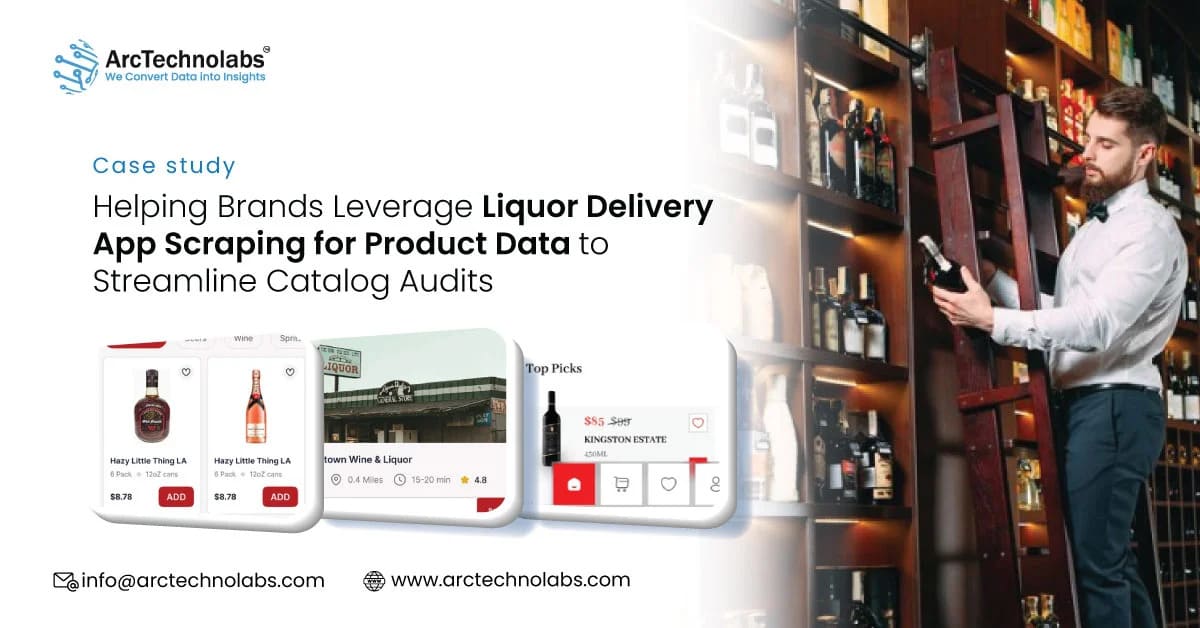
Smarter Liquor Delivery App Scraping for Product Data Growth

IntroductionThe beverage retail industry is undergoing a significant transformation, with digital ordering platforms redefining how consumers discover, compare, and purchase alcohol. For brands operating across multiple liquor delivery apps, maintaining accurate and consistent product information has become a core business priority. Liquor Delivery App Scraping for Product Data has emerged as a strategic capability that empowers beverage companies to monitor catalog accuracy, pricing shifts, and listing completeness across fragmented digital channels.Modern liquor brands and distributors deal with hundreds of SKUs spread across platforms like Swiggy Instamart, Blinkit, Zepto, and regional liquor delivery services. Each platform applies its own taxonomy, pricing logic, and product display rules, making it extremely difficult for brands to audit catalogs manually. Liquor Store Inventory Scraping plays a foundational role in building a consolidated view of how products appear, what prices are shown, and which listings are missing or incorrect across all active storefronts.The challenge is not simply collecting data, it is making that data meaningful, timely, and actionable. Without structured extraction pipelines, catalog discrepancies go unnoticed, promotional compliance suffers, and brands lose visibility during peak demand windows. Liquor Product Catalog Data Extraction bridges this gap by converting raw platform data into clean, structured records that fuel smarter catalog governance, faster auditing cycles, and more precise go-to-market decisions.The ClientThe client is a prominent beverage distribution group managing an extensive portfolio of imported spirits, domestic whisky labels, craft beers, and premium wines. With active listings across 12 major liquor delivery applications in more than 20 cities, the brand had accumulated significant catalog inconsistencies, varying prices, outdated product descriptions, missing images, and duplicate SKU entries. The client needed a scalable approach to continuously monitor and correct their digital shelf presence, and they identified Liquor Delivery App Scraping for Product Data as the most efficient path forward.The distribution group operated both B2C and B2B channels, supplying to retail chains, hotels, and directly to consumers through quick commerce platforms. Their internal catalog team was spending more than 60% of their time on reactive problem-solving, manually identifying incorrect listings after customers flagged them, rather than proactively managing digital shelf quality. They needed a partner who could automate the detection of catalog anomalies at scale.After evaluating multiple technology partners, the client selected ArcTechnolabs based on its depth of experience in platform data extraction and its proven ability to deliver structured, audit-ready outputs. The goal was to build a continuously refreshed Liquor Product Catalog Data Extraction pipeline that could identify pricing deviations, detect delisted products, flag unauthorized discounting, and surface platform-level gaps without any manual intervention from the client’s internal team.Key ChallengesThe beverage distribution landscape presents a uniquely complex set of data challenges that differ considerably from general e-commerce or food delivery verticals. Alcohol product listings are subject to regulatory labeling requirements, platform-specific compliance rules, and distributor pricing agreements, all of which create additional layers of complexity when managing catalog data at scale.Before partnering with ArcTechnolabs, the client faced several key challenges in managing and utilizing Liquor Dataset information effectively.Catalog data was stored in isolated spreadsheets with no connection to live platform listings, creating a persistent lag between what was approved internally and what customers actually saw online.Pricing inconsistencies across platforms were damaging brand perception, with the same SKU appearing at three to four different price points depending on the delivery app.Real-Time Liquor Delivery App Data Scraping was absent from the client’s toolkit, meaning they had no mechanism to detect flash discounts, unauthorized promotions, or sudden delisting events as they occurred.Competitor products were gaining ranking visibility through aggressive promotional bundling, and the client lacked intelligence on what competitor catalogs looked like across comparable platforms.Their internal BI team could not consolidate multi-platform metrics because incoming data was inconsistent, non-standardized, and incompatible with existing database schemas.Product imagery, description formatting, and unit specifications varied widely from one platform to another, with no automated compliance check in place.Key SolutionWe designed a fully customized data extraction ecosystem to address the client’s catalog intelligence requirements. Rather than applying a generic scraping framework, the team conducted a thorough analysis of each delivery platform’s data structure, product taxonomy, and update frequency before building dedicated extraction modules for each channel.The solution architecture was built around four core capabilities.First, platform-specific scrapers were developed for each delivery app in the client’s digital distribution network, capable of capturing product name, SKU code, price, MRP, available pack sizes, product imagery URL, description text, category tags, and listing rank.Second, Real-Time Liquor Delivery App Data Scraping was implemented through scheduled extraction cycles that ran multiple times daily, ensuring that any price change, product delisting, or promotional modification was captured within hours of its occurrence on the platform.Third, the extracted data was normalized through a proprietary data standardization layer that mapped platform-specific field names and taxonomies into the client’s master catalog schema.Fourth, a Liquor Delivery App Product Dataset API was delivered to allow the client’s internal BI and ERP systems to consume clean, structured catalog data programmatically, eliminating the need for file-based data transfers and manual imports.Data Points Captured Across PlatformsWe built a comprehensive extraction model that captured the following data dimensions across all integrated liquor delivery platforms:Data Category: Product IdentityExtracted Fields: SKU ID, Brand Name, Product Name, CategoryUpdate Frequency: DailyData Category: Pricing InformationExtracted Fields: MRP, Selling Price, Discount %, Surge PricingUpdate Frequency: Multiple Times DailyData Category: Listing ComplianceExtracted Fields: Description Text, Image URL, Pack Size, Unit TypeUpdate Frequency: DailyData Category: Availability StatusExtracted Fields: In-Stock, Out-of-Stock, Limited AvailabilityUpdate Frequency: HourlyData Category: Competitive IntelligenceExtracted Fields: Competitor SKUs, Price Bands, Promotional OffersUpdate Frequency: Twice DailyData Category: Platform RankingExtracted Fields: Search Rank, Category Rank, Sponsored PositionUpdate Frequency: DailyThe table above captures the full breadth of data points that we extracted consistently across delivery platforms. Each data category was mapped to specific audit use cases, for example, pricing fields fed directly into the client’s promotional compliance workflow, while listing compliance data was routed to the catalog management team for review and correction.This structured approach to data capture ensured that the client’s audit teams were no longer working from assumptions or delayed reports. Every field extracted had a defined owner, a defined review cadence, and a defined escalation path, turning raw extraction output into a fully governed catalog intelligence workflow that the client could rely on without technical dependency on us for day-to-day operations.Advantages of Implementing ArcTechnolabsAccurate Catalog SynchronizationWe ensure consistent product data alignment across all platforms using Liquor Data Scraping to detect and flag discrepancies in SKU listings, descriptions, and pricing fields automatically.Competitive Pricing IntelligenceThe extraction framework supports continuous monitoring of competitor price movements, using Liquor Marketplace Price Comparison Scraping to surface actionable pricing gaps that inform dynamic discount and bundling strategies.Real-Time Availability MonitoringBrands receive timely alerts for out-of-stock events and listing removals through Real-Time Liquor Delivery App Data Scraping pipelines, enabling supply chain teams to respond before customer-facing impact occurs.Seamless System IntegrationStructured outputs are delivered through a Liquor Delivery App Product Dataset API that connects directly to existing ERP and BI platforms, reducing manual data handling and improving operational reporting accuracy.Scalable Multi-Platform CoverageWe operate extraction modules across regional and national delivery apps using Liquor Shops Data Scraping Services to ensure no channel is left unmonitored, regardless of platform size or data complexity.ConclusionCatalog fragmentation remains one of the most underestimated operational challenges for beverage brands competing across multiple digital delivery channels. Liquor Delivery App Scraping for Product Data offers a proven, scalable path to catalog intelligence that transforms how brands manage their digital shelf presence.We bring deep expertise in building extraction pipelines that are platform-specific, audit-ready, and integrated directly into clients’ existing technology ecosystems. Through Real-Time Liquor Delivery App Data Scraping, brands gain the operational visibility needed to respond faster, price smarter, and compete more effectively across every channel where their products appear.If your brand is ready to move beyond reactive catalog management and build a proactive, data-driven digital shelf strategy, contact ArcTechnolabs today. Our team will design a custom extraction solution tailored to your platform mix, SKU portfolio, and audit requirements, delivering clean, structured catalog intelligence that your commercial, compliance, and category teams can act on from day one.#LiquorDeliveryAppScrapingForProductData,#LiquorProductCatalogDataExtraction,#RealTimeLiquorDeliveryAppDataScraping,#LiquorDeliveryAppProductDatasetAPI,Source: https://www.arctechnolabs.com/liquor-delivery-app-scraping-for-product-data.phpContact us:E-mail: [email protected] No: +91 8866656657Visit Now: https://www.arctechnolabs.com/

Steve Harringtone
Read arrow_forward
Can RFID Be Used to Track? A Practical Guide to RFID Tracking Systems Tech & Innovation
Nov 17, 2026 • visibility 20 • 29 min read

Can RFID Be Used to Track? A Practical Guide to RFID Tracking Systems

Can RFID be used to track people, products, equipment, and inventory? Yes, RFID can track tagged items by identifying them as they pass readers or enter defined detection zones. When connected to tracking software, multiple readers can record movement between locations and update inventory records. However, ordinary RFID does not automatically provide GPS-style coordinates or continuous location updates everywhere.That distinction matters in a warehouse. A reader installed at a loading-bay entrance may register a tagged container as it passes through, while a reader at a storage area can record its subsequent arrival. The software connects these events to build a movement history. If neither reader detects the container, the system cannot simply assume where it is.RFID tracking is therefore best understood as a combination of radio-frequency identification, reader placement, tagged assets, and software that interprets detection events.For businesses considering industrial RFID, the practical question is not only whether a tag can be read. It is whether the system can reliably capture the movements that matter to the operation.How Does RFID Tracking Work?RFID stands for Radio Frequency Identification. An RFID system uses radio signals to communicate between a reader and an electronic tag attached to an object, product, container, or other item.A typical passive UHF RFID tracking system contains four main elements:RFID tags: Store identification data associated with individual items or assets.RFID readers: Detect tags within their effective interrogation zones.Antennas: Transmit and receive radio-frequency signals, either as separate components or integrated into the reader.Tracking software: Associates tag identifiers with asset records and processes detection events into useful information.According to GS1’s EPC UHF Gen2 Air Interface Protocol, the standard defines communication between readers and passive UHF RFID tags operating in the 860–930 MHz range. The exact operating frequency used by a deployment depends on regional regulations and equipment configuration.Passive UHF tags do not require an onboard battery to communicate with a reader. The reader supplies energy through its radio signal, and the tag responds by backscattering information. This makes passive RFID suitable for many applications involving large numbers of relatively inexpensive tagged items.What happens when an item moves?Imagine a distribution center receiving a pallet of packaged products.The pallet or individual products carry RFID tags. As the shipment passes an RFID reading point, the reader detects the tags and sends their identifiers to the host application. The software checks the expected shipment information and records the receiving event.Later, another reader may record the pallet leaving a storage zone or passing through a dispatch portal.The application can then show:Which tagged items were detected.When a recorded movement occurred.Which reader or designated zone detected the item.Whether the observed movement matches the expected workflow.Whether an item appears to be missing from a scheduled inventory or shipment.This is the foundation of RFID asset tracking. The system records observations and turns them into a usable history; it does not necessarily know the item’s exact physical position at every moment.What Can RFID Be Used to Track?RFID tracking can support several different business processes. The most suitable setup depends on whether a company needs item identification, movement history, location-zone awareness, or more detailed localization.1. Inventory and warehouse stockRFID can help warehouses identify tagged cartons, pallets, bins, and individual products without requiring staff to scan each barcode separately.At receiving, a reader can detect multiple compatible tags within its reading zone. At dispatch, the system can compare detected items with shipment records. During cycle counting, RFID can help reconcile physical stock with the inventory database.The main operational advantage is reduced dependence on manually scanning every item one at a time. However, the actual result depends on tag placement, packaging materials, reader configuration, and the inventory process.A useful real-world example comes from research by Auburn University’s RFID Lab. A 2013 field study examined RFID-enabled inventory visibility across 13 stores over 23 weeks. The researchers reported an approximately 26% reduction in inventory record inaccuracy in the first study. A second study involving 62 stores found that the effect varied by product category, ranging from no statistically significant improvement to 81%.These results are evidence that RFID can improve inventory visibility under suitable conditions, not a guarantee that every implementation will deliver the same improvement.2. Tools, equipment, and fixed assetsBusinesses can attach RFID tags to tools, reusable containers, maintenance equipment, and other assets that frequently move between departments or work areas.Readers installed at entrances, issue counters, or designated storage locations can record when tagged items are detected. The software can associate those events with an asset register and help staff investigate missing equipment or overdue returns.For example, if a tagged tool leaves a controlled tool room, a reader can record its detection at the exit. A corresponding return event can be recorded when it re-enters the reading zone.The system’s value depends on the workflow. If the tool can leave through an unmonitored doorway, the software may not capture the departure. RFID improves the visibility of observed events; it does not eliminate every possible blind spot.3. Products moving through productionIn manufacturing, RFID can help associate materials, work-in-progress containers, and finished goods with production stages.A reader at a workstation may confirm that a tagged component has arrived. Another reading point farther down the line may record its movement to the next process. When the identifiers are linked to production orders, the software can build a record of where and when items were detected.This approach is especially useful when the physical workflow is repetitive and reading points can be installed at predictable locations.Metal machinery, liquid-filled containers, densely packed products, and closely spaced tags can affect read performance. Tag selection and antenna positioning should therefore be tested with the actual products rather than decided from a reader’s maximum advertised range alone.4. Returnable transport items and logistics assetsReusable pallets, totes, bins, and containers can circulate between factories, distribution centers, transport providers, and customers. RFID can help record their movement at participating facilities.If each asset has an identifier linked to a shared or synchronized database, a company can review its latest recorded detection and movement history. This can make it easier to investigate unreturned containers, reconcile transfers, and understand how reusable assets circulate.There is an important limitation: RFID tracking is only as complete as the reading infrastructure and data-sharing process. A container passing through a location without a compatible reader may not generate an event.Fixed RFID reading points record tagged inventory movements and help warehouse software maintain more accurate stock records.Can RFID Track an Item’s Exact Location?RFID can help determine where an item was detected, but the level of location detail depends on the system design. A fixed reader usually identifies tags within its effective reading zone. A network of readers can provide more detailed movement records, while specialized RFID localization systems may estimate position using additional measurements.For most warehouse applications, it is important to distinguish three levels of tracking.Tracking methodWhat the system can tell youTypical applicationSingle fixed RFID readerA tag was detected within the reader’s effective zoneInventory stations and tool roomsMultiple fixed readersA tag was detected at different monitored pointsWarehouse movement and shipping verificationSpecialized RFID localizationAn estimated position based on the system’s measurement methodSelected indoor tracking applicationsGPS-based trackingGeographic position calculated using satellite positioningVehicles and outdoor logisticsA fixed RFID reader does not automatically calculate the exact coordinates of every tag it detects. The reader’s antenna pattern, mounting position, radio environment, and tag response determine which tags can be observed. Software may associate a detection with a predefined zone, but that zone is not necessarily the object’s precise position.RFID tracking versus GPS trackingGPS and RFID solve different problems.GPS-enabled devices can calculate geographic positions using satellite signals. RFID systems identify tagged objects when they interact with readers. A passive UHF tag generally does not contain a GPS receiver or independently transmit continuous location updates.For example, a company transporting equipment between cities may use GPS tracking on a vehicle and RFID to identify the tagged tools or containers loaded onto it. GPS helps locate the vehicle, while RFID helps establish which assets were recorded at a loading or unloading point.The technologies can complement each other. Neither should be treated as a universal replacement for the other.Can RFID track an item in real time?Yes, RFID can support near-real-time tracking when readers continuously or frequently monitor relevant areas and the software processes detection events promptly.However, real-time performance depends on the installation. A reader that only operates when a pallet passes through a receiving portal will not continuously report the pallet’s location while it sits in an unmonitored storage aisle.A useful design question is: How quickly must the system know that an item has moved, and where must that movement be detected?A tool checkout counter may only need to record each issue and return. A conveyor line may require repeated reads as products move between stations. An application requiring continuous indoor positioning needs a different architecture from a basic inventory portal.How to Build a Reliable RFID Tracking SystemThe quality of an RFID tracking system is not determined by the reader alone. Tag selection, reader placement, event processing, and the way staff handle exceptions all influence the result.Choose tags for the actual operating environmentAn RFID tag that works well on a cardboard carton may perform differently when attached to a metal tool or a liquid-filled container.Before selecting tags, consider:The material and shape of the item.Whether the tag is attached to metal, plastic, fabric, or packaging.The tag’s orientation as it passes the reader.Exposure to water, heat, vibration, cleaning agents, or outdoor conditions.The required reading distance and movement speed.On a busy conveyor, a tag that reads reliably when stationary may become difficult to detect if it passes through the reading zone at an unfavorable angle. Test the tag on the actual product and at the intended speed rather than relying exclusively on a laboratory demonstration.Place readers at meaningful tracking pointsReader placement should follow the physical workflow.For example, a distribution center might install reading points at receiving, selected storage entrances, and dispatch. Each reader is associated with a defined location in the software. When a tag is detected, the application records the event and determines what it means for the item’s workflow.This arrangement creates a sequence of observations.If a container is recorded at receiving and later at dispatch, the system has evidence of those two events. It should not automatically claim that the container was continuously monitored between them.A good implementation also considers unintended reads. If a reader detects a tag from an adjacent aisle, the application may incorrectly associate the item with the wrong zone. Antenna direction, reader power, physical layout, and software filtering should be tested together.Connect RFID events to inventory softwareThe reader identifies tags, but the business application must interpret their identifiers.A tracking record should typically associate an asset identifier with the event time, reading location, event type, and relevant business context. Additional information can include a shipment reference, work order, operator, or expected destination.GS1’s EPCIS standard provides a framework for capturing and sharing supply-chain visibility events. It supports information about what was involved, where and when an event occurred, and why it occurred in a business process.For instance, a reader detection at a dispatch door becomes more useful when the software can distinguish a planned shipment from an unexpected movement. The same tag identifier can participate in receiving, storage, transfer, and shipping records without requiring the RFID chip itself to store the entire movement history.That is an important design principle: store the item’s identity on the tag and maintain the evolving movement history in the tracking system.Plan for missed reads and duplicate eventsNo RFID deployment should assume every read will be perfect.A tag may be missed because of its orientation or surrounding material. A stationary tag may be read multiple times. Several nearby tags may respond during the same inventory cycle.These are different problems and need different responses.Observed issuePossible responseExpected tag not detectedCheck tag orientation, antenna placement, power settings, and read-zone coverageSame item recorded repeatedlyApply suitable event filtering and duplicate-handling rulesItem assigned to the wrong zoneReview reader coverage, adjacent-zone interference, and location mappingInventory differs from system recordsRun a verification count and investigate missing or unexpected eventsReader detects tags but software shows no movementCheck communication, event-processing logic, and database integrationThe objective is not to eliminate every repeated radio response. It is to ensure that repeated reads do not become misleading business transactions.How Cykeo CK-D9L Supports RFID TrackingCykeo’s CK-D9L is an industrial integrated UHF RFID reader with a built-in 9 dBi antenna. It is designed for fixed RFID identification applications where tagged items must be detected and the resulting data sent to a host system.The documented hardware features include:An integrated 9 dBi antenna.Compatibility with ISO 18000-6C/6B and GB/T 29768-2013.Configurable communication options, including RS-232 and Ethernet.Carrier cancellation and an anti-collision algorithm.Wideband frequency hopping for interference resistance.An ABS antenna housing and an aluminum rear enclosure.Circuit protection against lightning and surges.DEMO software, SDK, and API development resources.The product is designed for industrial and outdoor applications, with dust- and water-resistant construction. Actual environmental suitability should be confirmed against the requirements of the installation.Where can CK-D9L be used for tracking?Warehouse receiving and dispatch: A fixed reader can detect tagged goods passing through a designated reading point. The application can compare the detected identifiers with expected shipment records.Industrial asset monitoring: Readers positioned at selected entrances or work areas can record when tagged equipment is detected. The asset-management software can use these events to support movement records and exception reporting.Production and material handling: A reader can identify tagged components or containers at a defined production stage. When integrated with the manufacturing application, the detection can become part of the item’s process history.Outdoor identification points: Its industrial enclosure and communication options make the CK-D9L a potential choice for suitable outdoor installations. Site testing remains necessary to establish reliable performance under the actual environmental and RF conditions.The CK-D9L should not be described as a standalone GPS tracker or a device that guarantees exact real-time coordinates. It is an RFID reader; tracking functions depend on the complete installation and the software connected to it.What should be tested before deployment?Before installing readers throughout a facility, test a representative selection of tagged assets under real operating conditions.Record whether the expected tags are detected, whether neighboring tags are unintentionally included, and whether the software assigns events to the correct locations. Repeat the test with realistic item orientation, packaging, and movement speed.For applications involving high-value equipment, also test what happens when an item moves through an unmonitored route, when the network connection is interrupted, or when a reader reports the same tag repeatedly.These tests reveal whether the system’s tracking logic matches the real workflow, not simply whether the hardware can read a tag.Fixed RFID reading points can record tagged assets entering or leaving monitored areas when integrated with tracking software.Frequently Asked Questions About RFID Tracking1. Can RFID be used to track items?Yes. RFID can identify tagged items as readers detect them. When connected to tracking software, the system can record inventory movements, monitor entry and exit points, and maintain an item’s detection history. The level of tracking detail depends on reader coverage and system design.2. Can RFID track an item in real time?RFID can support near-real-time event tracking when readers monitor the relevant areas and the software processes data promptly. A fixed reader does not automatically provide continuous updates for an item outside its reading zone.3. Can RFID track an item’s exact location?A basic RFID reader usually identifies tags within its effective reading zone rather than calculating exact coordinates. More detailed positioning may be possible with specialized RFID localization systems, multiple measurements, and suitable software.4. Is RFID tracking better than GPS?Neither technology is universally better. RFID is useful for identifying tagged objects at monitored points and managing inventory, while GPS is useful for geographic positioning outdoors. Businesses can combine them when they need both vehicle location and confirmation of the assets being transported.5. What can RFID be used to track in a warehouse?RFID can track tagged products, cartons, pallets, reusable containers, tools, and equipment. Fixed readers can record detection events at receiving areas, storage zones, production stations, and dispatch points when those locations are covered by the system.6. How far can an RFID reader track an item?The effective reading distance depends on the RFID frequency, tag design, antenna characteristics, reader settings, mounting materials, and surrounding environment. A reader’s antenna gain alone does not establish a guaranteed tracking distance. The intended tag and installation should be tested together.7. Can the Cykeo CK-D9L be used for RFID asset tracking?The CK-D9L can support fixed UHF RFID identification and asset-tracking applications when integrated with compatible tags and host software. Its 9 dBi integrated antenna, communication options, and documented protocol support make it suitable for evaluating applications such as warehouse entry monitoring and industrial item identification. Exact positioning and tracking behavior depend on the complete system.

article
Tech & Innovation
Nov 16, 2026 • visibility 30 • 11 min read

Image Optimization for Websites: 9 Practical Ways to Improve Your Visual Content

images play an important role in creating an engaging website. Whether you manage an online store, publish blog articles, run a business website, or create digital content, visual elements help communicate information and attract visitors.However, using images effectively requires more than choosing attractive photographs. Large image files, incorrect dimensions, unsuitable formats, and poorly organized visual content can affect website performance and user experience.Image optimization helps website owners prepare visual content that looks good while remaining practical for online use.Here are nine useful ways to improve your website images and create a better browsing experience.1. Choose the Right Image FormatDifferent image formats serve different purposes. Choosing an appropriate format can help balance image quality, file size, and compatibility.Some commonly used formats include:JPEG: Suitable for photographs and images containing many colors.PNG: Useful for graphics that require transparency or clear edges.WebP: A modern image format designed to provide efficient compression while maintaining good visual quality.Before publishing an image, consider its purpose and the format supported by your website or content management system.2. Compress Images Without Losing Too Much QualityLarge image files can increase the amount of data visitors need to download when opening a webpage.Image compression reduces file size and can help improve loading performance.However, excessive compression may introduce visible artifacts, blur, or unwanted changes in image quality.A practical approach is to compare different compression settings before selecting the final image. Check the photograph at its intended display size rather than judging it only from a tiny preview.Online image compression utilities make this process easier.3. Resize Images to Match Their Display DimensionsUploading an unnecessarily large image can increase file size without providing a meaningful visual benefit.For example, a small image displayed inside a blog sidebar does not necessarily need the same dimensions as a full-width website banner.Before uploading, identify the approximate dimensions required by the design.Common image resizing tasks include:Resizing blog featured images.Preparing product photographs for online stores.Adjusting social media graphics.Creating website thumbnails.Preparing images for email newsletters.Using suitable dimensions helps maintain a more efficient image library.4. Use Descriptive Image File NamesImage file names are often overlooked during website publishing.A file named IMG_2026_01.jpg provides little information about its subject. A descriptive name such as blue-leather-travel-bag.jpg is easier for people to understand and manage.Descriptive file names can help organize media libraries and provide additional context about image content.Use natural wording and avoid unnecessary keyword repetition.5. Write Useful Alt TextAlternative text, commonly called alt text, describes the meaningful content of an image.It is particularly important for visitors who use screen readers or cannot view images.For example, a product image might use alt text such as:"Brown leather travel bag with two handles and brass-colored zipper."Good alt text should describe the image accurately and naturally. Avoid stuffing multiple search keywords into the description.Decorative images that do not communicate meaningful information can often use empty alt attributes, depending on the website's implementation.6. Consider Responsive Images for Mobile DevicesPeople access websites using different devices, including mobile phones, tablets, laptops, and desktop computers.A large image intended for a desktop display may not always be the most efficient choice for a smaller mobile screen.Responsive images allow websites to deliver suitable image sizes for different screen dimensions and device capabilities.Website developers can use responsive image techniques such as the HTML srcset and sizes attributes to provide browsers with image options.This approach can help reduce unnecessary downloads while maintaining an appropriate visual experience.7. Organize Website Images ProperlyAs a website grows, its media library can become difficult to manage.Creating a consistent image organization system can make it easier to find and update visual content.For example, an online store might organize images by product category, while a blog could separate featured images, article illustrations, and author photographs.Useful organizational practices include:Using consistent file naming.Keeping original image files when appropriate.Removing unused duplicates.Recording image dimensions.Maintaining clear category folders.An organized image library can make website maintenance more manageable.8. Use Online Image Tools to Simplify EditingWebsite owners do not always need advanced desktop software for basic image preparation.Simple online utilities can help with everyday editing requirements.For example, an image resizer can adjust dimensions, an image compressor can reduce file size, and an image converter can change supported formats.One convenient resource is All In One Online Translator, which offers a collection of online utilities across image editing, PDF management, translation, calculators, text processing, developer resources, and other categories.Its image-related utilities include image compression, resizing, format conversion, cropping, and rotation.These tools provide a practical starting point for preparing images before publishing them online.9. Review Image Performance After PublishingImage optimization should not stop when a file is uploaded.After publishing a webpage, review how its images appear on different devices and screen sizes.Check whether images load correctly, maintain their proportions, and display at suitable dimensions.You can also use website performance testing tools to identify large resources and opportunities for improvement.Remember that image optimization is only one part of website performance. Hosting quality, caching, code efficiency, server response times, and other factors also influence the overall experience.Common Image Optimization Mistakes to AvoidEven well-designed websites can suffer from simple image management problems.Some common mistakes include:Using oversized images: Uploading unnecessarily large files can increase page weight.Ignoring mobile displays: Images should be suitable for smaller screens as well as desktop devices.Overcompressing photographs: Excessive compression can reduce visual quality.Missing alt text: Meaningful images should have appropriate alternative descriptions.Using misleading file names: Clear names make media libraries easier to manage.Ignoring image privacy: Avoid uploading confidential or sensitive images to online services without reviewing their privacy practices.Avoiding these mistakes can help create a more reliable visual publishing workflow.ConclusionImage optimization is an important part of maintaining a useful, accessible, and efficient website.From choosing suitable image formats to compressing files, resizing photographs, writing descriptive alt text, and reviewing mobile displays, small improvements can make a meaningful difference to visual content management.Website owners, bloggers, marketers, and online store managers can benefit from using practical image utilities as part of their regular publishing process.By combining appropriate image tools with good website practices, it becomes easier to maintain attractive visuals without unnecessarily increasing page size.

Premium Scrub Sets
Read arrow_forward
article
Tech & Innovation
Nov 16, 2026 • visibility 27 • 26 min read

Best Cyber Security Course in Pune: Fees, Skills, and Practical Training

Cyber Security has become an essential part of the digital world as businesses, government organizations, financial institutions, and individuals increasingly depend on connected systems and online services. Protecting sensitive information, preventing unauthorized access, and maintaining secure networks are important priorities for organizations across industries.As cyber threats continue to evolve, organizations need professionals who understand network security, ethical hacking, vulnerability assessment, penetration testing, and incident response. For students, graduates, and working professionals, enrolling in the Best Cyber Security Course in Pune with Placement can provide structured learning in essential security concepts and practical techniques.A comprehensive Cyber Security training program introduces learners to security tools, technical environments, practical labs, and real-world scenarios. It helps students understand how digital systems are protected and how security professionals identify vulnerabilities and respond to potential threats.What Is Cyber Security?Cyber Security refers to the practices, technologies, and processes used to protect computers, networks, applications, digital devices, and information from cyber threats.Organizations store large amounts of confidential information, including customer records, financial details, employee information, business documents, and operational data. Cyber Security helps protect these digital assets from unauthorized access, data theft, malware, ransomware, phishing, and other malicious activities.The main areas of Cyber Security include:Network Security: Protecting computer networks and connected systems from unauthorized access.Application Security: Identifying and addressing vulnerabilities in software and digital applications.Information Security: Protecting sensitive information from unauthorized use, modification, or disclosure.Cloud Security: Securing cloud-based infrastructure, applications, and stored information.Endpoint Security: Protecting devices such as laptops, desktops, and mobile phones.Ethical Hacking: Using authorized security techniques to identify system weaknesses.Incident Response: Managing security incidents and supporting recovery activities.Understanding these areas helps learners develop a foundation for working with modern digital security systems.Why Choose a Cyber Security Course in Pune?Pune has a growing technology and business ecosystem that includes IT companies, software development firms, manufacturing organizations, financial services, educational institutions, and startups. These organizations depend on digital infrastructure for communication, data management, customer services, and daily operations.As digital adoption increases, Cyber Security becomes important for protecting business systems and maintaining information security.Enrolling in a Cyber Security course in Pune can help learners develop technical knowledge relevant to this evolving industry.Develop Practical Technical SkillsCyber Security requires knowledge of operating systems, networks, security tools, and common attack methods. Structured training introduces learners to these concepts through technical exercises and guided practice.Understand Ethical HackingEthical hacking teaches authorized methods of identifying vulnerabilities in computer systems and applications. Students learn how security professionals assess digital environments and recommend improvements.Gain Exposure to Security ToolsCyber Security professionals use specialized tools for network monitoring, vulnerability assessment, penetration testing, and security analysis. Practical training introduces learners to these technologies.Learn Through Practical ExercisesHands-on labs and security simulations help students understand how vulnerabilities are identified and how protective measures are applied. These exercises connect theoretical knowledge with practical security activities.Explore Different Industry ApplicationsCyber Security is relevant to banking, healthcare, manufacturing, e-commerce, telecommunications, government services, and technology companies. Learning its applications helps students understand the importance of digital protection across industries.Essential Skills Covered in Cyber Security TrainingA comprehensive Cyber Security program should introduce learners to networking, operating systems, security fundamentals, ethical hacking, penetration testing, and incident response.Networking FundamentalsNetworking knowledge is important for understanding how computers and digital systems communicate. Security professionals need to understand network structures, communication protocols, and common network vulnerabilities.Important learning areas include:Network architectureIP addressingTCP/IP protocolsDNS and DHCPRouters and switchesFirewallsNetwork monitoringCommon network threatsThese fundamentals help learners understand how network environments operate and how organizations protect connected systems.Linux and Operating System SecurityOperating systems manage computer resources, applications, files, and user permissions. Understanding their security features is important for identifying vulnerabilities and managing system access.Students may explore:Linux commands and terminal operationsFile permissionsUser and group managementProcess managementSystem configurationAccess controlOperating system security fundamentalsLinux knowledge is particularly useful when working with security tools and technical testing environments.Ethical HackingEthical hacking involves authorized security testing to identify vulnerabilities before malicious attackers can exploit them.Learners develop an understanding of how security professionals assess systems, applications, and networks within an approved scope.Important learning areas include:Ethical hacking fundamentalsInformation gatheringReconnaissance techniquesVulnerability identificationSecurity assessmentReporting security findingsResponsible disclosureEthical hacking training emphasizes authorization, defined testing boundaries, and responsible security practices.Penetration TestingPenetration testing is an authorized security assessment that simulates selected attack techniques to evaluate the security of a system.It helps organizations understand weaknesses in their digital infrastructure and prioritize security improvements.Students may learn about:Testing methodologiesNetwork penetration testingWeb application testingVulnerability assessmentSecurity testing toolsFindings documentationRemediation recommendationsPractical exercises help learners understand the structured process followed during security assessments.Web Application SecurityWeb applications support online banking, shopping, communication, business operations, and customer services. Protecting these applications is an important part of modern Cyber Security.Learners are introduced to common application security concepts, including:Authentication and authorizationSession managementInput validationAccess controlCommon web vulnerabilitiesSecure application practicesSecurity testing fundamentalsUnderstanding application security helps learners recognize weaknesses that may affect websites and digital platforms.Cryptography and Information SecurityCryptography protects information through encryption, hashing, and related security techniques. It supports secure communication, data protection, authentication, and digital transactions.Important concepts include encryption methods, public and private keys, hashing, digital signatures, and secure communication protocols.These concepts help learners understand how confidential information is protected during storage and transmission.Cloud SecurityOrganizations increasingly use cloud platforms to store information, host applications, and manage business operations. Cloud Security focuses on protecting these environments and their resources.Students can develop an understanding of:Cloud security fundamentalsIdentity and access managementData protectionCloud configuration securityNetwork protectionMonitoring and loggingShared responsibility conceptsCloud security knowledge is relevant to organizations that use cloud infrastructure for their digital operations.Incident ResponseIncident response involves identifying, managing, and recovering from security incidents. It helps organizations reduce disruption and protect important digital assets.Learners are introduced to security monitoring, incident identification, investigation fundamentals, containment, recovery, and documentation.Tools and Technologies Used in Cyber SecurityPractical Cyber Security training introduces learners to tools used for network analysis, vulnerability assessment, penetration testing, and security monitoring.Kali Linux: A Linux distribution commonly used in authorized security testing and ethical hacking environments.Nmap: A network scanning tool used to discover hosts, services, and network information.Wireshark: A network protocol analyzer that helps examine network traffic and understand communication patterns.Metasploit Framework: A security testing framework used in authorized penetration testing environments.Burp Suite: A platform used for web application security testing.Nessus: A vulnerability assessment tool used to identify potential security weaknesses.John the Ripper: A password security auditing tool used in authorized testing environments.OWASP ZAP: A web application security testing tool that helps identify common vulnerabilities.Learning these tools through supervised exercises helps students understand their purpose and practical applications. All security testing should be performed within authorized environments and defined scopes.Importance of Practical Training in Cyber SecurityCyber Security involves identifying technical weaknesses, understanding attack patterns, and applying protective measures. Practical training helps learners develop these capabilities through guided exercises and controlled environments.Important benefits of hands-on learning include:Technical exposure: Students work with networking concepts, operating systems, and security tools.Security assessment: Practical exercises introduce vulnerability identification and assessment methods.Ethical hacking experience: Controlled labs demonstrate authorized testing techniques.Problem-solving: Security scenarios encourage learners to investigate technical issues.Incident response knowledge: Exercises introduce security event handling and recovery procedures.Project experience: Practical assignments help students demonstrate their understanding of security concepts.For example, a network security exercise may involve identifying active devices and examining network traffic. A web application security exercise may introduce common vulnerabilities in a controlled testing environment.A vulnerability assessment project may involve identifying security weaknesses, documenting findings, and recommending suitable remediation measures.These activities help learners understand how Cyber Security concepts are applied in professional environments.Applications of Cyber Security Across IndustriesCyber Security supports organizations that depend on digital information, connected devices, and online services.Banking and Financial ServicesBanks and financial institutions manage sensitive customer information, digital payments, online transactions, and financial records.Cyber Security helps protect these systems through access controls, transaction monitoring, encryption, fraud prevention, and security assessments.HealthcareHospitals, laboratories, and healthcare organizations manage confidential patient information and digital medical systems.Security measures help protect electronic health records, connected devices, healthcare applications, and administrative information.E-Commerce and RetailOnline businesses process customer details, payment information, orders, and inventory records.Cyber Security supports secure transactions, website protection, account security, and the protection of customer information.ManufacturingManufacturing organizations increasingly use connected machines, industrial networks, automation systems, and digital supply chains.Security practices help protect operational technology, production systems, and business information.Information TechnologyIT companies develop software, manage infrastructure, maintain applications, and provide digital services.Cyber Security professionals support secure software development, network protection, vulnerability management, and incident response.Government and Public ServicesGovernment departments manage public information, digital platforms, and essential services. Cyber Security helps protect these systems and supports the continuity of important digital operations.Cyber Security Course Fees in PuneCyber Security course fees in Pune can vary depending on the institute, program duration, curriculum, practical training, certifications, and learning facilities.Before enrolling, learners can explore the following aspects of a program:Course duration and learning scheduleNumber of practical labs and projectsEthical hacking and penetration testing coverageSecurity tools included in trainingCertification opportunitiesTrainer experienceInternship or practical exposureCareer support and placement assistanceBoston Institute of Analytics offers different Cyber Security and Ethical Hacking learning pathways. For the latest fee details, learners can connect with the Pune center and explore the available program options.Cyber Security Training at Boston Institute of Analytics PuneBoston Institute of Analytics offers a Cyber Security and Ethical Hacking program designed to introduce learners to important security concepts and practical techniques.Students exploring the Top Cyber Security Training in Pune with Placement can learn through a structured curriculum that covers security fundamentals, ethical hacking, and practical applications.Important program features include:200+ hours of training: Provides structured learning across Cyber Security and related technical subjects.15+ projects and case studies: Introduces learners to practical security scenarios and applications.20+ tools: Provides exposure to technologies used in security testing and analysis.Practical labs: Helps students apply concepts through guided exercises.Technical learning: Covers important areas of networking, ethical hacking, and digital security.Career support: Includes professional preparation and 100% lifetime placement assistance.The program helps learners build a foundation in Cyber Security while developing an understanding of how security professionals protect digital environments.Students interested in understanding professional responsibilities and ethical practices can also explore the legal boundaries of ethical hacking in India.Career Opportunities After a Cyber Security CourseCyber Security training can help learners develop technical knowledge relevant to different roles in information security, network protection, security testing, and risk management.Cyber Security AnalystCyber Security Analysts monitor systems, investigate potential threats, support security assessments, and help organizations protect their digital infrastructure.Ethical HackerEthical Hackers perform authorized security testing to identify vulnerabilities in networks, applications, and systems. They document findings and support security improvements.Penetration TesterPenetration Testers conduct structured security assessments using approved testing methodologies. Their work helps organizations understand potential weaknesses in their digital environments.Network Security EngineerNetwork Security Engineers help design, implement, and maintain security measures that protect organizational networks and connected systems.Security Operations Center AnalystSecurity Operations Center Analysts monitor security alerts, investigate suspicious activities, and support incident response processes.Vulnerability Assessment AnalystThese professionals identify, document, and prioritize security weaknesses across systems and applications. Their work helps organizations plan appropriate remediation activities.Information Security AnalystInformation Security Analysts support policies, risk management, security controls, and information protection practices within organizations.The availability of specific roles depends on an individual's technical knowledge, practical experience, certifications, and professional development.How to Choose the Right Cyber Security Course in PuneSelecting a suitable Cyber Security course involves understanding the curriculum, practical training, security tools, and professional support offered by the institute.Consider these important factors:Comprehensive curriculum: Look for networking, operating system security, ethical hacking, penetration testing, web application security, and incident response.Practical labs: Hands-on exercises help learners understand how security tools and testing techniques work.Tool exposure: Training should introduce relevant tools used for network analysis, vulnerability assessment, and security testing.Trainer experience: Experienced instructors can explain technical concepts and demonstrate their practical applications.Project work: Practical assignments and case studies help students develop problem-solving skills.Certification opportunities: Understand the certifications included and the learning requirements associated with them.Career support: Resume preparation, interview practice, and placement assistance can help learners prepare for professional opportunities.A structured learning pathway helps students develop technical foundations and understand the responsibilities associated with Cyber Security roles.Why Cyber Security Skills Matter in Today's Digital EnvironmentDigital transformation has changed how organizations store information, communicate with customers, manage operations, and deliver services. While these developments create new opportunities, they also increase the importance of protecting digital systems.Cyber Security professionals help organizations identify vulnerabilities, secure networks, protect applications, and respond to potential threats.Skills in ethical hacking, network security, cloud security, penetration testing, and incident response are relevant to organizations across multiple industries.For students and working professionals, Cyber Security training provides an opportunity to understand digital protection methods and develop technical capabilities for an increasingly connected business environment.ConclusionChoosing the best Cyber Security course in Pune involves understanding the curriculum, practical training, security tools, program duration, and available career support. Knowledge of networking, Linux, ethical hacking, penetration testing, application security, and incident response helps learners build a foundation in digital security.Boston Institute of Analytics offers a Cyber Security and Ethical Hacking program with 200+ hours of training, 15+ projects and case studies, and exposure to 20+ tools. Its practical learning approach helps students understand security concepts and their applications across different industries.For individuals interested in technology, ethical hacking, and digital protection, structured Cyber Security training can provide a foundation for developing technical skills and exploring opportunities in the information security industry.Frequently Asked QuestionsWhich is the best Cyber Security course in Pune?Boston Institute of Analytics offers a Cyber Security and Ethical Hacking program covering important areas such as networking, security fundamentals, ethical hacking, penetration testing, and practical security applications.What are the fees for a Cyber Security course in Pune?Cyber Security course fees vary according to program duration, curriculum, practical training, and certifications. Learners can contact Boston Institute of Analytics Pune for the latest program fee details.What is the duration of a Cyber Security course?Program duration varies by learning pathway. Boston Institute of Analytics offers different Cyber Security and Ethical Hacking program options. Learners can explore the available durations with the Pune center.Can beginners learn Cyber Security?Yes. Beginners can start with networking fundamentals, operating systems, and basic security concepts before progressing to ethical hacking, vulnerability assessment, and penetration testing.Is programming necessary for Cyber Security?Programming knowledge is useful in several Cyber Security areas, particularly security testing, automation, and application security. Beginners can develop programming fundamentals alongside networking and operating system knowledge.What tools are used in Cyber Security training?Common tools include Kali Linux, Nmap, Wireshark, Metasploit Framework, Burp Suite, Nessus, John the Ripper, and OWASP ZAP. Their use depends on the training curriculum and practical exercises.What career opportunities are available after Cyber Security training?Learners can explore roles such as Cyber Security Analyst, Ethical Hacker, Penetration Tester, Network Security Engineer, Security Operations Center Analyst, and Vulnerability Assessment Analyst, depending on their skills and experience.Does Boston Institute of Analytics provide placement assistance?Yes. Boston Institute of Analytics provides 100% lifetime placement assistance along with career support and professional preparation to help learners pursue relevant opportunities.