Articles

Articles & Insights

Discover, learn, and grow with stories from our ecosystem members.

search
filter_list Category: tech-innovation
close
E-Commerce Reviews Dataset | Product Reviews & Ratings Data Tech & Innovation
Nov 20, 2026 • visibility 26 • 16 min read

E-Commerce Reviews Dataset | Product Reviews & Ratings Data

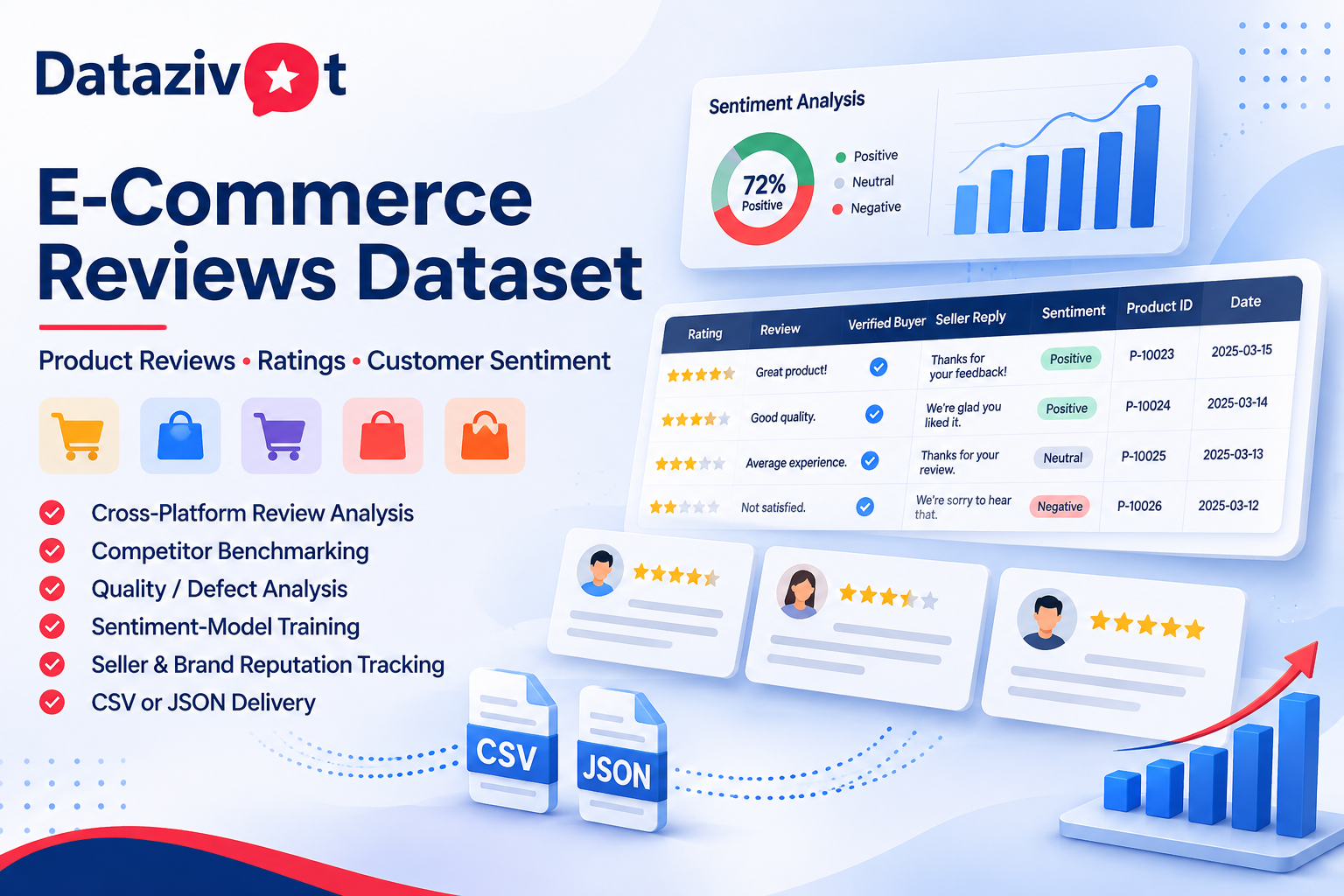
IntroductionThe e-commerce industry is becoming increasingly competitive, making it essential for businesses to understand customer expectations, purchasing behavior, and product performance. Customers frequently share their experiences through product ratings, written reviews, and feedback across online marketplaces. This information provides valuable insights into what customers appreciate, what influences their purchasing decisions, and where businesses need to improve.However, collecting and analyzing customer feedback from multiple e-commerce platforms can be challenging. Businesses often struggle with scattered information, inconsistent review formats, limited visibility into competitor performance, and difficulties identifying changing consumer preferences. Without structured data, extracting meaningful insights from thousands of customer opinions becomes a time-consuming process.An Ecommerce Reviews Dataset helps businesses transform unstructured customer feedback into organized, actionable information. It enables market researchers, retailers, manufacturers, and product managers to identify customer sentiment, evaluate product quality, compare competitors, and recognize emerging market opportunities.By leveraging structured product feedback and rating information, businesses can make informed decisions about product development, pricing strategies, customer experience improvements, and marketing campaigns. Ultimately, customer reviews become more than individual opinions; they become a valuable source of business intelligence that supports sustainable growth.1. Understanding Customer Sentiment and Improving Product QualityCustomer sentiment plays an important role in determining how consumers perceive products and brands. Online reviews provide direct insights into customer satisfaction, product expectations, and purchasing experiences. However, analyzing individual reviews manually becomes difficult when businesses operate across multiple marketplaces and manage thousands of product listings.This is where structured customer feedback becomes valuable. Through Ecommerce Reviews Data Scraping, businesses can collect product ratings, review descriptions, customer feedback, review dates, and other relevant information from publicly accessible e-commerce platforms.Analyzing this information helps businesses identify recurring complaints, positive product attributes, and customer expectations. For example, if multiple customers mention poor packaging, delayed delivery, or product durability issues, businesses can identify these recurring problems and take corrective action.Key Metrics for Customer Sentiment AnalysisBusinesses can evaluate several indicators to understand customer satisfaction.Average Product RatingDescription: Average score received by a productBusiness Benefits: Measures overall customer satisfactionPositive Review PercentageDescription: Share of favorable customer reviewsBusiness Benefits: Identifies product strengthsNegative Review PercentageDescription: Share of unfavorable customer reviewsBusiness Benefits: Highlights improvement areasReview VolumeDescription: Total number of customer reviewsBusiness Benefits: Measures customer engagementRecurring ComplaintsDescription: Frequently mentioned product issuesBusiness Benefits: Supports quality improvementsSentiment DistributionDescription: Positive, negative, and neutral feedbackBusiness Benefits: Provides an overview of customer perceptionIllustrative Customer Sentiment AnalysisConsider a hypothetical electronics retailer analyzing 1,000 customer reviews.Customer Sentiment: PositiveNumber of Reviews: 650Percentage: 65%Customer Sentiment: NeutralNumber of Reviews: 220Percentage: 22%Customer Sentiment: NegativeNumber of Reviews: 130Percentage: 13%Total Reviews: 1,000Total Percentage: 100%The results indicate that most customers are satisfied, but 13% of reviews express negative experiences. Further analysis could reveal whether these complaints relate to product performance, packaging, pricing, or delivery.These findings allow businesses to prioritize improvements instead of relying on assumptions.Additionally, sentiment analysis can help product development teams understand which features customers appreciate most. Businesses can use this information to refine existing products, improve customer support, and develop offerings that better match consumer expectations.By systematically evaluating customer opinions, companies can strengthen product quality, improve customer satisfaction, and build stronger brand relationships.Note: The figures in the example are hypothetical and intended to demonstrate how review analysis works.2. Identifying Competitor Performance and Market OpportunitiesUnderstanding competitor performance is essential for businesses that want to establish a strong position in the e-commerce marketplace. Competitor product reviews reveal how customers evaluate alternative products, which features influence purchasing decisions, and where competing brands may be falling short.Businesses can use Ecommerce Data Extract For Market Insights to evaluate product ratings, customer feedback, review frequency, pricing information, and product performance across competing brands.For example, a company selling wireless headphones can compare customer feedback across several competing products. Customers might consistently appreciate battery life in one product while complaining about sound quality in another. These observations help businesses identify opportunities to differentiate their products.Important Areas for Competitor AnalysisAnalysis Parameter: Competitor RatingsInformation Collected: Average ratings across productsStrategic Application: Evaluate competitor reputationAnalysis Parameter: Review FrequencyInformation Collected: Number of reviews over timeStrategic Application: Understand customer engagementAnalysis Parameter: Product FeaturesInformation Collected: Frequently discussed featuresStrategic Application: Identify competitive advantagesAnalysis Parameter: Customer ComplaintsInformation Collected: Common negative feedbackStrategic Application: Discover competitor weaknessesAnalysis Parameter: Product PricingInformation Collected: Listed product pricesStrategic Application: Develop competitive pricingAnalysis Parameter: Brand PerceptionInformation Collected: Overall customer sentimentStrategic Application: Evaluate market positioningIllustrative Competitor ComparisonSuppose a business analyzes three competing smartphone models to understand their market positioning.Product: Smartphone AAverage Rating: 4.5/5Review Count: 2,500Price: $699Product: Smartphone BAverage Rating: 4.2/5Review Count: 1,800Price: $649Product: Smartphone CAverage Rating: 3.9/5Review Count: 1,200Price: $599The hypothetical comparison highlights differences in customer ratings, review volume, and pricing.Smartphone A has the highest average rating and review count, suggesting stronger customer engagement and satisfaction within this sample. However, Smartphone C offers a lower price, which may appeal to price-sensitive consumers.Businesses can investigate customer feedback further to understand why these differences exist.For example, customers might prefer Smartphone A because of its camera quality, while Smartphone B receives more complaints about battery performance. Such insights can help manufacturers prioritize features that influence purchasing decisions.Competitor analysis also supports product positioning and promotional planning. Companies can identify underserved customer needs, discover product improvement opportunities, and develop differentiated offerings.By examining customer experiences across competing brands, businesses can make more informed decisions about product development, pricing, positioning, and market expansion.3. Discovering Consumer Trends and Understanding Purchasing BehaviorConsumer preferences constantly change due to new technologies, seasonal demand, product innovations, pricing fluctuations, and changing lifestyles. Businesses that identify these changes early can adjust their strategies and respond more effectively to customer expectations.Analyzing E-commerce Product Reviews Data helps organizations understand which product features are gaining popularity, what customers expect from different product categories, and which issues influence purchasing decisions.For example, customers purchasing skincare products may increasingly discuss ingredient transparency, packaging sustainability, and product suitability for different skin types. Similarly, electronics customers may focus more on battery efficiency, compatibility, and durability.These recurring discussions provide valuable indicators of changing consumer interests.Key Consumer Trend IndicatorsBusinesses can examine different review attributes to identify emerging trends.Trend Indicator: Frequently Mentioned FeaturesWhat It Reveals: Features customers discuss most oftenBusiness Application: Improve product developmentTrend Indicator: Seasonal Review PatternsWhat It Reveals: Changes in customer interestBusiness Application: Plan seasonal campaignsTrend Indicator: Emerging Product ComplaintsWhat It Reveals: Newly appearing customer concernsBusiness Application: Address product issuesTrend Indicator: Brand Preference ChangesWhat It Reveals: Shifts in customer perceptionBusiness Application: Refine brand positioningTrend Indicator: Feature-Specific RatingsWhat It Reveals: Satisfaction with individual attributesBusiness Application: Prioritize product improvementsTrend Indicator: Review GrowthWhat It Reveals: Increasing customer engagementBusiness Application: Identify growing product categoriesIllustrative Consumer Preference AnalysisConsider a hypothetical analysis of 2,000 reviews for home appliances.Product Attribute: Energy EfficiencyMentions: 700Percentage of Reviews: 35%Product Attribute: Product DurabilityMentions: 500Percentage of Reviews: 25%Product Attribute: Ease of UseMentions: 400Percentage of Reviews: 20%Product Attribute: Design and AppearanceMentions: 250Percentage of Reviews: 12.5%Product Attribute: Noise LevelsMentions: 150Percentage of Reviews: 7.5%Total Mentions: 2,000Total Percentage of Reviews: 100%The example suggests that energy efficiency is the most frequently discussed attribute, followed by product durability.A manufacturer could use these findings to prioritize energy-efficient features and improve product reliability.Businesses can also apply Online Product Review Data Scraping to monitor customer feedback over different periods and identify changes in product perception.For instance, comparing monthly review patterns can reveal whether customer satisfaction improves after a product update or declines following a pricing change.Combining review analysis with product categories, timestamps, ratings, and competitor information provides a broader understanding of consumer behavior.These insights help businesses recognize emerging demand, optimize product offerings, improve marketing communication, and make data-driven decisions.How Datazivot Can Help You?Collecting and organizing customer feedback from multiple e-commerce platforms requires appropriate data extraction capabilities and a structured approach. Datazivot helps businesses access valuable customer feedback through customized data collection solutions. With an Ecommerce Reviews Dataset, organizations can analyze customer opinions, evaluate competitor performance, and identify opportunities for business growth.Whether you are an e-commerce retailer, market researcher, manufacturer, or data analyst, Datazivot can help you obtain structured information that supports your business objectives.Our Key Data Collection CapabilitiesDatazivot can support your business with the following capabilities:Customized Data Extraction: Collect relevant product information and customer feedback based on your specific business requirements.Multiple Data Attributes: Capture product names, ratings, review descriptions, review dates, and other relevant fields.Competitor Intelligence: Gather competitor product information to support market comparison and competitive research.Structured Data Delivery: Organize collected information into convenient formats for analysis and business applications.Scalable Data Collection: Support data collection requirements across multiple product categories and e-commerce platforms.Business-Focused Solutions: Deliver data tailored to your research objectives, analytical requirements, and operational needs.With the right data collection approach, businesses can reduce manual research efforts and focus more on interpreting customer feedback.Datazivot also helps organizations obtain Ecommerce Reviews Data Scraping solutions aligned with their market research and competitive intelligence requirements.By transforming scattered customer feedback into structured information, businesses can improve research efficiency, identify customer expectations, and make better-informed strategic decisions.ConclusionCustomer reviews provide valuable insights into product quality, customer satisfaction, competitor performance, and changing consumer preferences. An Ecommerce Reviews Dataset enables businesses to transform customer opinions into structured information that supports product improvements, competitive analysis, and smarter business decisions. Organizations that consistently analyze customer feedback can identify market opportunities and respond more effectively to evolving consumer expectations.With reliable E-commerce Product Reviews Data, businesses can strengthen their market research strategies and gain a better understanding of customer needs. Ready to turn customer feedback into actionable business intelligence? Connect with Datazivot today to explore customized data extraction solutions and gain valuable market insights for your business!#EcommerceReviewsDataset,#EcommerceReviewsDataScraping,#EcommerceDataExtractForMarketInsights,#ECommerceProductReviewsData,#OnlineProductReviewDataScraping,Source: https://www.datazivot.com/ecommerce-reviews-datasets.phpContact us:E-mail: [email protected] No: +91 8866656657Visit Now: https://www.datazivot.com/

Melissa Melissa Torres
Read arrow_forward
Long Range RFID Scanner for Smart Factories: How to Track Equipment and Materials Automatically Tech & Innovation
Nov 19, 2026 • visibility 23 • 17 min read

Long Range RFID Scanner for Smart Factories: How to Track Equipment and Materials Automatically

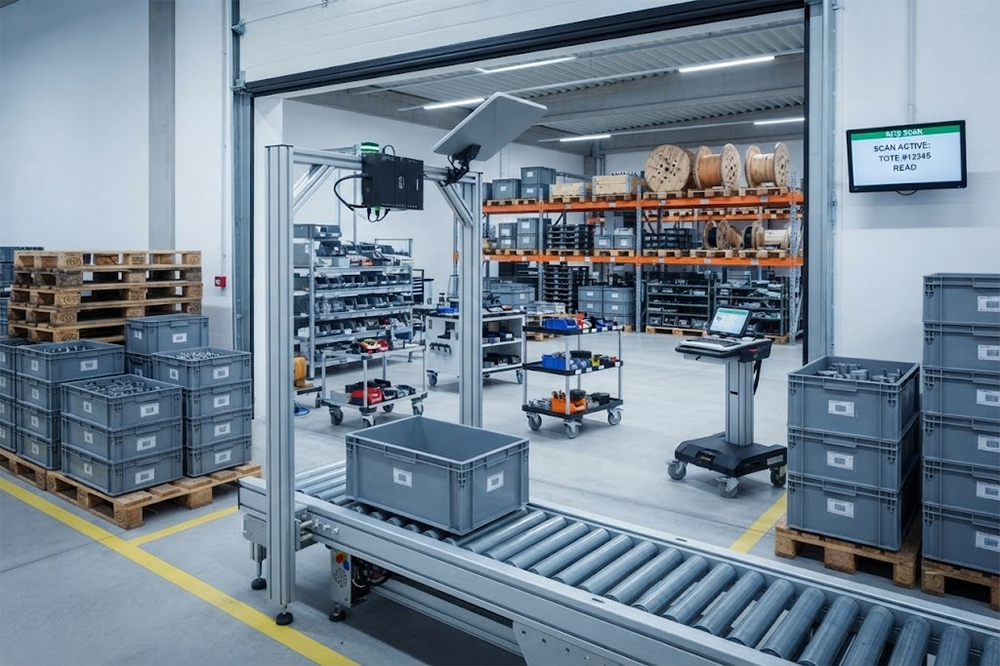
Short AnswerA long range RFID scanner supports smart factory automation by identifying tagged materials, equipment, work-in-process products, and reusable containers as they move through production lines, warehouses, and logistics checkpoints.The reader detects RFID Tags, while software connects each detection event to a production order, inventory record, equipment status, or material movement. A reliable system depends on tag selection, antenna placement, reading-zone control, and integration with factory software.How Does RFID Work in a Smart Factory?A typical smart factory RFID workflow looks like this:RFID tag → antenna → long range RFID scanner → EPC data → PLC or software platform → production eventFor example, a tagged material container leaves the warehouse. A reader at the warehouse exit detects the tag and sends the EPC to the factory management system.The software may then update the container status to:Released from inventorySent to productionAssigned to a work orderReceived at a workstationWaiting for inspectionReturned to storageThe RFID reader identifies the physical object. The factory software determines what that identification means.This connection between physical movement and digital records is one of the most useful parts of RFID in smart manufacturing.Tracking Raw Materials and Production SuppliesFactories often move raw materials between storage areas, preparation rooms, production lines, and inspection stations.Depending on the industry, RFID can be used to track:Raw material containersComponent binsCable reelsPlastic cratesMetal traysPalletsWork-in-process containersPackaging materialsSpare partsReusable transport boxesA long range RFID scanner can identify several tagged containers as they pass through a warehouse gate or production checkpoint.This can reduce the need for workers to stop and scan each barcode manually. It can also provide better visibility into whether the correct material reached the correct production area.However, RFID does not automatically understand the material itself. The EPC must be connected to a database record containing the part number, batch, quantity, supplier, or production order.RFID for Work-in-Process TrackingWork-in-process, or WIP, tracking is a common smart factory application.A product may pass through several stages:Material preparation → assembly → testing → inspection → packaging → finished goods warehouseAn RFID tag can identify the product, tray, pallet, or reusable carrier at each stage.The system can record:Which item arrived at a workstationWhen the item entered productionWhich process was completedWhether the item passed inspectionWhich station handled the itemWhether the item is waiting or delayedWhen the item moved to the next stageIn some factories, attaching a tag directly to every product may not be practical. A reusable carrier, tray, pallet, or workpiece fixture may be a better RFID target.The correct choice depends on product size, material, production cycle, reuse frequency, and required traceability.Long Range Does Not Mean Unlimited ReadingSmart factories contain many nearby objects, machines, shelves, and production stations. A reader that detects tags too far away may create incorrect production events.For example, a reader installed at Station A might also detect a tagged tray waiting at Station B. The software could then incorrectly record that the tray has already entered the next process.A controlled reading zone is therefore more important than the largest possible reading distance.Reading-zone control may involve:Directional antennasAntenna height and angleReader output powerPhysical spacingShielding or barriersSensor triggersPLC signalsSoftware time windowsEPC filteringDirection detectionSeparate antennas for entry and exitThe goal is to detect the intended item at the intended point—not every tag in the surrounding factory.Antenna Position and Production LayoutAntenna installation should follow the actual movement path of the product or carrier.Common installation options include:Side-Mounted AntennaA side antenna may work well when products pass through a narrow conveyor or doorway. It can provide a more controlled reading area than an antenna pointed across a large room.Top-Mounted AntennaA top-mounted antenna may suit products moving beneath a conveyor or through a defined transfer point. Tag orientation must be tested because some tags may face away from the antenna.Multiple AntennasMultiple antennas can improve reading reliability when products have different orientations or when one antenna cannot cover the complete reading area.However, adding more antennas can also increase unwanted reads. The antenna layout should be designed around the product path and the required detection zone.RFID TunnelAn RFID tunnel can create a more controlled environment for cartons, trays, or containers. It may be useful when the product shape and movement direction are relatively consistent.RFID and PLC IntegrationSmart factories often rely on PLCs, sensors, conveyors, robots, and manufacturing execution systems.The RFID reader may communicate with the factory control system through:EthernetTCP/IPSerial communicationDigital inputs and outputsAPISDKHTTPMQTTIndustrial gatewayMiddleware platformA sensor can tell the system that a pallet or container has arrived. The RFID reader can then identify the tag. The PLC or software can combine both signals to create a more reliable event.For example:A photoelectric sensor detects a container.The PLC triggers the RFID reading window.The reader identifies the EPC.The software checks the expected material list.The system confirms or rejects the material.The conveyor or production process continues.This approach can reduce false reads and improve synchronization between RFID and factory automation equipment.Tracking Tools, Fixtures, and Production EquipmentSmart factories do not only need to track materials. They also manage tools and equipment that move between production lines, maintenance rooms, and storage areas.Possible RFID assets include:Assembly toolsInspection instrumentsProduction fixturesMoldsJigsDiesTool cartsMaintenance casesCalibration equipmentReusable equipment containersPortable testing devicesA fixed reader at a tool room entrance can record when equipment leaves or returns. Another reader near a production area can record when a tool arrives at a workstation.For valuable tools and fixtures, RFID can also support maintenance scheduling, calibration records, and usage history.The RFID tag provides the identity. The asset management system stores the maintenance and operational information.RFID for Reusable Containers and PalletsMany factories use the same containers repeatedly between suppliers, warehouses, production lines, and finished goods areas.Without reliable tracking, reusable containers may be:Left at the wrong workstationSent to another factoryHeld in a shipping areaMissing from the return cycleCounted incorrectlyUsed for the wrong materialRFID can provide automatic detection at key points.For example, a tagged container may be recorded when it:Arrives from a supplierEnters the raw material warehouseMoves to productionReturns emptyEnters the cleaning areaLeaves for another facilityFor metal containers or pallets, the tag should be selected and mounted for metal surfaces. The tag position should also avoid areas where it may be damaged during handling.Can RFID Read Multiple Factory Assets?UHF RFID readers can identify multiple tags in a reading zone. This is useful for carts, pallets, containers, and groups of work-in-process products.Actual performance depends on:Tag quantityTag spacingProduct materialMetal structuresLiquid contentTag orientationReader output powerAntenna configurationConveyor speedReading-zone sizeSoftware filteringA pallet carrying several tagged cartons may produce a different result from a single carton moving through the same reader.Testing should therefore include the real packaging, real carrier, actual tag placement, and normal production speed.A Practical Smart Factory RFID ExampleConsider a factory that produces electrical components. Raw materials arrive in reusable containers and move through several assembly and testing stations.The factory installs long range RFID scanners at:The raw material warehouse entranceThe material preparation areaThe assembly line transfer pointThe inspection stationThe finished goods warehouseEach reusable container receives an RFID tag. The ERP or MES system stores the EPC together with the material number, batch, and current process status.During the pilot project, the reader at the assembly line detects containers waiting at a nearby station. The integrator adjusts the antenna angle, reduces unnecessary power, and uses a PLC sensor to trigger the reading window.The final system records the intended container only when it enters the transfer point. The software then checks whether the material matches the production order.This type of result comes from coordinating RFID hardware, factory layout, control signals, and software logic.What Should You Test Before Deployment?A smart factory RFID project should be tested under actual production conditions.Important test items include:Product and container materialsMetal and liquid contentRFID tag typeTag mounting positionTag orientationReading distanceAntenna directionReader output powerNumber of tagsConveyor speedProduct spacingNearby production equipmentSensor trigger timingPLC communicationDuplicate read filteringExpected versus unexpected tagsSoftware event logicERP or MES integrationRepeatability over multiple production cyclesTesting only one tag on a table is not enough. The real test should include the complete container, product, conveyor, antenna, sensor, and software workflow.What Should Distributors and System Integrators Look For?For smart factory projects, buyers should evaluate both RF performance and automation compatibility.Important procurement points include:Supported UHF frequency rangeEPC C1G2 / ISO18000-6C compatibilityReader sensitivityAdjustable output powerNumber of antenna portsAntenna compatibilityMulti-tag reading capabilityCommunication interfacesAPI and SDK supportDigital input and outputPLC integration optionsTrigger supportFirmware stabilityIndustrial installation optionsOn-metal RFID tag compatibilityOEM and private-label supportSample availabilityMOQLead timeTechnical supportBulk supply capabilityA reader may have strong RF specifications but still be unsuitable if it cannot communicate with the factory’s PLC, MES, ERP, or middleware platform.Long Range RFID Scanner or Barcode?RFID and barcode systems can work together.Barcode scanning may remain useful when:The item has no RFID tagA worker needs to confirm a single productThe barcode is already printed on the packagingThe reading zone is not controlledThe project budget is limitedRFID may be more useful when:Several items must be identified togetherWorkers need hands-free identificationProducts move through fixed checkpointsThe factory needs automatic event recordsTags may be hidden or difficult to scan individuallyReusable containers require movement trackingMany smart factories use a hybrid approach rather than replacing every barcode process.Final TakeawayA long range RFID scanner can help smart factories connect physical material movement with digital production data. It can track raw materials, work-in-process products, tools, fixtures, pallets, equipment, and reusable containers at warehouses and production checkpoints.The most reliable system combines:Suitable RFID tagsCorrect antenna placementControlled reading zonesReader and PLC integrationSoftware filteringERP or MES connectivityReal-world production testingThe goal is not simply to read tags from a long distance. The goal is to identify the correct asset, at the correct process point, and record the correct manufacturing event.

Drive Growth With E-Commerce Review Data Scraping for Sellers Tech & Innovation
Nov 18, 2026 • visibility 20 • 12 min read

Drive Growth With E-Commerce Review Data Scraping for Sellers

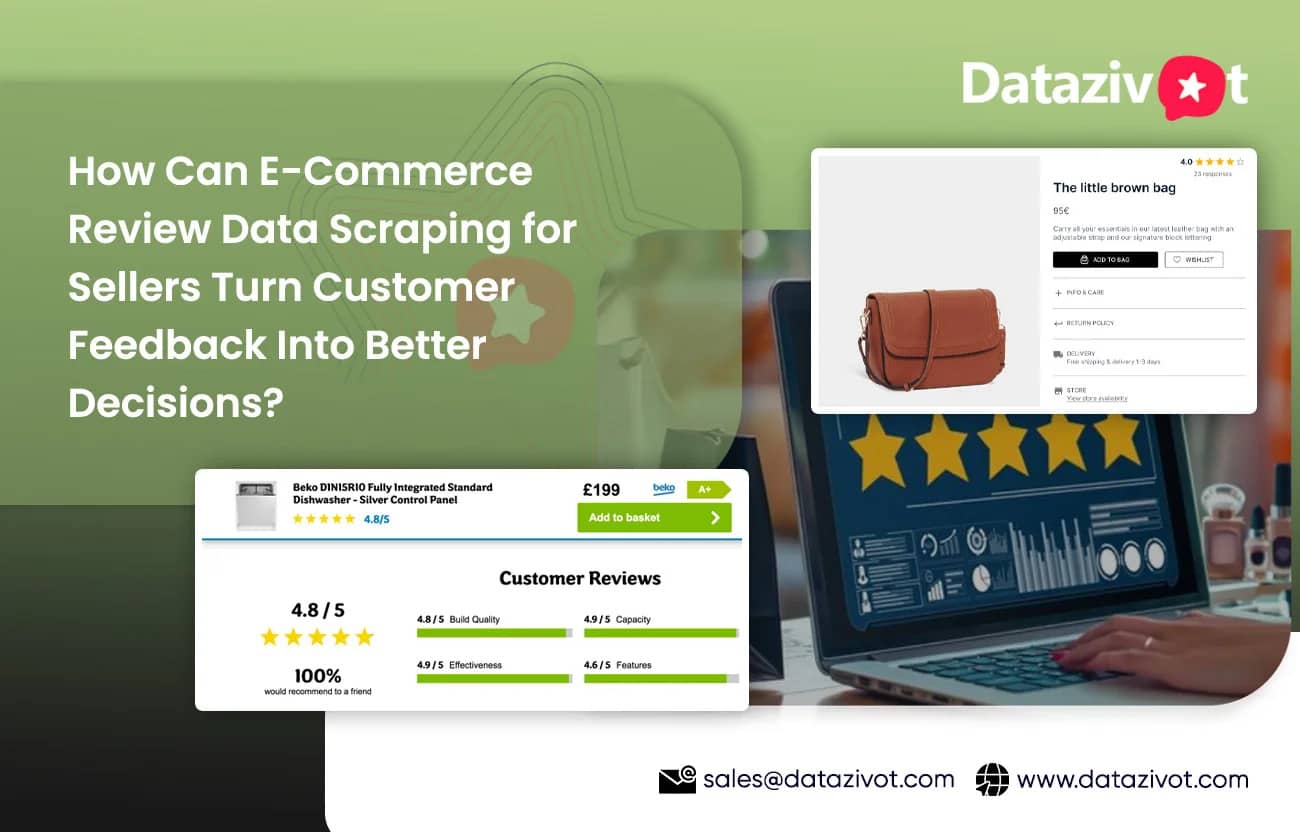
IntroductionCustomer feedback is no longer just a collection of star ratings; it serves as a direct window into buyer expectations and product performance. Online sellers often struggle to process thousands of feedback entries manually across multiple platforms. Automated data collection bridges this gap by gathering actionable intelligence directly from buyer comments.Modern sellers use automated tools to Scrape Product Reviews at scale, converting unstructured customer feedback into structured, clear insights. This strategic process allows brands to detect emerging product flaws early, track shifting consumer preferences, and optimize listings to improve conversions.Implementing E-Commerce Review Data Scraping for Sellers helps businesses refine product offerings and sharpen marketing strategies. By systematically monitoring buyer sentiments, marketplace merchants turn real-world customer opinions into targeted, high-impact growth decisions.Transforming Unstructured Marketplace Customer Feedback Into Actionable Product UpgradesManaging product quality across digital channels requires a clear understanding of what buyers experience after purchasing an item. Online merchants process thousands of star ratings and written comments daily, making manual reading practically impossible for expanding teams. Systems that gather buyer feedback organize raw data into structured reports, helping engineering teams identify defective components, packaging vulnerabilities, or sizing discrepancies long before return rates surge.Operational teams frequently rely on E-Commerce Competitor Analysis Using Sentiment Data to measure their brand performance against rival sellers in the same category. Comparing buyer reaction scores across competing listings reveals exact feature gaps and product weaknesses that rival brands fail to address, creating immediate opportunities for strategic market expansion and product differentiation.Quantitative tracking proves that brands leveraging E-Commerce Sentiment Data Collection Services reduce product return rates and boost overall rating averages over time. Data-driven adjustments eliminate subjective guesswork, ensuring future inventory iterations align with real market expectations.Direct identification of recurring manufacturing and packaging defects.Multi-brand sentiment comparison to spot untapped market opportunities.Reduction in customer return rates through proactive product updates.Alignment of design engineering with actual consumer feedback trends.Metric / Insight Type: Data Processing VolumeTraditional Manual Review: 10–15 reviews/hourAutomated Data Analytics: 50,000+ reviews/hourStrategic Outcome: Rapid Defect DetectionMetric / Insight Type: Analysis ConsistencyTraditional Manual Review: Highly SubjectiveAutomated Data Analytics: Algorithmic PrecisionStrategic Outcome: Standardized Quality TrackingMetric / Insight Type: Competitive CoverageTraditional Manual Review: Spot ChecksAutomated Data Analytics: Continuous MonitoringStrategic Outcome: Market Share ExpansionContinuous sentiment monitoring transforms reactive customer service into a proactive product development model. Engineering teams receive precise feedback patterns, allowing them to adjust manufacturing standards, update user manuals, or modify materials based on verified customer usage patterns rather than intuition or small sample surveys.Optimizing Dynamic Pricing Tactics And Market Positioning Through Sentiment AnalysisPricing strategies in competitive online marketplaces must balance profit margins with consumer perception of value. When customers consistently comment on whether an item is worth its selling price, merchants gain invaluable qualitative data that numerical sales figures alone cannot explain. Analyzing feedback across various price points helps sellers determine the exact threshold where price increases begin negatively impacting customer reviews.Integrating a robust Web Scraping API into internal analytics dashboards allows retail teams to correlate pricing fluctuations directly with buyer reaction scores over time. This continuous data stream provides actionable context, helping brand managers identify whether negative ratings stem from genuine product flaws or simple customer dissatisfaction with recent price hikes.Industry analytics show that brands utilizing E-Commerce Ratings Data Collection Services maintain significantly better control over their pricing power and brand equity. Data-backed pricing adjustments protect profit margins while maintaining strong consumer trust across fast-moving e-commerce platforms.Correlation of customer sentiment with real-time price fluctuations.Identification of optimal price points based on perceived product value.Enhancement of promotional campaign timing and bundle structuring.Protection of brand equity and profit margins in competitive categories.Pricing Strategy Aspect: Value AssessmentTraditional Static Approach: Periodic SurveysData-Driven Review Model: Real-Time Sentiment TracksPerformance Gain: Margin ImprovementPricing Strategy Aspect: Discount TimingTraditional Static Approach: Fixed Calendar EventsData-Driven Review Model: Triggered Sentiment SignalsPerformance Gain: Higher Campaign ROIPricing Strategy Aspect: Feature ValuationTraditional Static Approach: Cost-Plus EstimatesData-Driven Review Model: Consumer Value AlignmentPerformance Gain: Improved Conversion RatesSmart positioning relies heavily on understanding how consumers perceive premium features compared to basic alternatives. By aggregating sentiment around specific price changes, promotional campaigns, and bundled offers, merchants can fine-tune discount schedules and optimize listing copy to highlight high-value features that justify price points.Elevating Support Quality And Building Sustainable Marketplace Brand ReputationPrompt support responses and rapid issue resolution are crucial components of maintaining top seller status on major retail channels. Automated review monitoring alerts customer service managers to urgent complaints, negative ratings, or safety concerns instantly. Early intervention enables support agents to resolve customer issues quickly, turning potentially damaging public feedback into positive brand interactions.Deploying E-Commerce Product Review Data Scraping for Market Insights provides operational teams with a comprehensive overview of customer friction points across the buyer journey. Spotting trends in user confusion allows teams to rewrite product descriptions, update FAQ sections, and create clearer instructional content that prevents buyer frustration before it occurs.Consistently monitoring buyer sentiment helps brands achieve higher customer retention rates and stronger word-of-mouth recommendations. Maintaining continuous E-Commerce Review Monitoring safeguards marketplace listings, ensures customer trust remains high, and drives sustainable long-term revenue growth.Instant notifications for negative feedback and urgent buyer issues.Comprehensive mapping of customer friction across product listings.Proactive updates to FAQs, manuals, and listing descriptions.Sustained growth in repeat purchases and long-term brand equity.Support Capability: Response SpeedManual Issue Tracking: 48–72 hoursData-Driven Scraping Model: Under 2 hoursOperational Outcome: Faster Issue ResolutionSupport Capability: Pattern DetectionManual Issue Tracking: Reactive ReadingData-Driven Scraping Model: Automated AlertsOperational Outcome: Fewer Repeat TicketsSupport Capability: Listing OptimizationManual Issue Tracking: Periodic UpdatesData-Driven Scraping Model: Real-Time Copy AdjustmentsOperational Outcome: Higher Buyer Trust ScoreBuilding a long-term brand reputation requires consistent monitoring of buyer satisfaction scores across every product line. Service leadership can evaluate support performance by tracking how quickly customer complaints decrease after implementing policy or communication changes based on aggregated buyer feedback.How Datazivot Can Help You?Navigating complex marketplace data structures requires reliable data extraction tools tailored for growing brands. E-Commerce Review Data Scraping for Sellers enables online stores to aggregate ratings, buyer comments, and competitor metrics seamlessly without technical overhead.We deliver custom web scraping solutions built specifically to convert vast marketplace feedback into structured, actionable intelligence for your team.Automated multi-marketplace data extraction pipelineReal-time text sentiment classification and scoringCustomized data outputs in JSON, CSV, or database feedsHigh-uptime infrastructure with automated proxy managementCompetitor rating tracking and comparative reportingDedicated technical support and custom integration optionsOur specialized pipeline supports E-Commerce Product Review Monitoring API integrations to stream clean datasets directly into your business dashboards, keeping your inventory, product development, and marketing strategies fully aligned with real-world buyer needs.ConclusionUnderstanding customer sentiment across marketplace platforms is essential for sustainable online retail growth. Integrating E-Commerce Review Data Scraping for Sellers into your analytics workflow transforms customer feedback into clear roadmap decisions, reducing product returns while optimizing customer acquisition costs.Consistent data analysis protects your marketplace reputation and pinpoints high-value product opportunities ahead of competitors. Partner with us today to streamline your E-Commerce Review Monitoring strategy and transform raw customer feedback into measurable business revenue. Contact Datazivot to request a custom demo today.#ECommerceReviewDataScrapingForSellers,#ECommerceProductReviewMonitoringAPI,#ECommerceRatingsDataCollectionServices,#ECommerceSentimentDataCollectionServices,Source: https://www.datazivot.com/e-commerce-review-data-scraping-for-sellers.phpContact us:E-mail: [email protected] No: +91 8866656657Visit Now: https://www.datazivot.com/

Melissa Melissa Torres
Read arrow_forward
How to Start a Food Delivery Business in Jordan with a Talabat Clone Script Tech & Innovation
Nov 18, 2026 • visibility 30 • 15 min read

How to Start a Food Delivery Business in Jordan with a Talabat Clone Script

Jordan's food delivery industry is creating opportunities for entrepreneurs who want to connect restaurants, customers, and delivery partners through digital platforms. With the growing adoption of online ordering, mobile payments, and on-demand services, starting a food delivery business can be an interesting opportunity for startups and established businesses.From Amman to Irbid, Zarqa, and Aqaba, customers can explore different cuisines and order meals through online platforms. The presence of established services such as Talabat also demonstrates how digital food ordering connects local restaurants with customers across Jordan.For entrepreneurs planning to enter this market, launching a platform with a Talabat Clone Script offers a way to establish their own branded food delivery business without developing the entire application from scratch.1. Understanding Jordan's Online Food Delivery MarketJordan has an established online food ordering ecosystem, with customers using mobile applications to discover restaurants, browse menus, and order meals.According to Talabat's Jordan platform, its services cover several cities, including Amman, Irbid, Aqaba, Zarqa, Madaba, Jerash, and Salt. Its platform also offers access to different restaurant categories, including Arabic, American, Asian, Italian, and fast-food cuisines.This reflects the variety of food preferences and delivery requirements that entrepreneurs can consider when entering the market.Some important market opportunities include:Restaurant Aggregation: Bringing multiple local restaurants onto one platform.Local Food Delivery: Helping independent restaurants reach customers in nearby locations.Cloud Kitchen Delivery: Connecting delivery-focused kitchens with online customers.Specialty Food Delivery: Offering dedicated ordering services for desserts, healthy meals, bakery products, and traditional Jordanian food.Multi-Category Delivery: Expanding from restaurant orders into groceries and other essentials.Entrepreneurs can use these opportunities to build a delivery business around a particular city, customer segment, or food category.2. Why Start a Talabat-Like Food Delivery Business in Jordan?Established platforms demonstrate the demand for convenient online ordering. However, entrepreneurs do not necessarily need to build another large-scale marketplace immediately.They can begin with a focused business model and gradually expand their restaurant network and delivery operations.Here are some reasons to consider this business:Growing Digital Ordering HabitsCustomers increasingly value the convenience of discovering restaurants, comparing menus, and ordering food through their smartphones. A dedicated application can simplify this process.Opportunities for Local RestaurantsIndependent restaurants may want additional digital channels to promote their menus and receive online orders. A food delivery marketplace can help connect these businesses with a wider customer base.Multiple Revenue OpportunitiesA food delivery platform can generate revenue through restaurant commissions, delivery charges, promotional listings, and subscription-based partnerships.Expansion Across CitiesEntrepreneurs can initially concentrate on selected areas in Amman and gradually extend their services to other cities based on customer demand and delivery capacity.3. Essential Features of a Talabat Clone App for JordanA successful food delivery platform needs more than an attractive interface. It requires dedicated applications and management tools for customers, restaurants, delivery partners, and administrators.Here are the essential features to consider.Customer AppThe customer application should make food discovery and ordering simple.Easy Registration: Allow customers to sign up using their mobile numbers, email addresses, or supported social accounts.Restaurant Discovery: Display nearby restaurants based on customer locations.Advanced Search and Filters: Help users find restaurants based on cuisine, ratings, price, and availability.Menu Management: Display food images, descriptions, prices, and available options.Multiple Payment Options: Support suitable online payment methods and cash on delivery, depending on the business model and payment gateway availability.Live Order Tracking: Allow customers to follow their orders throughout the delivery process.Ratings and Reviews: Collect feedback about restaurants and delivery experiences.Promotional Offers: Provide discount coupons, referral rewards, and special deals.Restaurant Partner AppRestaurants need an efficient application to manage their online operations.Restaurant registration and profile management.Menu and food item management.Order acceptance and rejection.Real-time order notifications.Availability and store status management.Promotional offers and discounts.Sales reports and earnings management.Delivery Partner AppThe delivery application helps drivers manage their assigned orders.Driver registration and document verification.Online and offline availability.Order assignment and acceptance.Restaurant pickup information.Customer delivery details.GPS-based navigation and tracking.Delivery status updates.Earnings and payment history.Admin DashboardThe administrator needs centralized control over the entire delivery marketplace.Customer and restaurant management.Delivery partner management.Order monitoring and management.Commission and delivery fee configuration.Promotional campaign management.Payment and transaction monitoring.Reports and business analytics.Location-based operational management.These features help entrepreneurs manage different business activities from one centralized platform.4. Localizing Your Food Delivery App for the Jordan MarketLaunching a food delivery application in Jordan requires more than simply introducing an existing business model. Entrepreneurs should adapt the platform to local customer preferences and operational requirements.Consider these important localization elements:Arabic and English Language SupportArabic is essential for reaching local customers, while English can support international residents and visitors. A right-to-left (RTL) interface should be available for Arabic users to provide a comfortable browsing experience.Jordanian Dinar (JOD) SupportDisplay food prices, delivery charges, and transaction details in Jordanian dinars. Currency configuration should be aligned with the payment gateway and business requirements.Local Payment IntegrationProvide convenient payment options by integrating payment gateways that support operations in Jordan. Card payments and cash on delivery can be configured according to the business model and applicable requirements.Location-Based DeliveryConfigure delivery zones around the target operating areas. For example, a startup could begin with selected neighborhoods in Amman before expanding into Zarqa, Irbid, or Aqaba.Local Restaurant PartnershipsInclude restaurants offering Jordanian favorites such as Mansaf, Shawarma, Falafel, and other popular cuisines alongside international food options.These localization measures can help create a platform that feels relevant to the Jordanian market.5. How Does a Talabat Clone Script Generate Revenue?A food delivery marketplace can use multiple revenue streams instead of depending on a single source of income.Here are some common business models:Restaurant CommissionCharge partner restaurants a predefined commission for every successfully completed order.Delivery ChargesCollect delivery fees from customers based on delivery distance, location, or order conditions.Featured Restaurant ListingsAllow restaurant partners to pay for additional visibility through sponsored placements and promotional listings.Subscription PlansIntroduce subscription packages for restaurant partners with selected promotional or platform benefits.Advertising and PromotionsGenerate additional revenue through restaurant advertisements, sponsored campaigns, and featured offers.Entrepreneurs can combine these models based on their operational costs, restaurant partnerships, and customer acquisition strategy.6. How to Launch Your Own Talabat-Like App in JordanStarting a food delivery business requires a clear business strategy, the right technology, and a reliable restaurant and delivery network.Here is a practical approach:Step 1: Research Your Target MarketIdentify the locations you want to serve, understand local food preferences, and study existing competitors.Step 2: Select Your Business ModelDecide whether you want to operate a multi-restaurant marketplace, a single-restaurant delivery service, or a specialized food delivery platform.Step 3: Partner with Local RestaurantsApproach restaurants, cafes, bakeries, and cloud kitchens to build your initial merchant network.Step 4: Choose a Ready-Made Delivery SolutionSelect a customizable Talabat Clone Script that includes customer, restaurant, delivery partner, and administrator applications.Step 5: Configure Local RequirementsSet up Arabic and English language options, JOD currency, suitable payment integrations, delivery zones, and location-based services.Step 6: Test and Launch Your PlatformTest the complete ordering and delivery workflow before introducing the application to customers.Step 7: Promote Your BusinessUse local SEO, social media marketing, restaurant partnerships, referral campaigns, and promotional offers to attract customers.Before launching, ensure that your business registration, food-related operations, payment processing, and delivery arrangements comply with applicable Jordanian regulations.7. Launch Your Food Delivery Business with Trioangle's Talabat Clone ScriptBuilding a food delivery application from the ground up can require significant development time, technical resources, and ongoing maintenance.Trioangle Technologies offers a Talabat Clone Script, a ready-made and customizable food delivery solution designed to help entrepreneurs establish their own branded delivery platforms.Our solution includes dedicated interfaces for customers, restaurants, delivery partners, and administrators, helping businesses manage the complete ordering and delivery process.Key capabilities include:Arabic and English language support with RTL compatibility.Multiple currency configuration, including JOD setup.Native Android and iOS applications.Restaurant and delivery partner management.Real-time order tracking and notifications.Multiple payment integration options.Commission and revenue management.Promotional offers and referral features.Customizable branding and source code options.Advanced AI-powered capabilities and optional integrations.Whether you are planning to launch a restaurant delivery marketplace in Amman or expand your operations across Jordan, our Talabat Clone Script provides a foundation for building your own food delivery brand.Why Choose Trioangle Technologies?Ready-made food delivery solution.Customizable platform to suit your business requirements.Dedicated customer, restaurant, driver, and admin interfaces.Technical assistance and post-launch support.App submission assistance.White-label branding options.ConclusionJordan offers opportunities for entrepreneurs interested in building digital food delivery businesses. With online ordering, restaurant partnerships, convenient payment options, and efficient delivery management, startups can develop platforms that serve specific customer needs.However, success depends on understanding local preferences, selecting suitable delivery locations, building reliable restaurant partnerships, and providing a smooth customer experience.If you are planning to start a food delivery business in Jordan, Trioangle's Talabat Clone Script can help you establish your own branded platform with ready-made technology and customizable features.Ready to launch your own Talabat-like food delivery app in Jordan?Get in touch with Trioangle Technologies today to explore the demo and discuss your business requirements.