Oct 12, 2026
•
visibility 1
•
7 min read
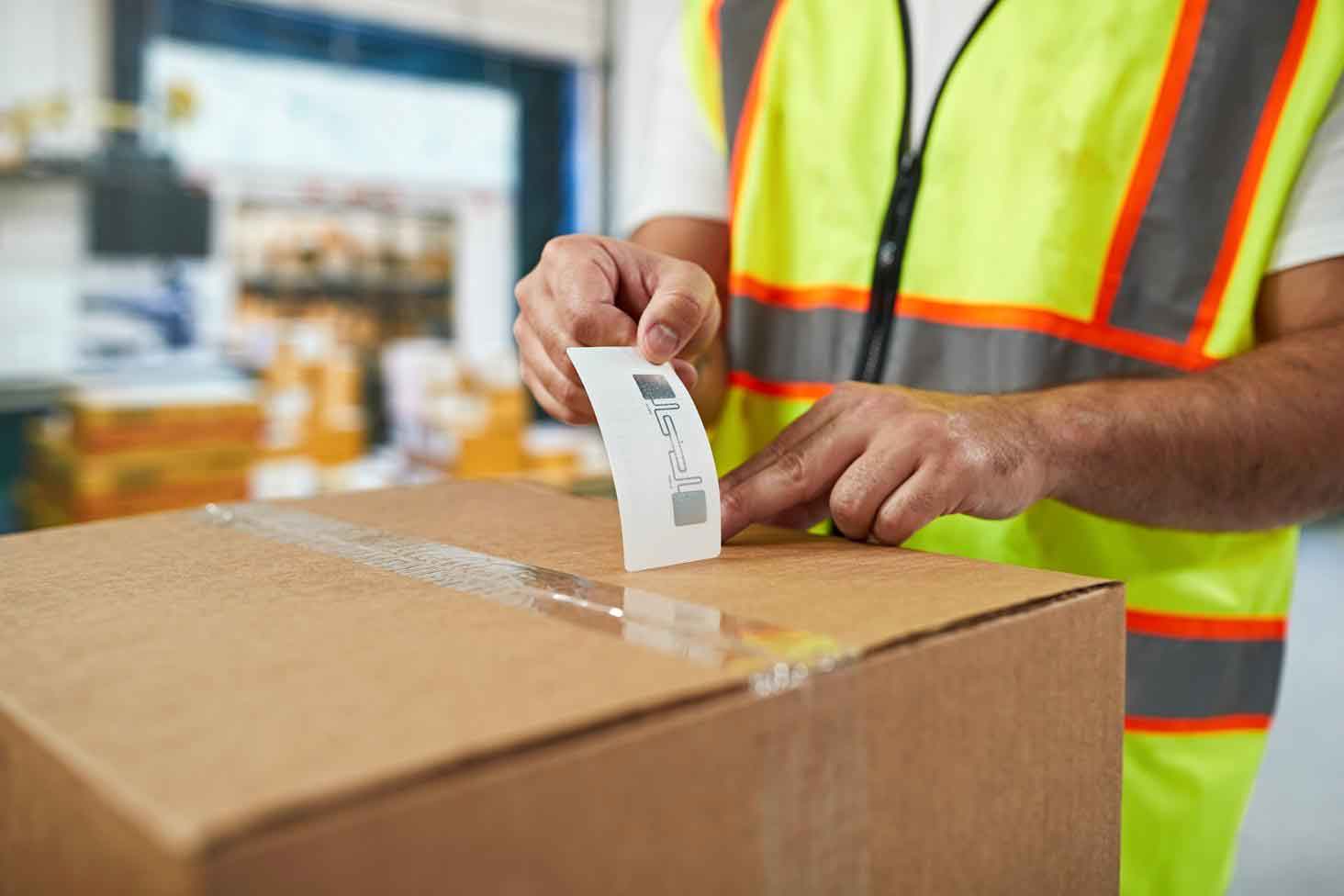
RFID label is a printable identification label that combines an RFID chip and antenna with a paper or synthetic label material. It allows products, cartons, or assets to be identified wirelessly while retaining human-readable information such as product names, numbers, or barcodes.That distinction matters in real deployments. An RFID label is not simply a barcode with radio communication added. Inside the label is an RFID inlay containing the chip and antenna; the outer material provides the surface for printing and attachment.At Cykeo, when we evaluate RFID labels for an application, we look at the item being tagged first, not just the reader specification. A label that performs well on corrugated cartons may behave very differently when moved onto a metal tool, liquid-filled container, or densely packed product.That is one of the details that tends to get missed during procurement.How RFID Labels WorkWhat Is Inside an RFID Label?A typical RFID label contains three functional layers:ComponentPrimary FunctionRFID chipStores identification and other encoded dataRFID AntennaReceives reader energy and communicates with the readerLabel substrateHolds the inlay and provides a printable surfaceFor a passive RFID label, the tag does not need a battery. The reader supplies the RF energy needed for communication.GS1 describes RFID as a family of technologies in which information is stored in a microelectronic chip and communicated with dedicated readers using radio-frequency waves or fields. GS1’s current standards repository lists EPC Gen2 as the UHF RFID air-interface standard and the current version as 3.0.1, modified February 26, 2026.That makes RFID labels particularly useful when a business needs to identify large numbers of physical objects without manually scanning every printed code.What Data Can an RFID Label Carry?The answer depends on the RFID chip and how the system is configured.In an EPC-based deployment, an RFID label can carry an Electronic Product Code associated with a unique physical object. GS1 explains that EPC provides a way to encode GS1 identifiers on RAIN RFID tags and can add serialization to identifiers such as GTINs.Typical information associated with an RFID label includes:Product identificationSerialized item informationAsset identificationInventory referencesApplication-specific user memoryInformation associated with a GS1 identifierThe label does not necessarily need to contain every piece of product information. In many systems, the RFID tag provides the identifier while the business database holds the detailed record.RFID Label Types for Different ApplicationsUHF RFID LabelsUHF RFID labels are common in logistics, warehousing, retail, and supply-chain applications because they can support identification of multiple tagged objects within a reading zone.GS1’s EPC/RFID specifications identify UHF EPC/RFID as operating in the 860–960 MHz range, while the specific regulatory operating band depends on the region.For a warehouse carton, a conventional UHF RFID label may be sufficient.For metal assets, however, a standard paper label is often not the right choice. A specialized on-metal RFID label may be required because the mounting surface changes antenna behavior.Paper RFID Labels vs Industrial RFID TagsTypeTypical EnvironmentMain ConsiderationPaper RFID labelCartons, products, packagingLow-cost labelingSynthetic RFID labelMore demanding environmentsImproved material durabilityOn-metal RFID labelMetal equipment and toolsDesigned for metal surfacesHard RFID tagIndustrial assetsMechanical protectionThe physical format should follow the application. It is tempting to standardize on one label across an entire operation, but that can create unnecessary read-performance problems later.A printable UHF RFID label combines product identification with wireless RFID tracking.What Are RFID Labels Used For?RFID Label Applications in Supply ChainsRFID labels are useful wherever physical products need to be identified as they move through a process.Common applications include:Warehouse inventory: identifying cartons, cases, and productsRetail: supporting item-level inventory visibilityManufacturing: tracking components and work-in-progressLogistics: associating shipments with digital recordsLibraries: identifying books and other circulating assetsAsset management: assigning unique identities to equipmentGS1’s traceability guidance specifically describes EPC/RFID tags being used for serialized identification and notes that fixed readers and handheld devices can be combined to capture important tracking events.That combination is important. A label on its own does not create traceability. The reader, software, business identifier, and capture points all have to work together.


 Tech & Innovation