

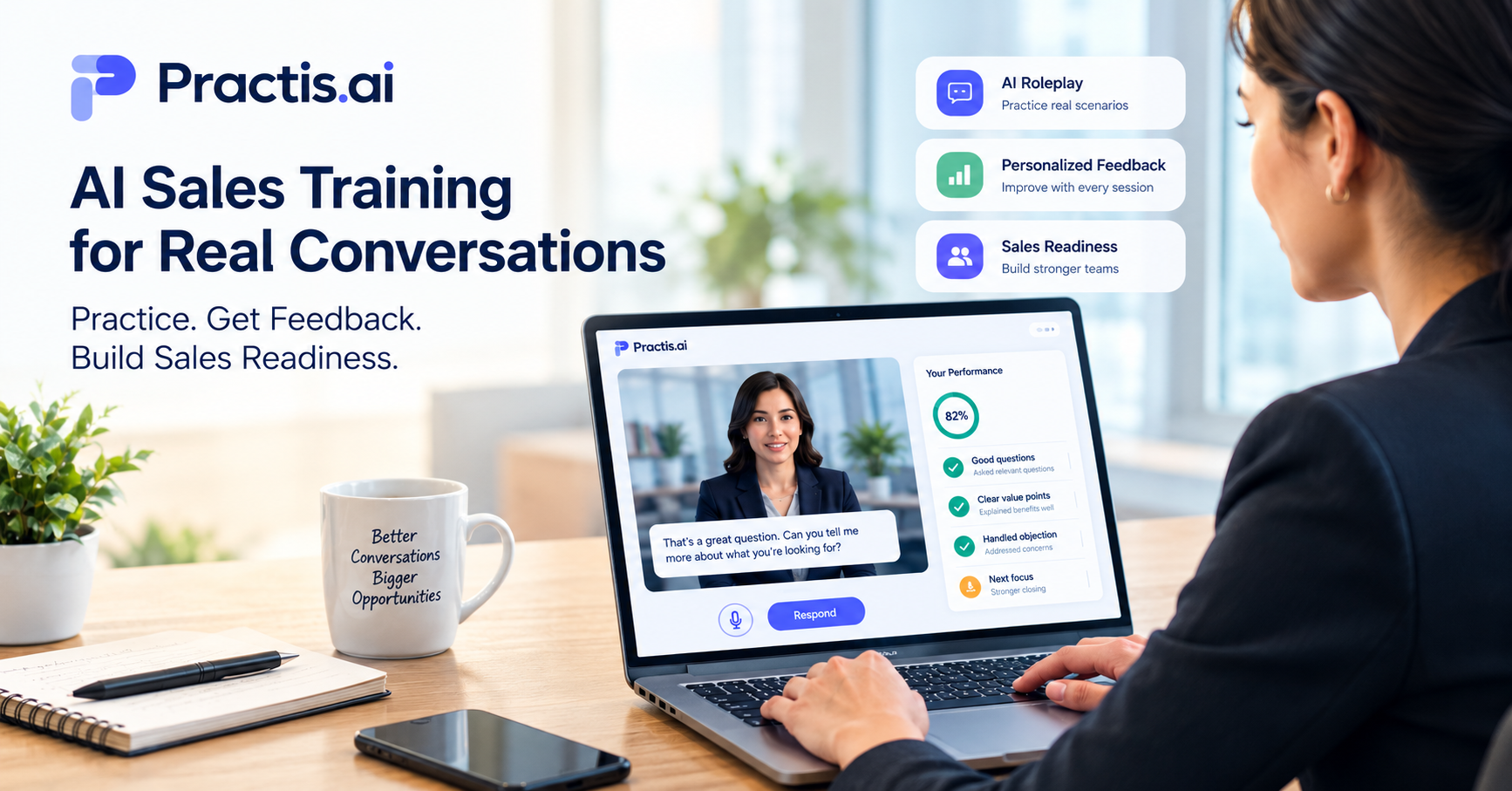
Practis.ai: How AI Sales Training Helps Teams Prepare for Customer Conversations
Sales success depends on more than knowing a product or following a script. Sales representatives need to ask the right questions, understand customer needs, respond to objections, and communicate value with confidence. Developing these skills takes practice, feedback, and consistent coaching.
Traditional sales training often relies on presentations, training manuals, workshops, and occasional roleplay exercises. Although these methods remain useful, they may not always provide enough opportunities for every representative to practice realistic customer conversations.
This is where artificial intelligence is creating new possibilities for sales development.
What Is AI Sales Training?AI sales training uses artificial intelligence to support learning and practice for sales professionals. Depending on the platform, it can help simulate customer interactions, provide feedback, and give representatives opportunities to improve their communication skills in a practice environment.
Instead of learning only through presentations or observation, sales representatives can rehearse different situations before speaking with actual customers.
For example, a representative might practice responding to a price objection, explaining a product's value, qualifying a potential buyer, or handling a customer who is hesitant to make a decision.
Repeated practice can help representatives become more comfortable with these situations and identify areas where additional coaching may be useful.
Why Sales Roleplay MattersSales roleplay allows representatives to practice conversations without the pressure of a real sales opportunity. It gives them a chance to experiment with different approaches, learn from mistakes, and improve their responses.
However, traditional roleplay can be difficult to conduct regularly when managers have limited time and large teams to support.
AI-powered roleplay offers another way to make practice more accessible. Representatives can work through simulated scenarios and prepare for a wider range of customer interactions.
The goal is not to replace real customer experience. It is to help sales professionals prepare more effectively before those conversations happen.
How Practis.ai Fits Into Modern Sales TrainingPractis.ai ↗ is a platform associated with AI-powered sales training and practice. It is relevant to the growing interest in using technology to help sales teams develop conversation skills and prepare for customer interactions.
For organizations exploring AI sales training, the broader value of platforms such as Practis.ai lies in making practice a more regular part of sales development rather than treating training as a one-time event.
Sales leaders can evaluate whether an AI training platform aligns with their team's needs, the conversations representatives handle most often, and the coaching processes already in place.
The most effective approach is to use technology to support practical learning while keeping human judgment and manager guidance central to development.
Benefits of AI-Powered Sales TrainingAI-supported training can offer several potential advantages when implemented thoughtfully.
More opportunities to practice: Representatives can rehearse challenging conversations before facing similar situations with customers.
A safe learning environment: Practice scenarios allow employees to make mistakes and explore different responses without putting a real sales opportunity at risk.
More consistent training: Teams can use common scenarios to reinforce sales messaging, product knowledge, and conversation standards.
Support for coaching: Practice results and feedback, where available, can help managers identify topics that deserve further attention.
Flexible learning: Representatives may be able to practice at different stages of onboarding or whenever they need to strengthen a particular skill.
Results depend on the quality of the scenarios, the relevance of the feedback, and how well the training is connected to everyday sales work.
Choosing an AI Sales Training PlatformBefore adopting a platform, sales leaders should consider a few important questions:
Does it support the customer conversations representatives actually encounter?Can employees practice objection handling, discovery questions, and value communication?Is the feedback clear and useful enough to guide improvement?Can managers connect practice activities with existing coaching processes?Is the platform suitable for the team's size, workflow, and training goals?It is also important to define how success will be measured. Completion rates alone may not show whether representatives are improving. Organizations can also examine skill development, manager observations, onboarding progress, and relevant sales performance indicators over time.
Combining AI Practice With Human CoachingAI can make practice more accessible, but sales development still benefits from experienced managers who understand customers, products, and business priorities.
Managers can help representatives interpret feedback, discuss complex situations, and connect practice exercises to real opportunities. Combining AI-supported practice with human coaching creates a more balanced learning process.
For teams exploring this approach, Practis.ai ↗ is one option to investigate as part of a broader evaluation of AI sales training solutions.
Final ThoughtsSales representatives become more prepared through consistent practice, constructive feedback, and opportunities to apply what they learn. AI sales training is adding new ways for teams to rehearse customer conversations and develop important communication skills.
The technology is most useful when it addresses real training needs rather than being adopted simply because it uses AI.
For businesses looking to improve sales readiness, the next step is to identify the conversations their teams find most challenging and evaluate how structured practice, AI tools, and manager coaching can work together.
Learn more about Practis.ai at https://practis.ai/ ↗.