

orionorthopedy's Store
Owned by orionorthopedy Joined May 2023 2 Listings
orionorthopedy's Store
easyid.me/biz/orionorthopedy-171803 • Verified Store
Scan to open official EasyID digital store, view live catalog, or save business card.
Verified Merchant
EasyID Certified Seller
Fast 24h Packing
Direct courier dispatch
Zero Escrow Direct
Direct merchant settlement
Store Listings (2)

What happens after ACL reconstruction surgery?
Introduction <br>The Anterior Cruciate Ligament (ACL) sits in the middle of the knee and provides stability when we twist and pivot during daily activities and sports. While the ACL is a robust ligament, it can still rupture if too much force is applied to it. Without an ACL, you may still walk and jog, but the knee will feel unstable during pivoting movements with stairs or sports such as basketball or football. The ACL is reconstructed using your hamstrings to restore the stability of your knee. <br>Post ACL Reconstruction Rehabilitation. <br>Physiotherapy and rehabilitation are crucial after surgery so that you may have a good functional outcome and return to sports sooner rather than later. Most post ACL reconstruction rehab protocols are broken up into several phases (Immediate, Intermediate, Late) and each phase has its own aims and targets. Not all patients will have the same rehabilitation as there might have been differences in the surgery they had. In addition to the ACL recon, they might also have had repairs of meniscus tears or treatment of cartilage injuries as well. <br> <br> <br> <br>Phase 1 (Immediate post op, 0-2 weeks after surgery) <br> <br>Rehab aims: <br> <br>Protect the new ACL graft <br>Reduce swelling, inflammation <br>Restore full knee extension, gradually improve flexion <br>Patient Education: <br> <br>Keep your knee straight in the brace <br>Ice your knee to reduce swelling <br>Use crutches to help you get around <br>Partial weight bearing for 4-6 weeks <br> <br> <br>Phase 2: Intermediate (3-5 weeks after surgery) <br> <br> <br>Rehab aims: <br> <br> <br>Continue to protect the graft <br>Maintain full knee extension, restore full knee flexion <br>Improve your walking pattern (gait) <br>Patient Education: <br> <br>Stationary bicycle <br>Gentle stretching and strengthening of leg muscles: quads, calves, hamstrings <br>Improve balance with single leg stance, partial squats <br> <br> <br>Phase 3: Late (6-8 weeks post op) <br> <br>Rehab aims: <br> <br>Continue to protect ACL graft <br>Maintain full range of motion <br>Safe progression of strengthening exercises <br>Patient Education: <br> <br>Cardio and gym exercises: leg press machine, swimming, pool jogging, lunges <br>Improve single leg balance <br> <br> <br>Phase 4: Transitional 9-12 weeks post op <br> <br>Rehab aims: <br> <br> <br>maintain full knee range of motion <br>Promote better balance and leg strength <br>Patient Education: <br> <br>May begin sport specific training but at lesser pace and intensity <br>Continue to strengthen muscles and improve knee range of motion <br> <br> <br>Phase 5: Early return to sports (3-5 months post op) <br> <br>Rehab aims: <br> <br>Safe and progressive strengthening <br>Safely initiate sport specific training program <br>Patient education: <br> <br>Interval running program <br>Strength and agility program <br> <br> <br>Phase 6: Unrestricted return to sport (>6 months post op) <br> <br>Rehab aims: <br> <br>Continue strengthening and balance exercises <br>Improved performance with sport specific drills <br>Safe progress to sports <br>(torsional activities may be delayed due to risk of graft re-rupture) <br>Patient education: <br> <br>Progressive strengthening exercises <br>Manage sports performance under supervision <br>Non contact practice - Full practice - Full play (9-10 months) <br>Avoid early pivoting sports within 9 months <br>What can I do to Make My Knee Heal Faster? <br>Your surgeon and physiotherapist would give you specific targets to meet after your surgery. While we want to make a quick recovery, there is also a need to protect the new ACL graft and prevent a re-rupture. <br> <br>Comply with the advice given by your surgeon and physiotherapist to manage the knee swelling, movements and strengthening during your rehabilitation. <br>To manage knee swelling, apply ice over your knee and elevate your leg over a pillow. Compression around the knee will also reduce swelling. <br>Do attend the planned consults with your surgeon and physiotherapist to ensure you are recovering well and do not encounter any complications. <br>Keep up with recommended exercises. Consistent stretching and strengthening are important. <br>physiotherapy_after_acl_reconstruction <br> <br>What are some things I should avoid? <br>In the early stages of your recovery, you will have to wear a knee brace and use crutches when you walk. This protects the ACL graft and avoids excessive swelling. <br> <br>Avoid pivoting sport in the first 9 or 10 months after surgery. The ACL graft is still vulnerable to rupture if excessive forces are applied to the knee too soon. <br> <br>Please seek the advice of your surgeon and physiotherapist before returning to competitive sports. A formal assessment will be done for you to ensure you may transition to sports safely. <br> <br>ACL Surgery Complications <br>While ACL reconstruction is one of the commonest and most successful orthopaedic surgeries, it has a 75 to 97 percent success rate. Like all surgical procedures, there are possible complications which patients may face. Some complications are minor while others are major. <br> <br>Minor complications: <br>Superficial wound infection <br>Skin numbness <br>Minor knee stiffness <br>Major complications: <br> <br>Deep knee joint infections <br>Severe knee stiffness <br>Knee instability <br>ACL graft re-rupture <br>Your surgeon will follow you up after surgery and ensure these complications do not occur. You may be on antibiotics and have your wounds cleaned regularly to prevent infections. Progressive physiotherapy and rehab are crucial to manage the movement of your knee while protected the integrity of your new ACL graft. <br> <br>Some patients experience a re-rupture of their ACL. If this happens within just a few months of surgery, it may either be a technical error of surgery or the patient returned to pivoting sports too soon. Some patients rupture their new ACL several years after their surgery due to the high intensity of their sport of choice. If this happens, a revision ACL reconstruction may bee performed. <br> <br>What is Revision ACL Reconstruction Surgery? <br>Revision surgery describes a repeat surgical procedure undertaken to improve the condition of the patient. Specific to ACL related surgery, this is roughly 3 to 5 percent of all ACL reconstruction operations performed. While primary ACL reconstruction is very successful, revision surgeries often have inferior outcomes. <br> <br>The new ACL graft will either be harvested from the same knee in the form of a quadricep or patella tendon graft or from a cadaveric source of allograft (from a person who has passed away). Cadaveric grafts are generally not as strong and robust as patients’ own tendons and may rupture again in future. <br> <br>Do I Need an ACL Revision Surgery? <br>The ACL is important to stabilise the knee during twisting and pivoting movements. If your knee remains unstable after your surgery, your surgeon will perform a clinical examination of your knee to assess its integrity and stability. A repeat MRI scan may be done to exclude a rupture of the ACL graft. If the ACL graft is re-torn and you would like to return to pivoting sports like football or basketball, then revision ACL reconstruction surgery may be required. <br> <br>Frequently Asked Questions <br>How long does it take to walk and drive after ACL surgery? <br>You should be able to walk without crutches after about 4 weeks. You should be able to drive once you are walking without crutches. Please consult your doctor before you come off your knee brace and crutches. <br> <br>How should I sleep after ACL surgery? <br> <br>Sleep with your legs propped up by a pillow under your heel. <br> <br>Is it common to retear your ACL? <br> <br>No, it is not common to retear your ACL. The risk of re-rupturing your reconstructed ACL is between 1 to 20 percent. This depends on your rehab journey and the type of sport you play. <br> <br>When can I return to sports? <br> <br>The timeline varies for a lot of people. On average, you can return to sports 8 to 12 months post surgery. Your physiotherapist will assess you for the specific sport that you play before giving you the go-ahead to return to unrestricted sporting activities. <br> <br> [a]https%3A%2F%2Fwww.orionortho.sg%2Farticles%2Fwhat_happens_after_acl_reconstruction_surgery[/a]
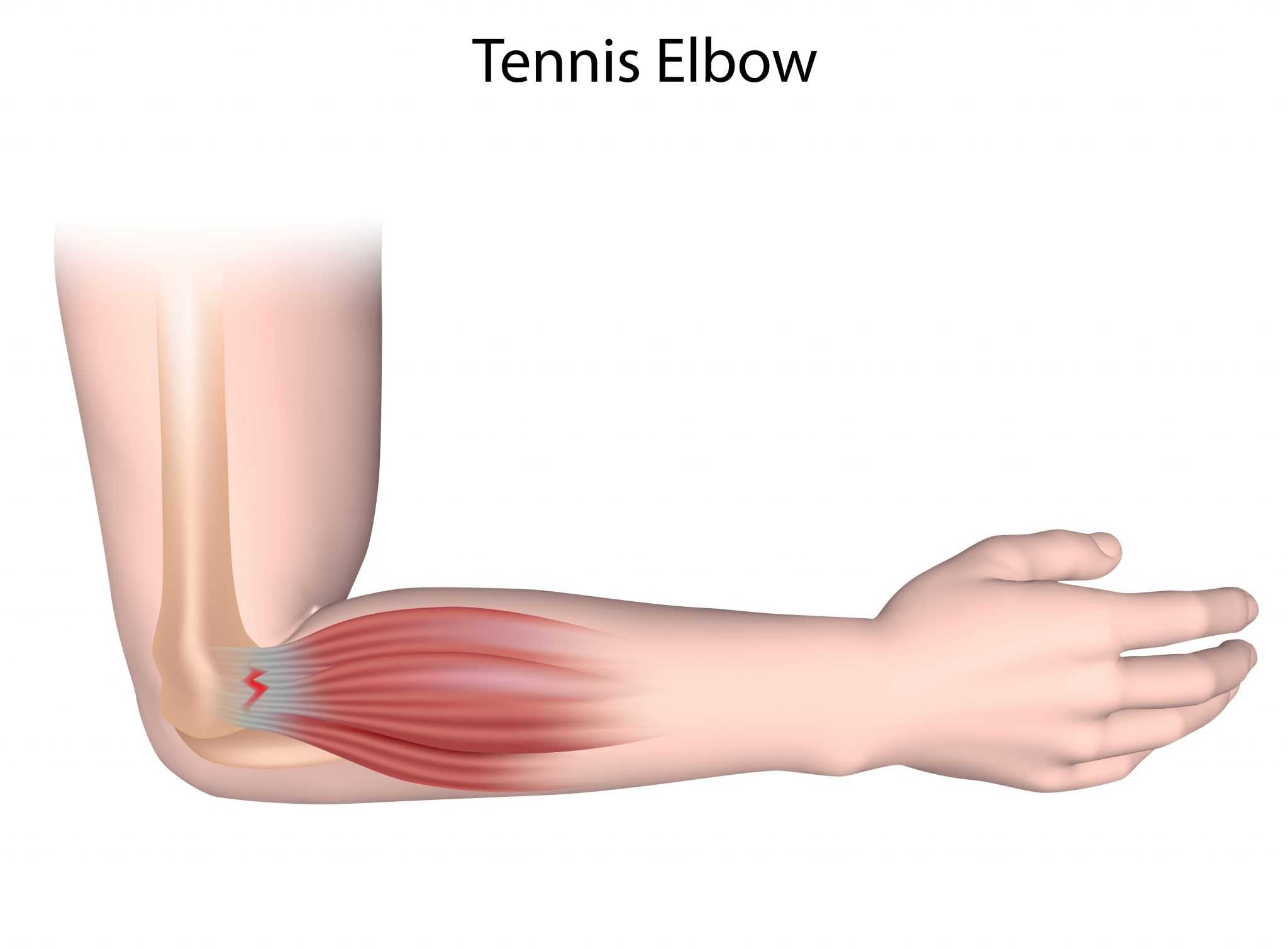
How Can I Take Care of My Tennis Elbow
What is Tennis Elbow? <br>Tennis elbow (lateral epicondylitis) describes pain on the outside or lateral part of your elbow when the tendons there are overloaded by repetitive movements of the wrist and arm. <br> <br>The repeated contraction of the forearm muscles that you use to straighten and raise your hand and wrist leads to inflammation and degeneration of tendons that attach the forearm muscles to the bony prominence at the outside of your elbow (lateral epicondyle) <br> <br>You don’t have to play tennis to develop a tennis elbow and athletes are not the only ones who get it! <br> <br>tennis-elbow-injury <br> <br>What are the symptoms of Tennis Elbow? <br>Patients mostly have pain and tenderness over the body prominence (lateral epicondyle) on the outer surface of their elbow. The point of tenderness is where their injured tendons are connected to the bone. <br> <br>Pain may also travel to the forearm or upper arm when patients are doing things with their hands such as turning a doorknob, lifting something or grabbing a racket tight. <br> <br> <br> <br>What sort of actions or activities cause Tennis Elbow? <br>There might be a variety of circumstances and activities causing a Tennis Elbow symptoms as this is not only a sports injury. We can divide them into these two groups: <br> <br>Racket and upper limb sports: <br>tennis <br>badminton <br>squash <br>fencing, <br>weight lifting <br>Jobs and hobbies: <br>Carpentry <br>Typing <br>Painting <br>Cooking <br> <br> <br>sport-elbow-injuries <br> <br> <br> <br>How does my surgeon or doctor diagnose tennis elbow? <br>Tennis elbow is a clinical diagnosis. This means that your doctor or surgeon makes this diagnosis based on the clinical history given by their patient as well as the thorough clinical examination that they perform on the painful limb. <br> <br>Imaging studies such as ultrasound or MRI scans are not necessary for diagnosis. However, your doctor may still request it if he or she is worried about something else such as the extent of the tear (partial or complete) or the nature of a painful mass. <br> <br>How Can I Take Care of My Tennis Elbow <br>If you feel pain when you move your elbow, hand or wrist, you should take a break from the specific activity which makes it worse. Refraining from aggravating activities helps to protect the elbow from further damage. <br> <br>Recognizing Tennis Elbow Early <br>The early signs of tennis elbow may not be located at the elbow at all. You may notice pain in your forearm, upper arm, wrist and difficulty moving your hand. Occasionally, the bony prominence on the outside of your elbow might be tender or inflamed. This is a clear sign of tennis elbow. <br> <br>Selfcare <br>Tennis elbow is usually self-limiting and may disappear after a few days of reduced physical activities and rest. It is important to diagnose this injury once you experience pain on the outside of your elbow. <br> <br>Reduce elbow swelling and inflammation by applying ice for 30 minutes every 3 to 4 hours for a few days or until the pain is gone. <br> <br>Anti-inflammatory medication can also help to reduce the pain and swelling, thus accelerating your recovery. <br> <br>Consider wearing a forearm muscle splint, or brace, for either tennis or golfers’ elbow. This brace is worn about two finger-breaths below the elbow crease and works by taking the strain off the affected tendon. It is recommended to wear the brace even when you are not playing tennis, and for a period of about 4 to 6 weeks. <br> <br>Adapting to Changes in Sport and Work <br>Epicondylitis isn’t always caused by playing tennis. A number of other sports may cause the tendon in your elbow to snap. A few of them are volleyball, javelin, golf or even manual jobs like gardening and plumbing with a bad technique. Here are a few ways to help your elbow stay safer even while playing or working. <br> <br>Sports: <br>Adequate warm-up exercises to loosen stiff joints and grant you a smoother swing. <br>Improve your swing technique. Having a tennis elbow may be an indication of a poor swing. <br>Ensure the grip of your racket is not too tight. This might also happen if the grip is too small. Consider changing the size of your racket grip or use double tapes to increase the size of your grip. The larger the grip, the less tendency for your to grip your racket too tight. <br>Wear a brace while you play. An elbow brace limits the range of motion so that you do not force your healing elbow out of its comfort zone. <br>Consider wearing splints while you rest. If the pain is too severe and begins to impair your sleep quality, you may wear a wrist splint while you sleep so that you are not jolted from sleep by sharp wrist pains. <br>tennis-elbow-excercises <br> <br> <br> <br>Work: <br>Use hand tools equipped with a shock absorber to continue physical work. <br>Where possible, switch out manual tools with power tools. <br>Wear a brace while you work. A shock-absorbing brace will have the most effect. <br>Consider asking your employer to temporarily transfer you to another department where you do not have to flex your elbow as much. <br>Management of Tennis Elbow at Orion Orthopaedic Surgery <br>If your lateral elbow pain does not improve despite rest, ice and anti-inflammatory medication, a formal assessment from Dr Mizan is advised. An in-depth clinical history will be obtained to ascertain the cause of the pain, duration and aggravating factors. <br> <br>A thorough clinical examination will be performed to confirm the diagnosis of tennis elbow. Other causes of elbow pain may include golfers’ elbow, fractures, nerve entrapment and elbow dislocations. <br> <br>If required, Dr Mizan may organize radiological investigations such as x-rays, ultrasound scans or an MRI scan to exclude these other differential diagnoses. <br> <br>Treatment of tennis elbow may include the following: <br> <br>Anti-inflammatory medication <br>Physical or physiotherapy <br>Elbow brace <br>Injections to the painful area <br>Surgery for tennis elbow is rare and is only considered if all the conservative techniques have failed. <br> <br>Oral Therapy for Tennis Elbow Treatment <br>Non-steroidal anti-inflammatory drugs (NSAIDs) effectively mitigate inflammatory pain caused by the tennis elbow. Your pharmacist may recommend Diclofenac, Ibuprofen, Naproxen, amongst others, depending on the severity of the pain experienced. If oral medications are inadequate or are contraindicated, your doctor may recommend topical therapy. <br> <br>Topical Therapy for Tennis Elbow Treatment <br>Patients with gastric or kidney problems often prefer topical therapy over oral medication. These topical anti-inflammatory medication may be applied over the area of pain perhaps two or three times a day when required. <br> <br>Ice <br>Applying an ice pack to the painful area for 10 to 15 minutes helps to relieve pain.It reduces blood flow to the area which in turn reduces swelling and pain. <br> <br>Steroid and local anaesthetic injections <br>Steroids have long been used by doctors with good effect for patients with pain. <br> <br>While long-term steroid use is commonly associated with negative systemic side effects, single doses of steroid injections are highly effective and have little systemic side effects. These steroid injections are given with local anaesthetic to reduce the pain, swelling and long term disability which patients may experience from their injuries. Their effects are felt locally where the injection is given and not systemically to the rest of the body. <br> <br>To improve the accuracy of where these steroid injections are given, the injections may be done under ultrasound guidance. Some possible local side effects include skin pigmentation, local swelling or minor bleeding. <br> <br>Shock wave therapy <br>Extracorporeal shock wave therapy (ESWT) is a beneficial method for treatment of tennis elbow. Studies have shown that ESWT stimulates soft-tissue healing and inhibition of pain receptors. ESWT is safe, helps reduce pain and promotes early return to daily activities. <br> <br>elbow-therapy <br> <br>Physiotherapy <br>Physiotherapy for tennis elbow includes specific exercises, massages, ESWT and the use of medical devices such as braces and splints. Physiotherapy is safe and empowers patients to apply self-care to their injuries to improve their symptoms and prevent recurrent injuries. <br> <br>Do I need surgery for Epicondylitis? <br>Surgery for tennis elbow is not common, but if the joint causes severe and persistent pain, your orthopaedic doctor may suggest either open surgery or arthroscopic surgery. <br> <br>Open or key-hole surgery for tennis elbow is aimed at reattaching the torn tendon to the bone (lateral epicondyle of the elbow). Patients are usually under general anaesthetic and may be discharged on the same day. <br> <br>Conclusion <br>Tennis elbow (lateral epicondylitis) is a fairly common condition characterized by pain over the lateral or outside portion of your elbow. It may be treated conservagively by avoiding aggravating activities, rest and anti-inflammatories. Physiotherapy and ESWT both help reduce symptoms and return patients to their active lifestyles. Surgery for tennis elbow is uncommon. <br> <br> <br>[a]https%3A%2F%2Fwww.orionortho.sg%2Farticles%2Fhow-can-i-take-care-of-my-tennis-elbow[/a]
About orionorthopedy's Store
No description provided.
0.0
Customer Reviews
See what others are saying about orionorthopedy's Store. We verify purchases to ensure reviews are genuine.
No reviews yet for this store.