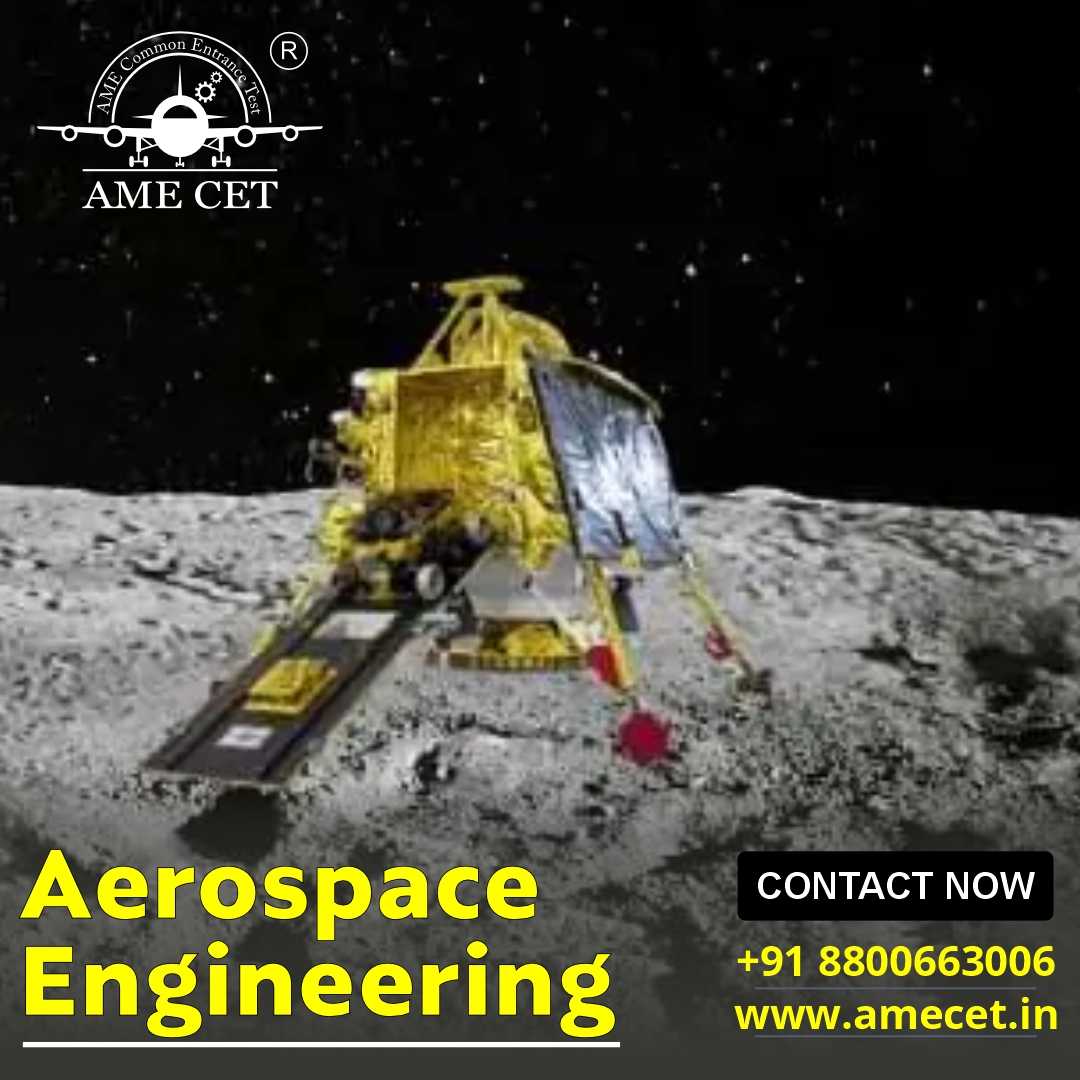
Aerospace engineering is a field of study that focuses on the design, development, and testing of aircraft and spacecraft. It is one of the most exciting and innovative engineering disciplines, and it combines principles of mechanical, electrical, and computer engineering to solve complex challenges. From creating efficient aircraft to exploring the depths of space, aerospace engineers are at the forefront of technological advancements that shape the future of air and space travel. <br> <br>What is Aerospace Engineering? <br> <br>Aerospace engineering is the branch of engineering that deals with the design, construction, and maintenance of both aircraft (such as airplanes and helicopters) and spacecraft (such as satellites, rockets, and space exploration vehicles). It involves understanding the complexities of aerodynamics, propulsion systems, avionics, materials science, and structural design. The field is divided into two major areas: aeronautical engineering (focused on aircraft) and astronautical engineering (focused on spacecraft). <br> <br>Aerospace Engineering Courses: A Comprehensive Overview <br> <br>Aerospace engineering courses are designed to equip students with the necessary knowledge and skills to design and develop cutting-edge aerospace technologies. These courses provide a strong foundation in physics, mathematics, computer science, and engineering principles, with a special focus on the challenges specific to air and space travel. <br> <br>Some of the key subjects covered in aerospace engineering courses include: <br> <br>Aerodynamics – The study of the behavior of air as it interacts with solid objects (such as aircraft or spacecraft). <br>Propulsion Systems – Understanding how engines and propulsion systems work to provide the necessary thrust for flight. <br>Structural Mechanics – The study of how materials and structures behave under various conditions, ensuring the safety and integrity of aircraft and spacecraft. <br>Control Systems – Learning how to design systems that control the movement and stability of aircraft and spacecraft. <br>Flight Mechanics – The study of the motion of aircraft and spacecraft and how they respond to different forces. <br>Avionics – The electronics used in aircraft and spacecraft for navigation, communication, and control. <br>Aerospace Engineering Course Duration <br> <br>The duration of an aerospace engineering course depends on the level of study. For undergraduate programs, such as a Bachelor of Technology (B.Tech) in Aerospace Engineering, the course typically lasts for 4 years. This includes theoretical courses, laboratory work, and practical training. Postgraduate programs, such as a Master of Technology (M.Tech), usually last for 2 years, where students can specialize in specific areas like aerodynamics, propulsion, or space exploration. <br> <br>Doctoral programs in aerospace engineering can take 3-5 years to complete and typically involve in-depth research in a specific area of aerospace technology. The duration may vary based on the institution and the student's research progress. <br> <br>What Is the Course of Aerospace Engineering? <br> <br>Aerospace engineering courses are designed to provide students with a deep understanding of both the theoretical and practical aspects of the field. In addition to the core subjects of aerodynamics, propulsion, and control systems, students are exposed to topics like computational fluid dynamics, materials science, space systems engineering, and the design and testing of aerospace components. <br> <br>The coursework is complemented by hands-on training, which may include internships with aerospace companies, research projects, and practical simulations. Some institutions also offer workshops, industrial visits, and collaborations with major aerospace organizations to give students real-world exposure to the industry. <br> <br>Aerospace Engineering Branches <br> <br>Aerospace engineering is a vast field with various specialized branches. The two main branches are: <br> <br>Aeronautical Engineering – This branch focuses on the design, development, and testing of aircraft that operate within Earth's atmosphere. It includes commercial airplanes, helicopters, drones, and military aircraft. Aeronautical engineers work on enhancing the efficiency, safety, and performance of these vehicles. <br> <br>Astronautical Engineering – This branch deals with the design and development of spacecraft that operate beyond Earth's atmosphere. Astronautical engineers work on designing satellites, space probes, space stations, and rockets. They are also involved in space exploration missions and the development of technologies that enable long-term space travel. <br> <br>Aerospace Engineering Course Details <br> <br>The details of an aerospace engineering course vary based on the institution, but they generally cover the following areas: <br> <br>Core Engineering Subjects: Mathematics, physics, computer science, materials science, and basic engineering principles. <br>Specialized Aerospace Topics: Aerodynamics, propulsion, control systems, avionics, flight mechanics, and space systems. <br>Practical Training: Labs, workshops, internships, and industrial visits to gain real-world exposure. <br>Research and Projects: Hands-on projects, thesis work, and collaborations with aerospace companies to develop innovative solutions. <br>Conclusion <br> <br>Aerospace engineering is a dynamic and innovative field that plays a critical role in shaping the future of air and space travel. Whether you are interested in designing aircraft or exploring outer space, this field offers numerous career opportunities for aspiring engineers. By pursuing a degree in aerospace engineering, students gain a comprehensive understanding of the principles behind flight and space exploration, preparing them for a rewarding career in one of the most advanced engineering domains. With the constant evolution of technology and the increasing demand for advanced aerospace solutions, aerospace engineers will continue to lead the way in shaping the future of transportation and exploration. <br>For More Details:- [a]https%3A%2F%2Fwww.amecet.in%2Faerospace-engineering.php[/a]
sell
Electronics
storefront
Amecetdelhi's Store