Articles

Articles & Insights

Discover, learn, and grow with stories from our ecosystem members.

search
filter_list Search: "travel"
close
How Can Foreign Companies Apply for BIS Certification in India? News & Current Events
Oct 15, 2026 • visibility 2 • 11 min read

How Can Foreign Companies Apply for BIS Certification in India?

India is one of the world's major markets for international manufacturers and exporters. However, foreign companies planning to sell certain products in India must comply with applicable Indian quality and safety regulations. One important requirement is BIS Certification, issued by the Bureau of Indian Standards (BIS), India's national standards body.BIS certification helps establish that a product meets the relevant Indian Standard and applicable certification requirements. Depending on the product category, foreign manufacturers may need a BIS licence under the Foreign Manufacturers Certification Scheme (FMCS) registration under another applicable scheme.Understanding the correct procedure, documentation, testing requirements and application process can help international businesses enter the Indian market more smoothly.What Is BIS Certification for Foreign Manufacturers?The Bureau of Indian Standards operates the Foreign Manufacturers Certification Scheme (FMCS) to grant licences to manufacturers whose factories are located outside India. Under this scheme, eligible manufacturers can obtain permission to use the BIS Standard Mark on products that conform to the relevant Indian Standard.FMCS generally covers products other than electronics and IT goods notified under the Compulsory Registration Scheme (CRS). The appropriate certification route depends on the product and the applicable Indian government notifications.Foreign companies should first verify whether their products fall under mandatory certification before exporting them to India.Step-by-Step Process to Apply for BIS Certification in IndiaStep 1: Identify the Applicable Indian StandardThe first step is to identify the Indian Standard (IS) applicable to the product. Each product category may have specific requirements relating to quality, performance, safety and testing.Manufacturers should check the official BIS website to determine the applicable standard and whether certification is mandatory under a relevant Quality Control Order (QCO) or other notification.Selecting the correct standard is essential because it determines the testing requirements, manufacturing controls and certification scope.Step 2: Check Factory and Testing FacilitiesForeign manufacturers applying under FMCS must have suitable manufacturing infrastructure and quality control arrangements at their factory premises.The manufacturer should ensure that:Appropriate manufacturing machinery and facilities are available.Required testing equipment and arrangements are maintained.Competent personnel can conduct the necessary product tests.Production processes comply with the applicable Indian Standard.The company can follow the prescribed Scheme of Testing and Inspection (STI/SIT) and applicable marking requirements.BIS assesses the manufacturer's ability to consistently produce products that meet the relevant standard.Step 3: Appoint an Authorised Indian Representative (AIR)Foreign manufacturers are required to nominate an Authorised Indian Representative (AIR) for the applicable certification process.The AIR must be an Indian resident and is responsible for representing the manufacturer in matters concerning compliance with the BIS Act, rules, regulations and licence conditions.The representative may be an eligible employee of the manufacturer's Indian branch or office. Where no such office exists, the manufacturer can nominate an appropriate representative in accordance with BIS requirements.The nomination must follow the prescribed format, and the representative should understand the responsibilities associated with the licence.Step 4: Prepare the Required DocumentsDocumentation is an important part of the BIS application process. Foreign manufacturers should prepare the prescribed application form and supporting records before submitting the application.Depending on the product and applicable requirements, documents may include:Company registration and manufacturing establishment details.Factory address and manufacturing process information.Details of production machinery and testing equipment.Quality control procedures and testing arrangements.Product specifications and relevant technical documents.Information about raw materials and production controls.Details and nomination documents for the AIR.Undertakings and declarations required by BIS.Applicable application fees and supporting payment details.Applicants should refer to the latest BIS checklist for their specific product and certification scheme, as the exact requirements may vary.Step 5: Submit the BIS Application OnlineOnce the documents are ready, the foreign manufacturer can submit the application through the official BIS Manak Online portal, following the procedure applicable to the relevant scheme.As of October 2026, BIS states that FMCS applications must be submitted online from 1 June 2026; the earlier offline application facility was accepted only up to 31 May 2026.Applicants should complete the required fields, upload the prescribed documents and pay the applicable fees. Incomplete information or delayed responses to BIS queries can extend the processing time.Step 6: Factory Inspection and Product TestingAfter the application is reviewed and the necessary formalities are completed, BIS arranges an assessment of the manufacturing facility in accordance with the applicable scheme.During the assessment, the inspection team may examine manufacturing processes, quality control systems, testing facilities, equipment and the manufacturer's ability to maintain consistent product quality.Product samples are also tested according to the applicable certification requirements. Testing may involve a BIS-recognised or approved laboratory, depending on the scheme and product category.If discrepancies are identified, the manufacturer must address them and provide the required information or corrective actions.Step 7: Grant of BIS LicenceIf the factory assessment, product testing and other applicable requirements are satisfactorily completed, BIS may grant the licence.The manufacturer must fulfil the applicable fee and compliance requirements before the licence is issued. Once authorised, the company may use the BIS Standard Mark only within the approved licence scope and subject to the licence conditions.Foreign manufacturers must also maintain ongoing compliance with applicable testing, inspection, marking and renewal requirements.How Much Does BIS Certification Cost for Foreign Companies?The cost of BIS certification depends on several factors, including the product category, applicable standard, number of products or varieties, testing expenses, factory inspection requirements and applicable BIS fees.Foreign manufacturers should also account for international travel, visa and related expenses associated with factory assessments where applicable.Because the costs vary by scheme and product, businesses should consult the latest official BIS fee schedule rather than rely on a single fixed price.How Long Does BIS Certification Take?The processing time depends on the completeness of the application, factory readiness, inspection scheduling, laboratory testing and the time taken to resolve any deficiencies.Manufacturers should begin the certification process well before their planned shipment or product launch in India. No product-specific timeline should be assumed until the applicable scheme and requirements have been confirmed.ConclusionForeign companies can apply for BIS certification in India by identifying the correct Indian Standard, preparing their manufacturing and testing facilities, appointing an Authorised Indian Representative, submitting the application, and completing the required inspection and product testing.Choosing the correct certification scheme is particularly important because FMCS and CRS have different scopes and procedures. Careful preparation can help reduce avoidable delays and support a smoother entry into the Indian market.

Extract Brands Use Competitor Intelligence for Data Insights Tech & Innovation
Oct 13, 2026 • visibility 12 • 13 min read

Extract Brands Use Competitor Intelligence for Data Insights

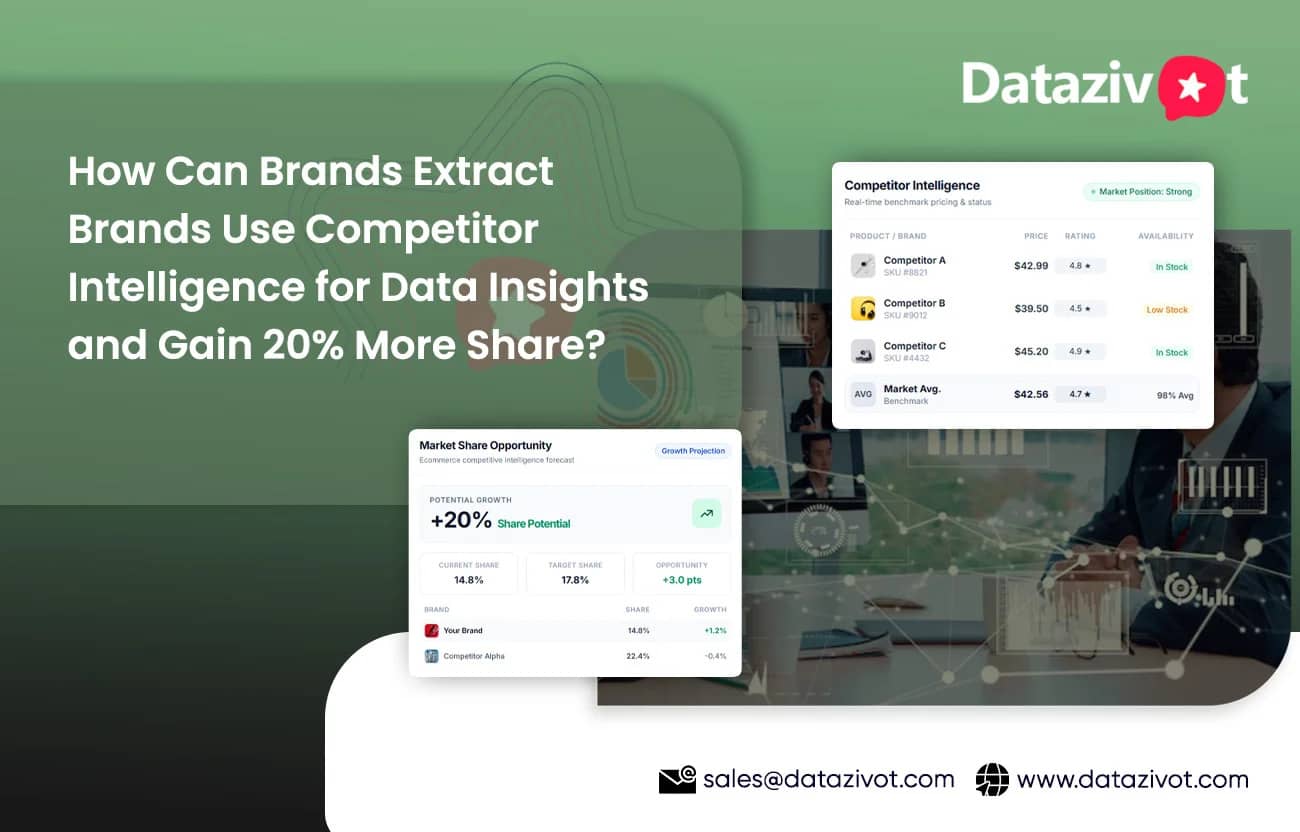
IntroductionBrands increasingly rely on structured market information to understand competitor movements, pricing changes, customer preferences, and emerging opportunities. Extract Brands Use Competitor Intelligence for Data Insights helps organizations organize competitive signals into actionable information for stronger positioning. Effective Competitive Intelligence also supports better decisions across pricing, assortment, promotions, and customer acquisition strategies.Competitor data provides valuable visibility into product launches, promotional campaigns, ratings, availability, and positioning across digital marketplaces. When these signals are collected consistently, brands can compare their performance against competitors and identify areas requiring immediate attention. This approach supports more informed planning while reducing dependence on fragmented manual research.Consistent data collection can also help businesses recognize market gaps before they become significant challenges. By comparing competitor activity across multiple channels, teams can identify pricing opportunities, improve product offerings, and refine promotional strategies. Structured insights make it easier to measure performance changes and allocate resources toward activities that support measurable market-share growth.Transforming Competitor Signals Into Actionable Growth StrategiesBrands need consistent competitor information to understand how pricing, product availability, assortment, and promotions influence purchasing decisions. Instead of reviewing isolated competitor updates manually, organizations can collect information continuously and organize it into comparable datasets. This creates a stronger foundation for evaluating market movements and identifying areas where their own offerings may require adjustment.A structured approach also allows teams to compare several competitors using consistent fields, making recurring analysis more reliable and reducing gaps caused by inconsistent research methods. Automated collection becomes particularly valuable when competitive conditions change rapidly. A Web Scraping API can help businesses gather relevant product, pricing, availability, and promotional information from multiple digital sources in a structured format.Teams can then feed this information into internal dashboards or analytical systems. This makes recurring monitoring easier and gives decision-makers access to comparable information without depending entirely on manual collection. The resulting workflow can support faster evaluations of competitive positioning and category-level changes.Key areas businesses can monitor include:Competitor product pricing and discountsProduct availability across digital channelsChanges in assortment and category coveragePromotional activity and campaign frequencyProduct launches and catalog modificationsRecurring competitive movement patternsPricing — Strategic Purpose: Positioning evaluation.Availability — Strategic Purpose: Supply monitoring.Promotions — Strategic Purpose: Campaign comparison.Assortment — Strategic Purpose: Catalog planning.Another important advantage comes from connecting current competitor information with historical records. Real-Time Brands Use Competitor Intelligence to Increase Market Value can help businesses assess how quickly competitors modify prices, launch products, change promotions, or adjust availability. These observations allow teams to distinguish temporary changes from sustained market movements and develop strategies based on measurable competitive behavior rather than isolated observations.Strengthening Competitive Positioning Through Customer SignalsCustomer feedback adds an important dimension to competitor analysis because purchasing decisions are influenced by experiences as well as price and availability. Ratings, written reviews, review frequency, and recurring complaints can reveal how customers perceive competing products. When businesses organize these signals alongside product information, they can identify areas where competitors receive positive responses and categories where customers repeatedly report problems.Customer Reviews Data Scraping can help businesses systematically collect publicly available review-related information for structured comparison. Instead of examining individual review pages manually, teams can organize ratings, review counts, recurring themes, and product-level feedback into datasets. This makes it easier to compare customer sentiment across competing products and identify patterns that may influence future product development, service improvements, or positioning decisions.Competitive analysis becomes more useful when customer signals are connected with broader business information. Brands Use Competitive Intelligence API for Data Insights can support analytical workflows by connecting structured competitor information with dashboards, reporting systems, or other business applications. This enables teams to examine customer feedback alongside pricing, availability, assortment, and promotional activity.Important customer-focused monitoring areas include:Product ratings and review volumesRecurring customer complaintsFrequently mentioned product attributesPositive customer experience patternsChanges in review sentimentCompetitor product strengths and weaknessesRatings — Business Application: Quality comparison.Review Volume — Business Application: Demand assessment.Complaints — Business Application: Improvement planning.Positive Feedback — Business Application: Strength identification.Businesses can use these insights to prioritize improvements rather than responding to individual comments in isolation. Repeated complaints may highlight product or service weaknesses, while consistently positive feedback can indicate features worth studying. Combining customer signals with competitor performance data also helps teams establish clearer priorities and identify changes that could strengthen their own market positioning.Converting Market Comparisons Into Measurable Share GrowthCompetitive information becomes more useful when businesses connect external market activity with measurable commercial objectives. Companies can compare competitor pricing, product coverage, promotional frequency, availability, and customer response to understand where their own market position differs. This comparison creates a practical foundation for identifying opportunities within categories where competitors have stronger visibility, broader assortments, or more attractive offers.Market Research becomes more effective when supported by continuously collected competitor information rather than occasional snapshots. A Web Data Scraper for Brand Competitor Research can help businesses organize information from relevant digital sources and maintain structured records for recurring analysis. With consistent datasets, teams can compare historical and current competitor activity, evaluate category changes, and identify patterns that may influence demand or purchasing behavior.Businesses can also use Scrape Competitor Data for Market Share Analysis when they need to evaluate competitive positioning across specific products or categories. Structured competitor records can help teams identify pricing differences, catalog gaps, product availability patterns, and promotional intensity. When these signals are compared with internal sales or performance data, organizations can better understand where competitive pressure is increasing and where additional commercial opportunities may exist.Businesses can focus on several measurable areas:Category-level competitive positioningProduct and assortment coverageRelative pricing and promotional activityCompetitor availability patternsMarket movement across product categoriesChanges in competitive intensityMarket Share — Business Application: Positioning evaluation.Price Difference — Business Application: Pricing review.Category Coverage — Business Application: Assortment planning.Promotional Frequency — Business Application: Campaign assessment.The resulting analysis can support several strategic decisions, including assortment expansion, pricing adjustments, promotional planning, and category prioritization. This creates a continuous feedback cycle where market changes are monitored, analyzed, and translated into practical actions that support stronger positioning and potential share growth.How Datazivot Can Help You?We help businesses organize competitive information into structured datasets designed for practical analysis. By using Extract Brands Use Competitor Intelligence for Data Insights, organizations can evaluate competitor pricing, product availability, assortment changes, customer feedback, and promotional activity across relevant digital sources.The approach can support businesses operating across ecommerce, retail, travel, food delivery, real estate, entertainment, and other data-intensive markets. Information can be collected from relevant digital sources, cleaned, standardized, and prepared according to specific analytical requirements.Datazivot can support organizations with:Automated collection from relevant online sourcesStructured competitor product and pricing datasetsRecurring monitoring of market changesProduct, rating, and review informationData cleaning and standardizationFlexible data delivery for analytical workflowsWith structured data available for recurring analysis, teams can compare competitors more efficiently and identify important changes across their target markets. Datazivot can also support Brands Use Competitive Intelligence API for Data Insights by providing organized competitive information that fits analytical and reporting workflows.ConclusionBrands require consistent and structured information to understand changing competitive conditions and identify areas for improvement. Extract Brands Use Competitor Intelligence for Data Insights can help businesses evaluate pricing, product availability, customer feedback, assortment, and promotional activity through organized datasets. When these insights are reviewed regularly, teams can make more informed decisions and identify opportunities for stronger positioning across competitive categories.Continuous market monitoring can also improve how businesses respond to emerging changes. Real-Time Brands Use Competitor Intelligence to Increase Market Value supports ongoing evaluation of competitor movements and commercial signals, helping teams connect external market activity with internal performance objectives. Contact Datazivot today to build reliable competitor data solutions for stronger market intelligence, strategic planning, and sustainable market-share growth.#ExtractBrandsUseCompetitorIntelligenceForDataInsights,#RealTimeBrandsUseCompetitorIntelligenceToIncreaseMarketValue,#BrandsUseCompetitiveIntelligenceAPIForDataInsights,#WebDataScraperForBrandCompetitorResearch,Source: https://www.datazivot.com/extract-brands-use-competitor-intelligence-for-data-insights.phpContact us:E-mail: [email protected] No: +91 8866656657Visit Now: https://www.datazivot.com/

Melissa Melissa Torres
Read arrow_forward
Extract Brands Use Competitor Intelligence for Data Insights Tech & Innovation
Oct 13, 2026 • visibility 13 • 13 min read

Extract Brands Use Competitor Intelligence for Data Insights

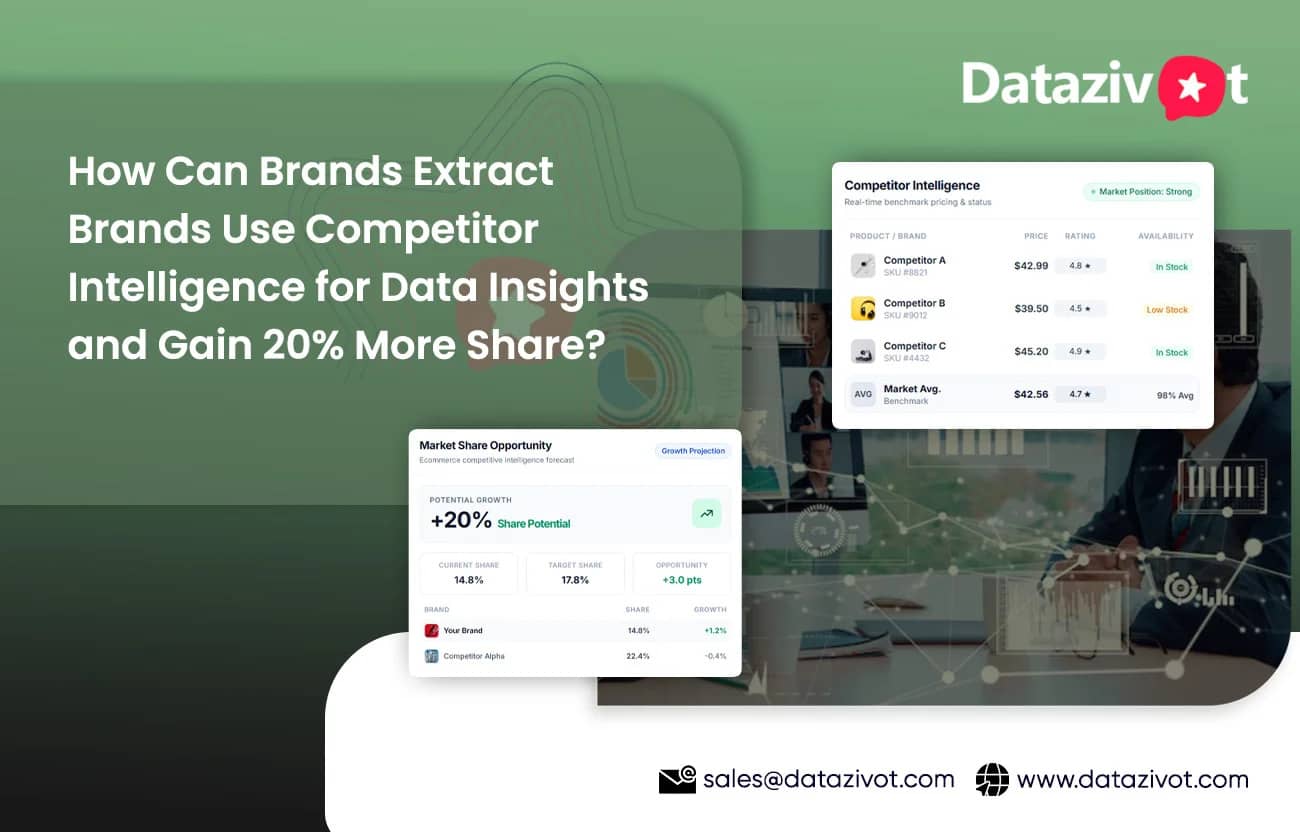
IntroductionBrands increasingly rely on structured market information to understand competitor movements, pricing changes, customer preferences, and emerging opportunities. Extract Brands Use Competitor Intelligence for Data Insights helps organizations organize competitive signals into actionable information for stronger positioning. Effective Competitive Intelligence also supports better decisions across pricing, assortment, promotions, and customer acquisition strategies.Competitor data provides valuable visibility into product launches, promotional campaigns, ratings, availability, and positioning across digital marketplaces. When these signals are collected consistently, brands can compare their performance against competitors and identify areas requiring immediate attention. This approach supports more informed planning while reducing dependence on fragmented manual research.Consistent data collection can also help businesses recognize market gaps before they become significant challenges. By comparing competitor activity across multiple channels, teams can identify pricing opportunities, improve product offerings, and refine promotional strategies. Structured insights make it easier to measure performance changes and allocate resources toward activities that support measurable market-share growth.Transforming Competitor Signals Into Actionable Growth StrategiesBrands need consistent competitor information to understand how pricing, product availability, assortment, and promotions influence purchasing decisions. Instead of reviewing isolated competitor updates manually, organizations can collect information continuously and organize it into comparable datasets. This creates a stronger foundation for evaluating market movements and identifying areas where their own offerings may require adjustment.A structured approach also allows teams to compare several competitors using consistent fields, making recurring analysis more reliable and reducing gaps caused by inconsistent research methods. Automated collection becomes particularly valuable when competitive conditions change rapidly. A Web Scraping API can help businesses gather relevant product, pricing, availability, and promotional information from multiple digital sources in a structured format.Teams can then feed this information into internal dashboards or analytical systems. This makes recurring monitoring easier and gives decision-makers access to comparable information without depending entirely on manual collection. The resulting workflow can support faster evaluations of competitive positioning and category-level changes.Key areas businesses can monitor include:Competitor product pricing and discountsProduct availability across digital channelsChanges in assortment and category coveragePromotional activity and campaign frequencyProduct launches and catalog modificationsRecurring competitive movement patternsPricing — Strategic Purpose: Positioning evaluation.Availability — Strategic Purpose: Supply monitoring.Promotions — Strategic Purpose: Campaign comparison.Assortment — Strategic Purpose: Catalog planning.Another important advantage comes from connecting current competitor information with historical records. Real-Time Brands Use Competitor Intelligence to Increase Market Value can help businesses assess how quickly competitors modify prices, launch products, change promotions, or adjust availability. These observations allow teams to distinguish temporary changes from sustained market movements and develop strategies based on measurable competitive behavior rather than isolated observations.Strengthening Competitive Positioning Through Customer SignalsCustomer feedback adds an important dimension to competitor analysis because purchasing decisions are influenced by experiences as well as price and availability. Ratings, written reviews, review frequency, and recurring complaints can reveal how customers perceive competing products. When businesses organize these signals alongside product information, they can identify areas where competitors receive positive responses and categories where customers repeatedly report problems.Customer Reviews Data Scraping can help businesses systematically collect publicly available review-related information for structured comparison. Instead of examining individual review pages manually, teams can organize ratings, review counts, recurring themes, and product-level feedback into datasets. This makes it easier to compare customer sentiment across competing products and identify patterns that may influence future product development, service improvements, or positioning decisions.Competitive analysis becomes more useful when customer signals are connected with broader business information. Brands Use Competitive Intelligence API for Data Insights can support analytical workflows by connecting structured competitor information with dashboards, reporting systems, or other business applications. This enables teams to examine customer feedback alongside pricing, availability, assortment, and promotional activity.Important customer-focused monitoring areas include:Product ratings and review volumesRecurring customer complaintsFrequently mentioned product attributesPositive customer experience patternsChanges in review sentimentCompetitor product strengths and weaknessesRatings — Business Application: Quality comparison.Review Volume — Business Application: Demand assessment.Complaints — Business Application: Improvement planning.Positive Feedback — Business Application: Strength identification.Businesses can use these insights to prioritize improvements rather than responding to individual comments in isolation. Repeated complaints may highlight product or service weaknesses, while consistently positive feedback can indicate features worth studying. Combining customer signals with competitor performance data also helps teams establish clearer priorities and identify changes that could strengthen their own market positioning.Converting Market Comparisons Into Measurable Share GrowthCompetitive information becomes more useful when businesses connect external market activity with measurable commercial objectives. Companies can compare competitor pricing, product coverage, promotional frequency, availability, and customer response to understand where their own market position differs. This comparison creates a practical foundation for identifying opportunities within categories where competitors have stronger visibility, broader assortments, or more attractive offers.Market Research becomes more effective when supported by continuously collected competitor information rather than occasional snapshots. A Web Data Scraper for Brand Competitor Research can help businesses organize information from relevant digital sources and maintain structured records for recurring analysis. With consistent datasets, teams can compare historical and current competitor activity, evaluate category changes, and identify patterns that may influence demand or purchasing behavior.Businesses can also use Scrape Competitor Data for Market Share Analysis when they need to evaluate competitive positioning across specific products or categories. Structured competitor records can help teams identify pricing differences, catalog gaps, product availability patterns, and promotional intensity. When these signals are compared with internal sales or performance data, organizations can better understand where competitive pressure is increasing and where additional commercial opportunities may exist.Businesses can focus on several measurable areas:Category-level competitive positioningProduct and assortment coverageRelative pricing and promotional activityCompetitor availability patternsMarket movement across product categoriesChanges in competitive intensityMarket Share — Business Application: Positioning evaluation.Price Difference — Business Application: Pricing review.Category Coverage — Business Application: Assortment planning.Promotional Frequency — Business Application: Campaign assessment.The resulting analysis can support several strategic decisions, including assortment expansion, pricing adjustments, promotional planning, and category prioritization. This creates a continuous feedback cycle where market changes are monitored, analyzed, and translated into practical actions that support stronger positioning and potential share growth.How Datazivot Can Help You?We help businesses organize competitive information into structured datasets designed for practical analysis. By using Extract Brands Use Competitor Intelligence for Data Insights, organizations can evaluate competitor pricing, product availability, assortment changes, customer feedback, and promotional activity across relevant digital sources.The approach can support businesses operating across ecommerce, retail, travel, food delivery, real estate, entertainment, and other data-intensive markets. Information can be collected from relevant digital sources, cleaned, standardized, and prepared according to specific analytical requirements.Datazivot can support organizations with:Automated collection from relevant online sourcesStructured competitor product and pricing datasetsRecurring monitoring of market changesProduct, rating, and review informationData cleaning and standardizationFlexible data delivery for analytical workflowsWith structured data available for recurring analysis, teams can compare competitors more efficiently and identify important changes across their target markets. Datazivot can also support Brands Use Competitive Intelligence API for Data Insights by providing organized competitive information that fits analytical and reporting workflows.ConclusionBrands require consistent and structured information to understand changing competitive conditions and identify areas for improvement. Extract Brands Use Competitor Intelligence for Data Insights can help businesses evaluate pricing, product availability, customer feedback, assortment, and promotional activity through organized datasets. When these insights are reviewed regularly, teams can make more informed decisions and identify opportunities for stronger positioning across competitive categories.Continuous market monitoring can also improve how businesses respond to emerging changes. Real-Time Brands Use Competitor Intelligence to Increase Market Value supports ongoing evaluation of competitor movements and commercial signals, helping teams connect external market activity with internal performance objectives. Contact Datazivot today to build reliable competitor data solutions for stronger market intelligence, strategic planning, and sustainable market-share growth.#ExtractBrandsUseCompetitorIntelligenceForDataInsights,#RealTimeBrandsUseCompetitorIntelligenceToIncreaseMarketValue,#BrandsUseCompetitiveIntelligenceAPIForDataInsights,#WebDataScraperForBrandCompetitorResearch,Source: https://www.datazivot.com/extract-brands-use-competitor-intelligence-for-data-insights.phpContact us:E-mail: [email protected] No: +91 8866656657Visit Now: https://www.datazivot.com/

Melissa Melissa Torres
Read arrow_forward
article
Career & Business
Oct 13, 2026 • visibility 7 • 6 min read

Looking for Thane Escort Services? Explore Local Profiles and Companionship Options

Thane is a vibrant city in Maharashtra, known for its growing residential communities, shopping destinations, restaurants, and convenient connections to Mumbai. Adults searching for Thane escort services can explore online directories to learn about advertised profiles and companionship options. Understanding how these listings work can help visitors and residents make informed decisions while prioritising privacy, personal safety, and respectful communication.Explore Escort Listings Across ThaneThane features several popular neighbourhoods, including Majiwada, Manpada, Ghodbunder Road, Vartak Nagar, and Hiranandani Estate. Each locality offers a distinctive mix of residential areas, commercial spaces, cafes, and leisure destinations.Online directories may provide information about different profiles, general preferences, and advertised companionship services. Reading these descriptions carefully can help you understand the information available before deciding whether to explore a listing further.Whether you are a local resident or visiting Thane for business or leisure, focus on accurate details rather than exaggerated promotional claims. Clear information makes it easier to compare listings and understand what is being advertised.What Should You Consider Before Choosing a Listing?Finding useful information about escort services in Thane begins with careful research. Check whether a profile provides consistent descriptions and transparent information. Avoid advertisements that make unrealistic promises or leave important details unexplained.Communication also plays an important role. Discuss expectations clearly, ask relevant questions, and confirm any applicable charges beforehand. Taking these steps can help prevent misunderstandings and encourage responsible decisions.Remember that online profiles are not necessarily independently verified. Check available information carefully instead of assuming that every advertisement is genuine or that the services described are available.Prioritise Privacy and Personal SafetyWhen exploring Thane escort listings, protecting your personal information should remain a priority. Avoid sharing passwords, banking details, identification documents, or other sensitive information with unfamiliar contacts.Be cautious of suspicious links, pressure to make immediate payments, and requests for advance transfers from unverified sources. If an interaction seems misleading or uncomfortable, consider ending the conversation.Respectful communication and mutual consent are equally important. Any interaction must involve consenting adults, and personal boundaries should always be respected. Everyone should feel comfortable expressing preferences and declining an arrangement without pressure.Discover Thane and Its SurroundingsThane offers a variety of experiences beyond its online listings. Visitors can explore shopping centres, local restaurants, cafes, recreational spaces, and scenic surroundings. The city's transport connections also make it convenient to travel to nearby areas of Mumbai.For those researching escort services in Thane, understanding the local area can be useful when planning a visit or organising leisure activities. Online directories can provide a starting point for reviewing advertised companionship options, but they should not be considered guarantees of profile authenticity, availability, or service quality.Make an Informed DecisionExploring Thane escort services requires attention to detail, clear expectations, and responsible choices. Review available profiles carefully, verify information wherever possible, and communicate respectfully before considering any arrangements.By prioritising transparency, privacy, personal safety, and mutual consent, you can evaluate online listings more confidently. Whether you live in Thane or are visiting the city, a thoughtful approach can help you avoid misleading advertisements and make better-informed decisions.

Neha Prajapati
Read arrow_forward