Oct 23, 2026
•
visibility 26
•
27 min read
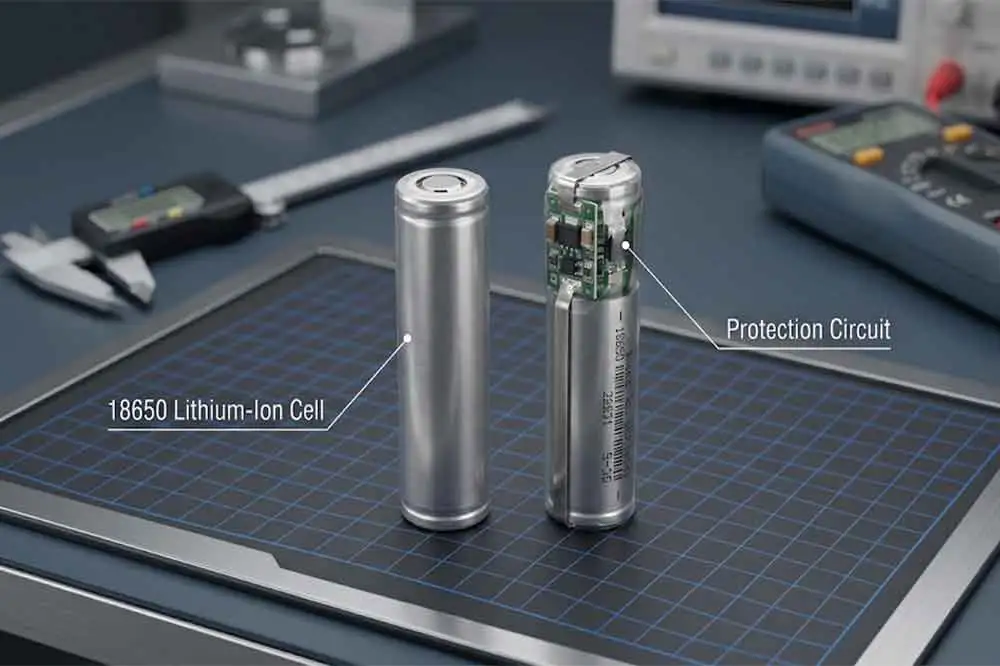
The price of 18650 battery cells can vary widely between suppliers.A buyer may receive several quotations for what looks like the same 18650 battery. However, the quoted prices may not be directly comparable.The cell model, capacity, discharge current, order quantity, production batch, packaging, shipping terms, and testing requirements can all affect the final cost.For B2B buyers, the important question is not simply, “What is the price of an 18650 battery?”A better question is:What is included in the quoted price, and are all suppliers quoting the same specification?This guide explains the main factors that affect the 18650 battery wholesale price and shows how buyers can compare quotations more accurately.Why There Is No Single 18650 Battery Wholesale PriceThere is no universal wholesale price for an 18650 battery cell.An 18650 cell is a size format, not one specific product.Different cells can have different:CapacityChemistryManufacturerDischarge currentInternal resistanceCycle performanceProduction dateQuality requirementsPackagingFor example, a 2000mAh cell and a 3500mAh cell may both use the 18650 format.Their prices can be different because their specifications and manufacturing costs are different.The same applies to high-discharge cells.A cell designed for higher current output may use a different internal design from a standard high-capacity cell.Therefore, always compare the exact cell specification.The Cell Model Has a Major Effect on PriceThe first question to ask when comparing 18650 battery prices is:What exact cell model is being quoted?A quotation that only says “18650 3000mAh” is incomplete.The supplier should identify the manufacturer and model.The model determines important technical characteristics.These may include:Nominal voltageRated capacityMaximum discharge currentCharging limitsInternal resistanceOperating temperatureCycle characteristicsPhysical dimensionsTwo 3000mAh cells can have different specifications.As a result, their wholesale prices can also differ.For OEM projects, the exact model should be included in the quotation and purchase order.Capacity Affects 18650 Battery PriceCapacity is another major pricing factor.Common 18650 capacities include:2000mAh2200mAh2500mAh2600mAh2800mAh3000mAh3200mAh3500mAhHigher capacity does not automatically mean better value.The correct capacity depends on the application.For example, a portable electronic product may prioritize energy capacity and compact size.A power tool may place more emphasis on discharge current.An OEM buyer should therefore compare capacity together with current capability and energy requirements.For a detailed capacity comparison, see [Standard 18650 Battery Capacity: 2000mAh, 2600mAh, 3000mAh or 3500mAh?].High-Capacity and High-Discharge Cells Can Have Different PricesCapacity is only one part of cell performance.A high-capacity cell may be designed to store more energy.A high-discharge cell may be designed to deliver more current.These design priorities can affect the price.For example, an application requiring high current may need a cell with a lower internal resistance and stronger discharge performance.Using a cheaper high-capacity cell may not be suitable simply because its mAh rating is higher.The battery pack must match the actual load.See [High Capacity vs High Discharge 18650 Batteries] for a more detailed comparison.Order Quantity Changes the Wholesale PriceQuantity is one of the most important factors in B2B battery pricing.A supplier may quote different prices for:100 cells500 cells1,000 cells5,000 cells10,000 cells50,000 cellsLarger orders can sometimes receive better unit pricing because production, handling, packaging, and purchasing costs are spread across more units.However, a larger order is not automatically cheaper in every situation.The supplier may need to arrange a new production batch.The buyer may also need additional inspection, storage, financing, or freight capacity.Therefore, ask for quantity-based quotations.For example:QuantityQuotation500 pcsAsk supplier1,000 pcsAsk supplier5,000 pcsAsk supplier10,000 pcsAsk supplier50,000 pcsAsk supplierThe actual price should come from the supplier based on the exact specification and current market conditions.MOQ Can Affect the Effective CostMOQ means minimum order quantity.A supplier may offer a lower unit price at a higher MOQ.For example, a supplier may quote a better price for 10,000 cells than for 500 cells.However, buyers should consider inventory risk.Buying more cells than needed can create additional costs.These may include:StorageWorking capitalInsuranceAging inventoryQuality controlHandlingFuture specification changesFor this reason, the lowest unit price is not always the lowest total purchasing cost.Stock Price vs New Production PriceThe 18650 battery wholesale price can also depend on whether the supplier has stock.There is a practical difference between:Ready stockandNew productionReady stock may be available sooner.New production may provide better batch consistency for a larger OEM project.However, stock can have an earlier production date.That makes production date and storage conditions important.Ask the supplier:Is the quoted quantity in stock?When were the cells produced?Are they from the same batch?Is new production required?What is the production lead time?These questions help explain why two suppliers may offer different prices.Production Batch Can Affect CostBattery cell manufacturers produce cells in batches.A supplier may have access to one batch at a particular price.A future batch may have a different cost.Changes can result from:Raw material pricesProduction costsMarket demandManufacturing capacityCell model availabilityExchange ratesLogistics costsFor long-term OEM projects, buyers should avoid assuming that one quotation will remain unchanged forever.Instead, agree on the quotation validity period.Then confirm the price again before each major order.Raw Material Costs MatterLithium-ion battery cells depend on several raw materials and manufacturing inputs.The cost structure can be influenced by materials such as:Lithium compoundsNickelCobaltGraphiteCopperAluminumThe exact effect depends on the battery chemistry and cell design.For example, LFP and NMC cells have different material compositions.However, raw material cost is only one part of the final price.Manufacturing, testing, packaging, logistics, quality control, and supplier margins also contribute.Therefore, a change in one raw material does not translate directly into the same percentage change in the final 18650 battery price.Chemistry Affects the PriceNot all 18650 cells use the same chemistry.Common lithium-ion chemistries include:NMCNCALCOLFPEach chemistry has different characteristics.Capacity, voltage, energy density, discharge performance, safety requirements, and manufacturing processes can differ.For this reason, do not compare the price of cells with different chemistries as though they were identical products.The application should determine the required chemistry first.Then compare suppliers offering the same technical specification.Internal Resistance Can Affect the ValueInternal resistance is an important technical parameter.It affects voltage drop, heat generation, and discharge performance.Two cells with the same nominal capacity may have different internal resistance.For some applications, the lower-resistance cell may provide better performance.However, lower resistance does not automatically make a cell better for every application.The target should match the battery design.When comparing quotations, ask whether internal resistance is specified and how it is tested.For OEM applications, resistance data can also support cell matching.See [18650 Battery Cell Matching: Why Capacity and Resistance Matter].Cell Quality and Grade Affect PriceBuyers may see terms such as:A gradeA+ gradePremium gradeStandard gradeGrade BThese terms should not be accepted without clarification.Ask the supplier what the grade means.Request measurable specifications instead.For example:Capacity rangeInternal resistance rangeVoltage rangeAppearance standardProduction dateTest methodBatch informationA clear specification is more useful than a grade label by itself.For B2B purchasing, quality should be defined by measurable requirements.Testing Requirements Can Increase the CostA basic bulk order may have simple inspection requirements.An OEM project may require much more testing.The buyer may request:Capacity testingVoltage testingInternal resistance testingAppearance inspectionDimension measurementBatch inspectionSample testingPre-shipment inspectionAdditional testing takes time and resources.Therefore, a supplier may quote different prices depending on the inspection requirements.Tell the supplier what level of testing is required before comparing quotations.Packaging Affects the Total CostPackaging is another cost that buyers sometimes overlook.Individual 18650 cells may be packed in trays, cartons, protective materials, or other suitable packaging.The required packaging depends on:QuantityShipping methodCustomer requirementsWarehouse handlingExport requirementsCustom labels or packaging can also increase the cost.For standard bulk cells, standard packaging may be more economical.For OEM projects, customized packaging may be necessary.The quotation should clearly state what packaging is included.Shipping Cost Is Separate From Cell PriceA supplier may quote a low EXW price.Another supplier may quote a higher CIF or DAP price.These prices cannot be compared directly.For example:Supplier A: EXW ShenzhenSupplier B: FOB ShenzhenSupplier C: DAP buyer warehouseThe three prices cover different parts of the supply chain.Therefore, ask for the same Incoterm when comparing suppliers.This makes the comparison much more meaningful.EXW, FOB, CIF, and DAP ExplainedEXWThe buyer usually takes responsibility for most transportation arrangements from the supplier’s location.The quoted product price may look low because fewer logistics costs are included.FOBThe supplier generally handles the required export-side arrangements up to the agreed loading point.The buyer then manages the main transportation and later costs according to the agreed term.CIFThe quotation generally includes cost, insurance, and freight to the named destination port.However, destination-side costs may still apply.DAPThe supplier arranges transportation to the agreed destination.The buyer may still be responsible for import duties and certain customs-related charges.The exact obligations depend on the agreed Incoterms version and contract.Always confirm the named place in the quotation.Freight Can Change the Final Landed CostFor international buyers, the unit cell price is only one part of the purchasing cost.A simple landed-cost model is:Landed Cost = Product Cost + Freight + Insurance + Duties/Taxes + Other FeesAdditional costs can include:Customs clearanceDestination handlingPort chargesWarehouse feesInspection feesLocal deliveryFor this reason, compare the final delivered cost when possible.A supplier with a slightly higher cell price may still provide a lower total cost after logistics are included.Certification and Documents Can Affect the QuoteBattery shipments may require technical and transportation documents.Depending on the project and destination, buyers may request:DatasheetSDS/MSDSUN38.3 documentationTest reportsCommercial invoicePacking listOther shipping documentsIf additional documentation or testing is required, confirm whether it is included in the quotation.Do not assume that every document is free.Also confirm whether the document applies to the exact cell model being purchased.Currency Can Change the Final CostInternational battery orders may be quoted in USD, RMB, EUR, or another currency.Exchange-rate changes can affect the final purchasing cost.For long-term projects, the buyer should record the quotation currency and validity period.A quotation in USD and a quotation in RMB should not be compared without considering the exchange rate.The payment date also matters for large orders.Payment Terms Affect Cash FlowPayment terms do not necessarily change the unit price, but they affect the buyer’s total purchasing situation.For example, the buyer may need to pay a deposit before production.The remaining balance may be due before shipment.The exact terms depend on the supplier and order.For larger projects, buyers should consider:Deposit percentageBalance timingPayment methodProduction start conditionInspection timingMake sure the payment terms are included in the purchase agreement.How to Compare Two 18650 Battery QuotationsA useful comparison table should contain more than the unit price.ItemSupplier ASupplier BManufacturerConfirmConfirmCell modelConfirmConfirmCapacityConfirmConfirmDischarge currentConfirmConfirmInternal resistanceConfirmConfirmProduction dateConfirmConfirmQuantitySameSameMOQConfirmConfirmPackagingConfirmConfirmDocumentsConfirmConfirmIncotermSameSameLead timeConfirmConfirmSampleConfirmConfirmUnit priceQuoteQuoteFreightQuoteQuoteLanded costCalculateCalculateThis approach prevents the price from becoming the only comparison point.Example: Why a Cheaper Quote May Not Be CheaperImagine two suppliers quote the same 3000mAh 18650 cell.Supplier A offers a lower EXW price.Supplier B offers a slightly higher DAP price.At first glance, Supplier A appears cheaper.However, Supplier A’s quote may require the buyer to pay:Export handlingFreightInsuranceCustoms clearanceDestination deliverySupplier B may include most of these costs.The final landed cost could therefore be closer than the initial quotations suggest.This is why B2B buyers should compare complete purchasing costs.Price Per Cell Is Not the Only CostFor battery pack manufacturers, another useful measurement is cost per Wh.The basic calculation is:Cost per Wh = Cell Price ÷ Cell EnergyCell energy can be estimated as:Wh ≈ Nominal Voltage × Capacity in AhFor example, a 3.6V 3000mAh cell has approximately:3.6V × 3Ah = 10.8WhThis gives a simple way to compare energy cost.However, cost per Wh should not replace technical evaluation.A cell with lower cost per Wh may not meet the required discharge current or cycle performance.Use the calculation as one comparison tool, not the only one.Cost Per Pack Can Be More Useful for OEM BuyersOEM buyers often care about the finished battery pack rather than the individual cell.Suppose a battery pack uses:10S4PThat means 40 cells are required.If one cell costs $X, the cell cost is approximately:40 × $XBut the finished pack also includes:BMSNickel stripsWireConnectorInsulationHousingLaborTestingPackagingTherefore, the cell price should be considered as part of the complete pack cost.For more information, see [How Many 18650 Cells Do You Need for a Battery Pack?].Higher Capacity Can Sometimes Reduce Pack Cell CountA higher-capacity cell can sometimes reduce the number of parallel cells required.For example, suppose a design requires approximately 12Ah.Using 3000mAh cells:12Ah ÷ 3Ah = 4PUsing 3500mAh cells:12Ah ÷ 3.5Ah ≈ 3.43PBecause parallel count must use a whole number, the actual configuration may still require 4P depending on the design.This is an important point.A more expensive cell does not automatically reduce the final pack cost.The complete series-parallel configuration should be calculated first.Do Not Compare Battery Prices Without the Same SpecificationA common sourcing mistake is comparing:Supplier A: 18650 3000mAh — $Xwith:Supplier B: 18650 3500mAh — $YThis is not a direct comparison.The specifications are different.A proper comparison should use the same:Cell modelCapacityDischarge currentChemistryTop typeQuality requirementsQuantityPackagingTrade termDelivery destinationOnly then does the price comparison become meaningful.How to Negotiate 18650 Battery Wholesale PricesGood negotiation starts with a clear specification.Instead of simply asking:Can you give me a lower price?Ask for a quantity-based quotation.For example:Please quote 1,000 pcs, 5,000 pcs, 10,000 pcs, and 50,000 pcs using the same cell specification.You can also ask:Is there a price difference for full production batches?What is the MOQ for the quoted model?Is the quoted price based on ready stock or new production?How long is the quotation valid?Can the same model be supplied for repeat orders?What packaging is included?What is the freight cost?This creates a more useful commercial discussion.Ask for a Price Validity PeriodBattery quotations can change over time.A quotation should therefore have a clear validity period.For example:Quotation validity: 15 daysor:Quotation validity: 30 daysThe exact period depends on the supplier and market conditions.For long-term OEM projects, ask how price adjustments are handled.This is more practical than expecting one quotation to remain unchanged for many months.Watch for Very Low 18650 Battery PricesAn unusually low quotation deserves more questions.The low price may be caused by:Different cell modelLower capacityOlder stockDifferent test conditionsDifferent quality requirementsDifferent packagingDifferent IncotermExcluded shipping costsDo not assume the supplier is offering the same product at a much lower margin.First check the specification.A detailed comparison often explains the price difference.A Simple 18650 Battery Cost ChecklistBefore accepting a quotation, check:Exact manufacturerExact cell modelCapacityVoltageDischarge currentInternal resistanceChemistryProduction dateBatch informationQuantityMOQPackagingDocumentsSample testingLead timeIncotermFreightTaxes and dutiesPayment termsQuotation validityRepeat-order pricingThis checklist can prevent many unnecessary purchasing problems.Frequently Asked QuestionsWhat is the wholesale price of an 18650 battery?There is no single wholesale price. The cost depends on the exact cell model, capacity, discharge current, quantity, production batch, packaging, testing, shipping terms, and destination. Buyers should request a current quotation based on a complete specification.Why do 18650 battery prices vary between suppliers?Suppliers may quote different cell models, capacities, quality levels, batches, packaging, MOQs, and Incoterms. Freight and destination costs can also create large differences in the final landed cost.Is a 3500mAh 18650 battery more expensive than a 3000mAh cell?It may be, but capacity alone does not determine price. Manufacturer, chemistry, discharge performance, production batch, order quantity, and other specifications also affect the quotation.How can I get a lower 18650 battery wholesale price?Request quantity-based pricing, compare the same specification, confirm the MOQ, and discuss repeat-order volumes. A larger order may improve the unit price, but inventory and cash-flow costs should also be considered.Should I compare 18650 battery prices by cost per cell?Cost per cell is useful, but it should not be the only measurement. For some applications, cost per Wh, discharge performance, cycle life, and the final battery pack configuration provide more useful comparisons.Does shipping affect the 18650 battery wholesale price?Yes. The final purchasing cost can include freight, insurance, customs clearance, duties, destination handling, and local delivery. Always compare suppliers using the same Incoterm and destination.ConclusionThe 18650 battery wholesale price depends on much more than the number printed on a quotation.Cell model, capacity, discharge performance, quantity, production batch, testing, packaging, shipping, and trade terms can all affect the final cost.For B2B buyers, the safest approach is to compare suppliers using the same technical specification and the same commercial conditions.Start with the cell.Then calculate the complete landed cost.Finally, consider how the cell affects the finished battery pack.A good purchasing decision balances price, technical performance, supply stability, and long-term project requirements.