Articles

Articles & Insights

Discover, learn, and grow with stories from our ecosystem members.

search
filter_list Category: tech-innovation
close
Web Scraping API vs Official API for E-Commerce Businesses Tech & Innovation
Nov 04, 2026 • visibility 30 • 12 min read

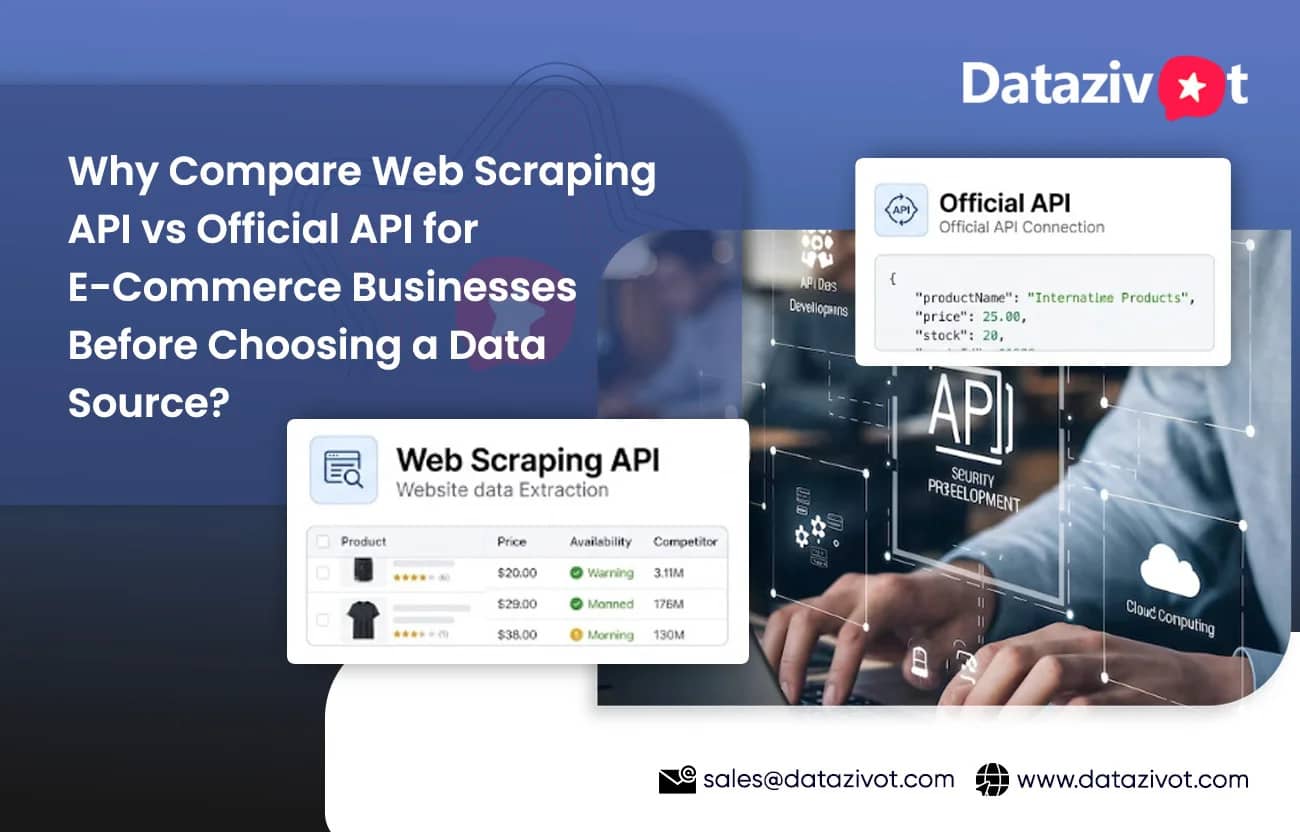
Web Scraping API vs Official API for E-Commerce Businesses

IntroductionChoosing the right data pipeline is a pivotal decision for any modern online retailer. E-commerce platforms generate massive volumes of pricing, product, and consumer feedback data every second. Selecting between a custom automated extraction pipeline and an official vendor connection directly impacts your digital system agility, long-term operational budget, and overall enterprise scalability.Official endpoints offer structured connectivity, but they frequently impose rigid query limits, rate caps, and restricted payload fields. Conversely, flexible toolkits built for automated extraction let you gather public web information without strict vendor limitations. Implementing a Web Scraping API enables tech teams to establish continuous, high-volume data streams without hitting constant platform roadblocks.Evaluating a Web Scraping API vs Official API for E-Commerce Businesses allows organizations to weigh technical flexibility against system stability. By assessing uptime reliability, field-level coverage, and integration complexity, e-commerce brands can build robust web data pipelines tailored precisely to their strategic growth objectives and operational needs.Technical Data Access Coverage and Field Level Payload FlexibilityChoosing a reliable digital dataset pipeline requires evaluating how deeply each source accesses external catalog details. Official merchant feeds restrict visibility to vendor-sanctioned parameters, often omitting real-time stock balances or unauthenticated consumer reviews. These endpoints enforce strict call quotas that impede large-scale analytics during peak promotional periods.To eliminate structural blind spots, leading digital brands deploy advanced extraction frameworks across targeted storefronts. Implementing Competitive Intelligence Using Web Scraping for Decision Making ensures continuous monitoring of dynamic retail shifts without artificial call limits. This approach captures full page content while bypassing modern anti-bot hurdles.Automated IP address rotation prevents localized request blocking.Dynamic JavaScript execution captures asynchronously rendered price updates.Headless browser integration extracts deeply nested product specifications.Custom selector parsing transforms raw HTML into structured datasets.Integrating automated collection tools streamlines analytical workflows for enterprise pricing teams. Organizations must Extract Website Data Using a Scraping API to maintain total visibility over shifting catalog changes across competitor platforms. This technical strategy guarantees consistent, unredacted data ingestion for internal intelligence systems.Data Field Access: Official API — Restricted to vendor-approved payloads; Web Scraping API — Complete public page coverage.Rate Limits: Official API — Strict caps (e.g., 500–1,000 requests/hr); Web Scraping API — Highly scalable with automated proxy rotation.Setup & Approval: Official API — Requires seller authentication & approval; Web Scraping API — Immediate deployment on public pages.Average Uptime/Accuracy: Official API — ~99.9% stable schema; Web Scraping API — ~98.5% (requires anti-bot management)Platform Integration Speed Maintenance and Delivery Latency StandardsSystem stability remains essential when connecting external data streams into automated repricing engines or inventory tools. Direct vendor feeds provide standardized JSON or XML structures with predictable schema designs, minimizing upfront developer workload. Planned migration notices further reduce surprise maintenance overhead for internal technical teams.However, relying exclusively on proprietary connection channels introduces geographic and scope restrictions across external platforms. Achieving Real-Time Data Access Through Official APIs works reliably for internal store logistics, but fails when tracking competitor storefronts that do not publish open partner endpoints.Standardized JSON structures streamline database mapping workflows.Predictable payload schemas lower continuous engineering overhead.Official versioning frameworks give advance notice of breaking modifications.Direct server connections maintain fast turnaround for owned store metrics.Blending direct connections with cloud extraction scripts balances operational stability against external visibility. Implementing structured Competitive Intelligence strategies allows enterprise organizations to cross-examine internal sales records against dynamic external market trends without incurring data blind spots.Initial Engineering Setup: Official API Integration — Low to Moderate (Standard SDKs); Web Scraping API Pipeline — Low to Moderate (RESTful Endpoints).Ongoing Maintenance: Official API Integration — Minimal (Schema changes notified); Web Scraping API Pipeline — Moderate (Requires parser adjustment).Target Platforms: Official API Integration — Internal / Partner platforms only; Web Scraping API Pipeline — Any public e-commerce website.Real-Time Latency: Official API Integration — Direct stream (100–300 ms); Web Scraping API Pipeline — Near real-time (500–1,500 ms).Operational Cost Efficiency Scalability and System Compliance StandardsScaling enterprise data collection requires balancing recurring bandwidth expenses against overall pipeline performance goals. Standard provider subscriptions enforce progressive tier pricing that quickly escalates costs as query frequency increases. Collecting millions of product records daily can lead to unsustainable API overage fees.Deploying specialized Web Scraping Systems for Enterprise Data Collection offers a cost-effective alternative for high-volume market monitoring. Managed scraping infrastructures handle proxy pools, browser instances, and anti-bot challenges automatically, sparing engineering teams from building complex scraping stacks in-house.Flexible pay-as-you-go pricing scales smoothly with request volume.Automated proxy routing handles IP blocks without team intervention.Cloud extraction engines process millions of daily catalog requests efficiently.Custom output formatting fits directly into existing data pipelines.Modern e-commerce brands rely on automated extraction tools to feed machine learning pricing models. Companies frequently Scrape Public Website Data for Market Research to obtain high-density datasets across global digital channels, ensuring strategic pricing decisions remain backed by reliable competitive intelligence.Pricing Model: Official API — Tiered per request / High enterprise cost; Web Scraping API — Pay-per-successful request or bandwidth.Compliance Alignment: Official API — Subject to API Terms of Service (ToS); Web Scraping API — Aligned with public data collection standards.Infra Management: Official API — Managed entirely by data provider; Web Scraping API — Cloud-hosted with automated proxy management.Data Structure: Official API — Native JSON/XML formats; Web Scraping API — Custom JSON/CSV tailored to database schemas.How Datazivot Can Help You?Navigating the complexities of data ingestion requires robust infrastructure tailored to your online business needs. When comparing a Web Scraping API vs Official API for E-Commerce Businesses, companies often face hurdles like unexpected rate limits, blocked IP addresses, or incomplete data fields.We eliminate these bottlenecks by delivering customized end-to-end data pipelines designed for high-volume extraction across dynamic e-commerce platforms.Customized enterprise data pipeline architecture designed for scaleAutomated proxy management featuring dynamic IP rotation and anti-bot resolutionHigh-frequency price and inventory monitoring across global marketplacesFlexible data delivery formats including clean JSON, CSV, and direct database feedsSchema maintenance monitoring to handle target website design changes seamlesslyDedicated technical support offering high uptime SLAs for business-critical operationsWhether your engineering team needs to monitor competitor prices or aggregate large product catalogs, our infrastructure provides seamless access to public web information. Partnering with us allows your organization to receive a Web Data Scraper for Structured Business Datasets, enabling your team to focus on strategic analysis rather than infrastructure management.ConclusionChoosing the most effective data source remains a strategic imperative for modern retail organizations. Comparing a Web Scraping API vs Official API for E-Commerce Businesses ensures your leadership team balances system maintenance costs, pipeline scalability, and field-level visibility effectively.Choosing to Scrape Public Website Data for Market Research provides the flexibility required to capture full market intelligence across diverse digital storefronts. Transform your operational strategy today by partnering with Datazivot to deploy scalable, high-speed data extraction solutions tailored to your growth goals.#WebScrapingAPIVsOfficialAPIForECommerceBusinesses,#ExtractWebsiteDataUsingAScrapingAPI,#RealTimeDataAccessThroughOfficialAPIs,#ScrapePublicWebsiteDataForMarketResearch,Source: https://www.datazivot.com/web-scraping-api-vs-official-api-for-e-commerce-businesses.phpContact us:E-mail: [email protected] No: +91 8866656657Visit Now: https://www.datazivot.com/

Melissa Melissa Torres
Read arrow_forward
What is RFID Antenna? Tech & Innovation
Nov 04, 2026 • visibility 29 • 6 min read

What is RFID Antenna?

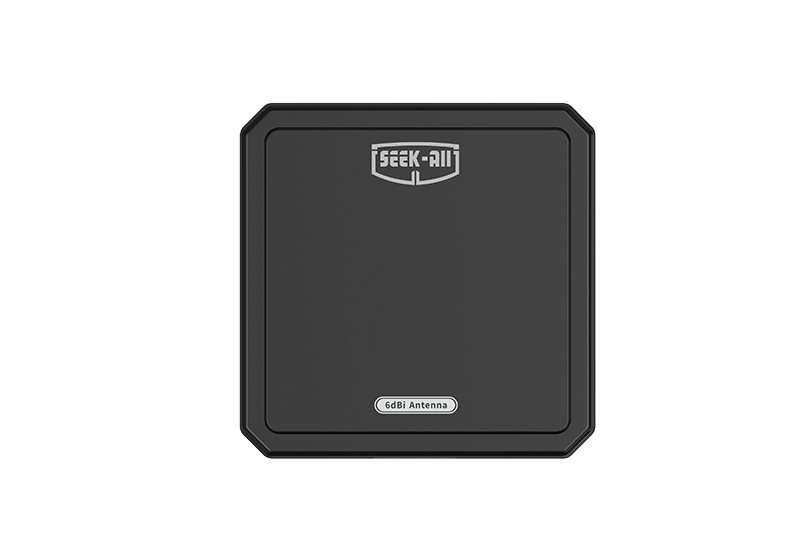
If you’re looking into RFID technology, a core question arises: what is RFID antenna? Simply put, an RFID antenna is a crucial component that transmits and receives radio waves, enabling communication between an RFID reader and the tags. Think of it as the messenger and interpreter in the system.Without the antenna, the reader cannot send commands or power to the tags, nor can it listen for their responses. It’s the vital link that makes the entire RFID process possible, turning data into radio frequency signals and back again.How Does an RFID Antenna Actually Function?Understanding how does an RFID antenna work breaks down into two main modes: transmitting and receiving. When the connected RFID reader sends a command, the antenna converts this electrical signal into electromagnetic radio waves (RF signals) and broadcasts them into its surrounding area. This signal can also provide the energy needed to power passive RFID tags.Conversely, when a tag within range responds, the antenna captures its weak returning signal. It then converts these captured waves back into an electrical signal that the reader can decipher into usable data, like a unique serial number or stored information. The antenna’s design directly determines its effective read range and how well it can focus energy in a specific pattern.Exploring Different Types of RFID AntennasNot all RFID antennas are the same. The types of RFID antennas are primarily chosen based on their polarization and gain, which suit different real-world scenarios. Common configurations include linear polarized and circular polarized antennas.Linear polarized antennas focus energy in a single plane (horizontal or vertical). They offer a longer read range but require careful alignment between the tag and antenna. These are often used in controlled settings like conveyor belts. Circular polarized antennas, on the other hand, emit signals that spiral out. They are excellent for environments where tag orientation is unpredictable, like in retail inventory or asset tracking, as they provide more consistent reads despite the tag’s angle, though with a slightly shorter range.Where Are RFID Antennas Used? Key ApplicationsThe practical RFID antenna applications are vast and cross multiple industries. In retail and logistics, they are mounted on portals, shelves, or handheld readers to manage inventory in real-time, drastically reducing stock-checks time. In manufacturing, they track parts and work-in-progress on assembly lines.Access control systems use antennas embedded in panels to read credentials from badges. Libraries use them to self-checkout and detect items. In warehousing, fork-lift mounted antennas help locate pallets. Each application demands a specific antenna type—considering range, durability, and radiation pattern—to solve a unique business challenge effectively.Choosing the Right RFID Antenna for Your ProjectSelecting an antenna isn’t just about picking one with the longest range. You must consider the environment (indoors/outdoors, metal presence), the required read zone size and shape, the type of tags being used, and any regulatory power limits. Partnering with an experienced provider like CYKEO ensures you get a system where the reader, antenna, and tags are optimally matched for your specific use case, maximizing your investment’s return.

article
Tech & Innovation
Nov 03, 2026 • visibility 29 • 18 min read

Best Cyber Security Course in Kolkata with Placement Guarantee: Endpoint Security

Endpoints such as laptops, desktops, smartphones, and servers are common entry points for cyberattacks. As organizations adopt remote work, cloud applications, and connected devices, protecting these endpoints has become an important part of enterprise security. Endpoint security focuses on identifying, preventing, and responding to threats that target individual devices connected to an organization's network.For learners interested in developing practical security knowledge, the Best Cyber Security Course in Kolkata with Placement Guarantee offers a structured pathway through Cyber Security and Ethical Hacking. Understanding endpoint protection alongside network security, threat detection, and incident response can help learners build relevant skills for modern security environments.What Is Endpoint Security in Cyber Security?Endpoint security is the practice of protecting devices connected to a network from malware, unauthorized access, suspicious activity, and other cyber threats.An endpoint can be any device that communicates with an organization's network, including:Desktop computers and laptopsSmartphones and tabletsServers and virtual machinesRemote employee devicesInternet of Things (IoT) devicesEndpoint security solutions monitor device activity, detect suspicious behavior, enforce security policies, and help prevent malicious software from affecting business systems.Unlike traditional security approaches that focus mainly on network boundaries, endpoint security provides protection directly on the devices where many attacks begin.Why Endpoint Security Is Important for BusinessesOrganizations use endpoints to access business applications, communicate with customers, store information, and manage daily operations. A compromised device can create opportunities for attackers to access sensitive data or move deeper into an organization's network.Protects Against Malware and RansomwareEndpoint protection tools help identify malicious files, suspicious processes, and ransomware behavior. They can block threats or isolate affected devices to reduce the impact of an attack.Supports Remote Workforce SecurityEmployees often access company systems from home networks, public Wi-Fi, and personal devices. Endpoint security helps organizations apply security policies beyond traditional office networks.Reduces Unauthorized AccessDevice authentication, security configurations, and access policies help prevent unauthorized users from using endpoints to reach sensitive business resources.Improves Threat DetectionEndpoint monitoring helps security teams identify unusual activity, such as unexpected software installations, suspicious login attempts, and abnormal file modifications.Supports Regulatory and Data Protection RequirementsOrganizations handling financial, customer, and employee information need controls that help protect data across connected devices. Endpoint security contributes to broader information security and data protection practices.Common Endpoint Security ThreatsUnderstanding common endpoint threats helps security professionals recognize how attackers compromise devices and exploit weak security configurations.Malware InfectionsMalware includes malicious software designed to damage systems, steal information, or gain unauthorized access. It may enter devices through unsafe downloads, malicious attachments, compromised websites, or infected removable media.Ransomware AttacksRansomware can encrypt files or restrict access to systems and demand payment for recovery. Endpoint monitoring and preventive controls help organizations identify suspicious behavior and reduce the spread of ransomware.Phishing and Credential TheftPhishing messages may trick users into opening malicious links, downloading infected attachments, or sharing login credentials. Compromised accounts can then be used to access business applications and sensitive information.Zero-Day ExploitsA zero-day vulnerability is a software weakness that is exploited before a fix is available or widely deployed. Endpoint protection, application controls, and monitoring can help reduce exposure to suspicious activity associated with such attacks.Insider ThreatsInsider threats may involve employees or contractors misusing legitimate access, intentionally or unintentionally. Monitoring, access controls, and data protection policies help organizations manage these risks.Unsecured DevicesDevices with outdated software, weak configurations, or unnecessary applications may expose organizations to security vulnerabilities.Key Technologies Used in Endpoint SecurityEndpoint security combines multiple technologies to protect devices and monitor suspicious activity.Endpoint Detection and Response (EDR)EDR solutions continuously monitor endpoint activity and collect information about processes, files, connections, and system behavior. Security teams use this information to investigate alerts, identify attack patterns, and respond to incidents.Extended Detection and Response (XDR)XDR combines security information from multiple sources, such as endpoints, networks, email systems, and cloud environments. It helps security teams understand threats across different parts of an organization's infrastructure.Antivirus and Anti-MalwareAntivirus and anti-malware solutions detect and block malicious software. Modern solutions may use behavioral analysis and other detection techniques alongside traditional signature-based methods.Endpoint Protection Platforms (EPP)EPP solutions provide preventive controls such as malware protection, application control, device security, and firewall capabilities.Mobile Device Management (MDM)MDM helps organizations manage mobile devices through centralized policies. It can support device configuration, security enforcement, application management, and remote device actions.Data Loss Prevention (DLP)DLP technologies help organizations identify and control the movement of sensitive information. They can reduce the risk of unauthorized data sharing through endpoints and connected applications.Endpoint Security Best PracticesOrganizations can strengthen endpoint protection by combining technology, security policies, and user awareness.Keep Software Updated: Apply operating system and application updates to address known vulnerabilities.Use Strong Authentication: Implement multi-factor authentication for accounts accessing business resources.Apply Least-Privilege Access: Give users only the permissions needed for their responsibilities.Enable Endpoint Monitoring: Monitor device behavior and investigate unusual activity.Use Encryption: Protect sensitive information stored on devices and during transmission.Secure Remote Devices: Apply consistent security policies to devices used outside office networks.Train Employees: Help users recognize phishing, suspicious downloads, and unsafe online behavior.Maintain Backups: Keep reliable backups to support recovery from ransomware and other incidents.Skills Needed for an Endpoint Security CareerProfessionals working in endpoint security need technical knowledge, investigative ability, and an understanding of how devices interact with enterprise networks.Operating System FundamentalsKnowledge of Windows and Linux helps professionals understand processes, services, permissions, file systems, and system logs.Networking KnowledgeUnderstanding IP addresses, DNS, ports, protocols, firewalls, and network communication helps security teams investigate suspicious endpoint connections.Malware Analysis FundamentalsBasic knowledge of malware behavior, malicious files, suspicious processes, and common attack techniques supports endpoint investigations.Security MonitoringProfessionals need to understand how security alerts are generated, how endpoint activity is recorded, and how suspicious behavior is investigated.Incident ResponseEndpoint security professionals may help isolate affected devices, investigate attack activity, preserve evidence, and support system recovery.Analytical and Communication SkillsSecurity analysts need to interpret technical findings, document incidents, and communicate risks and recommended actions to other teams.How BIA's Cyber Security Program Supports Practical LearningDeveloping endpoint security knowledge requires an understanding of operating systems, networks, vulnerabilities, and security monitoring. A structured training program can help learners build these foundations through technical instruction and applied exercises.The Top Cyber Security Course in Kolkata with Job Guarantee at Boston Institute of Analytics offers the Cyber Security and Ethical Hacking program, designed to develop technical knowledge and practical security capabilities.Key Program FeaturesStructured Learning: Certification, Diploma, and Master Diploma pathways offer different learning durations.Practical Training: Projects, case studies, and security exercises support applied learning.Industry-Relevant Tools: Learners gain exposure to tools used in Cyber Security and Ethical Hacking.Technical Skill Development: Learning areas include network security, cryptography, penetration testing, ethical hacking, and incident response.Career Support: Learners receive professional development support, including resume preparation and interview guidance.The program includes 200+ hours of learning, 15+ projects and case studies, and exposure to 20+ tools.Course Duration and Learning PathwaysProgramDurationCertification4 MonthsDiploma6 MonthsMaster Diploma10 MonthsThese learning pathways help learners develop a foundation in Cyber Security concepts and practical technical skills.Career Opportunities in Endpoint and Cyber SecurityEndpoint security skills are relevant to several roles across enterprise IT, security operations, incident response, and infrastructure protection.Job RoleKey ResponsibilitiesEndpoint Security AnalystMonitors and protects endpoint devices against cyber threatsCyber Security AnalystReviews security activity and investigates potential threatsSOC AnalystMonitors alerts and supports security incident handlingIncident Response AnalystInvestigates compromised systems and supports containmentIT Security AdministratorManages security configurations, device policies, and access controlsSecurity Operations EngineerSupports security monitoring tools and defensive technologiesProfessionals can develop specialized expertise in endpoint detection, malware analysis, security operations, or incident response as they gain experience.Why Kolkata Is a Relevant City for Cyber Security CareersKolkata has a growing technology and business environment that includes IT services, software companies, consulting organizations, financial services, and enterprises with digital operations.Several factors make the city relevant for Cyber Security learners:IT and Software Services: Technology companies need professionals who understand application, network, and endpoint protection.Banking and Financial Services: Financial organizations depend on secure devices and access controls to protect sensitive information.Enterprise IT Operations: Businesses need professionals who can manage devices, monitor security activity, and support incident response.Digital Business Expansion: Increased use of online platforms creates a need for stronger information security practices.Security Awareness: Organizations require employees and security teams who understand common cyber risks and preventive controls.Building a foundation in Cyber Security can help learners prepare for roles across these professional environments.How to Build a Foundation in Endpoint SecurityLearners can follow a structured approach to develop endpoint security knowledge and practical skills.Learn operating system fundamentals: Understand Windows and Linux processes, permissions, services, and logs.Study networking concepts: Develop knowledge of IP addressing, DNS, ports, protocols, and firewalls.Understand common threats: Learn how malware, ransomware, phishing, and credential theft affect devices.Explore endpoint protection: Understand antivirus, EDR, EPP, and device management concepts.Practice security investigations: Work with endpoint logs and simulated security alerts in controlled learning environments.Develop incident response skills: Learn the fundamentals of containment, investigation, and recovery.For additional learning, explore the legal boundaries of ethical hacking in India to understand the importance of responsible and authorized security testing.Frequently Asked QuestionsWhat is endpoint security in Cyber Security?Endpoint security protects devices such as laptops, desktops, smartphones, and servers from malware, unauthorized access, and other cyber threats. It combines monitoring, threat detection, prevention, and response measures.What is the difference between EDR and antivirus?Antivirus primarily detects and blocks malicious software, while Endpoint Detection and Response (EDR) continuously monitors endpoint activity and supports threat investigation and incident response.What are examples of endpoint security threats?Common threats include malware, ransomware, phishing, credential theft, zero-day exploits, insider threats, and attacks involving unsecured devices.Which technologies are used in endpoint security?Common technologies include antivirus, EDR, XDR, Endpoint Protection Platforms, Mobile Device Management, and Data Loss Prevention solutions.What skills are required for an endpoint security analyst?Useful skills include Windows and Linux fundamentals, networking, malware analysis, security monitoring, incident response, and analytical problem-solving.Can beginners learn Cyber Security and Ethical Hacking?Yes. Beginners can start with operating systems, networking, and security fundamentals before progressing to ethical hacking, penetration testing, endpoint protection, and other specialized areas.ConclusionEndpoint security plays an important role in protecting devices, business applications, and sensitive information from modern cyber threats. Understanding malware, endpoint monitoring, EDR, incident response, and security best practices can help learners develop relevant capabilities for the information security industry.The Cyber Security and Ethical Hacking program at Boston Institute of Analytics combines structured learning, practical projects, technical tools, and career support. For learners in Kolkata, building a strong foundation in Cyber Security can support professional development across endpoint protection, security operations, and enterprise security.

article
Tech & Innovation
Nov 03, 2026 • visibility 29 • 18 min read

Best Cyber Security Course in Delhi with Placement Guarantee: Threat Intelligence

Cyber threats are becoming more sophisticated as businesses rely on digital platforms, cloud infrastructure, connected devices, and online services. Organizations need professionals who can identify emerging threats, understand attacker behavior, and use security information to prevent potential incidents. Cyber Threat Intelligence (CTI) helps security teams turn information about cyber threats into actionable insights.For learners interested in developing these capabilities, the Best Cyber Security Course in Delhi with Placement Guarantee provides a structured learning pathway through Cyber Security and Ethical Hacking. Understanding threat intelligence alongside network security, ethical hacking, and incident response can help learners build relevant skills for today's security environment.What Is Cyber Threat Intelligence?Cyber Threat Intelligence is the process of collecting, analyzing, and interpreting information about potential and existing cyber threats. It helps organizations understand who may target their systems, what techniques attackers use, and which assets could be at risk.Threat intelligence allows security teams to move beyond reacting to individual alerts. By studying indicators, attacker behavior, and emerging vulnerabilities, they can make more informed security decisions.The main types of threat intelligence include:Strategic Intelligence: Provides a high-level understanding of cyber risks, threat trends, and their potential business impact.Tactical Intelligence: Examines attacker tactics, techniques, and procedures (TTPs) to help security teams understand how attacks are carried out.Operational Intelligence: Focuses on information about specific campaigns, threat actors, and planned attacks.Technical Intelligence: Includes indicators such as malicious IP addresses, suspicious domains, file hashes, and malware signatures.Each type supports a different level of security planning, investigation, and response.Why Threat Intelligence Matters in Modern Cyber SecurityOrganizations face threats such as phishing, ransomware, credential theft, malware infections, and unauthorized system access. Threat intelligence helps security teams understand these risks and improve their ability to respond.Early Identification of Emerging ThreatsThreat intelligence provides information about newly discovered vulnerabilities, malicious infrastructure, and active attack campaigns. Security teams can use these insights to prioritize defensive measures.Better Security MonitoringSecurity Operations Center (SOC) teams use threat intelligence to add context to alerts. For example, an alert involving a suspicious IP address becomes more meaningful when that address is associated with a known malicious campaign.Improved Incident ResponseThreat intelligence helps investigators understand attack methods, identify related indicators, and determine whether similar activity may exist elsewhere in the organization.Stronger Risk ManagementOrganizations can use threat information to understand which systems, business functions, and data assets may face greater exposure. This supports more focused security planning.Understanding Attacker BehaviorStudying threat actors and their techniques helps security professionals understand how attacks develop, from initial access to privilege escalation, lateral movement, and data exfiltration.Key Sources of Cyber Threat IntelligenceThreat intelligence comes from different sources. Security professionals combine these sources to develop a clearer understanding of potential threats.Open-Source Intelligence (OSINT)OSINT involves gathering information from publicly available sources such as security reports, vulnerability databases, technical blogs, public advisories, and research publications.Internal Security DataOrganizations generate valuable security information through firewall logs, endpoint alerts, authentication records, network traffic, and incident reports. Analyzing this data can reveal suspicious patterns.Commercial Threat Intelligence FeedsSpecialized providers offer intelligence feeds containing information about malicious domains, IP addresses, malware indicators, and threat campaigns. Security teams use these feeds to enrich their monitoring systems.Information-Sharing CommunitiesSecurity organizations and industry groups share information about threats, vulnerabilities, and attack techniques. Collaboration can help organizations understand risks affecting their sectors.Important Threat Intelligence Frameworks and ConceptsFrameworks and structured approaches help security professionals organize threat information and communicate findings consistently.MITRE ATT&CK FrameworkMITRE ATT&CK is a knowledge base of adversary tactics and techniques based on observed cyberattack behavior. It helps security teams understand how attackers operate and identify gaps in defensive controls.Common tactics include:Initial AccessExecutionPersistencePrivilege EscalationDefense EvasionCredential AccessDiscoveryLateral MovementCollectionExfiltrationIndicators of Compromise (IOCs)Indicators of Compromise are technical clues that may suggest a system has been affected by malicious activity.Examples include:Suspicious IP addressesMalicious domain namesFile hashes linked to malwareUnusual registry changesUnexpected network connectionsIOCs help security teams investigate and identify potentially compromised systems.Tactics, Techniques, and Procedures (TTPs)TTPs describe how threat actors plan and execute attacks. Studying these patterns can help security professionals identify related activity even when attackers change specific tools or infrastructure.Cyber Kill ChainThe Cyber Kill Chain is a model that describes stages commonly associated with cyberattacks. It helps security teams understand how an attack progresses and where defensive measures may interrupt it.Tools Used in Threat Intelligence and Security AnalysisThreat intelligence professionals use different tools to collect information, investigate indicators, and connect threat data with security monitoring.Tool or PlatformApplicationVirusTotalExamines files, URLs, and domains for malicious indicatorsMISPSupports threat information sharing and intelligence managementOpenCTIHelps organize and analyze cyber threat intelligenceMITRE ATT&CKMaps adversary tactics and techniquesSIEM PlatformsCollect and analyze security events from multiple sourcesWiresharkExamines network traffic and communication patternsThese tools support different stages of threat research, investigation, and security operations.Skills Needed for a Career in Threat IntelligenceThreat intelligence professionals need a combination of technical knowledge, research ability, and analytical thinking.Networking FundamentalsKnowledge of IP addressing, DNS, ports, protocols, firewalls, and network traffic helps professionals understand suspicious communications and potential attack paths.Operating System KnowledgeUnderstanding Windows and Linux environments helps security professionals examine system activity, logs, processes, and files during investigations.Malware and Threat AnalysisBasic knowledge of malware behavior, suspicious files, phishing techniques, and malicious infrastructure helps analysts interpret threat indicators.Security MonitoringProfessionals need to understand how security alerts are generated, how logs are analyzed, and how suspicious activity is investigated.Research and Analytical SkillsThreat intelligence involves collecting information from multiple sources, identifying relationships, and distinguishing meaningful indicators from unrelated data.Report Writing and CommunicationAnalysts prepare intelligence reports that explain threats, their potential impact, and recommended defensive actions. Clear communication helps security teams and business leaders understand technical findings.How BIA's Cyber Security Program Supports Practical LearningDeveloping threat intelligence capabilities requires a foundation in networking, security concepts, threat identification, and incident response. A structured Cyber Security program can help learners understand these areas through technical instruction and practical exercises.The Top Cyber Security Course in Delhi with Job Guarantee at Boston Institute of Analytics offers the Cyber Security and Ethical Hacking program, designed to develop technical knowledge and practical security skills.Key Program FeaturesStructured Learning: Certification, Diploma, and Master Diploma pathways provide different learning durations.Hands-On Training: Practical projects, case studies, and security exercises support applied learning.Industry-Relevant Tools: Learners gain exposure to tools used in Cyber Security and Ethical Hacking.Technical Skill Development: Learning areas include network security, cryptography, penetration testing, ethical hacking, and incident response.Career Support: Learners receive support for professional development, resume preparation, and interview readiness.The program includes 200+ hours of learning, 15+ projects and case studies, and exposure to 20+ tools.Course Duration and Learning PathwaysProgramDurationCertification4 MonthsDiploma6 MonthsMaster Diploma10 MonthsThese pathways provide opportunities to develop foundational and applied knowledge across different areas of Cyber Security and Ethical Hacking.Career Opportunities in Cyber Threat IntelligenceThreat intelligence skills are relevant to multiple roles across security operations, threat research, incident response, and enterprise security.Job RoleKey ResponsibilitiesThreat Intelligence AnalystCollects and analyzes information about cyber threats and threat actorsCyber Security AnalystMonitors security activity and investigates potential threatsSOC AnalystReviews alerts, analyzes logs, and supports security incident handlingThreat HunterSearches for hidden or suspicious activity within systems and networksIncident Response AnalystInvestigates security incidents and supports containment and recoverySecurity Research AnalystStudies vulnerabilities, attack methods, and emerging security risksProfessionals can build specialized expertise in threat research, malware analysis, security operations, or incident response as they gain experience.Why Delhi Is a Relevant City for Cyber Security CareersDelhi and the wider National Capital Region have a diverse business environment that includes IT services, consulting, banking, financial services, government-related organizations, and large enterprises. These organizations depend on secure digital infrastructure and effective information protection.Several factors make the region relevant for Cyber Security professionals:Enterprise Technology Operations: Large organizations need security professionals to protect applications, networks, and business information.Banking and Financial Services: Financial institutions rely on monitoring, access controls, and threat detection to protect sensitive data.IT and Consulting Services: Technology and consulting companies support clients with infrastructure security and risk management.Digital Business Growth: Increasing use of online platforms creates demand for professionals who understand digital threats.Security Operations: Organizations need trained teams to monitor alerts, investigate suspicious activity, and support incident response.Developing technical knowledge and practical analytical skills can help learners prepare for opportunities across these environments.How to Build a Foundation in Threat IntelligenceLearners can develop threat intelligence knowledge through a structured progression of technical and analytical skills.Learn networking fundamentals: Understand IP addresses, DNS, protocols, ports, and network communication.Understand operating systems: Develop familiarity with Windows and Linux environments.Study common cyber threats: Learn how phishing, malware, ransomware, and credential attacks operate.Explore threat intelligence frameworks: Understand MITRE ATT&CK, IOCs, and attacker TTPs.Practice security analysis: Work with network traffic, system logs, and threat indicators in controlled learning environments.Develop reporting skills: Learn to communicate threat findings and their potential business impact.For additional learning, explore Cyber Security skills and career pathways for security professionals to understand the broader professional opportunities in this field.Frequently Asked QuestionsWhat is Cyber Threat Intelligence?Cyber Threat Intelligence is the collection and analysis of information about cyber threats, attackers, and their methods. It helps organizations understand risks and improve security monitoring and incident response.What are the four types of threat intelligence?The four commonly recognized types are strategic, tactical, operational, and technical intelligence. Each provides information for different levels of security planning and threat investigation.What is the MITRE ATT&CK Framework?MITRE ATT&CK is a knowledge base that organizes observed cyber adversary tactics and techniques. Security teams use it to understand attacker behavior and evaluate defensive capabilities.Which tools are used by threat intelligence analysts?Common tools and platforms include VirusTotal, MISP, OpenCTI, MITRE ATT&CK, SIEM platforms, and Wireshark. Their applications range from indicator analysis to threat information management and network investigation.What skills are required for a threat intelligence career?Important skills include networking, operating systems, malware analysis fundamentals, security monitoring, threat research, analytical thinking, and technical report writing.Can beginners learn Cyber Security and Ethical Hacking?Yes. Beginners can start with networking, operating systems, and security fundamentals before progressing to ethical hacking, penetration testing, threat analysis, and other specialized areas.ConclusionCyber Threat Intelligence helps organizations understand emerging risks, recognize attacker behavior, and strengthen their security strategies. Knowledge of threat intelligence frameworks, indicators of compromise, security tools, and analytical methods can support career development across threat research, security operations, and incident response.The Cyber Security and Ethical Hacking program at Boston Institute of Analytics combines structured learning, practical projects, technical tools, and career support. For learners in Delhi, building a strong foundation in Cyber Security can create pathways toward specialized roles in the growing information security industry.

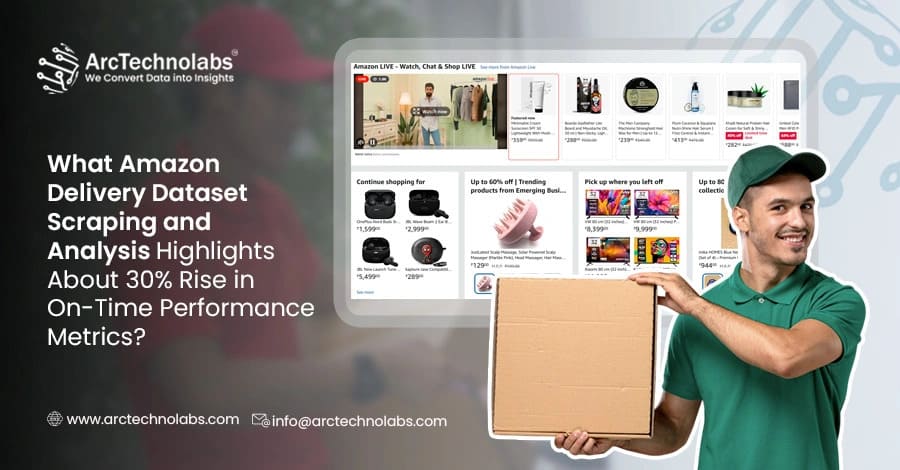
Insights via Amazon Delivery Dataset Scraping and Analysis Tech & Innovation
Nov 03, 2026 • visibility 25 • 10 min read

Insights via Amazon Delivery Dataset Scraping and Analysis

IntroductionIn today’s hyper-competitive ecommerce ecosystem, on-time delivery is no longer a differentiator — it is a baseline expectation. Customers anticipate same-day or next-day fulfillment with accurate tracking and zero disruptions. Over the past year, marketplace data indicates a 30% improvement in on-time performance metrics across major fulfillment networks.This measurable jump is not accidental; it is data-driven. By implementing Amazon Delivery Dataset Scraping and Analysis, logistics teams are identifying inefficiencies in route planning, hub coordination, and last-mile distribution. From metropolitan clusters to tier-2 cities, intelligent dataset extraction reveals hidden trends that manual reporting often overlooks.When combined with insights derived from Web Scraping Amazon Product Data, companies are able to correlate product demand spikes with delivery capacity adjustments. This creates predictive alignment between inventory positioning and courier deployment. This blog explores how structured delivery data analysis explains the 30% improvement in on-time metrics and how businesses can replicate similar performance gains through strategic data-driven logistics optimization.Detecting Operational Delays Through Structured Route IntelligenceImproving on-time performance begins with identifying where delivery friction occurs. By systematically collecting dispatch timestamps, route allocation logs, and delivery confirmation records, logistics teams gain visibility into operational slowdowns that previously went unnoticed. The integration of Web Scraping Ecommerce Data allows companies to merge order volume patterns with fulfillment timelines, helping isolate repetitive delay clusters across specific geographies.For example, analysis across 12 urban regions revealed that nearly 18% of late shipments originated from only four high-density postal zones. Once routes were redistributed and dispatch buffers adjusted, those zones experienced a 22% improvement in punctuality within one quarter.To strengthen execution oversight, organizations deploy a Real-Time Amazon Delivery Monitoring System that tracks active shipments dynamically. This enables early intervention before delays cascade across hubs.Operational Bottleneck Impact Table:Average Dispatch Delay: Before optimization — 2.8 hours; after optimization — 1.4 hours; improvement — 50% reduction.Route Congestion Incidents: Before optimization — 320/month; after optimization — 210/month; improvement — 34% reduction.Missed Delivery Attempts: Before optimization — 12%; after optimization — 7%; improvement — 41% improvement.On-Time Rate: Before optimization — 68%; after optimization — 88%; improvement — +20 percentage points.Through structured delay mapping and continuous monitoring, logistics leaders convert fragmented shipment data into actionable route-level intelligence. The outcome is measurable improvement in punctuality, cost efficiency, and customer satisfaction.Strengthening Courier Accountability Through Performance BenchmarkingCourier variability often determines whether shipments arrive on schedule. To address performance inconsistencies, companies evaluate partner-level metrics such as pickup punctuality, first-attempt success rates, and exception handling duration. The use of an Amazon Courier Partner Performance Dataset enables granular comparison between delivery partners operating across regions.In a recent benchmark across five fulfillment hubs, data revealed a 15% variation in completion times and nearly 28% difference in first-attempt success rates among partners. By reallocating volume to high-performing couriers and setting structured improvement thresholds for others, companies recorded a 12% uplift in first-attempt deliveries within two quarters.Additionally, structured Amazon Delivery Performance Analysis helps quantify root causes of delays — whether route inefficiencies, traffic exposure, or workforce constraints.Courier Performance Comparison Table:On-Time Completion: Partner A — 91%; Partner B — 84%; Partner C — 88%.First Attempt Success: Partner A — 93%; Partner B — 79%; Partner C — 86%.Average Delay: Partner A — 18 mins; Partner B — 37 mins; Partner C — 25 mins.Customer Rating: Partner A — 4.6; Partner B — 4.1; Partner C — 4.4.Benchmark transparency encourages accountability and operational discipline. When courier allocation aligns with verified performance metrics, overall delivery punctuality improves consistently across the network.Turning Logistics Data into Predictive Routing DecisionsRaw shipment logs alone do not improve delivery outcomes; insight extraction does. Organizations that translate delivery records into visual dashboards gain clarity on seasonal, geographic, and time-based trends. With structured Amazon Delivery Data Visualization, patterns such as peak delay hours and weather-linked disruptions become instantly identifiable.For instance, delivery exceptions increase by 26% during heavy rainfall months, while high-rise residential clusters show 18% higher reattempt rates. By incorporating predictive modeling into Ecommerce Logistics Analytics, teams proactively redesign routes instead of reacting to disruptions after they occur.Dynamic traffic heatmaps, AI-based volume forecasting, and slot buffering mechanisms collectively reduce average transit time by 14% and lower operational costs by 9%.Predictive Optimization Impact Table:Dynamic Route Reassignment: Impact on on-time delivery — +11%.Traffic Heatmap Integration: Impact on on-time delivery — +7%.Delivery Slot Buffering: Impact on on-time delivery — +6%.AI-Based Volume Forecasting: Impact on on-time delivery — +9%.Predictive routing models convert historical delivery records into forward-looking strategies. As route efficiency improves and congestion risks are anticipated earlier, on-time performance strengthens systematically, contributing to sustained operational growth.How ArcTechnolabs Can Help You?Improving logistics performance requires more than dashboards — it demands structured data architecture, scalable extraction pipelines, and actionable analytics frameworks. With proven expertise in ecommerce data intelligence, we implement Amazon Delivery Dataset Scraping and Analysis strategies tailored to your operational model.Our solutions enable businesses to transform fragmented delivery logs into cohesive performance insights across regions, hubs, and courier partners.We provide:Automated multi-region dataset extraction.Hub-level operational performance tracking.Courier benchmarking and KPI scoring models.Route efficiency evaluation frameworks.Delay pattern identification algorithms.Predictive shipment forecasting models.Our integrated approach ensures your team transitions from reactive logistics handling to proactive optimization. By incorporating Amazon Delivery Performance Analysis, organizations achieve measurable gains in punctuality, cost efficiency, and customer satisfaction.ConclusionOperational improvements are rarely accidental; they are engineered through data clarity. Businesses that adopt Amazon Delivery Dataset Scraping and Analysis build structured visibility into route planning, courier performance, and delivery reliability.When combined with advanced Ecommerce Logistics Analytics, measurable performance gains such as the 30% rise in on-time delivery become achievable realities. Data-driven logistics is shaping the next generation of ecommerce fulfillment excellence. Contact ArcTechnolabs today to transform your logistics intelligence strategy into scalable distribution success.#AmazonDeliveryDatasetScrapingAndAnalysis,#RealTimeAmazonDeliveryMonitoringSystem,#AmazonDeliveryPerformanceAnalysis,#AmazonCourierPartnerPerformanceDataset,Source: https://www.arctechnolabs.com/amazon-delivery-dataset-scraping-analysis.phpContact us:E-mail: [email protected] No: +91 8866656657Visit Now: https://www.arctechnolabs.com/

Steve Harringtone
Read arrow_forward
Top Managed Data Scraping Companies in 2026: 8 Providers Enterprise Buyers Should Evaluate Tech & Innovation
Nov 03, 2026 • visibility 29 • 28 min read

Top Managed Data Scraping Companies in 2026: 8 Providers Enterprise Buyers Should Evaluate

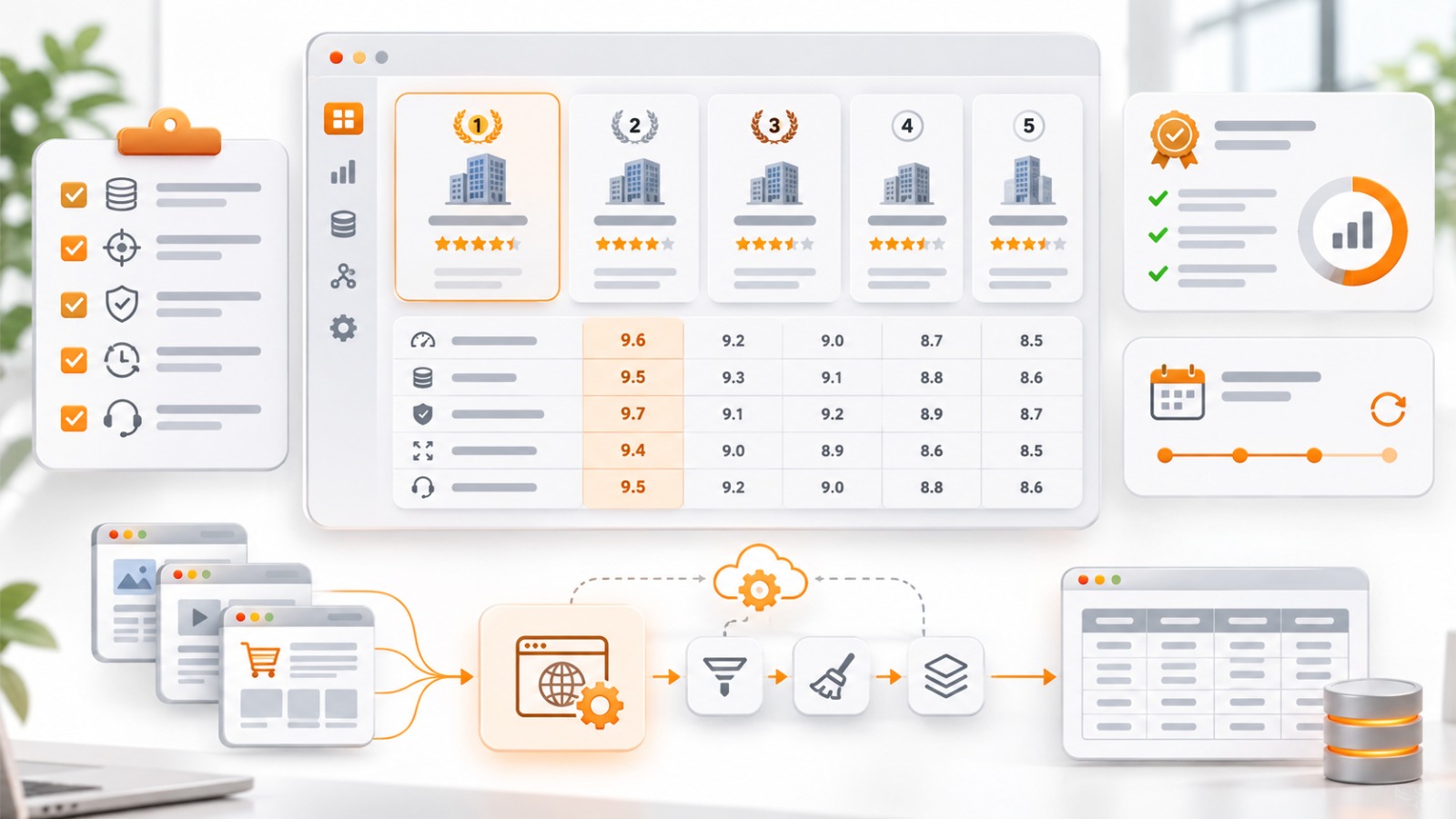
Top Managed Data Scraping Companies in 2026: 8 Providers Enterprise Buyers Should EvaluateA practical comparison of managed data scraping providers, followed by a 12-point enterprise evaluation framework.Search for the “best data scraping company” and you will often find very different products grouped into the same list: managed data providers, proxy networks, scraping APIs, browser automation platforms, and no-code tools. That makes provider comparisons harder than they need to be because those models solve different operational problems.This guide focuses specifically on providers that can take responsibility for a meaningful part of the end-to-end data workflow: source assessment, extraction, maintenance, validation, normalization, and structured delivery. It is written for enterprise buyers that primarily need dependable data rather than another scraping system to operate.Methodology noteThe order below reflects this article’s managed-service focus and use-case fit. It is not a universal claim that one provider is best for every project. Buyers should validate fit against their own sources, data-quality requirements, delivery model, security needs, and budget.What Is a Managed Data Scraping Company?A managed data scraping company is a provider that builds and operates a collection workflow on the buyer’s behalf and delivers structured data as the output. The buyer still defines the business objective, sources, fields, cadence, and acceptance criteria, but the provider owns more of the technical and operational work.ResponsibilityManaged ProviderScraping API / ToolSource assessmentUsually provider-led or sharedUsually customer-ledCrawler / extractor setupProviderCustomerInfrastructureProviderAPI/tool provider + customer workflowSource-change maintenanceProviderOften customerData validationCan be includedUsually customerNormalization / schemaRequirement-drivenOften customer-definedRecurring deliveryProvider-managedCustomer integratesPrimary outputFinished structured dataScraping capability / responsesThe key distinction is operational ownership. A scraping tool gives the buyer a capability. A managed provider is hired to deliver a data outcome.Top Managed Data Scraping Companies at a GlanceOrderProviderPrimary ModelBest FitClient Technical Workload1KVETOIQFully managed data serviceCustom recurring business datasetsLow2PromptCloudFully managed data-as-a-serviceLarge recurring enterprise feedsLow3GrepsrFully managed extractionEnterprise pipelines with formal QA and SLAsLow4ScrapeHeroManaged service + API optionsLarge custom crawls and managed APIsLow5DatahutManaged web data serviceEcommerce, pricing and market intelligenceLow6Actowiz SolutionsManaged service + API optionsRetail and recurring custom datasetsLow7X-Byte Enterprise CrawlingManaged services + APIsLarge-scale custom collectionLow8DataHenHybrid services + platformCustom scraping, API integration and ETLLow-MediumThis list deliberately excludes API-first and proxy-first vendors from the primary ranking when the buyer would still need to build and maintain most of the workflow internally.1. KVETOIQ — Managed Data Scraping & Structured Data DeliveryBest for: organizations that want a custom recurring dataset without owning the scraping infrastructure.KVETOIQ is featured first in this guide because its current positioning is explicitly requirement-led and managed: clients define the sources, fields, coverage, cadence, quality rules, and delivery destination, while the collection, validation, monitoring, and maintenance workflow is handled as a service.For buyers specifically looking for a data scraping company rather than a self-service scraper, this model can be attractive because the engagement is centered on the finished dataset and the business workflow that uses it.Key characteristics:Managed source assessment and extraction engineering.Custom schema, normalization, and data-quality rules.Recurring and custom collection workflows.Delivery through files, APIs, webhooks, cloud storage, databases, and analytics destinations.Ongoing monitoring and maintenance as sources change.Use cases spanning ecommerce, pricing, market intelligence, AI data, research, and custom web data.Consider KVETOIQ when the strategic asset is the data itself and the business does not want internal engineering teams to inherit crawler maintenance.2. PromptCloud — Fully Managed Enterprise Web DataBest for: organizations with large recurring data-feed requirements and enterprise-scale managed delivery.PromptCloud describes its offering as enterprise-scale, fully managed web scraping delivered as Data-as-a-Service. Its public service model covers crawler setup, extraction, human-assisted quality checks, custom pipelines, and delivery through formats and destinations such as APIs, S3, FTP, CSV, JSON, and XML.Fully managed recurring data pipelines.Custom sample and schema refinement before go-live.AI-assisted extraction with human QA.SLA-backed delivery and enterprise support.Suitable for large recurring feeds across industries.Consider PromptCloud when the organization has broad or high-volume recurring web-data needs and wants a mature Data-as-a-Service operating model.3. Grepsr — Managed Data Extraction With Formal QABest for: enterprise teams that place strong emphasis on data quality, delivery commitments, and operational visibility.Grepsr positions itself as a fully managed data extraction provider. Its public offering includes crawler setup, maintenance, source-change monitoring, automated and human QA, scheduled delivery, account management, and enterprise security controls.Fully managed crawler setup and ongoing maintenance.Automated validation combined with human review.Defined delivery and accuracy standards.Support for API, S3, FTP, CSV, JSON, XML and other delivery workflows.Enterprise monitoring and project visibility.Consider Grepsr when formal QA processes, reporting, delivery SLAs, and enterprise governance are important buying criteria.4. ScrapeHero — Managed Enterprise Scraping Plus API OptionsBest for: large custom crawling projects, high-volume data collection, and teams that may also need managed APIs.ScrapeHero operates as a full-service data provider and also offers custom and prebuilt API options. Its managed services cover large-scale crawling, server and proxy management, extraction, cleaning, validation, and ongoing maintenance.Large-scale managed web crawling.Custom extraction and cleaned datasets.Managed infrastructure, proxy, and blocking complexity.Custom and prebuilt API options for real-time access.Ongoing maintenance for source changes.Consider ScrapeHero when the project needs substantial scale or when the buyer wants a choice between finished datasets and managed API access.5. Datahut — Managed Web Data for Pricing and Market IntelligenceBest for: ecommerce, pricing intelligence, product intelligence, and recurring competitive-data workflows.Datahut positions its service around scraping, cleaning, validating, and delivering ready-to-use web data while managing technical complexity such as dynamic sites, anti-bot challenges, and website changes. Its public materials emphasize continuous updates, custom delivery, support, and ecommerce-focused use cases.Managed extraction, QA, and delivery.Continuous adaptation to website changes.Strong ecommerce, pricing, product and marketplace use cases.Custom refresh schedules and delivery formats.Dedicated support for enterprise workflows.Consider Datahut when the business case centers on ecommerce, competitive pricing, product intelligence, or market monitoring.6. Actowiz Solutions — Managed Collection With Named OwnershipBest for: retail, ecommerce, and recurring custom datasets where buyers want a managed engagement plus API options.Actowiz describes its web scraping services as managed engagements where the provider builds, runs, maintains, validates, and delivers the collection pipeline. Its public service model also includes API access and one-time project extraction for buyers with different operating needs.Managed collection and scheduled delivery.Schema validation and quality review.Named engineering/account ownership.API access for product and engineering teams.Pilot/sample workflow before production.Consider Actowiz when a buyer needs a managed retail or ecommerce data workflow but may also want API access to the same collection pipeline.7. X-Byte Enterprise Crawling — Custom Web Data Services at ScaleBest for: organizations requiring custom enterprise crawling, price scraping, app scraping, APIs, or large-scale extraction.X-Byte positions itself as a web scraping services company that delivers customized datasets and supports enterprise web crawling, mobile app scraping, APIs, custom extraction, price scraping, real-time crawling, and data-intelligence use cases.Enterprise web crawling and custom extraction.Web scraping API and real-time collection options.Price, ecommerce, travel, food, social, and marketplace use cases.Large-scale structured data delivery.Custom dataset-oriented engagements.Consider X-Byte when the project spans several collection types or requires custom crawling across large or varied source sets.8. DataHen — Hybrid Data Services, APIs and ETLBest for: teams that want full-service data collection today but may also want a platform for internal development later.DataHen combines full data-collection services with a self-service platform. Its public offering covers custom web scraping, API integrations, ETL processing, and connections into business-intelligence tools.Custom web scraping services.API integration work.ETL and data-cleaning workflows.Business-intelligence connectivity.Optional self-service platform for technical teams.Consider DataHen when the requirement extends beyond scraping into API integration and ETL, or when a hybrid service/platform model is preferable.How to Choose the Right Data Scraping Company: 12 CriteriaProvider lists are only a starting point. The right company depends on the dataset, sources, workflow, and level of operational ownership the buyer expects.1. Can the provider handle your actual sources?Ask whether the provider has a credible approach to the kinds of sources in scope: static websites, JavaScript-heavy applications, marketplaces, directories, location-dependent pages, mobile apps, or frequently changing sources. A successful demo on one simple page proves very little about a complex production scope.2. How does the provider measure data quality?Avoid vague claims such as “high accuracy.” Ask how coverage, completeness, field validity, freshness, duplicates, and schema consistency are measured. Quality should be tied to agreed acceptance criteria.3. What happens when a website changes?Source maintenance is one of the biggest differences between a managed provider and a scraping tool. Ask who detects layout changes, who repairs extraction logic, how quickly failures are triaged, and whether missed data can be recovered.4. Can the workflow scale with the requirement?Scale can mean more sources, more records, more countries, more frequent refreshes, or more complex schemas. Ask what changes operationally and commercially if the workload grows several times larger.5. Does the provider deliver data or just scraped pages?A technically successful request does not guarantee usable business data. Enterprise buyers often need extraction, normalization, matching, validation, history, and structured delivery rather than raw HTML.6. How customizable is the schema?Ask whether the provider can deliver fields using your naming, types, category rules, identifiers, and source-specific logic instead of forcing the project into a generic output.7. What delivery options are supported?CSV and JSON may be enough for some teams. Others need APIs, webhooks, S3, databases, warehouses, or direct analytics integrations. Delivery should fit the downstream workflow.8. How is pipeline health monitored?Reliable operations require visibility into failed jobs, missing fields, abnormal record counts, stale data, delivery failures, and source changes. Ask what the provider monitors and how incidents are communicated.9. What support model do you get?Clarify whether the buyer receives a named technical contact, account owner, escalation path, support window, and documented process for change requests. Managed data is an operational relationship, not only a purchase.10. How is pricing structured?Compare total delivered-data cost rather than headline scraping price. Pricing may depend on source complexity, volume, refresh frequency, geography, validation, delivery, custom engineering, and support.11. Can the provider supply a representative sample?A useful pilot should demonstrate the actual dataset: required fields, coverage, schema, quality, and delivery format. It should not simply prove that the provider can retrieve HTML from the target website.12. Does the provider understand the business use case?The same extraction technology can support very different decisions. Amazon pricing, grocery availability, real-estate listings, AI training data, market research, and lead data each require different schemas, quality rules, refresh cadences, and validation logic.If the project is specifically centered on managed website collection rather than broader data services, compare the provider’s web scraping services against the same criteria: source capability, QA, maintenance, delivery, and support.Managed Provider vs Scraping API vs Scraping ToolModelWhat You ReceiveWho Maintains the Workflow?Best FitManaged providerFinished structured dataProviderData-first business and enterprise teamsScraping APIRetrieval / rendering infrastructureMostly customerDeveloper teams building their own pipelineScraping toolCrawler / automation capabilityCustomerTechnical teams wanting direct controlThese models can overlap, and some companies offer more than one. The important buying question is not the marketing category; it is where the responsibility boundary actually sits.Enterprise Provider Evaluation ScorecardA simple weighted scorecard helps prevent decisions from being dominated by a single factor such as price or a polished demo. The weights below are illustrative and should be adjusted to the project.CategorySuggested WeightData quality & validation20%Source capability & feasibility15%Reliability & maintenance15%Scalability10%Customization & schema flexibility10%Delivery & integration10%Support & accountability10%Pricing transparency5%Pilot / sample quality5%Scoring methodScore each shortlisted provider from 1 (weak) to 5 (strong) in every category, multiply by the category weight, and compare the weighted totals. Keep written evidence for each score.Red Flags When Evaluating Data Scraping Companies“100% accuracy” claims with no definition, measurement method, or acceptance criteria.No clear explanation of who owns maintenance after source websites change.Pricing offered before the provider understands sources, fields, volume, frequency, and delivery.Raw HTML or page retrieval presented as equivalent to a validated dataset.No quality-assurance process beyond “the scraper ran successfully.”No representative sample or pilot on the buyer’s own sources.Unclear escalation path when a critical source breaks.Inability to explain how the data was collected, normalized, or validated.Heavy reliance on generic platform features when the requirement is highly custom.For a deeper vendor-evaluation checklist, see KVETOIQ’s guide on how to choose a web scraping company and the questions buyers should ask before committing.Which Managed Data Scraping Provider Fits Which Requirement?RequirementProvider to Evaluate FirstCustom recurring business datasets with requirement-led deliveryKVETOIQVery large recurring enterprise feedsPromptCloudFormal enterprise QA, reporting, and SLA-led workflowsGrepsrLarge custom crawling plus managed API optionsScrapeHeroEcommerce, pricing, and market intelligenceDatahutRetail-focused managed engagements with API optionsActowiz SolutionsLarge-scale enterprise crawling across varied data typesX-ByteScraping + API integration + ETL / BI workflowsDataHenThis is a fit-oriented shortlist, not a substitute for a technical pilot. Two providers that look similar at the company level may perform very differently on the exact sources, data fields, geographies, and refresh cadence in a buyer’s project.When KVETOIQ Makes SenseKVETOIQ is worth evaluating when the organization primarily wants a customized, recurring dataset and does not want to operate the scraping infrastructure internally.The sources and fields are specific to the buyer’s workflow.The dataset needs recurring refreshes rather than a one-time extraction.Normalization, validation, and QA matter downstream.The delivery schema must fit existing analytics, AI, warehouse, or operational systems.Source changes and crawler maintenance should remain with the provider.The use case spans several source types, platforms, or markets.For projects where the dataset requires especially tailored field logic, source-specific normalization, or non-standard delivery, KVETOIQ also offers custom data extraction as a requirement-driven service.Pilot Checklist Before Signing a Managed Data ContractUse the real target sources, not a provider-selected demo website.Define the expected fields and schema before the pilot begins.Check coverage: did the expected records arrive?Check completeness: are required fields consistently populated?Validate field meaning, not just field presence.Review duplicates and entity/product matching where relevant.Confirm timestamps, source references, and freshness.Test the intended delivery path, not only a downloadable sample.Ask the provider to explain anomalies and failed records.Document the acceptance criteria that would govern production.Frequently Asked QuestionsWhat is a data scraping company?A data scraping company helps businesses collect data from websites, applications, marketplaces, directories, and other web sources. A managed provider goes beyond giving the customer software by building, operating, validating, maintaining, and delivering the data workflow on the customer’s behalf.Which companies provide managed data scraping services?Companies with meaningful managed-service offerings include KVETOIQ, PromptCloud, Grepsr, ScrapeHero, Datahut, Actowiz Solutions, X-Byte Enterprise Crawling, and DataHen. Their operating models differ, so buyers should compare the exact responsibility each provider takes for extraction, maintenance, QA, and delivery.What is the difference between a managed scraping company and a scraping tool?A scraping tool provides software or infrastructure the customer uses to build a collection workflow. A managed scraping company takes responsibility for more of the operational pipeline and delivers structured data according to agreed requirements.How do I compare data scraping companies?Start with the dataset requirement, then compare source capability, data quality, maintenance, scalability, schema flexibility, delivery, support, pricing transparency, and the quality of the pilot or sample. A weighted scorecard can make the decision more consistent.What should a managed data scraping service include?Depending on the engagement, a managed service can include source assessment, crawler or extractor development, infrastructure, scheduling, normalization, validation, monitoring, maintenance, historical recovery, and delivery through files, APIs, cloud storage, databases, or warehouses.Should I request a sample dataset before choosing a provider?Yes. A representative sample or pilot can reveal whether the provider understands the source, schema, field definitions, data quality requirements, and delivery expectations before the buyer commits to a larger recurring engagement.Final TakeawayThere is no single managed data scraping company that is automatically best for every buyer. The right provider depends on the sources, data model, refresh cadence, quality threshold, integration requirements, governance needs, and the amount of operational responsibility the customer wants to retain.The most useful comparison is therefore not “Which company has the longest feature list?” It is “Which provider can reliably deliver the dataset we need, in the format and cadence we need, while taking ownership of the parts of the workflow we do not want to operate ourselves?”KVETOIQ is featured first in this article for buyers specifically looking for a requirement-led managed data partner. Enterprise teams should still run a representative pilot and evaluate each shortlisted provider against documented acceptance criteria before making a long-term decision.Provider Information NoteProvider descriptions in this article were reviewed against public information on the companies’ official websites in November 2026. Capabilities, pricing, certifications, service commitments, and product packaging can change; buyers should verify current details directly with each provider during procurement.

Pradip Valand
Read arrow_forward
Can You Copy RFID with iPhone? The Answer Is More Complicated Than You Think Tech & Innovation
Nov 03, 2026 • visibility 37 • 9 min read

Can You Copy RFID with iPhone? The Answer Is More Complicated Than You Think

If you’ve ever carried an office badge, apartment access card, or parking credential, you’ve probably wondered the same thing:“Can I just copy this RFID card to my iPhone?”It’s a reasonable question.After all, modern phones can replace credit cards, boarding passes, car keys, and even hotel room keys. Carrying one less card sounds convenient.Unfortunately, when it comes to RFID access cards, things aren’t always that simple.In fact, whether an iPhone can replace an RFID card depends on the type of card, the security system behind it, and the limitations of smartphone hardware itself.Why People Think It Should WorkMost people know that iPhones have NFC technology.They use it every day for contactless payments.So the assumption is usually:“My card uses RFID. My phone has NFC. They’re basically the same thing, right?”Not exactly.While NFC is related to RFID technology, not every RFID system works with NFC devices.Think of it like different languages.Two devices may both use radio signals, but that doesn’t automatically mean they can communicate with each other.RFID and NFC Are Not Always InterchangeableThis is where most confusion begins.RFID is a broad category covering several technologies and frequency ranges.Some access cards operate at low frequencies.Others operate at high frequencies.Some use encrypted communication.Others use simple identification numbers.Meanwhile, smartphones are designed to support only specific NFC functions.As a result, an iPhone may successfully read one credential while completely ignoring another.That doesn’t necessarily mean the card is broken.It simply means the technologies are not compatible.Can an iPhone Read an RFID Card?Sometimes.If the credential uses a supported NFC standard, the phone may be able to detect it and read certain information.But reading data and copying a credential are two very different things.Many secure access cards store protected information that cannot simply be extracted and duplicated.In those situations, the phone may recognize the card exists but still be unable to reproduce its access credentials.Why Most Access Cards Cannot Be Added to Apple WalletOne of the most common questions online is whether an RFID card can be added directly to Apple Wallet.People often imagine scanning the card once and instantly turning their phone into a replacement badge.In reality, Apple Wallet works with supported credential systems that have been specifically integrated into mobile access platforms.It is not a universal RFID card storage tool.If the building’s access system doesn’t support mobile credentials, simply owning an iPhone won’t change that.The limitation is usually on the infrastructure side rather than the phone itself.What About Cloning the Card?This is where internet discussions often become misleading.Technically speaking, some RFID cards can be duplicated under certain circumstances.Others cannot.Several factors determine whether duplication is possible:Card frequencyChip typeEncryption methodSecurity configurationAccess control platformModern secure credentials are specifically designed to resist unauthorized copying.For that reason, the answer is rarely a simple yes or no.A card that appears identical to another card may use completely different security technology inside.Why Many Organizations Are Moving to Mobile Credentials InsteadRather than copying physical cards, many organizations are taking a different approach.They’re replacing cards altogether.Newer access systems can issue credentials directly to smartphones through mobile access platforms.Instead of cloning an RFID card, users receive a secure digital credential managed by the access control system.For facility managers, this offers several advantages:Faster credential issuanceEasier user managementRemote access controlReduced card replacement costsBetter security auditingThis is one reason smartphone-based access control has become increasingly common in offices, apartments, universities, and commercial buildings.Can an iPhone Act Like an RFID Card?Sometimes, but only in specific situations.An iPhone can emulate certain NFC-based credentials when supported by compatible systems.However, it cannot universally replace every RFID card ever produced.Whether emulation works depends on:Access system compatibilityCredential formatSecurity requirementsMobile credential supportThis is why two seemingly similar access cards may behave very differently when tested with the same phone.Related ReadingMany people confuse RFID cloning, NFC emulation, and mobile credentials because the terms are often used interchangeably online.If you want a deeper explanation of how iPhones interact with RFID systems, this guide is worth reading:Can You Use Your iPhone as an RFID Card Emulator?It breaks down what an iPhone can actually emulate, where the limitations come from, and why some access cards simply cannot be replaced by a smartphone.What Businesses Should Consider Before UpgradingFor companies still relying on traditional access cards, the better question may not be:“Can we copy RFID cards to phones?”Instead, ask:“Can our access control system support mobile credentials?”Many organizations discover that upgrading to a smartphone-friendly platform is more practical than trying to duplicate existing cards.The result is often a better experience for users and simpler management for administrators.Final ThoughtsThe idea of copying an RFID card to an iPhone sounds straightforward, but the technology behind access control is more complex than most people realize.Some credentials can interact with smartphones.Some can be replaced by mobile access systems.Others remain tied to dedicated RFID hardware.The key point is that an iPhone is not a universal RFID cloning device.Whether a credential can be used on a smartphone depends on the card technology, security architecture, and access control platform involved.For businesses planning new deployments, mobile credentials are increasingly becoming the preferred alternative to traditional access cards.

Retail Promotion Data Scraping for Competitor Price Analysis Tech & Innovation
Nov 03, 2026 • visibility 17 • 14 min read

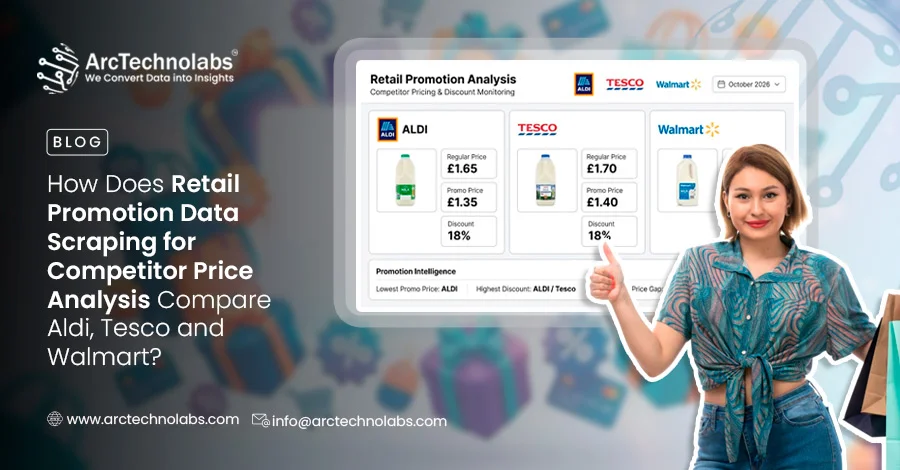
Retail Promotion Data Scraping for Competitor Price Analysis

IntroductionIn today’s hyper-competitive grocery market, tracking competitor discounts across major chains is essential for maintaining market share. Grocery giants constantly adjust prices, flash sales, and promotional bundles to capture price-sensitive shoppers. Utilizing Retail Promotion Data Scraping for Competitor Price Analysis gives retailers actionable intelligence to optimize their pricing strategies dynamically.Automated data extraction allows businesses to observe shifting pricing strategies across leading global brands like Aldi, Tesco, and Walmart in real time. Rather than relying on manual checks, automated scraping tools compile price fluctuations, promo codes, and regional discounts continuously. This ensures pricing teams can react instantly to competitor moves without sacrificing profit margins.By leveraging a structured Web Scraping for Retail Competitive Pricing Insights Guide, supermarket chains and analytics providers can refine their promotional monitoring workflows. Understanding how different grocery leaders deploy promotions provides a massive strategic advantage. Below is a comparative breakdown of how promotional scraping functions across three major retail environments.Comparative Supermarket Pricing Strategies Across Major Global Retail ChainsSupermarket pricing strategies diverge significantly across everyday low pricing models, promotional rollbacks, and localized discount structures. Aldi relies heavily on private-label dominance and lean supply chains, offering consistent value with fewer promotional fluctuations. Tesco utilizes sophisticated Clubcard loyalty frameworks to deploy personalized discounts, changing digital coupon values dynamically based on consumer purchasing history. Meanwhile, Walmart implements vast multi-tier rollback campaigns, matching local competitor prices across thousands of physical locations and digital fulfillment centers.Utilizing Tesco Datasets, market research teams can analyze the exact cadence of loyalty-driven promotions and quantify their conversion impact. These datasets allow analysts to map recurring promotional loops and consumer engagement trends without manual auditing delays. By observing how loyalty tiers influence basket sizes, pricing strategists construct precise forecasting models that anticipate upcoming competitive moves effectively.Studies indicate that automated retail monitoring increases pricing accuracy by up to 34% while reducing manual audit overhead by half. Market researchers deploying Tesco Promotion Data Scraping for Market Research uncover seasonal promotional variance that informs overarching merchandising strategies. Competitor price intelligence platforms synthesize these vast metrics into unified dashboards, allowing executives to benchmark promotional depth against historical performance benchmarks.Aldi: Primary pricing strategy — everyday low pricing (EDLP); promotional frequency — low (stable baseline pricing); data extraction complexity — moderate (dynamic regional inventory).Tesco: Primary pricing strategy — loyalty-based and Clubcard discounts; promotional frequency — high (weekly rotating offers); data extraction complexity — high (personalized digital coupon structures).Walmart: Primary pricing strategy — rollbacks and competitive matching; promotional frequency — very high (continuous automated updates); data extraction complexity — high (massive catalog size and geo-blocking)Automated extraction monitors continuous baseline pricing stability across private-label dominant retail networks.Loyalty program tracking isolates personalized digital coupon shifts and member-exclusive basket savings.Rollback evaluation measures multi-tier discount campaigns across expansive geographic footprints.Maintaining a competitive advantage in fast-moving grocery sectors requires continuous tracking of cross-channel promotional adjustments and discount behaviors. Automated pipelines aggregate millions of product records daily, ensuring that pricing committees receive clean, standardized data feeds immediately.Technical Infrastructure Standards For High Volume Retail Data ExtractionExtracting high-frequency retail promotion feeds demands resilient technical architectures that handle JavaScript rendering, headless browser evasion, and proxy rotation. Retailers incorporating Tesco App Grocery Data Scraping Services extract deep mobile-exclusive offers and localized app-only discounts. These specialized scrapers bypass API restrictions and simulate genuine user sessions to retrieve accurate pricing payloads without triggering rate limits.Distributed cloud architectures ensure that data ingestion pipelines remain operational even when target websites implement aggressive bot-mitigation protocols. Automated error-handling routines detect blocked IP addresses instantly and rotate residential proxies without human intervention. This technical resilience guarantees uninterrupted data flow for time-sensitive pricing engines operating around the clock.Industry statistics demonstrate that structured web extraction reduces data collection latency from several days to mere minutes. Executing Walmart Discount Web Data Scraper for Retail Analytics enables enterprise inventory managers to process massive seasonal price cuts across thousands of distinct SKUs. Maintaining clean data pipelines ensures that predictive pricing models receive pristine inputs for machine learning forecasting algorithms.Proxy Network: Technology standard — rotating residential IPs; functionality and purpose — prevents IP blacklisting during heavy catalog crawls.Parser Engine: Technology standard — BeautifulSoup / Scrapy; functionality and purpose — extracts unstructured HTML into clean JSON/CSV formats.Headless Browser: Technology standard — Playwright / Selenium; functionality and purpose — renders dynamic JavaScript elements and promotional banners.Asynchronous request handling parses multiple category pages concurrently to accelerate ingestion speeds.Headless browser rendering captures dynamic promotional banners and hidden discount pop-ups accurately.JSON parsing pipelines convert raw web data into standardized formats for immediate analytics consumption.Enterprise analytics teams rely heavily on these robust extraction layers to feed downstream business intelligence and dynamic pricing algorithms. By converting unstructured markup into structured JSON files, technical architects empower category managers to execute rapid price matching strategies.Granular Inventory Tracking And Regional Supermarket Performance BenchmarksHyperlocal inventory tracking requires granular data collection methods to account for regional price discrepancies and stock availability variations. Supermarket pricing varies substantially between urban fulfillment hubs and suburban superstores, requiring zip-code specific extraction parameters. Retail strategists evaluating micro-market variations optimize regional pricing elasticity through precise geographic filtering.Regional fulfillment analysis reveals how localized supply chain constraints impact competitor discounting frequency and shelf availability. By segmenting data collection by postal codes, analytics teams uncover localized pricing anomalies that national averages routinely conceal. This granularity allows brands to adjust regional pricing models dynamically rather than relying on uniform, broad-stroke adjustments.Market analysts incorporating Aldi Groceries Datasets analyze private-label pricing stability against branded manufacturer alternatives over multi-month observation windows. Comprehensive tracking models reveal exact markdown schedules, helping retail executives time their own promotional campaigns for maximum competitive advantage. These historical datasets provide a reliable baseline for measuring the long-term effectiveness of private-label expansion strategies.Zip-Code Specificity: Data point captured — localized store inventory and pricing; business impact — uncovers regional pricing variances and gaps.Stock Status: Data point captured — real-time availability flags; business impact — identifies competitor stockouts immediately.Markdown Velocity: Data point captured — clearance percentage and duration; business impact — predicts end-of-lifecycle inventory clearing patterns.Postal-code filtering captures hidden regional price discrepancies across suburban and urban store locations.Real-time stock availability flags expose immediate competitor supply chain gaps and stockouts.Clearance velocity tracking forecasts end-of-lifecycle markdown patterns for seasonal retail merchandise.Sustained market dominance requires continuous cross-referencing of localized inventory levels against aggressive competitor promotional schedules and seasonal markdown velocities. Automated intelligence systems synthesize these complex data streams into intuitive dashboards that drive executive decision-making.How ArcTechnolabs Can Help You?Modern supermarket chains require fast, reliable, and scalable web data extraction infrastructure to stay ahead of rival promotional shifts. Deploying automated systems centered around Retail Promotion Data Scraping for Competitor Price Analysis allows brands to track complex pricing shifts seamlessly across global markets without technical bottlenecks.We provide tailor-made scraping solutions designed to handle high-frequency data extraction across complex e-commerce platforms.Customized enterprise data pipeline development for large-scale grocery extraction.Advanced anti-bot handling and geo-targeted proxy rotation infrastructure.High-speed extraction of web and mobile application data payloads.Clean, structured data delivery in JSON, CSV, or direct database feeds.Real-time pricing alert integrations for dynamic pricing platforms.Scalable extraction models tailored for global retail footprints.Our robust technical architecture incorporates a powerful Retail Promotion Data Scraping API for Supermarket Analytics, empowering enterprise clients to receive reliable, cleaned market datasets delivered on demand. Partnering with us eliminates the burden of maintaining in-house scrapers, giving your strategy team full focus on outperforming competitors.ConclusionNavigating the fast-moving grocery landscape demands continuous market visibility and rapid strategic adjustments. Implementing robust Retail Promotion Data Scraping for Competitor Price Analysis equips modern business leaders with the accurate pricing intelligence needed to protect profit margins, predict competitor moves, and capture market share effectively across top retail chains.Relying on old pricing data creates severe competitive disadvantages in today’s digital-first economy. Utilizing an enterprise-grade Aldi Promotion Web Scraping for Product Price Monitoring solution ensures your business maintains real-time pricing advantages day after day. Partner with ArcTechnolabs today to scale your retail data pipelines and dominate market pricing strategy.#RetailPromotionDataScrapingForCompetitorPriceAnalysis,#AldiPromotionWebScrapingForProductPriceMonitoring,#TescoPromotionDataScrapingForMarketResearch,#WalmartDiscountWebDataScraperForRetailAnalytics,Source: https://www.arctechnolabs.com/retail-promotion-data-scraping-for-competitor-price-analysis.phpContact us:E-mail: [email protected] No: +91 8866656657Visit Now: https://www.arctechnolabs.com/

Steve Harringtone
Read arrow_forward
Protected 18650 Battery Size and Dimensions: What Buyers Should Check Tech & Innovation
Nov 03, 2026 • visibility 16 • 19 min read

Protected 18650 Battery Size and Dimensions: What Buyers Should Check

A protected 18650 battery may fit the same general category as a standard 18650 cell, but its actual dimensions can be different. The added protection circuit, insulating materials, and terminal construction may increase the overall length. For buyers and product engineers, this difference can determine whether a battery fits an existing device or requires a change to the enclosure.When purchasing protected 18650 batteries in bulk, checking only the battery name is not enough. Diameter, total length, terminal style, dimensional tolerance, and the space available inside the equipment should all be confirmed before an order is placed.What Are the Standard 18650 Battery Dimensions?The name 18650 refers to a cylindrical lithium-ion cell format. The numbers generally indicate a nominal diameter of approximately 18 mm and a nominal length of approximately 65 mm.These figures describe the general cell format, not a guarantee that every finished battery will measure exactly 18 mm by 65 mm.The dimensions of a complete protected battery may differ from those of the bare cell. Protection components, additional insulation, terminal design, and the outer covering can affect its final size.What Does 18650 Mean?The 18650 format is widely used in rechargeable lithium-ion batteries for portable electronics, lighting equipment, instruments, and battery packs.However, the format name does not specify every product characteristic. It does not tell buyers the exact capacity, chemistry, discharge current, protection cutoff, or final assembled dimensions.Two batteries described as 18650 may therefore have different electrical specifications and physical measurements.When reviewing a supplier’s datasheet, confirm whether the listed dimensions refer to the bare cell or the complete protected battery. This simple distinction can prevent compatibility problems during product development.Typical Dimensions of Protected 18650 BatteriesA conventional unprotected 18650 cell is commonly around 18 mm in diameter and 65 mm in length. A protected version can be longer because additional components are installed at the end of the cell.Physical dimensions are only one part of battery selection. Buyers should also understand protected 18650 battery voltage differences before confirming electrical compatibility with their devices.Depending on the product design, protected 18650 batteries may measure approximately 68–72 mm or more in overall length. This is an illustrative range, not a universal specification. Some products fall outside it, and the diameter can also vary with the wrapper and protective construction.Buyers should never use this approximate range as the final basis for a production design. Request the exact drawing or dimensional specification for the model being purchased.For an existing device, even a small difference in length may prevent the battery compartment from closing or stop the contact spring from operating correctly.Why Is a Protected 18650 Battery Longer?The main reason is the addition of a protection circuit and its associated construction.A protected lithium-ion battery generally includes an overcharge, over-discharge, and overcurrent protection arrangement, depending on the design. The protection components may be installed near one terminal and connected to the cell through an appropriate electrical structure.Additional insulation and terminal construction can also affect the final dimensions.Protection Circuit and Additional ComponentsThe protection circuit is intended to help prevent specified unsafe operating conditions. It adds components that are not present in the same form on a typical unprotected cell.Some protected batteries use a raised button-top terminal, while others have different terminal arrangements. These choices can change the measured overall length.The finished battery wrapper and insulating rings should also be included when assessing fit. A measurement taken from a bare cell before assembly may not represent the finished product.For OEM buyers, ask the supplier for the dimensions of the completed battery, including its protection circuit, terminal, wrapper, and any other external components.Button-Top vs. Flat-Top DesignsA button-top battery has a raised positive terminal. A flat-top battery has a flatter terminal profile.The terminal style affects the overall geometry and may affect compatibility with a battery holder, charging equipment, or device contacts. It should not be treated as a purely cosmetic difference.Some equipment requires a specific contact arrangement. A battery with the wrong terminal type may fail to make reliable electrical contact even if its body diameter and length appear suitable.Also, a button-top design is not necessarily protected, and a flat-top design is not necessarily unprotected. Buyers should verify both the protection configuration and terminal specification.How to Measure Protected 18650 Battery DimensionsFor accurate purchasing and engineering work, measure the finished battery rather than relying on the format name.1. Measure the maximum diameter. Use a suitable caliper to measure across the widest part of the battery body. Include the outer wrapper and any protruding features that affect the available space.2. Measure the overall length. Measure from the bottom of the negative terminal to the highest point of the positive terminal. For a button-top model, include the raised button.3. Confirm the terminal profile. Record whether the battery is flat-top, button-top, or another specified configuration.4. Check the external construction. Note wrapper thickness, insulating rings, exposed metal areas, and any other features that may affect installation or electrical clearance.5. Compare the result with the supplier drawing. Confirm the nominal dimensions and permitted tolerances rather than relying on a single sample measurement.Use appropriate measurement equipment and avoid damaging the battery wrapper or terminals. Lithium-ion cells can become hazardous if their insulation or terminals are damaged.Will a Protected 18650 Battery Fit Your Device?Physical compatibility depends on more than the battery’s nominal diameter and length.Start by checking the internal dimensions of the battery compartment. The usable space must accommodate the complete battery, not just the cylindrical cell body.Next, inspect the contact arrangement. Spring contacts may provide some movement, while fixed contacts may require a more precise overall length. A battery that is too short can lose contact during movement, while one that is too long can place excessive pressure on the terminals or prevent the enclosure from closing.Consider the installation environment as well. Vibration, temperature changes, and repeated battery replacement can affect contact reliability.If the device was designed around an unprotected 18650 cell, do not assume that a protected replacement will fit. The extra length may require a different battery holder, revised enclosure, or alternative battery design.For a new OEM project, the most reliable approach is to establish the battery compartment’s maximum dimensions early in the design process. Then select a battery model that satisfies both the physical and electrical requirements.Never force an oversized battery into a compartment or remove its protective covering to make it fit.A battery may fit the compartment but still fail to meet the device’s electrical requirements. Check the protected 18650 discharge current requirements before approving the battery model.Battery Dimension Tolerances and Bulk PurchasingIn B2B purchasing, the nominal dimensions are only part of the specification. Buyers should also understand dimensional tolerances, meaning the permitted variation around the specified measurements.For example, a drawing may list a nominal length and a maximum permitted length. The buyer needs to know which measurement applies to the finished protected battery and how the supplier controls it during production.This is particularly important when ordering hundreds or thousands of batteries for a product with a tightly fitted compartment.Before approving a bulk order, request a technical datasheet and, where appropriate, a dimensioned drawing. Confirm whether the dimensions include the protection circuit and all external insulating materials.A sample inspection can help verify that the supplied product matches the approved specification. For recurring orders, define the accepted dimensions and inspection method before production begins.Packaging and transport can also affect the condition of the battery wrapper and terminals. Incoming quality checks should identify damaged insulation, bent terminals, or other physical defects rather than focusing on measurements alone.Protected 18650 Dimensions in Custom Battery PacksProtected individual cells and custom multi-cell battery packs require different dimensional checks.A single protected cell has a relatively simple external shape, but a battery pack may include multiple cells, interconnections, a battery management system (BMS), wiring, connectors, insulation, and an enclosure.The total pack dimensions depend on the cell arrangement and the space required for these additional components. A compact cell layout does not automatically result in a compact finished pack.For OEM and ODM projects, provide the supplier with the available enclosure dimensions, connector position, cable exit direction, mounting requirements, and expected operating conditions.If the pack must fit an existing product, a mechanical drawing is usually more useful than a general description such as “fits 18650 batteries.” The drawing should identify critical dimensions and any areas where clearance is limited.Also confirm the electrical design. Changing from a bare cell to a protected cell or changing the pack’s protection architecture may affect available space and assembly requirements.A battery supplier should assess the complete design instead of promising compatibility based only on the cell format.Common Mistakes When Selecting Battery SizeOne frequent mistake is assuming that every 18650 battery is exactly 65 mm long. This overlooks the additional construction used in many protected models.Another is checking the body diameter but ignoring the terminal height. The positive terminal may be the feature that determines whether the battery fits.Buyers may also confuse a protected cell with a complete battery pack. A pack with multiple cells, wiring, and a BMS has a different overall size and mounting requirement.Finally, relying on a product photograph instead of a technical drawing can lead to avoidable errors. Images rarely provide enough information to establish exact dimensions or tolerances.The best practice is to confirm the exact model, finished dimensions, terminal configuration, and approved drawing before production or bulk purchasing.ConclusionProtected 18650 battery dimensions depend on the underlying cell format, protection circuit, terminal construction, insulation, and finished assembly. Although a conventional 18650 cell is commonly around 18 mm in diameter and 65 mm long, a protected version may be longer and may differ in its external profile.For reliable product integration, verify the maximum diameter, overall length, terminal style, dimensional tolerance, and available installation space. OEM buyers should request the complete battery drawing and approve a sample when dimensional compatibility is critical.A few careful checks before ordering can reduce fitting problems, production delays, and unnecessary redesign costs.Frequently Asked QuestionsWhat are the dimensions of a protected 18650 battery?A protected 18650 battery may measure approximately 68–72 mm or more in length, depending on its construction. Confirm the manufacturer’s finished-battery dimensions before purchasing.Are all protected 18650 batteries the same size?No. Protection circuits, terminal styles, insulation, and manufacturing designs can change the final dimensions. Always check the exact model specification.Will a protected 18650 battery fit an unprotected 18650 battery holder?Not necessarily. A protected model is often longer, so it may not fit the holder or allow the device enclosure to close properly.What should buyers measure before ordering protected 18650 batteries?Check the maximum diameter, overall length including the positive terminal, terminal style, dimensional tolerance, and available compartment clearance.Can OEM suppliers customize protected 18650 battery dimensions?Some OEM suppliers can develop custom battery assemblies to meet specified space requirements. Feasibility depends on the cell, protection design, electrical requirements, and available enclosure space.When selecting batteries for a new product, buyers should evaluate dimensions, electrical specifications, and installation requirements together. Explore our 18650 lithium battery products to compare available battery options for different equipment and OEM applications.Related ArticlesBattery dimensions can affect compatibility, especially when ordering protected 18650 cells in large quantities. Our [wholesale protected 18650 batteries buyer’s guide] covers the key specifications buyers should confirm before approving a bulk order.

Turning Financial Data Into Smarter Decisions With Alternative Data Analytics, Model Transparency, and Predictive Analytics Tech & Innovation
Nov 02, 2026 • visibility 48 • 12 min read

Turning Financial Data Into Smarter Decisions With Alternative Data Analytics, Model Transparency, and Predictive Analytics

The financial industry is evolving rapidly as banks, fintech companies, lenders, and financial institutions look for better ways to understand market trends, manage risks, and identify growth opportunities. Traditional financial reporting provides valuable information about past performance, but modern organizations need more than historical numbers to remain competitive. They need forward-looking insights supported by reliable data, advanced technology, and intelligent analytical models.This is where Alternative Data Analytics, Model Transparency, and Predictive Analytics play an important role. Together, these capabilities help financial organizations uncover hidden patterns, understand complex financial activities, and make more informed business decisions.Data Geny helps financial institutions and fintech companies transform complex information into actionable intelligence through advanced analytics, machine learning, financial risk analytics, and data-driven solutions designed around the realities of the financial industry.Understanding the Value of Alternative Data AnalyticsFinancial organizations traditionally depend on structured information such as transaction records, credit histories, financial statements, and customer account data. While these sources remain essential, they may not provide a complete picture of changing customer behavior, market conditions, or emerging business opportunities.Alternative Data Analytics allows organizations to examine additional information sources to gain a broader understanding of financial activities. Depending on the business objective and applicable data permissions, these sources may include digital activity, payment behavior, economic indicators, market information, customer interactions, and other non-traditional datasets.For banks and fintech companies, alternative data can support more comprehensive analysis and help identify patterns that conventional datasets may overlook.Key Applications of Alternative Data Analytics1. Improved Credit Risk AssessmentLenders can combine traditional credit information with appropriate alternative datasets to develop a more comprehensive understanding of potential borrowers. This can help improve risk evaluation, particularly when conventional credit histories provide limited information.2. Better Customer UnderstandingAnalyzing customer interactions, purchasing behavior, and engagement patterns can help financial organizations understand customer preferences. These insights support customer segmentation, personalized financial products, and improved customer experiences.3. Market and Investment IntelligenceAlternative datasets can help organizations monitor economic developments, identify emerging trends, and evaluate changing market conditions. Combining different information sources can provide additional context for strategic planning.4. Fraud Detection and Anomaly IdentificationUnusual transaction patterns and unexpected behavioral changes may indicate potential fraudulent activity. Advanced analytics can help identify these patterns and prioritize transactions for further investigation.However, alternative data must be evaluated carefully. Data quality, relevance, privacy, consent, and regulatory requirements should remain central to every implementation.Why Model Transparency Matters in Financial AnalyticsMachine learning models are increasingly used for credit scoring, fraud detection, financial forecasting, and risk management. Although these models can analyze large volumes of information, financial organizations must understand how their predictions are generated and what factors influence their results.Model Transparency helps make analytical models understandable, traceable, and accountable. It allows financial institutions to examine model behavior, evaluate important variables, and understand the reasoning behind specific predictions.This is particularly important in financial services, where analytical decisions can influence lending approvals, risk exposure, customer treatment, and regulatory reporting.Important Elements of Model TransparencyExplainable AI (XAI): Explainable AI techniques help organizations understand which variables contribute to a model's prediction. This makes it easier for risk managers and analysts to interpret model outputs.Model Documentation: Proper documentation records a model's purpose, data sources, assumptions, limitations, development process, and intended use. It supports accountability throughout the model lifecycle.Model Validation: Regular validation helps determine whether models perform as expected and whether their assumptions remain appropriate as financial conditions change.Governance and Monitoring: Continuous monitoring helps identify performance deterioration, unexpected behavior, data changes, and potential model bias. These practices support responsible model management.Data Geny offers Model Risk Management, Model Governance and Monitoring, and Model Transparency and Analytics Governance services to help financial organizations develop analytical frameworks that prioritize reliability, accountability, and regulatory awareness.Predictive Analytics: Moving From Historical Reports to Future InsightsFinancial institutions cannot rely exclusively on historical reports when making important business decisions. They need analytical systems that can identify emerging patterns and estimate potential future outcomes.Predictive Analytics uses historical data, statistical methods, and machine learning algorithms to forecast possible developments. Instead of simply explaining what happened, predictive models help organizations evaluate what may happen next.How Predictive Analytics Supports Financial Institutions1. Credit Risk and Scoring ModelsPredictive models can analyze borrower information, repayment behavior, and relevant financial indicators to estimate credit risk. These insights help lenders make more informed lending decisions and improve risk assessment processes.2. Revenue and Demand ForecastingBanks and fintech companies can use forecasting models to estimate revenue trends, anticipate customer demand, and support financial planning. These insights help management teams prepare for changing business conditions.3. Fraud Detection and Financial Crime AnalyticsPredictive analytics can identify unusual transaction behavior and emerging risk patterns. When integrated into appropriate monitoring systems, these models help financial institutions prioritize suspicious activities for investigation.4. Customer Churn PredictionUnderstanding which customers may discontinue a financial service can help organizations develop targeted retention strategies. Predictive models can examine engagement patterns, transaction activity, and customer behavior to identify potential churn indicators.5. Portfolio Performance and OptimizationFinancial organizations can analyze historical performance, market indicators, and risk factors to understand portfolio behavior and evaluate different scenarios. These insights support more informed portfolio management decisions.Data Geny's Predictive Analytics and Forecasting, Machine Learning Model Development, Time-Series Analysis, and Financial Risk and Compliance Analytics capabilities help organizations turn financial information into forward-looking business intelligence.Bringing Alternative Data, Transparency, and Predictive Analytics TogetherThe real value of modern financial analytics comes from combining these three capabilities within a coordinated strategy.Alternative Data Analytics expands the information available for decision-making. Predictive Analytics uses relevant information to identify patterns and estimate future outcomes. Model Transparency ensures that analytical results can be interpreted, evaluated, and governed responsibly.For example, a fintech lender may combine traditional credit records with suitable alternative data to understand borrower behavior. Predictive models can then estimate potential repayment risks, while explainability techniques help analysts understand the factors influencing individual predictions.This integrated approach requires strong data engineering, consistent data quality, appropriate governance, and continuous model monitoring. Without these foundations, even sophisticated analytical systems may produce unreliable or difficult-to-interpret results.Why Choose Data Geny for Financial Data Analytics Solutions?Data Geny focuses specifically on the financial services industry, supporting banks, fintech companies, lenders, and financial enterprises with specialized analytics solutions.Rather than applying generic analytics frameworks, Data Geny develops solutions around financial data, business objectives, risk management requirements, and regulatory considerations.Its capabilities include predictive modeling, fraud detection, credit risk analytics, machine learning, data governance, model monitoring, financial forecasting, and AI-driven decision intelligence.The focus extends beyond developing analytical prototypes. Data Geny works toward production-ready solutions that integrate into business workflows, support governance requirements, and provide practical insights for financial decision-makers.ConclusionThe future of financial decision-making depends on the ability to understand more data, predict potential outcomes, and maintain confidence in analytical results. Alternative Data Analytics helps organizations discover additional insights, Model Transparency supports responsible and explainable decisions, and Predictive Analytics enables financial institutions to anticipate risks and opportunities.By bringing these capabilities together, banks and fintech companies can improve risk assessment, understand customers more effectively, strengthen governance, and make informed strategic decisions.With its finance-specific expertise and advanced data analytics capabilities, Data Geny helps financial organizations move beyond traditional reporting and turn complex financial data into a valuable competitive advantage.