

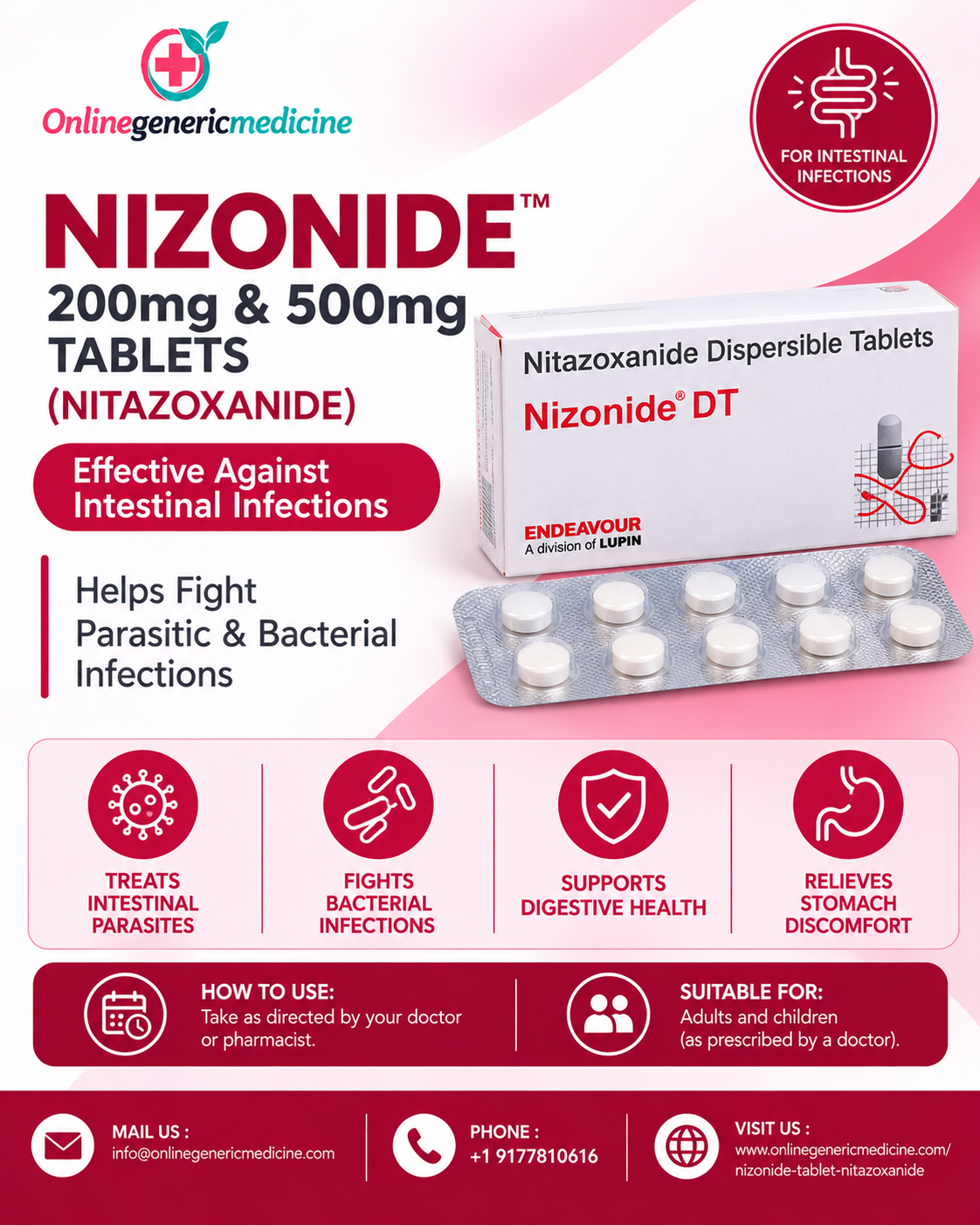
Nizonide 200mg & 500mg Tablets (Nitazoxanide): Uses, Dosage, Side Effects & FAQs
Nizonide ↗ 200mg and 500mg Tablets contain Nitazoxanide as their active ingredient. It is an antiprotozoal and antiparasitic medicine used to treat certain intestinal infections caused by parasites and other susceptible microorganisms.
These infections may cause diarrhoea, stomach pain, nausea, and loose stools. Nitazoxanide works by interfering with processes that certain organisms need to produce energy and survive.
Nizonide is available in 200mg and 500mg strengths. The appropriate strength and treatment schedule depend on the infection, the patient's age, and the healthcare professional's instructions.
What Is Nizonide Tablet?Nizonide is an oral medicine that contains Nitazoxanide. It is used for certain intestinal infections, particularly:
Giardiasis, caused by Giardia lamblia.Cryptosporidiosis, caused by Cryptosporidium parvum.These infections can spread through contaminated food or water and may cause digestive symptoms such as diarrhoea and abdominal discomfort.
Nizonide helps control susceptible organisms responsible for these infections. It is not a general treatment for every type of diarrhoea.
Uses of Nizonide 200mg & 500mg TabletsNizonide ↗ may be prescribed for certain parasitic and protozoal infections.
1. Treatment of GiardiasisGiardiasis is an intestinal infection caused by a parasite called Giardia lamblia. It can spread through contaminated drinking water, food, or contact with infected surfaces.
Common symptoms include:
Watery diarrhoea.Stomach cramps.Bloating and gas.Nausea.Loose stools.Loss of appetite.Nitazoxanide may be prescribed to treat giardiasis and help control the infection.
2. Treatment of CryptosporidiosisCryptosporidiosis is an intestinal infection caused by Cryptosporidium parasites. It can spread through contaminated water, food, or contact with infected people.
Possible symptoms include:
Watery diarrhoea.Stomach discomfort.Nausea.Vomiting.Fever in some cases.Dehydration caused by fluid loss.Nitazoxanide may be used for certain cases of cryptosporidiosis. Treatment suitability can depend on age and immune system function.
How Does Nizonide Work?Nizonide contains Nitazoxanide, which interferes with an important energy-producing process in susceptible parasites and microorganisms.
It affects an enzyme-dependent process known as pyruvate oxidoreductase (PFOR). This process helps certain organisms produce the energy they need to survive.
By interfering with this process, Nitazoxanide helps control susceptible organisms and supports recovery from the infection.
How to Take Nizonide 200mg & 500mg TabletsTake Nizonide according to your doctor's instructions. The prescribed dose and treatment duration depend on the type of infection, age, and medical condition.
General instructions include:
Swallow the tablet with water.Take it with food to help improve absorption.Follow the prescribed treatment schedule.Complete the course as directed by your healthcare professional.Do not change the dose or tablet strength yourself.Do not take an extra dose to make up for a missed dose.The 200mg and 500mg tablets contain different amounts of Nitazoxanide. They should not be substituted for one another without medical guidance.
If you miss a dose, follow the instructions provided by your doctor or medicine leaflet. Do not double the next dose.
Possible Side Effects of NizonideLike other medicines, Nizonide may cause side effects. Not everyone experiences them.
Common Side EffectsNausea.Stomach pain.Headache.Vomiting.Diarrhoea.Changes in urine colour.Serious Side EffectsContact a healthcare professional if you experience:
Severe or persistent stomach discomfort.Repeated vomiting.Signs of dehydration.Skin rash or itching.Swelling of the face, lips, or tongue.Difficulty breathing.Seek urgent medical attention if you experience symptoms of a serious allergic reaction.
Precautions Before Taking NizonideAllergies: Inform your doctor if you are allergic to Nitazoxanide or any ingredient in the tablet.Pregnancy: Discuss the possible risks and benefits with your healthcare professional before using this medicine.Breastfeeding: Ask your doctor whether Nitazoxanide is suitable while breastfeeding.Liver or kidney conditions: Share your medical history before starting treatment.Weakened immune system: People with weakened immune systems may need additional medical assessment, especially when treating cryptosporidiosis.Children: The appropriate formulation and dose depend on the child's age and weight. Do not give adult tablets to children without medical advice.Fluid intake: Diarrhoea can cause dehydration. Drink sufficient fluids and use oral rehydration solution when recommended.Treatment duration: Do not extend or repeat treatment without consulting a healthcare professional.Persistent symptoms: Seek medical advice if diarrhoea continues, becomes severe, or is accompanied by signs of dehydration.Drug InteractionsTell your doctor about all medicines, supplements, and herbal products you currently use.
Nitazoxanide is highly bound to plasma proteins. Particular care may be needed when it is taken with other highly protein-bound medicines that have a narrow therapeutic range, such as warfarin.
Also inform your healthcare professional about:
Prescription medicines.Over-the-counter medicines.Other medicines used for intestinal infections.Herbal products and supplements.Medicines that may affect liver function.Your healthcare professional can review your medication list and advise whether any changes or monitoring are needed.
Difference Between Nizonide 200mg and 500mg TabletsBoth strengths contain the same active ingredient, Nitazoxanide. The main difference is the amount of medicine in each tablet.
FeatureNizonide 200mgNizonide 500mgActive ingredientNitazoxanideNitazoxanideStrength200mg500mgFormTabletTabletMedicine categoryAntiprotozoal and antiparasiticAntiprotozoal and antiparasiticDosageAs prescribedAs prescribedThe correct strength depends on the patient's age, infection, and prescribed treatment schedule. Do not select a strength without medical advice.
Storage InstructionsStore Nizonide according to the instructions on the packaging.Keep the tablets in a dry place.Protect them from excessive heat and moisture.Keep the medicine away from children.Do not use tablets after the expiry date.Keep the medicine in its original packaging unless instructed otherwise.Nizonide Information at Online Generic MedicineOnline Generic Medicine ↗provides medicine-related information to help readers understand products such as Nizonide 200mg and 500mg Tablets. Readers can learn about Nitazoxanide, its uses, dosage guidance, possible side effects, precautions, and other important medicine information.
Always check the product packaging for the correct strength and follow the instructions provided by your healthcare professional.
Frequently Asked Questions1. What is Nizonide 200mg & 500mg Tablet used for?
Nizonide ↗contains Nitazoxanide and is used to treat certain intestinal infections, including giardiasis and cryptosporidiosis.
2. What is the active ingredient in Nizonide?
The active ingredient in Nizonide is Nitazoxanide. It belongs to a group of medicines called antiprotozoal and antiparasitic agents.
3. What is the difference between Nizonide 200mg and 500mg?
The difference is the amount of Nitazoxanide in each tablet. The appropriate strength depends on the patient's condition and prescribed treatment plan.
4. Should Nizonide be taken with food?
Yes. Nizonide tablets are generally taken with food because food helps improve the absorption of Nitazoxanide.
5. Can Nizonide cause diarrhoea?
Diarrhoea may occur as a side effect. However, it can also be a symptom of the infection being treated. Contact a healthcare professional if it becomes severe or continues.
6. Can Nizonide be used for all types of diarrhoea?
No. Nizonide is used for certain infections caused by susceptible organisms. It does not treat every cause of diarrhoea, including all bacterial, viral, or non-infectious conditions.
7. What should I do if I miss a dose of Nizonide?
Follow the instructions provided by your healthcare professional or medicine leaflet. Do not take a double dose to make up for a missed one.
8. Can children take Nizonide Tablets?
Nitazoxanide may be prescribed for certain infections in children, but the appropriate formulation and dose depend on age and weight. A healthcare professional should determine the treatment.
ConclusionNizonide 200mg and 500mg Tablets contain Nitazoxanide, which is used to treat certain intestinal infections, including giardiasis and cryptosporidiosis. It works by interfering with energy production in susceptible organisms. Follow the prescribed treatment schedule, take the medicine with food, and consult a healthcare professional if symptoms continue or become worse.