

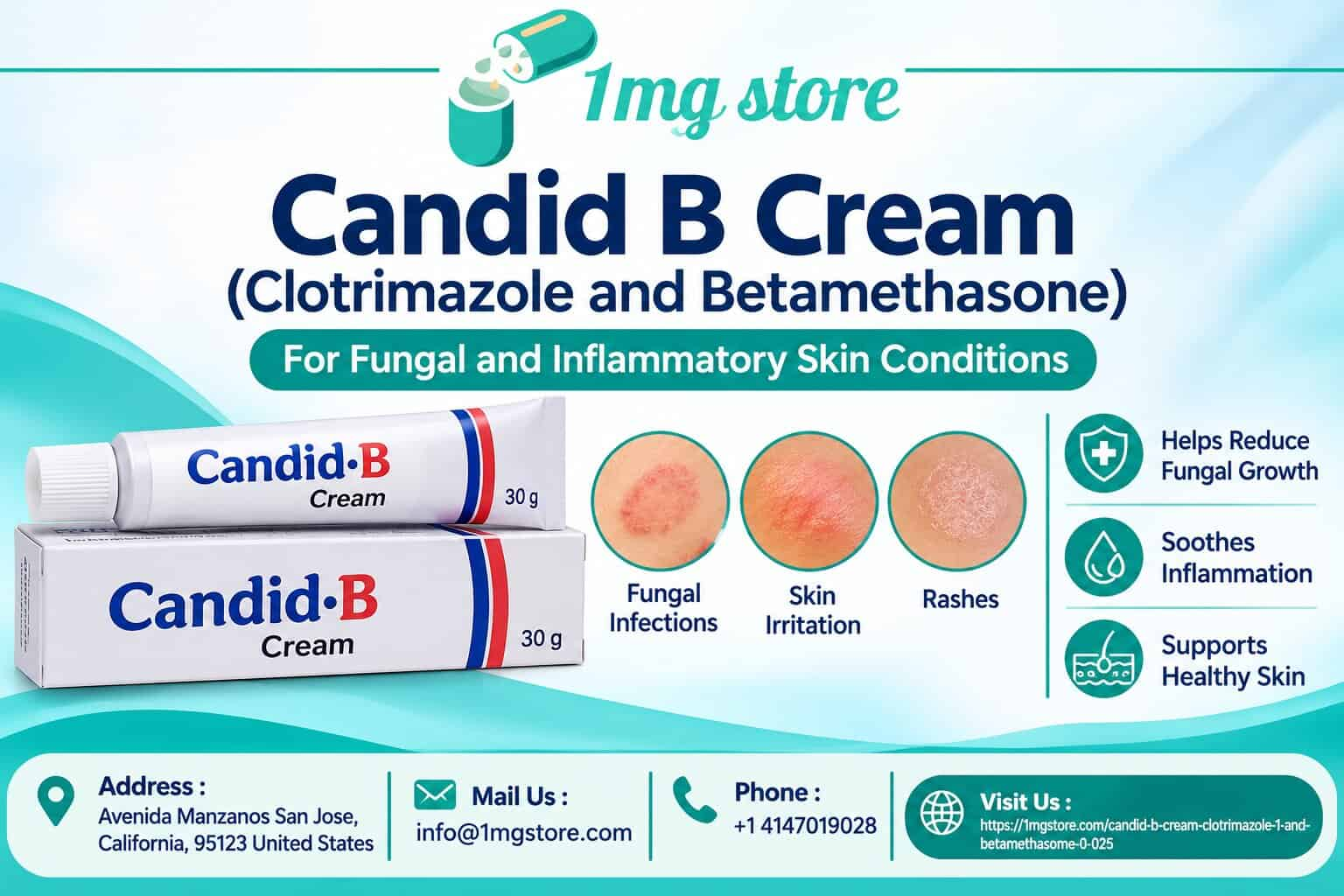
Candid B Cream (Clotrimazole and Betamethasone): Uses, Application, Side Effects, and Precautions
Candid B Cream ↗ is a topical medicine that contains two active ingredients: Clotrimazole and Beclomethasone/Betamethasone, depending on the specific formulation. These ingredients are used to manage certain fungal skin infections accompanied by inflammation, redness, and itching.
Clotrimazole is an antifungal ingredient that helps control fungal growth, while Betamethasone is a corticosteroid that helps reduce inflammation and itching.
This blog explains Candid B Cream, its uses, ingredients, application, possible side effects, and precautions in simple language.
What Is Candid B Cream?Candid B Cream is a combination skin cream containing an antifungal ingredient and a corticosteroid.
Clotrimazole: Helps treat fungal skin infections by stopping fungal growth.Betamethasone: Helps reduce inflammation, redness, and itching.Together, these ingredients help manage fungal skin infections associated with inflammatory symptoms.
Note: Check the product packaging for the exact corticosteroid ingredient and strength, as formulations can differ. Some products contain Beclomethasone, while others contain Betamethasone.
Uses of Candid B CreamCandid B Cream may be prescribed for certain fungal skin infections accompanied by inflammation.
Common uses include:
Fungal skin infections: Helps manage infections caused by susceptible fungi.Skin itching: Helps reduce itching associated with inflammation.Redness: Helps control redness caused by inflammatory skin conditions.Skin irritation: Helps relieve inflammation associated with certain fungal infections.Inflammatory fungal conditions: Combines antifungal and anti-inflammatory effects.It should only be used for conditions for which the combination is appropriate.
How Does Candid B Cream Work?Candid B Cream ↗ contains two ingredients that work in different ways.
1. Clotrimazole
Clotrimazole is an antifungal medicine. It works by interfering with the formation of ergosterol, an important component of fungal cell membranes. This damages the fungal cells and helps control the infection.
2. Betamethasone
Betamethasone is a corticosteroid that reduces inflammation in the affected skin area. It helps control redness, swelling, and itching.
The combination addresses fungal growth and associated inflammation.
Benefits of Candid B CreamThe main effects of Candid B Cream include:
Helps control susceptible fungal skin infections.Reduces inflammation associated with the infection.Helps relieve itching and redness.Combines antifungal and corticosteroid ingredients in one formulation.Helps manage certain inflammatory fungal skin conditions.How to Apply Candid B CreamFollow the application instructions provided by your healthcare professional.
Clean the affected skin area gently.Dry the area before applying the cream.Apply a thin layer to the affected area as directed.Wash your hands after application unless your hands are being treated.Avoid covering the treated area with tight bandages unless advised.Follow the prescribed treatment duration.Do not apply the cream to the eyes, mouth, or other sensitive areas unless specifically instructed.
Possible Side Effects of Candid B CreamSome people may experience side effects while using Candid B Cream.
Common side effects:
Mild skin irritation.Burning sensation.Itching.Redness.Dryness.Skin discomfort.Other possible side effects with prolonged or inappropriate use:
Skin thinning.Changes in skin colour.Stretch marks.Increased skin sensitivity.Delayed healing.Contact a healthcare professional if side effects become severe or do not improve.
Precautions While Using Candid B CreamConsider the following precautions before using Candid B Cream:
Use the cream only for the condition for which it was prescribed.Avoid applying it to large areas of skin unless directed.Do not use it for longer than the recommended period.Avoid contact with the eyes and mouth.Do not apply it to broken skin without medical advice.Inform your healthcare professional about any previous allergic reactions to its ingredients.Use caution when applying it to the face, skin folds, or sensitive areas.Consult a healthcare professional before using it during pregnancy or breastfeeding.Do not use it for acne or other unrelated skin conditions without medical advice.Drug InteractionsTell your healthcare professional about other medicines and skin products you are using. Some possible considerations include:
Other topical corticosteroid creams.Other antifungal skin preparations.Medicated skin lotions.Products containing additional corticosteroids.Topical medicines that may cause skin irritation.Other prescription skin treatments.Medicated cosmetics applied to the same area.Products that affect the skin's protective barrier.Using multiple topical products together may increase irritation or affect treatment. Follow professional instructions.
Frequently Asked Questions (FAQs)1. What is Candid B Cream used for?
Candid B Cream ↗ is used for certain fungal skin infections accompanied by inflammation, redness, and itching.
2. What are the main ingredients in Candid B Cream?
The formulation discussed here contains Clotrimazole and a corticosteroid. Check the packaging to confirm whether the steroid is Betamethasone or Beclomethasone.
3. How does Clotrimazole work in Candid B Cream?
Clotrimazole is an antifungal ingredient that interferes with fungal cell membrane formation and helps control fungal growth.
4. What is the role of Betamethasone in Candid B Cream?
Betamethasone is a corticosteroid that helps reduce inflammation, redness, and itching.
5. Can Candid B Cream be used for itching?
It may help relieve itching associated with certain inflammatory fungal infections. However, not all itching is caused by fungal infections.
6. Can Candid B Cream be used on the face?
Facial skin is sensitive, and corticosteroids may cause unwanted effects when used on the face. Use it there only if specifically advised by a healthcare professional.
7. What are the common side effects of Candid B Cream?
Possible side effects include skin irritation, burning, itching, redness, and dryness.
8. Can Candid B Cream be used for a long time?
Prolonged use of corticosteroid-containing creams may cause skin thinning and other unwanted effects. Follow the recommended treatment duration.
ConclusionCandid B Cream is a combination topical medicine containing Clotrimazole and a corticosteroid. It is used for certain fungal skin infections associated with inflammation and itching. Clotrimazole helps control fungal growth, while the corticosteroid helps reduce inflammatory symptoms.
Understanding the ingredients, uses, application instructions, and precautions is important before using this cream.
For more product information, 1mg Store provides information about different healthcare products and their ingredients.