

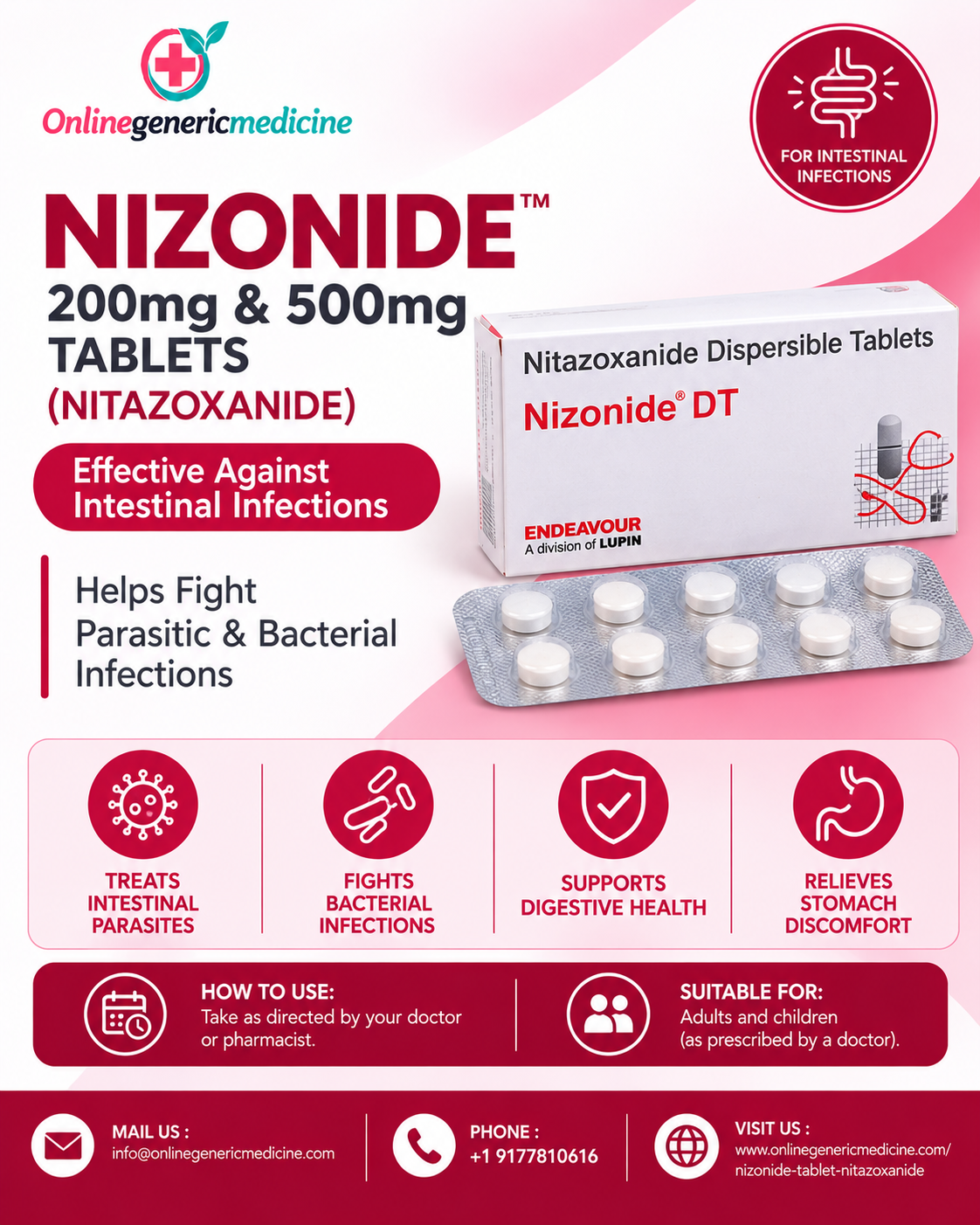
Nizonide 200mg & 500mg Tablets (Nitazoxanide): Uses, Dosage, Side Effects & FAQs
Nizonide ↗ 200mg and 500mg Tablets are medicines that contain Nitazoxanide as their active ingredient. Nitazoxanide belongs to a group of medicines called antiprotozoal and antiparasitic agents. It is used to treat certain intestinal infections caused by parasites and other microorganisms.
These infections may cause symptoms such as diarrhoea, stomach pain, nausea, and loose stools. Nizonide works by interfering with processes that certain parasites and microorganisms need to survive.
The 200mg and 500mg strengths are available for different treatment needs. The appropriate strength and treatment duration depend on the patient's age, condition, and healthcare professional's instructions.
What Is Nizonide Tablet?Nizonide ↗ is an oral medicine containing Nitazoxanide. It is commonly prescribed for certain intestinal infections, particularly those caused by:
Giardia lamblia.Cryptosporidium parvum.These organisms can cause intestinal infections and diarrhoea. Nitazoxanide helps control susceptible organisms and supports recovery from the infection.
Nizonide is available in 200mg and 500mg tablet strengths. The correct strength should be selected according to the prescribed treatment plan.
Uses of Nizonide 200mg & 500mg TabletsNizonide may be prescribed for certain parasitic and protozoal infections.
1. GiardiasisGiardiasis is an intestinal infection caused by a parasite called Giardia lamblia. It may spread through contaminated food or water.
Possible symptoms include:
Watery diarrhoea.Stomach cramps.Bloating and gas.Nausea.Loose stools.Nitazoxanide may be prescribed to treat giardiasis.
2. CryptosporidiosisCryptosporidiosis is an intestinal infection caused by Cryptosporidium parasites. It can spread through contaminated water, food, or contact with infected people.
Common symptoms include:
Watery diarrhoea.Stomach discomfort.Nausea.Fever in some cases.Dehydration due to fluid loss.Nitazoxanide may be used for certain cases of cryptosporidiosis. Its suitability can depend on the patient's age and immune status.
How Does Nizonide Work?Nizonide contains Nitazoxanide, which interferes with an important energy-producing process in susceptible parasites and microorganisms.
It affects an enzyme-dependent process called pyruvate oxidoreductase (PFOR). This makes it difficult for certain organisms to produce the energy they need to survive.
As a result, the medicine helps control the infection and allows the body to recover.
How to Take Nizonide 200mg & 500mg TabletsTake Nizonide according to your doctor's instructions. The prescribed dose and duration depend on the type of infection, age, and medical condition.
General instructions include:
Swallow the tablet with water.Take it with food, as this helps improve absorption.Follow the prescribed treatment schedule.Complete the treatment course as directed.Do not change the strength or dose yourself.Do not take an additional dose if you miss one without checking the instructions.The 200mg and 500mg tablets are not interchangeable without appropriate medical guidance. Do not decide which strength to use based only on the severity of symptoms.
Possible Side Effects of NizonideSome people may experience side effects while taking Nizonide. These effects are not experienced by everyone.
Common Side EffectsNausea.Stomach pain.Headache.Vomiting.Diarrhoea.Changes in urine colour.Less Common or Serious Side EffectsContact a healthcare professional if you experience:
Severe or persistent stomach discomfort.Repeated vomiting.Signs of dehydration.Skin rash or itching.Swelling of the face, lips, or tongue.Difficulty breathing.Seek urgent medical attention if you experience symptoms of a serious allergic reaction.
Precautions Before Taking NizonideAllergies: Inform your doctor if you have an allergy to Nitazoxanide or any ingredient in the tablet.Pregnancy: Discuss the possible risks and benefits with your healthcare professional before taking this medicine.Breastfeeding: Ask your doctor whether Nitazoxanide is suitable while breastfeeding.Liver or kidney conditions: Share your medical history before starting treatment.Immune system problems: People with weakened immune systems may need additional medical assessment, particularly when treating cryptosporidiosis.Children: The appropriate formulation and dose depend on the child's age and weight. Do not give adult tablets to children without medical advice.Fluid intake: Diarrhoea can cause dehydration. Drink sufficient fluids and use oral rehydration solution when recommended.Treatment duration: Do not extend or repeat the treatment course without consulting a healthcare professional.Drug InteractionsTell your doctor about all medicines, supplements, and herbal products you currently use. Nitazoxanide may interact with certain medicines.
Particular care may be needed with:
Warfarin and other medicines affected by plasma protein binding.Other prescription medicines used for intestinal infections.Medicines that may affect liver function.Herbal supplements.Over-the-counter medicines used for diarrhoea or stomach problems.Your healthcare professional can review your medication list and advise whether any changes are necessary.
Nizonide 200mg vs 500mg TabletsNizonide ↗ is available in different tablet strengths. The main difference is the amount of Nitazoxanide in each tablet.
FeatureNizonide 200mgNizonide 500mgActive ingredientNitazoxanideNitazoxanideStrength200mg500mgFormTabletTabletUseCertain parasitic and protozoal infectionsCertain parasitic and protozoal infectionsDosageAs prescribedAs prescribedThe correct strength depends on the patient's age, infection, and prescribed treatment schedule.
Storage InstructionsStore Nizonide according to the instructions on the packaging.Keep the tablets in a dry place.Protect them from excessive heat and moisture.Keep the medicine away from children.Do not use the tablets after the expiry date.Nizonide Information at Online Generic MedicineOnline Generic Medicine provides medicine-related information to help readers understand products such as Nizonide 200mg and 500mg Tablets. Readers can learn about Nitazoxanide, its uses, dosage guidance, possible side effects, precautions, and medicine information.
Always check the product packaging for the correct strength and follow the instructions provided by your healthcare professional.
Frequently Asked Questions1. What is Nizonide 200mg & 500mg Tablet used for?
Nizonide contains Nitazoxanide and is used to treat certain intestinal infections caused by parasites, including giardiasis and cryptosporidiosis.
2. What is the active ingredient in Nizonide?
The active ingredient in Nizonide is Nitazoxanide, an antiprotozoal and antiparasitic medicine.
3. What is the difference between Nizonide 200mg and 500mg?
The difference is the amount of Nitazoxanide in each tablet. The appropriate strength depends on the patient's condition and the prescribed treatment plan.
4. Should Nizonide be taken with food?
Yes. Nitazoxanide tablets are generally taken with food because food helps improve the absorption of the medicine.
5. Can Nizonide cause diarrhoea?
Diarrhoea may occur as a side effect. However, diarrhoea can also be a symptom of the infection being treated. Contact a healthcare professional if it becomes severe or continues.
6. Can Nizonide be used for all types of diarrhoea?
No. Nizonide is used for certain infections caused by susceptible organisms. It does not treat every cause of diarrhoea, such as all bacterial, viral, or non-infectious conditions.
7. What should I do if I miss a dose of Nizonide?
Take the missed dose according to the instructions provided by your healthcare professional or medicine leaflet. Do not take a double dose to make up for a missed one.
8. Can children take Nizonide Tablets?
Nitazoxanide may be prescribed for certain infections in children, but the formulation and dose depend on age and weight. A healthcare professional should determine the appropriate treatment.
ConclusionNizonide 200mg and 500mg Tablets contain Nitazoxanide, which is used to treat certain intestinal infections, including giardiasis and cryptosporidiosis. The medicine works by interfering with energy production in susceptible organisms. Follow the prescribed dosage, take it with food, and consult a healthcare professional if symptoms continue or become worse.