

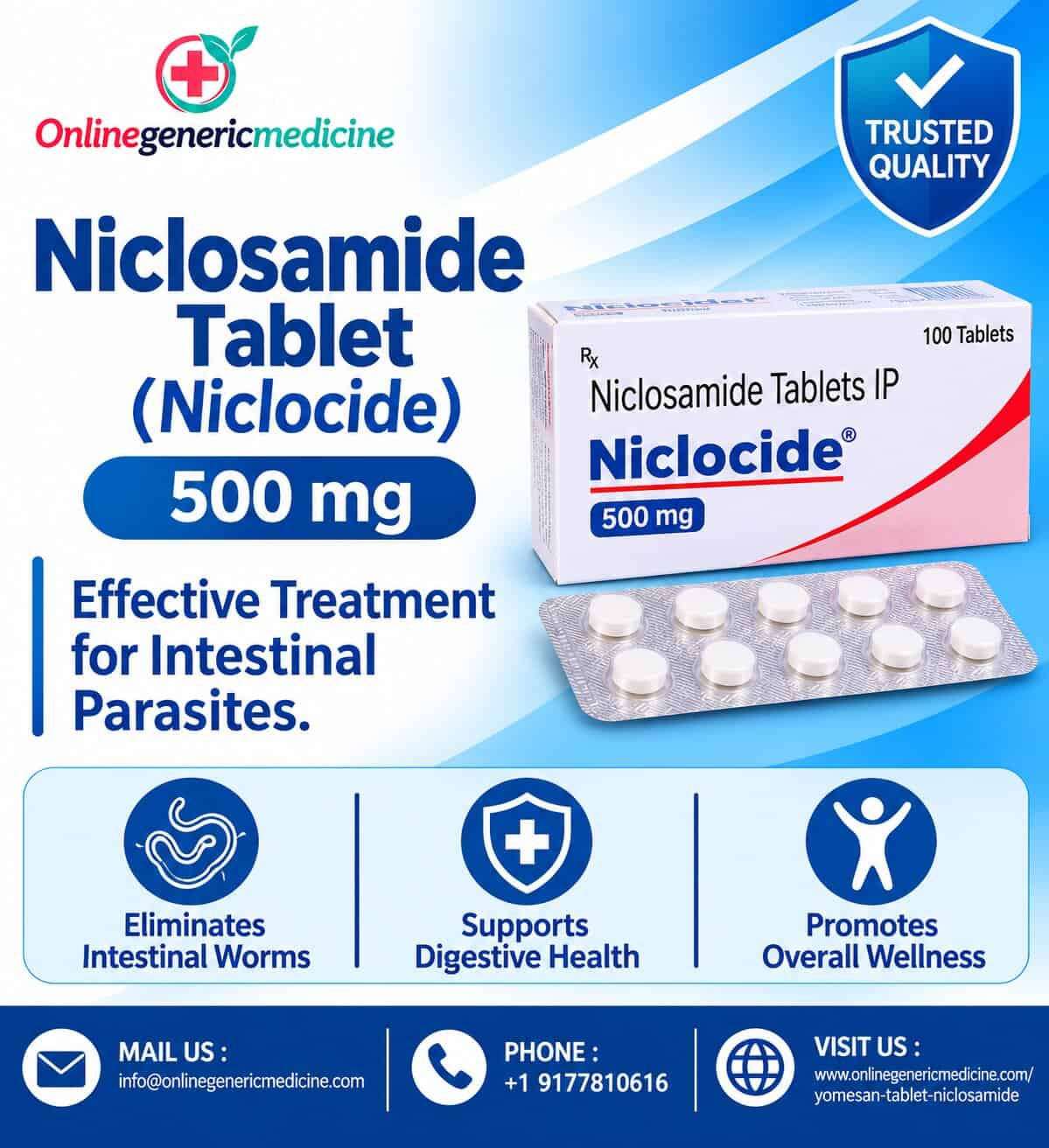
Niclosamide Tablet (Niclocide): Uses, Dosage, Side Effects & FAQs
Niclosamide ↗Tablet (Niclocide) contains niclosamide, an antiparasitic medicine used to treat certain tapeworm infections in the intestines. It works by affecting the energy-producing processes of tapeworms, helping the body remove them through bowel movements.
The dose and duration of treatment depend on the type of infection and the patient's medical condition. This article explains the uses, working, dosage guidance, possible side effects, precautions, and other important information about Niclocide.
What Is Niclosamide Tablet (Niclocide)?Niclocide is a tablet containing niclosamide. It belongs to a group of medicines called anthelmintics, which are used to treat infections caused by certain parasitic worms.
Niclosamide mainly acts inside the intestine and is poorly absorbed into the bloodstream. It is used for specific tapeworm infections rather than all types of worm infections.
Uses of Niclosamide TabletNiclosamide ↗may be prescribed to treat certain intestinal tapeworm infections, including:
Taenia saginata: Also known as beef tapeworm infection.Taenia solium: Also known as pork tapeworm infection in its intestinal form.Diphyllobothrium latum: A fish tapeworm infection.Hymenolepis nana: Also called dwarf tapeworm infection.The appropriate treatment depends on identifying the parasite. Niclosamide does not treat every parasitic infection.
Important: Intestinal tapeworm infection caused by Taenia solium is different from cysticercosis, in which tapeworm larvae affect body tissues. Niclosamide is not a treatment for cysticercosis.
How Does Niclosamide Work?Niclosamide works by interfering with the energy production of susceptible tapeworms.
It affects important processes that the worms need to survive. This weakens the parasites and helps the body remove them through bowel movements.
Because niclosamide mainly acts inside the intestine, only a small amount is absorbed into the bloodstream.
How to Take Niclosamide TabletTake Niclosamide according to your doctor's instructions and the product label. The dose depends on the type of tapeworm infection, age, and medical condition.
General instructions include:
Follow the prescribed dose and treatment schedule.Chew the tablet thoroughly or take it as directed on the product label.Follow any instructions about food and water.Do not take extra tablets without medical advice.If you miss a dose, ask your healthcare professional what to do.Some treatment plans may require additional steps or follow-up stool testing to confirm that the infection has cleared.
Possible Side Effects of NiclosamideSome people may experience side effects while taking niclosamide. These are generally related to the digestive system.
Possible side effects include:
NauseaVomitingStomach discomfortAbdominal painDiarrhoeaLoss of appetiteDizzinessItching or skin rashContact a healthcare professional if symptoms are severe, persistent, or unusual. Seek urgent medical attention if you experience signs of a serious allergic reaction, such as swelling of the face or difficulty breathing.
Precautions Before Taking NiclosamideBefore starting treatment, tell your doctor about your health history and any medicines you use.
Allergies: Inform your doctor if you have had an allergic reaction to niclosamide or any ingredient in the tablet.Pregnancy: Discuss the possible benefits and risks with your healthcare professional if you are pregnant.Breastfeeding: Ask your doctor whether the medicine is suitable while breastfeeding.Digestive Problems: Tell your doctor if you have ongoing stomach or intestinal problems.Other Medicines: Share details of prescription medicines, over-the-counter products, and supplements you take.Correct Diagnosis: Treatment should be based on the type of parasite causing the infection.Follow-up: Follow any recommended stool tests or medical check-ups after treatment.Drug InteractionsNiclosamide is poorly absorbed from the digestive tract, so systemic drug interactions may be limited. However, tell your doctor or pharmacist about all medicines and supplements you use.
Discuss the following:
Other antiparasitic medicines: Your doctor should review whether additional treatment is needed.Digestive medicines: Tell your healthcare professional about medicines that may affect digestion or intestinal activity.Prescription medicines: Share your complete medication list before starting treatment.Do not combine medicines or change your treatment schedule without professional advice.
Storage InstructionsStore Niclosamide tablets according to the instructions on the packaging.Keep them away from excessive heat and moisture.Store the medicine in its original packaging where possible.Keep it out of the reach of children.Do not use tablets after their expiry date.Online Generic MedicineOnline Generic Medicine provides product information about different medicines and their ingredients, including antiparasitic treatments.
When reviewing Niclosamide Tablet (Niclocide), check the active ingredient, tablet strength, manufacturer, packaging, and directions for use. Always follow the advice of your healthcare professional.
Frequently Asked Questions (FAQs)1. What is Niclosamide Tablet (Niclocide) used for?
Niclosamide ↗is used to treat certain intestinal tapeworm infections, including beef tapeworm, pork tapeworm in its intestinal form, fish tapeworm, and dwarf tapeworm infections.
2. How does Niclosamide work?
It interferes with the energy-producing processes of susceptible tapeworms. This weakens the parasites and helps the body remove them through bowel movements.
3. Is Niclosamide an antibiotic?
No. Niclosamide is an antiparasitic medicine. It is used for certain tapeworm infections and does not work like antibiotics used to treat bacterial infections.
4. How should I take Niclosamide tablets?
Follow your doctor's instructions and the product label. Depending on the formulation, the tablet may need to be chewed thoroughly before swallowing.
5. What are the common side effects of Niclosamide?
Possible side effects include nausea, vomiting, stomach discomfort, abdominal pain, diarrhoea, and loss of appetite.
6. Does Niclosamide treat all types of worms?
No. Niclosamide is mainly used for certain intestinal tapeworm infections. Other types of parasitic worms require different treatments.
7. Can Niclosamide treat cysticercosis?
No. Niclosamide is used for intestinal tapeworm infections and is not a treatment for cysticercosis, which occurs when tapeworm larvae affect body tissues.