

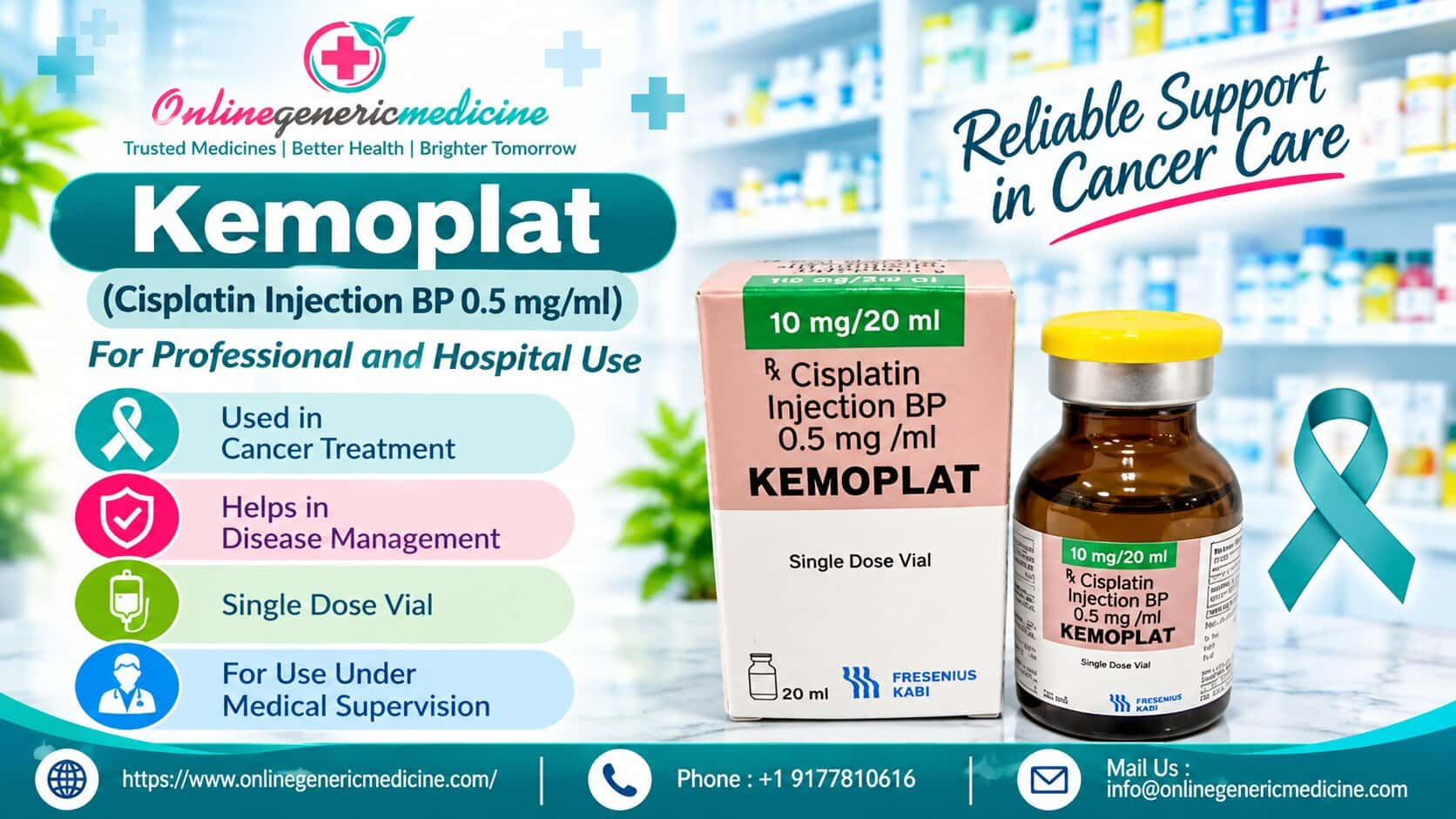
Kemoplat Injection: Uses, Ingredients, Dosage, Side Effects, and Important Medical Information
Kemoplat Injection ↗ is a prescription chemotherapy medicine used in the treatment of certain types of cancer. It contains cisplatin as its active ingredient, which belongs to a group of medicines known as platinum-based chemotherapy agents. It works by interfering with the genetic material of cancer cells, affecting their ability to grow and multiply.
People researching Kemoplat Injection often want to understand its composition, medical applications, administration, possible side effects, and precautions. Learning about these aspects can help patients and caregivers understand the treatment process and prepare for discussions with their healthcare team.
This article provides general information about Kemoplat Injection, its medical uses, and important considerations associated with cisplatin-based treatment.
What Is Kemoplat Injection?Kemoplat Injection is an injectable medicine containing cisplatin. It is used as part of chemotherapy treatment for selected cancers.
Cisplatin is a cytotoxic medicine, meaning it acts against cells that grow and divide. It is administered intravenously by trained healthcare professionals in a hospital or suitable clinical setting.
The treatment plan depends on the cancer type, disease stage, previous treatments, kidney function, general health, and other individual medical factors.
Composition of Kemoplat InjectionThe primary active ingredient in Kemoplat Injection is:
Cisplatin: Cisplatin is a platinum-containing chemotherapy agent that interferes with DNA structure and function. This activity prevents cancer cells from properly copying their genetic material and can lead to cell death.
The exact concentration and available pack size should be checked on the product packaging or official prescribing information.
What Is Kemoplat Injection Used For?Kemoplat Injection may be prescribed for different types of cancer, depending on the treatment protocol and clinical assessment.
Some cancer types for which cisplatin-based chemotherapy may be used include:
Ovarian cancer: Cisplatin may form part of selected chemotherapy regimens for ovarian cancer.Testicular cancer: It is used in established chemotherapy combinations for certain testicular cancers.Bladder cancer: Cisplatin-based treatment may be considered in specific cases.Lung cancer: It may be included in chemotherapy combinations for selected lung cancer patients.Head and neck cancers: Cisplatin is used in certain treatment protocols, sometimes alongside radiation therapy.Other solid tumours: Depending on the diagnosis, cisplatin may be considered for additional cancer types.The suitability of this medicine depends on the individual diagnosis and the treating oncologist's recommendations.
How Does Kemoplat Injection Work?Cisplatin works by interacting with the DNA inside cells. DNA contains the instructions required for cells to grow, function, and reproduce.
After entering cells, cisplatin forms bonds with DNA. These bonds interfere with DNA replication and repair processes. When cancer cells cannot properly repair the resulting damage, they may stop dividing or undergo cell death.
Because some healthy cells also divide rapidly, chemotherapy can affect normal tissues as well. This explains why cisplatin treatment may cause side effects involving the digestive system, blood cells, kidneys, nerves, and hearing.
How Is Kemoplat Injection Administered?Kemoplat Injection is administered through an intravenous infusion by qualified medical professionals.
The treatment schedule is determined by the oncologist according to the cancer type, treatment combination, body measurements, kidney function, and overall medical condition.
Important administration considerations include:
The patient's medical history and current condition are reviewed.Kidney function and blood test results are assessed.The prescribed chemotherapy dose is calculated by the oncology team.The medicine is prepared and administered according to clinical protocols.The patient is monitored for immediate reactions and other complications.Follow-up tests are arranged to evaluate treatment tolerance.Patients should never attempt to administer this chemotherapy medicine themselves.
Dosage and Treatment ScheduleThere is no single dosage schedule suitable for everyone receiving Kemoplat Injection ↗.
Cisplatin dosing may depend on:
Type and stage of cancer.Body surface area.Kidney function.Blood test results.Previous chemotherapy exposure.Other medicines included in the treatment plan.Response to earlier treatment cycles.The oncologist may adjust the dose, delay a treatment cycle, or change the regimen depending on laboratory findings and side effects.
Patients should follow the prescribed treatment schedule and should not change or discontinue chemotherapy without consulting their oncology team.
Possible Side Effects of Kemoplat InjectionLike other chemotherapy medicines, Kemoplat Injection can cause side effects. Their severity and duration vary between patients.
Commonly reported side effects may include:
Nausea and vomiting.Reduced appetite.Fatigue and weakness.Changes in taste.Reduced blood cell counts.Constipation or diarrhoea.Hair thinning or hair loss.Mouth discomfort.Some side effects require particular attention because cisplatin can affect important organs.
1. Kidney-Related EffectsCisplatin may affect kidney function. Healthcare professionals commonly monitor kidney-related blood tests and hydration status during treatment.
2. Hearing ChangesSome patients may experience ringing in the ears, reduced hearing, or other auditory changes. Hearing assessment may be required in certain treatment situations.
3. Nerve-Related EffectsCisplatin may cause peripheral neuropathy. Symptoms can include tingling, numbness, or unusual sensations in the hands and feet.
4. Blood Cell ChangesChemotherapy can reduce the production of blood cells. This may increase the risk of infection, anaemia, or bleeding.
5. Electrolyte ImbalancesCisplatin may affect electrolyte levels, including magnesium and potassium. Blood tests help identify changes that may require medical attention.
Patients should promptly report fever, unusual bleeding, reduced urine output, hearing changes, severe vomiting, or new numbness to their healthcare team.
Important Precautions Before TreatmentBefore receiving Kemoplat Injection, patients should provide their oncologist with complete information about their medical history.
Important considerations include:
Existing kidney problems.Hearing difficulties.Nerve-related conditions.Previous chemotherapy or radiation treatment.Allergies to cisplatin or other platinum-containing medicines.Current prescription medicines and supplements.Pregnancy or breastfeeding.Cisplatin ↗can cause serious harm to an unborn baby. Pregnancy prevention and fertility-related concerns should be discussed with the oncology team before treatment. Patients should also seek advice about breastfeeding during treatment.
Monitoring During Kemoplat Injection TreatmentRegular monitoring is an important part of cisplatin-based chemotherapy.
Healthcare professionals may recommend:
Blood tests: These help evaluate blood cell counts, kidney function, and electrolyte levels.
Kidney function assessment: Tests such as serum creatinine and estimated kidney filtration are used to monitor renal health.
Hearing assessments: These may be recommended to identify changes in hearing.
Neurological evaluation: Doctors may assess symptoms such as numbness, tingling, and changes in sensation.
Treatment response assessment: Imaging, physical examinations, and other investigations may be used to evaluate how the cancer responds.
Monitoring helps the medical team identify complications and make appropriate treatment decisions.
Drug Interactions and Other MedicinesCertain medicines may increase the risk of side effects when used with cisplatin.
Patients should inform their healthcare team about all medicines they take, including:
Medicines that may affect kidney function.Certain antibiotics.Other chemotherapy medicines.Medicines that may affect hearing.Vitamins and nutritional supplements.Non-prescription medicines.The oncology team can review potential interactions and determine whether changes or additional monitoring are necessary.
Storage and Handling InformationKemoplat Injection should be stored according to the manufacturer's instructions and official product information.
Because cisplatin is a cytotoxic medicine, its preparation, handling, administration, and disposal require appropriate precautions.
General considerations include:
Keep the medicine in its original packaging until required.Follow the storage temperature stated on the product label.Protect the product as directed by the manufacturer.Do not use damaged, expired, or improperly stored vials.Allow trained healthcare professionals to handle and prepare the injection.Specific storage requirements may differ according to the formulation and packaging.
Frequently Asked Questions About Kemoplat Injection1. What is Kemoplat Injection used for?Kemoplat Injection contains cisplatin and is used in chemotherapy regimens for certain cancers, including selected ovarian, testicular, bladder, lung, and head and neck cancers.
2. What is the active ingredient in Kemoplat Injection?Its active ingredient is cisplatin, a platinum-based chemotherapy medicine.
3. How is Kemoplat Injection given?It is administered intravenously by trained healthcare professionals under medical supervision.
4. Does Kemoplat Injection cause hair loss?Hair thinning or hair loss may occur during cisplatin-based chemotherapy. The extent varies depending on the treatment combination and individual response.
5. Why are kidney tests important during cisplatin treatment?Cisplatin can affect kidney function. Regular laboratory monitoring helps healthcare professionals identify changes and make appropriate treatment decisions.
6. Can Kemoplat Injection affect hearing?Yes. Cisplatin may cause hearing-related problems, including ringing in the ears and hearing loss. Any changes should be reported promptly.
7. Can Kemoplat Injection be used with other chemotherapy medicines?Yes. Depending on the cancer diagnosis, cisplatin may be included in combination chemotherapy regimens. The combination and schedule are determined by the oncologist.
8. Who determines the dosage of Kemoplat Injection?A qualified oncologist determines the dose based on the diagnosis, body measurements, kidney function, treatment protocol, and other medical factors.
ConclusionKemoplat Injection ↗ is a cisplatin-based chemotherapy medicine used in the management of selected cancers. Its action involves interfering with the DNA of cancer cells, affecting their ability to grow and divide.
Understanding its composition, medical applications, administration, possible side effects, and monitoring requirements provides useful background for patients and caregivers. Regular medical supervision, laboratory testing, and communication with the oncology team are essential throughout treatment.
Anyone researching Kemoplat Injection should refer to the official product information and consult a qualified healthcare professional for guidance about its suitability and use.