

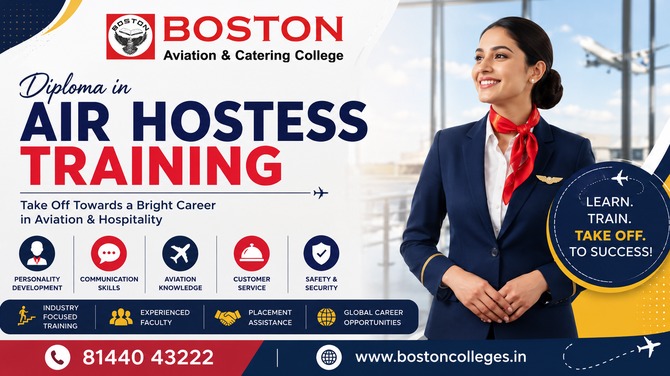
Why Choose a Diploma in Air Hostess Training in Tamil Nadu After 12th?

Completing Class 12 is an important milestone for students who are preparing to choose a career path. While many students consider traditional degree programs, others are interested in careers that offer opportunities to interact with people, develop professional skills, and work in dynamic industries. Aviation is one such field that attracts students who dream of working as cabin crew members and airline service professionals.
A diploma in air hostess training can introduce students to the skills and responsibilities associated with cabin crew services. The training may cover communication, professional grooming, passenger handling, hospitality, teamwork, and interview preparation. For students who enjoy customer service and want to explore aviation-related careers, this program can be an option worth considering after Class 12.
Tamil Nadu offers different educational opportunities for students interested in aviation and hospitality. Before choosing a course, students should understand its benefits, eligibility requirements, career possibilities, and training methods. This article explains why a diploma in air hostess training may be a suitable choice after 12th and how students can prepare for a future in aviation.
1. Start Your Aviation Journey After Class 12One advantage of exploring air hostess training after Class 12 is that students can begin developing career-related skills at an early stage. Instead of waiting until they complete a longer academic program, eligible students may choose a suitable diploma that introduces them to the aviation and hospitality sectors.
The course can help learners understand cabin crew responsibilities, passenger service standards, and professional workplace expectations. Students can also begin improving their communication, confidence, and interview skills. However, admission requirements and course duration vary between institutions. Applicants should confirm the minimum educational qualification, age criteria, and other conditions before enrolling.
2. Develop Professional Communication SkillsCommunication is essential in aviation because cabin crew members interact with passengers from different regions and cultural backgrounds. They need to explain information clearly, listen carefully, respond politely, and work effectively with colleagues. These abilities are important not only during flights but also in airline customer service and other passenger-facing positions.
A suitable training program may include spoken English practice, group discussions, public speaking, role-playing activities, and interview preparation. Regular practice can help students become more confident when speaking with others. Students who need additional support can improve their skills through reading, everyday conversations, and mock interviews. Developing strong communication skills can be useful across many professional careers.
3. Understand the Benefits of Practical TrainingPractical learning helps students connect classroom knowledge with real-world situations. In air hostess training, practical activities may include passenger-service simulations, professional etiquette exercises, grooming sessions, teamwork activities, and mock interviews. These experiences can help learners understand the expectations of customer-facing aviation roles.
Before selecting a program, students should ask about the practical components included in the syllabus. They should also check whether trainers provide feedback on communication, presentation, and customer handling. Practical training can improve familiarity with professional situations, although it cannot replace airline-specific training or guarantee recruitment. A course with a clear curriculum and structured learning activities can help students prepare more effectively for future opportunities.
4. How to Choose the Best Air Hostess Training Institutes in Tamil NaduStudents researching the Best air hostess training institutes in Tamil Nadu ↗ should compare the quality of teaching, course structure, training facilities, and career guidance available at each institution. A reliable training provider should clearly explain its eligibility requirements, course fees, duration, syllabus, and certificate details. Students should also ask about grooming sessions, communication development, mock interviews, and opportunities for practical learning.
It is advisable to compare multiple institutions rather than choosing one based only on advertisements or promotional claims. Check the complete fee structure and ask whether additional charges apply for uniforms, study materials, examinations, or certificates. Students should also verify claims about airline partnerships, internships, and placement support. Making an informed decision can help learners choose a program that suits their educational needs and career goals.
5. Explore Different Aviation Career PathsAviation includes several career areas beyond cabin crew services. Depending on their qualifications, skills, and employer requirements, students may explore airline customer service, airport passenger assistance, ground staff operations, air ticketing, travel services, and hospitality. Understanding these options can help students decide whether air hostess training aligns with their long-term interests.
Students who enjoy interacting with passengers may consider cabin crew or customer-service positions, while those interested in airport procedures may explore ground operations. Learners who prefer reservations and travel planning can investigate air ticketing and tourism programs. Each position has different responsibilities and eligibility criteria. Researching job descriptions and speaking with experienced professionals can help students understand the opportunities available before choosing a specialized course.
6. Compare Aviation Training Institutes in Tamil NaduWhen evaluating Aviation training institutes in Tamil Nadu ↗, students should first identify the type of aviation career they want to pursue. Some institutions offer cabin crew training, while others focus on airline and airport management, ground staff operations, air ticketing, or travel and tourism. Although these programs may share certain subjects, they are designed for different professional goals.
Students should review the curriculum carefully to determine whether it matches their interests. Course duration, fees, practical exposure, trainer experience, and career guidance are also important factors. Applicants should confirm the recognition and purpose of the qualification offered by the institution. A clear understanding of the differences between aviation courses can prevent students from choosing a program that does not meet their expectations.
7. Learn Professional Grooming and Workplace EtiquetteProfessional grooming and workplace etiquette are important in customer-facing aviation roles. Cabin crew members are expected to maintain a professional appearance, communicate respectfully, and follow the airline's uniform and conduct standards. Training programs may introduce students to personal presentation, body language, professional behaviour, and appropriate workplace communication.
Students can develop these qualities through consistent practice and constructive feedback. Good grooming involves more than appearance; it also includes punctuality, personal discipline, respect for others, and a responsible attitude. These qualities can be valuable during interviews and throughout a professional career. Learning professional etiquette early can help students feel more prepared when entering the workplace.
8. Understand Diploma in Air Hostess Training in IndiaA Diploma in Air Hostess Training in India ↗ generally introduces learners to the foundational skills and professional expectations associated with cabin crew work. Depending on the institution, subjects may include passenger handling, communication, hospitality, professional grooming, airline service standards, teamwork, and interview preparation. The exact syllabus, course duration, admission conditions, and certificate awarded differ between training providers.
Before enrolling, students should request detailed course information and ask how practical learning is assessed. They should also understand what the qualification represents and whether additional education or training may be required for their intended career. Airline employers establish their own recruitment criteria, which may include educational qualifications, communication ability, age, medical fitness, and other requirements. Completing a diploma can support preparation, but it does not automatically qualify a candidate for every airline role.
9. Build Confidence and Personality DevelopmentConfidence is valuable when applying for cabin crew and other passenger-service positions. Students may need to participate in group discussions, introduce themselves professionally, answer interview questions, and demonstrate how they would respond to customer concerns. Personality development activities can help learners practice these situations in a supportive environment.
Students can improve confidence by speaking regularly in English, participating in group activities, practicing public speaking, and preparing answers to common interview questions. They should also learn to listen attentively and respond calmly when faced with unfamiliar situations. Confidence develops over time through practice, feedback, and preparation. Combining communication skills with a positive attitude can help students present themselves more effectively during recruitment.
10. Explore Training Options in MaduraiStudents who prefer to study close to home may compare aviation and hospitality training options in Madurai. When researching the Top Air Hostess Training Institute In Madurai ↗, applicants should verify whether the institute currently offers the desired program and examine its course duration, syllabus, fees, facilities, and practical training arrangements.
Students should also ask about trainer qualifications, the certificate awarded, and the type of career guidance provided. If placement assistance is advertised, clarify whether it includes resume preparation, mock interviews, vacancy information, or employer interactions. Placement assistance should not be confused with guaranteed employment. Comparing these factors can help students identify an educational option that matches their requirements and budget.
11. Prepare for Airline Recruitment After TrainingAfter completing a suitable training program, students can begin preparing for airline recruitment. The process usually depends on the airline and the position being advertised. Candidates may need to submit an application, attend interviews, participate in assessments, provide documents, and meet medical or other job-specific requirements.
Students should create a professional resume that highlights their educational qualifications, communication skills, and relevant training. They should also follow official airline career websites for verified vacancy announcements. Practicing interview questions about teamwork, customer service, problem-solving, and motivation can improve preparation. Applicants must check each vacancy's eligibility criteria carefully and avoid unofficial recruitment offers that promise guaranteed airline jobs in exchange for suspicious payments.
12. Is Air Hostess Training the Right Choice After 12th?A diploma in air hostess training may suit students who are interested in aviation, customer service, professional communication, and hospitality. It can provide an introduction to the industry and help learners develop transferable skills that may be useful in several service-related careers.
However, students should consider their interests, financial circumstances, preferred career path, and willingness to meet airline recruitment requirements before enrolling. They should compare diploma programs with other educational options, including aviation management and hospitality degrees. Speaking with family members, career counselors, and training providers can help students make a well-informed decision. The best course is one that aligns with the student's goals and offers transparent, relevant training.
ConclusionChoosing a diploma in air hostess training after 12th can be an opportunity for students who want to explore aviation and develop professional skills. The program may help learners improve communication, grooming, customer service, teamwork, and interview preparation. These abilities can support applications for suitable cabin crew positions and related opportunities in aviation and hospitality.
Students in Tamil Nadu should research institutions carefully, compare course details, and confirm admission requirements before making a decision. Understanding the difference between training and airline recruitment is equally important. With consistent preparation, realistic expectations, and a commitment to learning, students can take informed steps towards their preferred career path.
Frequently Asked Questions (FAQs)1. Can I join a Diploma in Air Hostess Training after 12th?Many institutes accept students who have completed Class 12, but eligibility varies. Applicants should confirm the educational qualification, age requirements, course duration, and admission procedures directly with the training provider.
2. What are the benefits of studying air hostess training after 12th?The course may help students develop communication, professional grooming, customer-service, teamwork, and interview skills. It can also introduce them to cabin crew responsibilities and related aviation career options.
3. What career opportunities are available after air hostess training?Depending on qualifications and employer requirements, students may apply for cabin crew positions or explore airline customer service, airport passenger assistance, hospitality, and travel-related roles. Recruitment requirements differ for each position.
4. How do I select an air hostess training institute in Tamil Nadu?Compare the syllabus, practical training, course fees, trainer experience, facilities, certification, and career guidance. Verify the institution's current course availability and any claims about airline partnerships or placements before enrolling.
5. Does a diploma guarantee a job as an air hostess?No. A diploma may help students develop relevant skills, but airlines conduct their own recruitment processes. Candidates must meet the employer's eligibility criteria and successfully complete the required selection stages.