

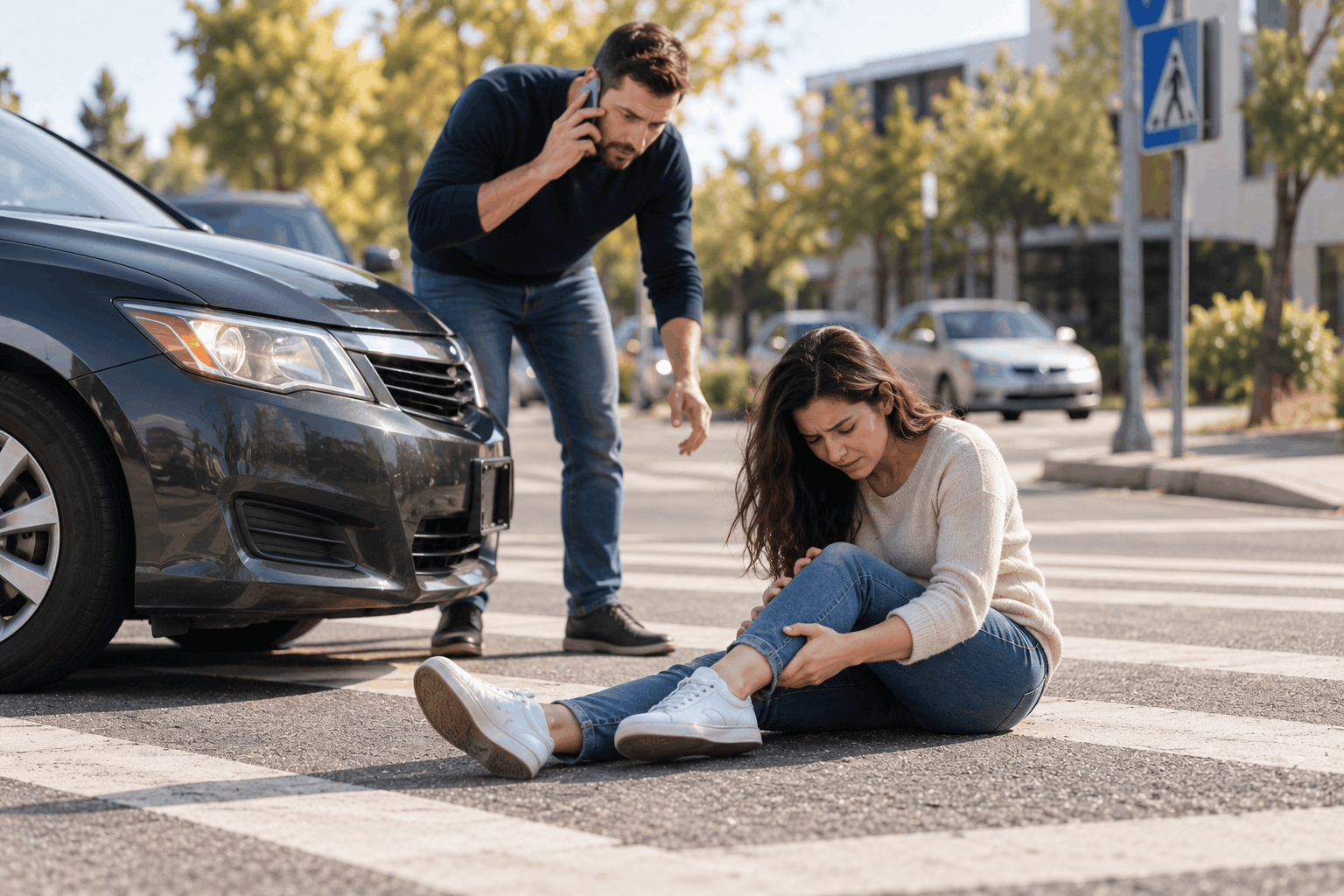
Who Is at Fault in a California Pedestrian Accident?
Pedestrian accidents can cause serious injuries, unexpected medical expenses, and significant disruption to everyday life. When a vehicle strikes someone on foot, one of the first questions is who is legally responsible for the collision. In California, the answer depends on the circumstances of the accident, the actions of everyone involved, and the evidence available to support the claim.
Drivers are often responsible when they fail to yield, drive distracted, or ignore traffic signals. However, pedestrians also have a duty to follow traffic laws and exercise reasonable care. In some cases, both parties may share responsibility.
Understanding how fault is determined can help injured pedestrians protect their rights and make informed decisions about compensation. A pedestrian accident lawyer ↗ can review the evidence, identify potentially responsible parties, and explain the legal options available under California law.
1. When Is a Driver at Fault in a Pedestrian Accident?Drivers have a responsibility to operate their vehicles safely and watch for people walking near roads, intersections, parking lots, and crosswalks. When a driver's careless or unlawful actions cause a collision, that driver may be held legally responsible for the resulting injuries.
Common examples of driver negligence include:
Failing to yield at a crosswalk: California Vehicle Code Section 21950 generally requires drivers to yield to pedestrians crossing within marked or unmarked crosswalks at intersections, subject to applicable legal exceptions.Distracted driving: Looking at a phone, adjusting navigation, or becoming distracted by passengers can prevent a driver from noticing someone crossing the street.Speeding: Driving too fast for traffic, weather, or visibility conditions reduces the time available to stop and increases the severity of an impact.Running red lights or stop signs: Ignoring traffic controls can put pedestrians at risk, particularly at busy intersections.Driving under the influence: Alcohol or drugs can affect judgment, coordination, and reaction time.Backing up without checking: Drivers leaving driveways, parking spaces, or commercial loading areas may injure pedestrians if they fail to check their surroundings.For example, imagine a driver approaching a Walnut Creek intersection who turns right without checking for pedestrians crossing with the signal. If the driver strikes a pedestrian, evidence of the driver's failure to yield may support a negligence claim.
However, a collision alone does not automatically establish legal liability. Investigators must consider the applicable traffic laws, the driver's conduct, and the circumstances leading up to the accident.
2. Can a Pedestrian Be at Fault in California?Yes. Although drivers must take reasonable precautions to avoid hitting pedestrians, people on foot also have legal responsibilities. A pedestrian's actions may contribute to an accident and affect the amount of compensation they can recover.
Examples of pedestrian conduct that may contribute to a collision include:
Crossing outside a crosswalk when it is unsafe to do so.Walking against a traffic signal.Suddenly entering the path of an approaching vehicle when the driver has insufficient time to stop.Walking into traffic without paying reasonable attention to surrounding conditions.Ignoring applicable pedestrian signals or crossing restrictions.California Vehicle Code Section 21954 addresses pedestrians crossing outside marked crosswalks or unmarked crosswalks at intersections. Generally, pedestrians in these circumstances must yield the right-of-way to vehicles close enough to present an immediate hazard. Drivers must still exercise due care to avoid hitting pedestrians.
This distinction is important because an insurance company may argue that an injured person caused the collision by crossing improperly. That argument does not automatically eliminate the pedestrian's right to compensation.
The relevant question is whether the pedestrian acted unreasonably under the circumstances and, if so, how that conduct contributed to the accident. A careful review of witness statements, traffic signals, photographs, and other evidence can help establish what actually happened.
3. How Does California's Comparative Negligence Law Affect Fault?California follows a pure comparative negligence system. This means an injured person can generally recover compensation even if they were partly responsible for an accident. However, their financial recovery is reduced by their percentage of fault.
Consider a pedestrian who suffers $100,000 in legally recoverable damages after being struck by a vehicle. If the pedestrian is found 20% responsible and the driver is 80% responsible, the pedestrian's potential recovery would be reduced by 20%.
In this example, the pedestrian could recover $80,000, assuming the full $100,000 in damages is established and no other legal issues affect the claim.
The same principle applies when a pedestrian is found more than 50% responsible. California's pure comparative negligence rule does not automatically bar recovery simply because the injured person bears most of the fault.
Insurance companies may use this rule when evaluating settlement offers. An adjuster might argue that the pedestrian was distracted, crossed outside a crosswalk, or ignored a traffic signal to justify reducing the proposed payment.
Before accepting that assessment, it is important to examine the evidence supporting the assigned percentage of fault. A pedestrian accident lawyer can challenge unsupported allegations, explain how comparative negligence applies, and present evidence showing the driver's contribution to the collision.
The goal is not to deny genuine responsibility but to ensure that fault is evaluated fairly and that any reduction in compensation reflects the available evidence.
4. What Evidence Helps Determine Who Caused the Accident?Establishing fault often requires more than a police report or a driver's account of what happened. Strong evidence can help clarify the sequence of events, identify negligent conduct, and establish the connection between the collision and the pedestrian's injuries.
Important evidence may include:
Police and collision reports: These records may document statements, road conditions, traffic violations, vehicle damage, and the responding officer's observations. A report can be useful, although it does not necessarily settle civil liability.
Photographs and videos: Pictures of the intersection, crosswalk, vehicle damage, injuries, and skid marks may help explain how the collision occurred. Nearby business cameras, traffic cameras, or dashcams may capture crucial moments.
Witness statements: Independent witnesses may describe the driver's speed, the pedestrian's movements, the traffic signal, or whether the driver appeared distracted.
Medical records: Hospital records, diagnostic imaging, treatment notes, and medical bills can help establish the nature and extent of the injuries caused by the accident.
Physical and digital evidence: Vehicle event data, available surveillance footage, road measurements, and accident reconstruction analysis may help clarify disputed details.
Time matters when preserving evidence. Surveillance footage may be overwritten, witnesses may become difficult to locate, and physical evidence can disappear as the scene changes.
If you are injured, prioritize medical care and avoid putting yourself in danger to collect evidence. When possible, ask someone to photograph the scene or identify witnesses. Keep copies of medical records, bills, insurance correspondence, and other accident-related documents.
A pedestrian accident lawyer Walnut Creek residents can consult may help gather relevant records, request available footage, and organize evidence before it becomes harder to obtain.
5. Can Other Parties Be Responsible for a Pedestrian Accident?Not every pedestrian accident is solely the fault of the driver or pedestrian. Depending on the circumstances, another person, business, or public entity may share legal responsibility.
For example, an employer may potentially be liable when an employee causes a pedestrian collision while performing job-related duties. This may arise when a delivery driver, company vehicle operator, or other employee negligently strikes someone on foot.
A property owner or business may also face a claim in certain circumstances if a dangerous property condition contributes to the accident. Examples might include inadequate visibility caused by an improperly maintained property feature or a hazardous parking area. Liability depends on the specific facts and the applicable legal duties.
Government entities may be responsible in some cases involving dangerous public property, such as a defective sidewalk or an unsafe roadway condition. However, claims against public entities follow special procedures and deadlines. A California government claim generally must be presented within six months for claims seeking damages for personal injury, subject to applicable exceptions and legal requirements.
Other potentially responsible parties may include contractors, maintenance companies, or businesses responsible for traffic control or site safety, depending on their role in creating or failing to address a hazard.
Identifying all potentially liable parties can matter because an injured pedestrian may otherwise overlook a valid source of compensation. An attorney can investigate the accident, evaluate each party's legal responsibilities, and determine which claims may be supported by the evidence.
ConclusionDetermining who is at fault in a California pedestrian accident requires a careful look at the driver's conduct, the pedestrian's actions, traffic laws, and the evidence surrounding the collision. A driver who fails to yield or operates a vehicle carelessly may be responsible, but pedestrian conduct and the actions of other parties can also affect liability.
California's comparative negligence law allows injured pedestrians to pursue compensation even when they share some responsibility. The key is to establish what happened and ensure that any assignment of fault is supported by reliable evidence.
If you or a loved one has been injured in a pedestrian accident, consider speaking with a pedestrian accident lawyer before accepting an insurance company's conclusions about liability. The Herman Firm can help you understand your options, investigate the circumstances, and evaluate a potential personal injury claim.
Visit The Herman Firm ↗ to learn more about your legal options and request a consultation. Taking action early may help preserve important evidence and protect your ability to pursue compensation.
Frequently Asked Questions1. Who is usually at fault in a California pedestrian accident?The driver may be at fault if they were speeding, failed to yield, ignored a traffic signal, or drove negligently. However, fault depends on the specific circumstances. A pedestrian or another party may also share responsibility.
2. Can I receive compensation if I was jaywalking?Yes, potentially. California's pure comparative negligence rule allows injured pedestrians to recover damages even when their own conduct contributed to an accident. Crossing outside a crosswalk may affect the allocation of fault, but it does not automatically prevent recovery.
3. What if the driver says the accident was my fault?A driver's statement does not determine legal liability. Police reports, witness accounts, photographs, surveillance footage, and other evidence can help establish what happened. Avoid making assumptions about fault before the available evidence has been reviewed.
4. How long do I have to file a pedestrian accident lawsuit in California?The general deadline for a California personal injury lawsuit is two years from the date of injury, subject to exceptions. Different deadlines may apply to minors, delayed discovery, and claims involving government entities. Government claims can have much shorter initial deadlines, often six months for personal injury. Consult an attorney promptly to confirm the deadline that applies to your case.
5. What compensation can I recover after a pedestrian accident?Depending on the facts, recoverable damages may include medical expenses, future medical care, lost wages, reduced earning capacity, pain and suffering, and other legally recognized losses. The amount depends on the evidence, the severity of the injuries, liability, and any applicable reduction for comparative fault.