

How to Choose an Anechoic Chamber for Modern EMC Testing

Modern electronic products must operate reliably in environments where electromagnetic signals can affect performance. From wireless communication devices to industrial electronics, manufacturers need dependable testing methods to evaluate emissions, immunity, and radio frequency behaviour. Choosing the right Anechoic Chamber ↗ is an important part of building an effective testing facility. DMCRF Shop provides chamber options for laboratories and engineering teams looking for solutions suited to different testing applications.
Why Is an Anechoic Chamber Important for Electronics Testing?
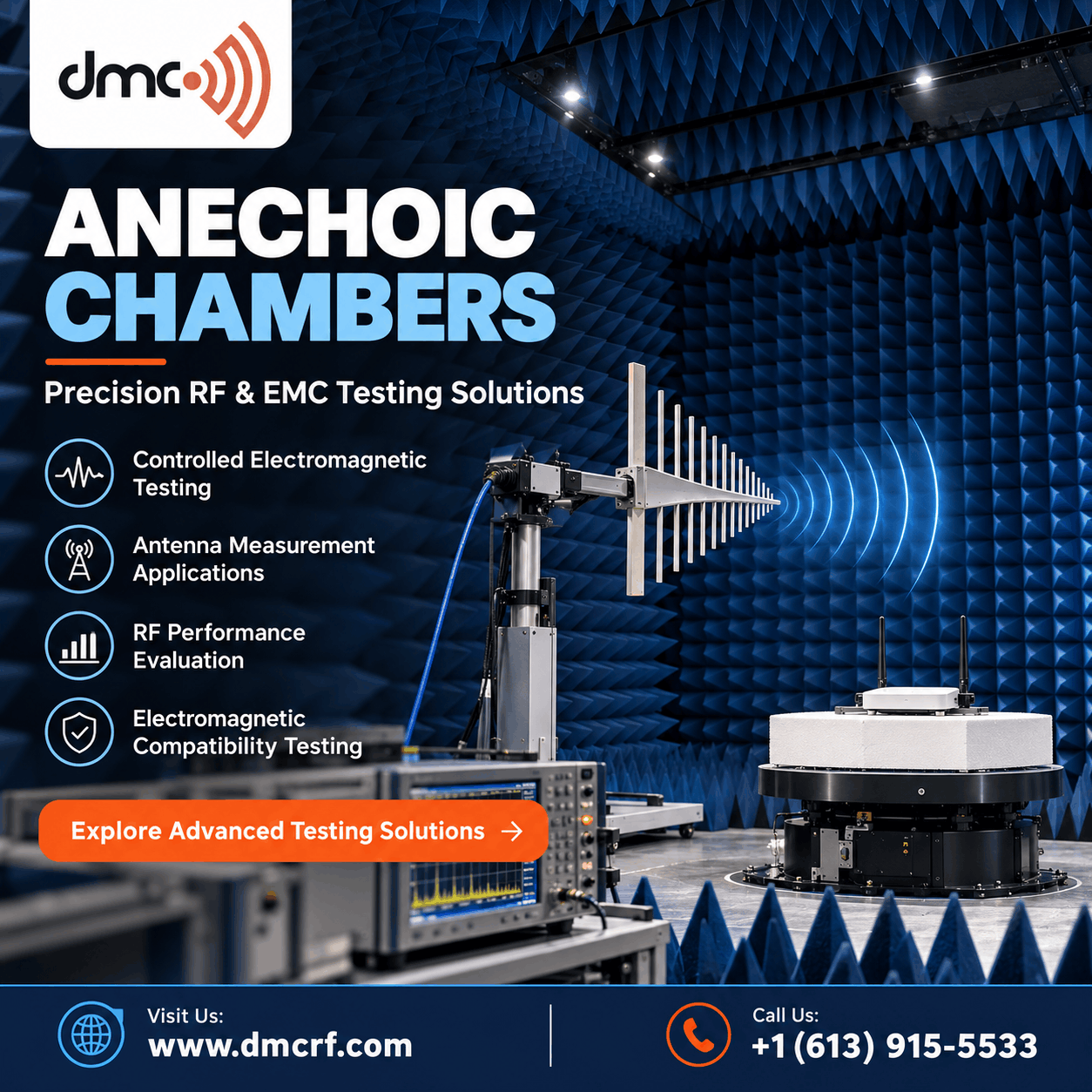
An anechoic chamber is a specially designed enclosure that reduces unwanted electromagnetic reflections within its testing space. Depending on its design, the chamber can support antenna measurements, electromagnetic compatibility evaluations, and other RF testing activities.
In ordinary rooms, reflected signals from walls, ceilings, and nearby objects can affect measurement accuracy. A properly designed chamber uses suitable absorbing materials and a controlled layout to minimise these reflections. This helps testing teams obtain more consistent results when working with electronic equipment.
Before selecting a chamber, consider the required frequency range, equipment dimensions, antenna positioning, measurement distance, and applicable testing standards. These factors help determine which chamber configuration is suitable for your laboratory.
Explore DMC-SAC-3M, DMC-SAC-5M, and DMC-SAC-10M
Different testing projects require different amounts of space. DMCRF Shop offers the DMC-SAC-3M ↗, DMC-SAC-5M, and DMC-SAC-10M models for buyers evaluating semi-anechoic chamber options.
The DMC-SAC-3M may be worth evaluating when laboratory space and the intended measurement arrangement favour a more compact configuration. Smaller testing setups can be useful for specific equipment evaluations, provided the required test geometry and standards are satisfied.
The DMC-SAC-5M offers another configuration to consider when a project requires a different balance between available space, equipment placement, and measurement distance. Testing teams should review the proposed internal dimensions and intended test setup before choosing a model.
For applications requiring a larger test area, the DMC-SAC-10M may be an option to investigate. A larger chamber can provide additional room for equipment positioning and test arrangements, depending on the actual design specifications.
Do not select a model based on size alone. Ask for technical details covering usable test volume, absorber performance, frequency coverage, shielding, and the relevant measurement requirements.
When Should You Consider a DMC-FAC-3M?
A full-anechoic configuration can be relevant when a test application requires extensive absorption of electromagnetic reflections from the chamber boundaries. The DMC-FAC-3M ↗ is a model to consider when reviewing full-anechoic chamber options.
The choice between semi-anechoic and full-anechoic designs depends on the test method and the applicable standard. Some evaluations use a ground plane and a semi-anechoic environment, while others require different chamber arrangements.
Before purchasing, identify whether your application involves radiated emissions, immunity measurements, antenna characterisation, or another RF procedure. Confirm the required chamber configuration with your testing or compliance team.
Selecting a MIL-STD-461 Chamber for Defence Electronics
Equipment used in defence and military environments may need electromagnetic interference and susceptibility testing under specific requirements. A MIL-STD-461 Chamber ↗ can form part of a testing setup intended to support applicable military electromagnetic compatibility evaluations.
However, chamber selection alone does not establish compliance. The complete facility, measurement equipment, calibration, test procedures, antenna arrangements, and relevant requirements must all be considered.
If your project involves military electronics, communication equipment, or electronic subsystems, identify the exact MIL-STD-461 test methods that apply. Then discuss the necessary chamber performance and configuration with your supplier.
Request technical documentation before finalising a purchase. This helps you understand whether the proposed setup is suitable for your intended evaluation and facility requirements.
Why Consider a CISPR Chamber?
A CISPR Chamber may be appropriate for laboratories performing electromagnetic emissions testing associated with applicable CISPR standards. These standards are used in various product categories to address radio disturbance and related measurement requirements.
The chamber design must match the intended test method, frequency range, measurement distance, and equipment arrangement. Absorber performance, site validation, and other measurement conditions also influence whether a facility is suitable for a particular test.
For manufacturers preparing electronic products for evaluation, choosing the correct chamber configuration can support a more organised testing process. Always verify the applicable standard and its current requirements before specifying a chamber.
What Should You Check Before Purchasing?
Use the following checklist when comparing chamber solutions from DMCRF Shop:
Testing objective: Identify the exact emissions, immunity, or RF measurement activities.Chamber dimensions: Check the available room and the required measurement geometry.Frequency coverage: Confirm that the proposed design supports the intended testing range.Absorber performance: Review the specified performance across relevant frequencies.Shielding requirements: Establish the necessary protection against external electromagnetic interference.Applicable standards: Confirm whether the project requires CISPR, MIL-STD-461, or another testing method.Installation and support: Ask about site preparation, installation requirements, and technical assistance.Documentation: Request relevant specifications, drawings, and supporting performance information.Careful planning can help reduce the risk of selecting equipment that does not match your laboratory's requirements.
Find Your Anechoic Chamber Solution at DMCRF Shop
Selecting an Anechoic Chamber ↗ involves more than comparing dimensions or model names. The right solution depends on your test standards, measurement objectives, available space, and required technical performance. Whether you are comparing DMC-SAC-3M, DMC-SAC-5M, DMC-SAC-10M, DMC-FAC-3M, a MIL-STD-461 Chamber, or a CISPR Chamber, review the specifications carefully before making a decision.
Visit DMCRF Shop to explore the available chamber range and discuss your testing requirements with the team.
Visit: https://www.dmcrfshop.com/ ↗
Call: +1 613-915-5533