

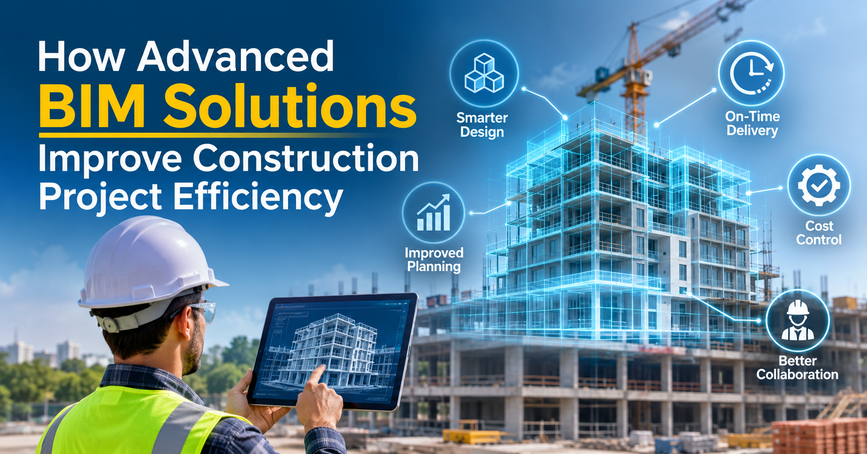
How Advanced BIM Solutions Improve Construction Project Efficiency
Construction projects involve multiple teams, complex designs, tight deadlines, and large budgets. Managing all these elements efficiently requires accurate information and strong coordination. Modern Bim companies in Chennai ↗ ↗are increasingly using advanced Building Information Modeling (BIM) solutions to improve design coordination, reduce errors, and streamline project execution. BIM creates a connected digital representation of a building, allowing project teams to visualize, analyze, and manage construction information throughout the project lifecycle.
1. Better Design CoordinationOne of the biggest advantages of advanced BIM solutions is improved coordination between architectural, structural, and MEP disciplines. Instead of working with disconnected drawings, teams can collaborate using a centralized digital model.
BIM makes it easier to identify conflicts between systems before construction begins. For example, clashes between structural elements and electrical or plumbing services can be detected during the design stage. Resolving these issues early reduces costly modifications at the construction site.
2. Accurate VisualizationTraditional two-dimensional drawings can sometimes make it difficult for project teams and clients to understand the final outcome. BIM provides detailed three-dimensional visualization, making complex design concepts easier to interpret.
Project stakeholders can review building components, layouts, materials, and systems before construction starts. This improves decision-making and allows design changes to be evaluated more effectively.
3. Reduced Construction ErrorsConstruction errors can result in material waste, rework, delays, and additional expenses. Advanced BIM solutions help minimize these risks by providing coordinated and information-rich models.
When changes are made to the BIM model, relevant information can be updated across associated drawings and documentation. This reduces the possibility of teams working with outdated information and helps maintain consistency throughout the project.
4. Improved Project SchedulingBIM can also support construction scheduling through 4D modeling. By connecting the digital building model with project timelines, teams can visualize how construction activities will progress over time.
This enables project managers to identify potential scheduling conflicts, understand construction sequences, and coordinate different activities more efficiently. Better planning can help teams reduce delays and maintain project milestones.
5. More Effective Cost ManagementCost control is essential for maintaining construction profitability. BIM can support quantity takeoffs and cost estimation by connecting building components with relevant material and quantity information.
When design changes occur, updated quantities can help teams assess their potential cost impact. This provides project stakeholders with better visibility into budgets and supports more informed financial decisions.
6. Improved CollaborationLarge construction projects typically involve architects, engineers, contractors, consultants, suppliers, and owners. Without effective communication, important information can become fragmented.
A coordinated BIM environment gives different stakeholders access to consistent project information. This encourages collaboration and helps teams communicate design changes, identify problems, and make decisions using shared project data.
7. Enhanced Construction Site PlanningBIM models can provide valuable support during actual construction. Site teams can use detailed models to understand installation requirements, dimensions, locations, and construction sequences.
Combining BIM with technologies such as laser scanning, drones, and reality capture can further improve site monitoring. Teams can compare actual site conditions with the planned model and identify deviations before they become major problems.
8. Better Facility ManagementThe benefits of BIM do not necessarily end when construction is completed. An information-rich model can support facility management by providing useful information about building components and systems.
Owners and facility managers can use this information for maintenance planning, equipment management, renovations, and future upgrades. This makes BIM valuable across the entire building lifecycle rather than only during construction.
9. Supporting Sustainable ConstructionAdvanced BIM solutions can also contribute to more sustainable project planning. Digital models can help teams evaluate material quantities, building performance, energy considerations, and design alternatives before construction begins.
By identifying opportunities to reduce material waste and improve resource efficiency, BIM can support sustainability objectives while helping project teams make practical design decisions.
ConclusionAdvanced BIM solutions are transforming the way construction projects are designed, coordinated, executed, and managed. From clash detection and 3D visualization to scheduling, cost control, site planning, and facility management, BIM provides project teams with better access to reliable information.As construction becomes increasingly digital, BIM can work alongside sustainability strategies and data-driven project management. Organizations working with Esg consulting firms in India ↗ can also integrate BIM-based insights into broader sustainability planning, helping align construction efficiency with long-term environmental and operational goals.