

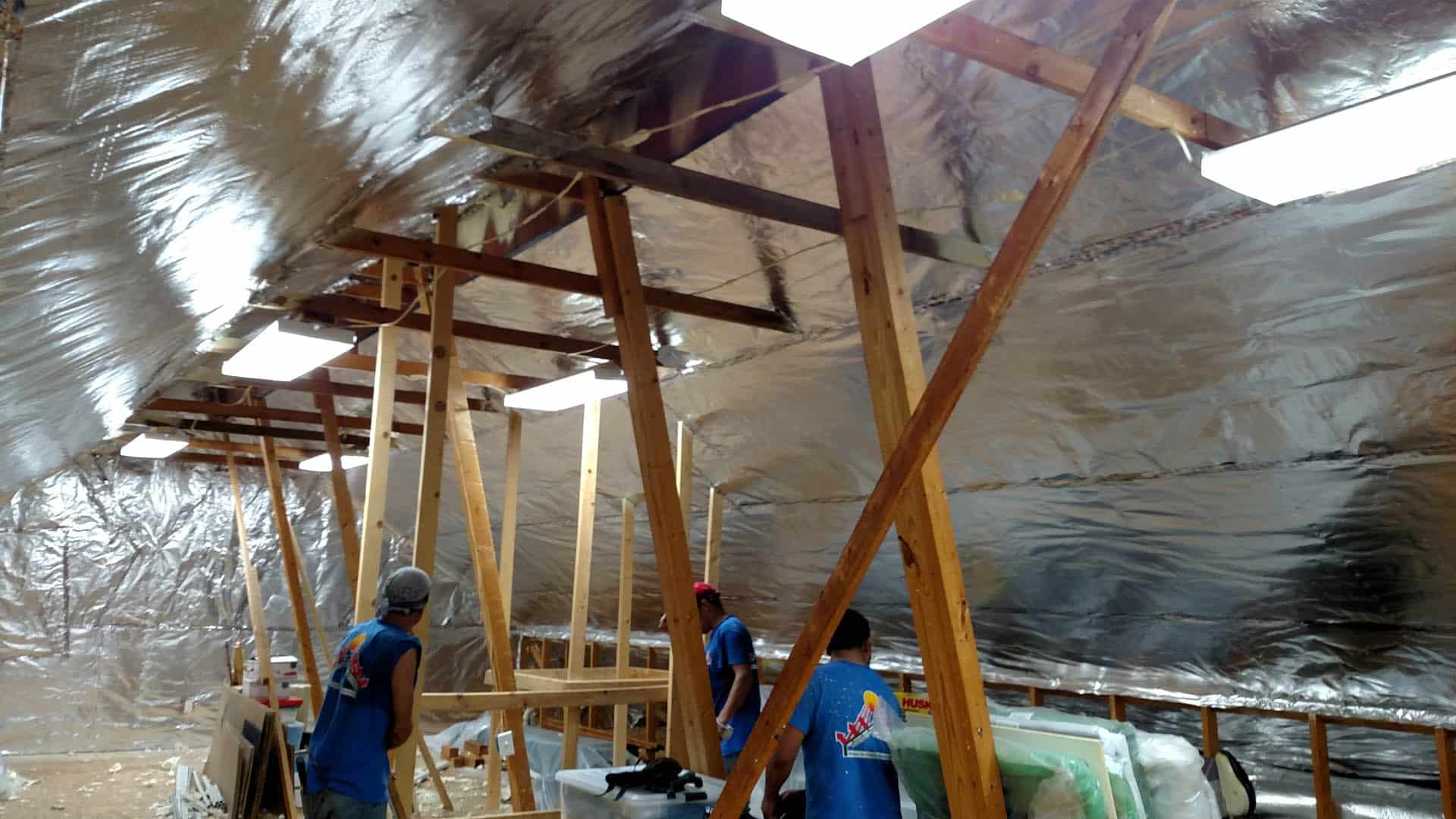
Garage Spaces Overheat Quickly? Reflective Insulation Helps Limit Radiant Heat Through Roof Assemblies
On July afternoons, a shut garage can outheat the driveway. Most of that warmth drops straight from the roof deck. Sun-baked shingles push energy downward as infrared radiation.
A trusted Insulation contractor in Houston ↗ answers that path with reflective foil. Results hinge on air gaps, placement, ventilation, and companion insulation. Installation errors can quietly cancel the benefit, too.
Roof Decks Radiate Heat Into Garages
Under Texas sun, asphalt shingles can pass 150°F by midafternoon. That energy crosses the decking and radiates toward cooler surfaces. Cars, stored paint, and workbenches absorb it steadily. Most garages lack ceiling insulation, so nothing interrupts the flow. Even after sunset, warm sheathing keeps releasing stored energy.
How Does Reflective Foil Stop Radiation?
Polished aluminum has extremely low emissivity, near 0.03 to 0.05. In practice, a clean sheet bounces back up to 97% of infrared.
1. Foil must face an open air gap.
2. Dust buildup lowers reflectivity over the years.
3. Perforated versions let trapped moisture escape.
4. Conduction still passes wherever surfaces touch.
Air Gaps Decide Barrier Performance
Contact kills the effect. Foil pressed against hot decking just conducts warmth through. A gap of at least three-quarters inch restores reflection. Stapling to rafter bottoms creates that space. A seasoned Houston Insulation Contractor ↗ verifies spacing before closing each bay.
Should Garages Pair Foil With Batts?
Reflective layers handle radiation, yet conduction needs a different material. Fiberglass or mineral wool below the foil slows conducted warmth. Together, each layer covers gaps the other leaves open. Garages under living space benefit most. Bedrooms above stop soaking up afternoon warmth through the floor.
What Mistakes Undermine Garage Radiant Barriers?
Small errors erase much of the gain.
1. Installers block soffit vents completely.
2. Torn seams leave decking exposed.
3. Upward-facing foil collects heavy dust.
4. Garage doors stay uninsulated.
Each one reopens a path for radiant gain.
Stored Paint and Batteries Feel It First
That paint on the workbench tells the real story. Latex cans spoil once repeated heat cycles break their emulsion. Car batteries also wear out faster in hot enclosures. A garage freezer runs longer cycles fighting that same radiation. Reflective foil, then, shields more than comfort. It shields everything a garage quietly holds.
FAQs
Does a radiant barrier help during Houston winters?
It reflects a little indoor warmth back, but winter gains stay minor. Its real value shows across the long cooling season.
Can foil sit directly over existing ceiling insulation?
Perforated foil can lie over insulation on a garage ceiling. Dust settles on that surface, though, so rafter mounting holds performance longer.
How much cooler will a garage feel afterward?
Results depend on ventilation, roof orientation, and door insulation. Pairing foil with batts and an insulated door delivers the strongest improvement.
Is reflective foil safe near electrical wiring?
Aluminum conducts electricity, so it must stay clear of bare wires and junction boxes. Professional installers route around fixtures to avoid that risk.